How do I unclog a kitchen sink without chemicals?
Use a plunger, then the trap. Seal the second bowl or the overflow, run a few inches of water and plunge 20 to 30 times. If the sink still holds water, put a bucket under the U-shaped trap, open it and clear it out; most kitchen clogs sit there. A hand snake reaches the pipe beyond. Chemical openers are caustic and rarely needed.
Free to ask. Local shops send quotes, and you pay only when you book one.
By Kasra Taheri, Founder, LoclisPublished
Researched and drafted with AI, then checked claim by claim against the sources listed below before it was published. Prices and rules change; the dates beside each source say when it was last checked.
Step by step
Read when to stop and call a pro, further down this page, before you start.
Step 1: Check the disposal first
If the sink has a garbage disposal, turn it on with the water standing: a whirlpool means the disposal is spinning and the clog may be in the drain line.[2]
Step 2: Seal the other opening
Plug the second drain of a double sink, or the overflow hole of a single bowl with a wet rag, and keep it sealed while you plunge.[1]
Step 3: Add water
Leave or run about four inches of water in the bowl so the plunger cup is covered and pushes water, not air.[2]
Step 4: Plunge 20 to 30 times
Set a flat cup plunger over the drain, press down smoothly, jerk it up sharply, and repeat 20 to 30 times.[1]
Step 5: Flush the line
If the water drops away, rinse the drain with hot soapy water to carry the loosened clog down the pipe.[1]
Step 6: Set a bucket under the trap
If plunging fails, bail out the standing water and put a pan or bucket under the U-shaped trap below the sink.[1]
Step 7: Open the trap
Unscrew the trap's cleanout plug with an adjustable wrench,[1] or loosen the two slip nuts on a plastic trap by hand and lower it into the bucket.
Step 8: Clear the trap
Pull the clog out with a gloved finger, a pencil or a piece of wire,[1] and check the short pipe running into the wall as well.
Step 9: Reassemble and test
Put the trap back, snug the nuts by hand, then run hot soapy water and watch the joints for drips.
Step 10: Try a hand snake
If the trap was clear, feed a hand drain snake into the pipe that runs into the wall, turning the handle as you push, then draw it back out.
You can clear most kitchen sink clogs with a plunger and a bucket. Plunge first, with the second opening sealed. If that fails, open the U-shaped trap under the sink and clean it out. Most clogs are in the trap[1], usually a plug of grease and food scraps. A hand snake handles what sits further along. None of it needs a chemical opener.
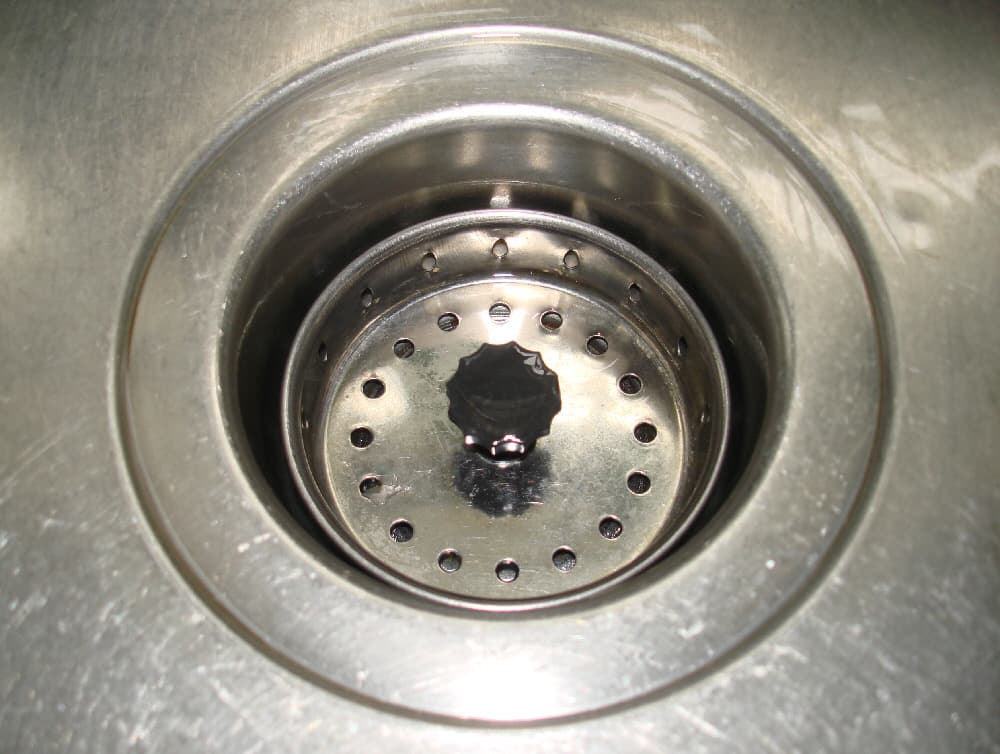
Check the disposal first
If your sink has a garbage disposal, find out whether the disposal or the drain is the problem. With water standing in the sink, switch the disposal on. If the disposal runs and you see a whirlpool in the water, the clog may be in the drain line, not the disposal.[2] If it runs but no whirlpool forms, or it will not start at all, the disposal itself needs attention, covered in what not to put down a garbage disposal. Do not stick your hand in the disposal.[2]
Plunge it properly
A plunger works by pushing a slug of water against the clog, so it needs a sealed system and enough water to push.
- Seal the second opening. In a double bowl sink, plug the other drain; in a single bowl, plug the overflow opening with a washcloth or rag, and keep the plug in place.[1] Otherwise the push comes straight back up the other side.
- Use enough water. InSinkErator's instructions call for about four inches of water in the sink[2], enough to cover the plunger's cup.
- Use the right plunger. A flat-rimmed cup plunger seals best on a flat sink bottom. The flanged kind made for toilets often rocks and leaks air on a sink.
- Work it hard. Set the cup over the drain, press the plunger down smoothly, jerk it up sharply, and repeat 20 to 30 times.[1] The pull matters as much as the push.
If that clears it, rinse the drain with hot soapy water.[1] If the water level does not move at all, repeat once before moving on.
If a dishwasher drains through the sink plumbing, a hard push can send dirty water back up its hose into the dishwasher. Run the dishwasher's drain cycle afterwards and check it is clean.

Clean the trap
When plunging fails, go to the trap: the U-shaped bend of pipe directly under the drain. Bail as much water out of the sink as you can first, because everything in the sink will come out of the trap.
If the trap has a cleanout plug, set a pan or bucket under it and unscrew the plug with an adjustable wrench.[1] Most modern plastic traps have no plug; instead, two large slip nuts hold the trap in place, and they usually loosen by hand. Lower the trap into the bucket.
Use your finger, a pencil or a piece of wire to pull the clog out of the trap[1], wearing gloves. Look into the short arm of pipe that runs into the wall as well, since grease often collects there. Put the trap back with its washers seated, tighten the nuts by hand until snug, and run hot soapy water while you watch the joints. A slow drip usually means a washer is out of place, not that the nut needs forcing; plastic threads crack when overtightened.
Then a hand snake
The EPA's alternative to chemical drain cleaner is a plunger or a plumber's snake.[4] If the trap was clear, the clog is in the pipe in the wall. With the trap off, feed a hand snake (a drum auger) straight into that pipe, turning the handle as you push. When it stops, keep turning and push gently; when it gives, run it a little further, then draw it back slowly and clean what it brings up. Reattach the trap and test with hot water.
Stop if the snake jams hard and will not turn. Older galvanized or cast-iron pipe inside a wall is not worth forcing a cable through.
What to skip
Chemical openers. Chemical drain cleaners help only with sluggish drains, are caustic, and can burn you or damage pipes or fixture finishes.[1] If you do use one, read the label, never add a second brand or type on top of one that did not work, because the mix can give off deadly fumes, and do not plunge a drain with chemical in it.[1] Their poisonous ingredients include lye (sodium hydroxide or caustic soda) and hydrochloric acid.[6] On a septic system, the EPA says to avoid chemical drain openers and use boiling water or a drain snake instead.[5] InSinkErator lists caustic drain cleaners among the things not to put into a disposal.[3]
Hot water as a fix for grease. Hot water moves grease along but does not get rid of it. As King George County's service authority explains: "When mixed in small amounts with hot water, F.O.G. flows easily. But once it cools, it hardens inside pipes."[7] That is why a grease clog that clears with hot water tends to come back.
Baking soda and vinegar. The fizz looks busy, but it has little force. It is not a substitute for a plunger on a sink that will not drain.
Stop and call a pro if
- Water comes up in another fixture while the sink drains, or several drains are slow at once. Fairfax County's wastewater division puts it this way: "If the backup occurs only when facilities (such as toilet, tub, washer or sinks) are used, it is possible that you need a plumber."[8]
- A chemical opener is already in the drain. Do not plunge it or open the trap; tell the plumber which product you used.
- The snake stops hard in the wall, or the trap and wall pipe are old metal that will not come apart.
- The trap leaks after you put it back and new washers do not fix it.
- The sink clogs again within weeks. The blockage is likely further down the line than a hand snake reaches.
For more help, see when a clog needs a plumber instead of a plunger, how to keep a kitchen sink from clogging and what a plumber charges to unclog a drain in Virginia. You can also browse plumbing repair answers or look up plumbers in Blacksburg.
Still stuck? Describe the clogged sink once and licensed local plumbers quote it.
Common questions
- Does baking soda and vinegar unclog a kitchen sink?
- It fizzes and may freshen a smelly drain, but it has little force behind it. A sink that will not drain at all is usually blocked by a plug of grease and food that needs pushing or pulling out, which is what a plunger, the trap and a hand snake do.
- Can I pour boiling water down a clogged sink?
- The EPA lists boiling water, along with a drain snake, as an alternative to chemical openers for homes on septic. It will not do much for a sink already full of standing water, and it can scald, so pour slowly and keep children away. For a fully blocked sink, plunge first.
- Why does my plunger just splash water out of the other bowl?
- Because the push escapes through the second drain. Plug the other bowl firmly, or the overflow opening on a single bowl, and keep that plug held down the whole time you plunge.
- Is it safe to plunge a sink with a garbage disposal?
- Yes, with the disposal switched off. InSinkErator's own clog instructions use a plunger over the disposal opening with the other bowl stoppered. Never put your hand into the disposal.
- The sink cleared but clogged again a week later. Why?
- Usually grease. It goes down warm, then cools and hardens in the pipe, catching food scraps each time. Wipe greasy pans with a paper towel, pour fat into a can for the trash, and use a strainer. If it keeps coming back, the clog may be further down the line than a hand snake reaches.
Sources
- [1] Making Simple Repairs: Clogged Drains (FCS5234-05, archived fact sheet), UF/IFAS Extension, University of Florida. Checked October 26, 2026.
- [2] Fixing a Clogged Garbage Disposal, InSinkErator. Checked October 26, 2026.
- [3] Standard Series Installation, Care and Use Manual, InSinkErator. Checked October 26, 2026.
- [4] Household Hazardous Waste (HHW), U.S. Environmental Protection Agency. Checked October 26, 2026.
- [5] How to Care for Your Septic System, U.S. Environmental Protection Agency. Checked October 26, 2026.
- [6] Drain opener poisoning, MedlinePlus, U.S. National Library of Medicine. Checked October 26, 2026.
- [7] Fats, Oils & Grease, King George Service Authority, King George County, Virginia. Checked October 26, 2026.
- [8] Wastewater Management: Sanitary Sewer Emergencies, Fairfax County Department of Public Works and Environmental Services. Checked October 26, 2026.
Want a pro to handle it?
Describe the job once. Licensed local businesses send quotes, and you pay only when you book one.
Get a quote for Plumbing Repair