Why are several drains in my house clogged at once?
When several drains clog together, the blockage is almost never in each fixture. It is usually in a line they share: the main drain or the sewer lateral to the street, clogged by grease, wipes or roots. It can also be the public sewer main, a full septic tank, or rain overloading the sewer. Stop running water, check with neighbors, then call your utility or a licensed plumber.
Free to ask. Local shops send quotes, and you pay only when you book one.
By Kasra Taheri, Founder, LoclisPublished
Researched and drafted with AI, then checked claim by claim against the sources listed below before it was published. Prices and rules change; the dates beside each source say when it was last checked.
Step by step
Read when to stop and call a pro, further down this page, before you start.
Step 1: Stop running water
Stop using sinks, toilets, the washer and the dishwasher; do not run any water down the drains until the blockage has been cleared.[1]
Step 2: Note which drains are affected
Write down which fixtures are slow or backing up; backups enter through the lowest drains first, so a basement drain or ground-floor shower is the tell.[3]
Step 3: Ask the neighbors
Check whether neighbors have the same problem, to tell whether the blockage is inside your building or on the sewer main.[3]
Step 4: Call the utility if it is the main
If several buildings are affected, or sewage backs up with nothing running, call your sewer utility before a plumber.[1]
Step 5: Plug low drains if sewage is rising
Close tub, sink and floor drains with stoppers or plugs, adding weight if needed, and remember ceramic fixtures are fragile.[1]
Step 6: Keep away from the water
Wear rubber gloves and boots around any backup and keep children and pets out of the area.[3]
Step 7: Check the septic record
On septic, find when the tank was last pumped; VDH says household tanks should be pumped every three to five years.[8]
Step 8: Find the cleanout, leave it closed
Locate the outdoor cleanout so a plumber can reach the line, but leave the cap on while the line is backed up.[4]
Step 9: Book a plumber and ask for a camera
If the problem is your line, have a licensed plumber clear it and ask for a camera inspection to see why it clogged.[2]
When one drain clogs, the problem is usually in that fixture. When several clog at once, the problem is almost always in a pipe they share. Every sink, tub, toilet and the washer in a house drains into branch lines that join a single main drain, which leaves the house as the sewer lateral (or the line to a septic tank). A blockage there backs everything up at once. Your first job is to work out how far down the line it is, because that decides whether you call your utility or a plumber.
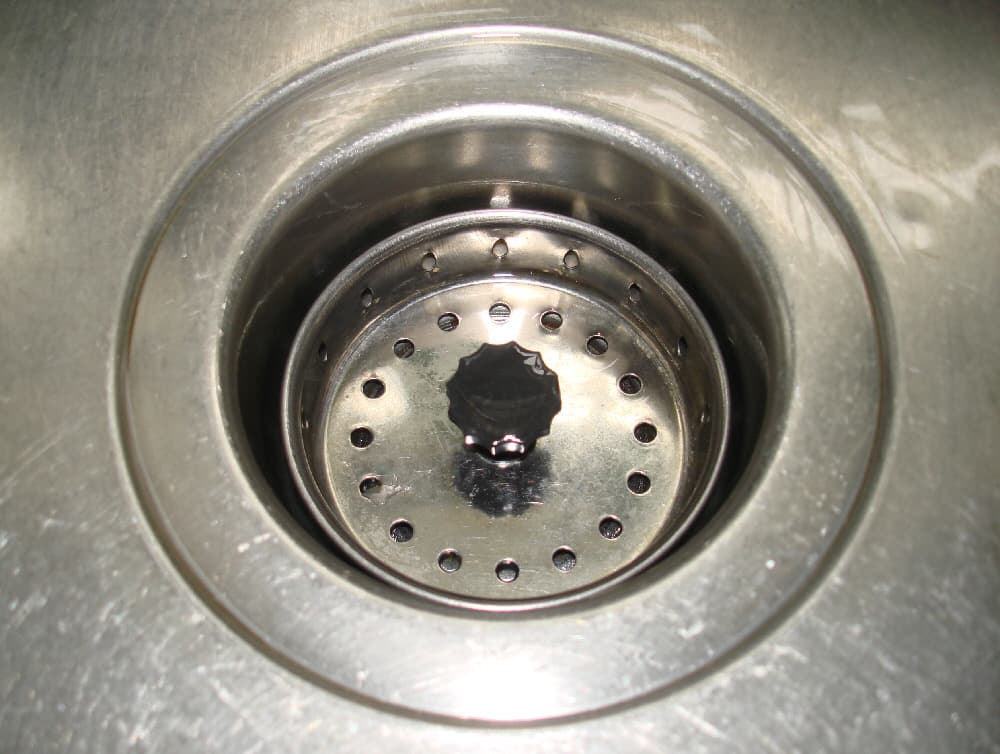
Read the pattern
Which drains are affected tells you where the clog sits.
- The lowest drains back up first. The City of Salem notes: "Backups will enter through the lowest drains first."[3] A basement floor drain, a basement shower or a ground-floor tub filling up points to the main line or the lateral.
- One fixture rises when another drains. Flushing a toilet and seeing the tub fill means the blockage is beyond where the two lines join. Fairfax County's wastewater division says: "If the backup occurs only when facilities (such as toilet, tub, washer or sinks) are used, it is possible that you need a plumber."[1]
- Only one bathroom's fixtures are slow. The clog is probably in that bathroom's branch line, not the main.
- Sewage comes up with nothing running. That suggests the public sewer. See below.
The usual causes
Grease. Cooking fat goes down liquid and hardens in the pipe, then catches everything else. Prince William Water reports that more than 80% of clogs that occur in Prince William Water's sewer lines are the result of fats, oils and grease (FOG) being poured down drains.[5] The same habit builds up in the main line of a house before it reaches the street.
Wipes and paper products. Salem's list is blunt: "Never flush wet wipes, diapers, sanitary napkins, tampons, paper towels, cardboard, or cloth. Even the wipes labeled "flushable" build up in pipes, causing blockages."[3] Wipes snag on grease or a rough joint and form a mat across the pipe.
Roots and broken pipe. Spotsylvania County explains: "Broken sewer laterals can allow tree roots or debris into the pipe, which may cause blockages, building backups, or overflows".[4] Root clogs tend to come back on a schedule after each cleaning. Fairfax County's code compliance office lists the warning signs: "Signs that laterals may require repair include: Frequently clogged drains, odor of sewage, and basement backups during rain."[2]
Rain getting into the sewer. If backups happen in storms, rain is getting in. In Fairfax County, basement backups usually occur during heavy rain storms because the sanitary system is inundated by rain water.[2] The county lists the routes: root intrusion, cracked or broken laterals and defective lateral connections let water in indirectly, while roof drain connections, uncapped cleanouts and illegal foundation drain connections let it in directly.[2] Spotsylvania County adds that improper connections include roof downspouts, groundwater sump pumps, foundation drains, and drains from window wells and driveways.[4]
A full septic tank. On septic, slow drains through the whole house can start at the tank or drainfield. The EPA explains: "If the drainfield is overloaded with too much liquid, it can flood, causing sewage to flow to the ground surface or create backups in toilets and sinks."[7] The Virginia Department of Health is specific: VDH recommends that the average household septic system be inspected at least every three years by a septic service professional, and household septic tanks should be pumped every three to five years.[8] If yours is overdue, call a septic service. See why a septic system backs up into the house.
A blocked vent. Drain lines need air to flow, supplied by vent pipes that usually exit through the roof, and Virginia's plumbing contractor classification includes venting systems related to plumbing.[9] A blocked vent tends to cause slow, gurgling drains rather than outright backups. Checking it means a roof, so leave it to a plumber.
Is it your line or the public sewer?
If sewage backs up while nothing in the house is running, look beyond your property. Fairfax County explains: "If you have sewage backing up when you are not using any of your facilities, it is possible that there is a problem in the county main line."[1] There, the county sends someone to check its line, and if that line is working normally, the owner is advised to contact a plumber.[1] In Fairfax County, maintaining a private lateral line is the property owner's responsibility.[1]
Talk to your neighbors. Salem's guidance: If the problem is affecting multiple buildings, call the city water department; if it appears to be one building, a licensed plumber is recommended.[3] In the New River Valley, Montgomery County's water and sewer FAQ says to call the NRV 911 non-emergency line at 540-382-4343 for after-hours water or sewer problems, not 911.[6] Other utilities have their own numbers, often on the bill. For who owns which part of the pipe, see who is responsible for the sewer line between the house and the street.
What to do while you wait
Stop using water. Fairfax County's advice for a backup is to immediately close all drain openings with stoppers or plugs, keeping in mind that ceramic plumbing fixtures are fragile, and do not run any water down your drains until the blockage has been cleared.[1] Salem adds: "Protect yourself, other people, and pets from contact with the wastewater, which can contain harmful bacteria and chemicals."[3]
Find your cleanout so the plumber can get to work quickly. A cleanout usually is 4 inches in diameter with a tight-fitting steel or plastic cap.[4] Leave the cap on and let the plumber open it.
Skip the chemical opener. Salem's water department is direct: "Chemical drain cleaners are not likely to help and can cause additional damage."[3] If sewage has already come into the house, read what to do when sewage backs up into the basement.
Once the line is clear, ask why it clogged. Fairfax's guidance: "The best way to assess the condition of a lateral is by Closed Circuit Television Video (CCTV) examination".[2]
Stop and call a pro if
- Sewage comes up through a floor drain, tub or toilet.
- Water rises in one fixture when you use another.
- Drains back up during heavy rain.
- The main line has clogged more than once in a few months.
- You are on septic and the tank is overdue for pumping.
For more, read when a clog needs a plumber instead of a plunger and what a plumber charges to unclog a drain in Virginia, browse plumbing repair answers, or look up plumbers in Blacksburg.
Several drains backed up? Describe the problem once and licensed local plumbers quote it.
Common questions
- Can I unclog several drains with a plunger?
- Usually not. When several fixtures back up together, the blockage is in the line they share, beyond the reach of a plunger or a short hand snake. Plunging one fixture can just push water up another. A plumber clears a main line with a powered drain machine, ideally through an outdoor cleanout.
- Why does my shower fill up when I flush the toilet?
- Because both drain into the same line, and that line is blocked beyond where they join. Water from the toilet has nowhere to go but back up the lowest opening, often a shower or tub. Stop using water and call a plumber, or your utility if neighbors have the same problem.
- Who pays if the clog is in the sewer line?
- It depends where the blockage is. The public main is the utility's. The private lateral is usually the owner's: Fairfax County says maintaining it is the property owner's responsibility, and Salem says the same for the part on private property. Ask your utility where its part begins.
- Why do my drains back up only when it rains hard?
- Rain is getting into the sanitary sewer. Fairfax County explains that heavy storms overload the system, through cracked laterals and roots or through roof drains, uncapped cleanouts and foundation drains tied into it. A camera inspection of your line shows whether the entry point is on your property.
- Could a blocked vent cause several slow drains?
- It can make drains slow and gurgle, especially fixtures near each other, though a true clog in the main line is more common when drains actually back up. Vents usually exit through the roof, so checking one is a job for a plumber, not a ladder.
Sources
- [1] Wastewater Management: Sanitary Sewer Emergencies, Fairfax County Department of Public Works and Environmental Services. Checked October 26, 2026.
- [2] Sanitary Sewer House Lateral, Fairfax County Department of Code Compliance. Checked October 26, 2026.
- [3] Water & Sewer: Backup vs. Overflow, frequently asked questions, City of Salem, Virginia. Checked October 26, 2026.
- [4] Utilities: Sanitary Sewer Laterals, frequently asked questions, Spotsylvania County, Virginia. Checked October 26, 2026.
- [5] Put Grease in Its Place, Prince William Water. Checked October 26, 2026.
- [6] Water & Sewer FAQs, Montgomery County, Virginia. Checked October 26, 2026.
- [7] How Your Septic System Works, U.S. Environmental Protection Agency. Checked October 26, 2026.
- [8] Onsite Sewage System Owner Responsibilities, Virginia Department of Health. Checked October 26, 2026.
- [9] 18VAC50-22-20. Definitions (Board for Contractors Regulations), Virginia Administrative Code, Virginia General Assembly. Checked October 26, 2026.
Want a pro to handle it?
Describe the job once. Licensed local businesses send quotes, and you pay only when you book one.
Get a quote for Plumbing Repair