Should I open and close my pool myself or hire a pool company?
Open and close a simple pool yourself if you can handle the cover and are willing to test the water several times. Hire a pool company for a heavy safety cover, a heater or automation, a history of green water, or if time is short. Wiring, gas and structural repairs are for licensed professionals.
Free to ask. Local shops send quotes, and you pay only when you book one.
By Kasra Taheri, Founder, LoclisPublished
Researched and drafted with AI, then checked claim by claim against the sources listed below before it was published. Prices and rules change; the dates beside each source say when it was last checked.
Step by step
Read when to stop and call a pro, further down this page, before you start.
Step 1: List the tasks
Write down what your opening and closing involve: cover, hardware, water testing, equipment, plumbing.
Step 2: Mark the jobs that are not DIY
Mark anything with a heater, wiring or gas as a job for a licensed pro.
Step 3: Judge the cover
Decide whether you can safely lift and store the cover with the help you have.
Step 4: Weigh your time
Decide whether you can test and adjust the water several times in the first days.[1]
Step 5: Get written quotes
If hiring, get itemized written quotes for the same scope.[2]
Step 6: Check licences and deposit
Check licences for any repair work, and keep the deposit to 10% of the price or $1,000, whichever is less.[2]
Most owners can open and close an above-ground or simple in-ground pool themselves if they are comfortable with a test kit, a pump and a heavy cover. Hire a pool company when the pool has a heavy safety cover, a heater or automation, a history of green water, or when you cannot give the water the attention it needs. Wiring, gas and structural repairs are always for licensed professionals.
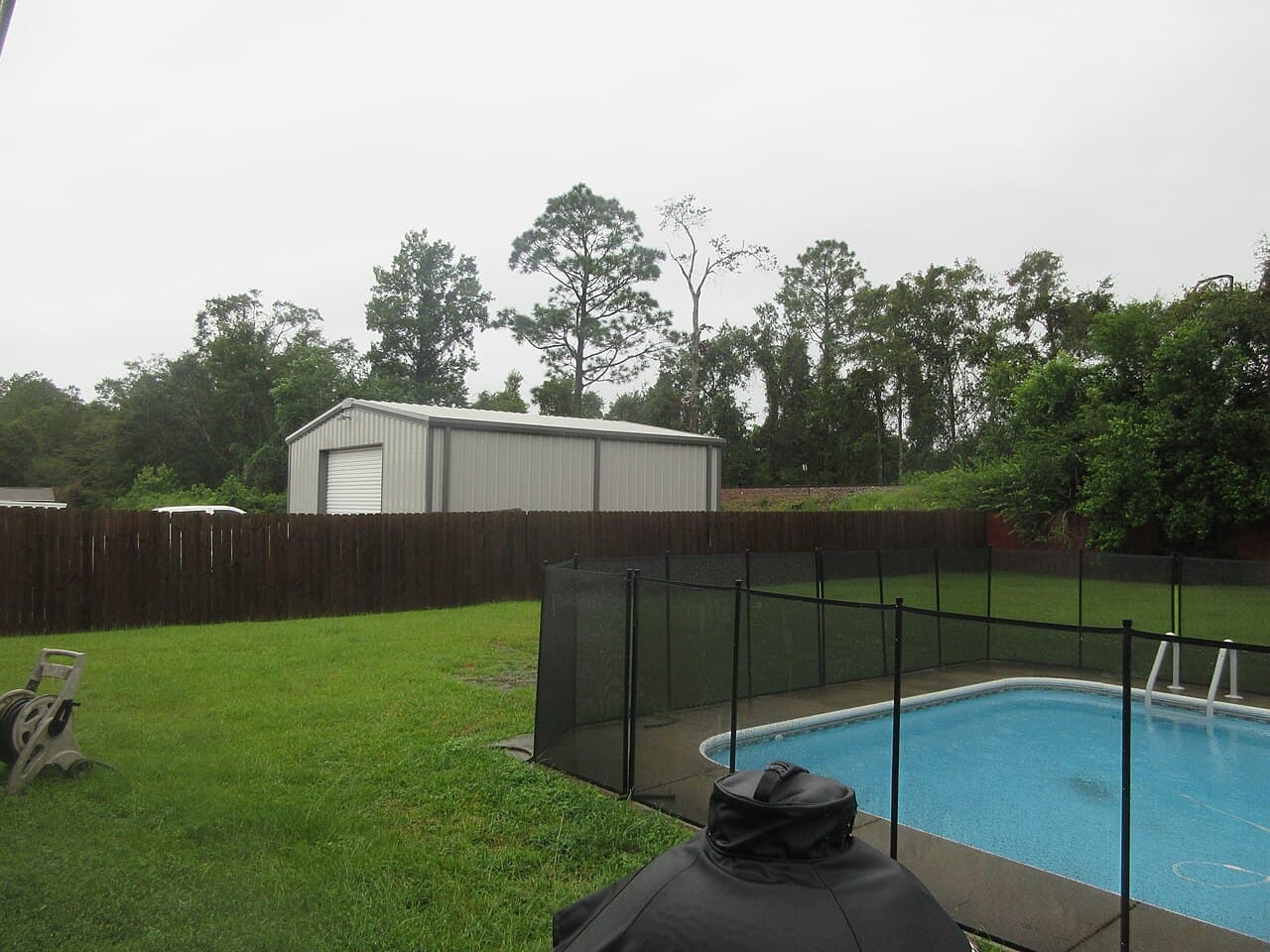
When doing it yourself makes sense
DIY works best when the job is mostly labour and testing. That means clearing and storing a cover, putting ladders and rails back, filling to the skimmer, running the filter and balancing the water. The steps are in how to open a pool in the spring.
It suits you if you have a second pair of hands for the cover, a dry place to store it, and the willingness to test the water several times in the first days. The Portsmouth Health Department's guide to pool operation says test kits are not 100% accurate and that operating a pool without testing is like driving a car with your eyes closed,[1] so a DIY opening only works if you are going to measure, not guess.
When to hire a pool company
A heavy or anchored cover. Safety covers are awkward and, with a lot of water on top, heavy. Mishandling them can damage the cover or the deck anchors.
A heater, salt system, pump automation or lights. These involve gas or line-voltage electrical work, and those parts are for a licensed professional. Ask any company whether the person doing that work holds the right licence.
A closing that needs the plumbing protected. Draining and blowing out lines in a freezing climate is easy to get wrong, and a mistake shows up as a burst pipe in spring.
A pool that goes green. The guide says that when filling a pool at the beginning of a season, it is important to get the water in balance as soon as possible.[1] If you have a history of cloudy or algae-filled openings, a company that brings its own testing gear and treatment plan saves time and chemicals.
Time and physical limits. An opening or closing is a long, wet day. If that is not realistic, hiring is a reasonable call.
Where DIY goes wrong
The mistakes are usually in the chemistry and the closing, not the cover. Mixing chemicals is the dangerous one: the guide says to never mix anything with chlorine except water.[1] It also says acids and bases may be directly added to pool or spa water as per label instructions as long as there are no people in the water, and the pool should stay closed until they dissolve.[1] Rushing a first swim after adding chemicals is a common error.
Another is neglecting the closing. A pool that is closed badly invites algae, stains and freeze damage that make the next opening more expensive. The same guide says the end of the operating season is the best time to inventory your equipment, prioritize and complete repairs, and prepare your facility for winter weather.[1]
How to hire well in Virginia
Ask for the same scope from each company, in writing: what is covered in the opening and the closing, which chemicals are included, and what extra visits cost. Virginia law requires all licensed contractors to provide a written contract for residential work.[2] The Board for Contractors suggests an initial deposit of no more than 10% of the total price or $1,000, whichever is less.[2]
Repairs are different from service. If the work you are considering is valued at $1,000 or more, a valid Virginia Contractor’s License is required for the license category in which the contractor is to work.[2] Verify the licence on DPOR's license lookup before you hire anyone for repair or equipment work.
Stop and call a pro if
- Any pump, heater, light or panel wiring needs attention. Do not open or rewire it yourself.
- You smell gas near a heater. Leave the area and call your gas utility or emergency services.
- The pool has cracks, a dropping water level or a leak.
- You cannot lift or secure the cover safely.
- You are not sure what is in the water or how to correct it.
Getting help in Virginia
For prices and what to ask, read how much it costs to open and close a pool in Virginia. If you want year-round help, see what a pool service company does each visit. Browse pool and spa services or more pool and spa answers.
When you are ready, describe the job once and local pool pros quote it.
Common questions
- Can I close my pool myself?
- Many owners do, but the closing is where mistakes cost most: poor water balance, a cover that fails or plumbing that freezes. If you are unsure, hire a company for the closing and open it yourself.
- Is it cheaper to open a pool myself?
- Usually yes in cash, but you pay in time and the risk of getting the chemistry wrong. See the cost answer for what a company quote should include.
- Do pool companies need a licence?
- Repair work valued at $1,000 or more needs a valid Virginia contractor's licence.[^dpor-guide] Check any company on DPOR's license lookup.
- What should never be DIY?
- Heater, gas, pump or light wiring, and structural repairs. Leave those to licensed professionals.
- What do I ask a company before hiring?
- What is included, whether chemicals are covered, what extra visits cost and what the written contract says.[^dpor-guide]
Sources
- [1] Pool Operation and Maintenance Guide (compiled 2018), Portsmouth Health Department, Virginia Department of Health. Checked October 27, 2026.
- [2] What You Should Know Before You Hire a Contractor, Virginia Board for Contractors, DPOR. Checked October 27, 2026.
Want a pro to handle it?
Describe the job once. Licensed local businesses send quotes, and you pay only when you book one.
Get a quote from a local pro