How do I open my pool in the spring?
Remove and clean the cover, reinstall the ladder and hardware, fill to the skimmer, start the filter, then test and balance the water before anyone swims. Virginia's health department guide for pool operators keeps pH at 7.2 to 7.8 and replaces test reagents each season. Leave heaters and wiring to a licensed pro.
Free to ask. Local shops send quotes, and you pay only when you book one.
By Kasra Taheri, Founder, LoclisPublished
Researched and drafted with AI, then checked claim by claim against the sources listed below before it was published. Prices and rules change; the dates beside each source say when it was last checked.
Step by step
Read when to stop and call a pro, further down this page, before you start.
Step 1: Check the cover and hardware plan
Walk the pool and note anything damaged: ladder, rails, skimmer lids, deck cracks.[1]
Step 2: Clear the cover
Pump or siphon standing water off the cover and brush off leaves before you lift it.
Step 3: Remove and store the cover
Clean and dry the cover fully, then store it somewhere dry and secure.
Step 4: Reinstall hardware
Put back the ladders, rails and diving board you removed, and tighten every bolt.[1]
Step 5: Fill to the skimmer
Add water with a hose until the level sits at about the middle of the skimmer opening.[1]
Step 6: Check the baskets and pump lid
Empty both baskets and make sure the pump lid seals.
Step 7: Start the filter
Switch the pump on at its own switch, watch it prime, and run it around the clock for the first day or two.
Step 8: Exercise the valves
Operate the valves through their full range so they do not stay stuck.[1]
Step 9: Test with fresh reagents
Use fresh reagents or strips and test pH, alkalinity and chlorine.[1]
Step 10: Balance, then sanitize
Adjust alkalinity, then pH, then chlorine, keeping swimmers out until the chemicals dissolve.[1]
Step 11: Retest before swimming
Retest after a day of filtering and swim only when pH and chlorine are in range.[1]
Open a pool in this order: clear and remove the cover, put the hardware back, bring the water to the right level, start the filter, then test and balance the water before anyone swims. The water work is the part that matters. A pool that looks clear in April can still have the wrong chemistry, so do not skip the testing.
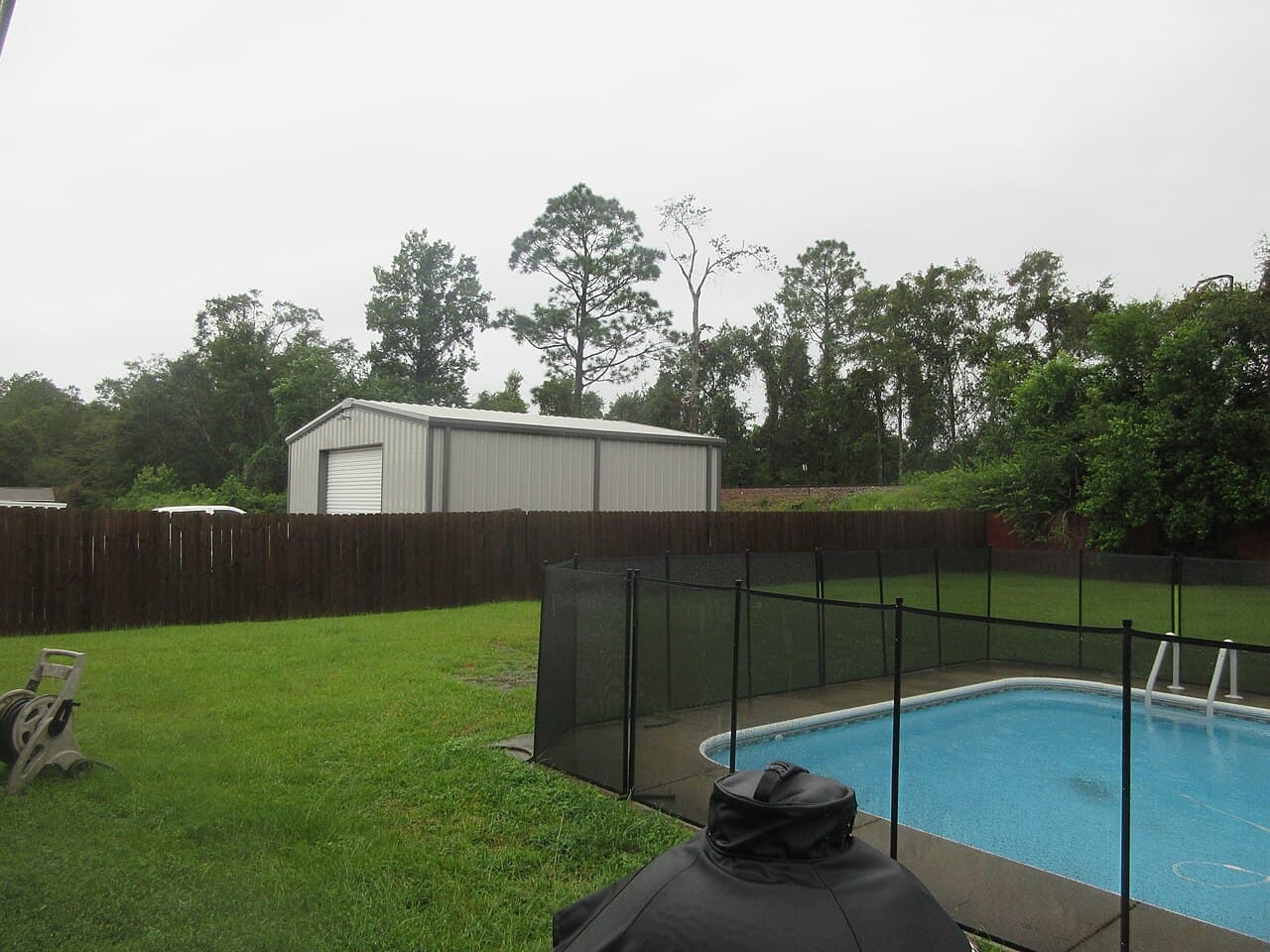
Plan the day
Pick a dry, mild day and expect it to take most of a weekend: the cover work is an afternoon, but the water needs a day or two of filtering before it is ready. A health department guide for pool operators, from the Portsmouth Health Department, notes that refilling can take time too: its spring checklist says filling "may take several days to refill pool", so plan ahead.[1] You will usually only top up a pool that held its water over winter, but if yours was drained, the same warning applies.
The same guide treats the weeks before opening as the hard part. It says the effort you put in before opening day is what lets the equipment do the work for you the rest of the season, and that the end of the operating season is the best time to inventory your equipment, prioritize and complete repairs, and prepare your facility for winter weather.[1] If you did not do that last autumn, now is the time to look over the ladder, rails, skimmer lids and pool deck for damage.
Remove the cover and reinstall hardware
Before you pull a cover off, pump or siphon off the standing water and brush off leaves so debris does not slide into the pool. Clean the cover, let it dry fully, and store it somewhere dry and secure. Mildew and mice are the usual reasons covers fail early.
Put back the ladders, handrails, diving board and anything else you removed. The guide's winter checklist for public pools tells operators to remove ladders and diving boards and store them inside,[1] so if you did the same, put them back now. Check that every bolt is snug and that nothing wobbles before anyone uses it.
Set the water level and restart the filter
Fill with a hose until the water sits at about the middle of the skimmer opening, so the skimmer can draw water without sucking air. Reinstall any plugs and gauges you removed, and check the pump basket, the skimmer basket and the pump lid seal.
Then start the pump at its own switch and watch the pressure gauge settle. Water should flow from the returns and the pump should prime within a minute or so. If it will not prime, shut it off rather than letting it run dry. Run the filter around the clock for the first day or two. Follow the filter manual for startup; sand, cartridge and diatomaceous earth filters each have their own procedure. Valves that sat all winter can stick, and the guide recommends operating all valves at full range to prevent sealing up.[1]
Leave heaters, automation panels and anything wired or gas-fired to a licensed pro. Do not restart a heater or open its gas line yourself.
Test and balance the water
Buy fresh test reagents or strips. The Portsmouth guide says all reagents should be replaced at the beginning of each new season, and that test kits are not 100% accurate, so treat them as close estimates and keep them cool and dry.[1] Its warning is plain: "Operating a pool without testing is like driving a car with your eyes closed."[1]
Work through the readings in this order.
Balance first. The guide says that when filling a pool at the beginning of a season, it is important to get the water in balance as soon as possible.[1] Adjust total alkalinity before you chase pH.
pH. The guide says pool water should be kept at a pH of 7.2 to 7.8, with 7.4 the optimum.[1]
Chlorine. The guide says the Portsmouth Health Department follows the Virginia Department of Health standard under which the free available chlorine residual for pools is continuously maintained within the range of 1.0 – 3.0 parts per million.[1] That is a public-pool standard, so check your chlorine product's label for a home pool.
Stabilizer. If the pool is outdoors, cyanuric acid, or stabilizer as it is commonly known, should be added to pool water at the beginning of the pool season;[1] once the proper level of stabilizer is achieved (40 – 60 ppm), the guide says to check it weekly.[1] Your chlorine product may already contain it, so test before you add more.
Shock if the water is dull. Super chlorination means raising the free chlorine residual of the pool water to 5 to 10 ppm.[1] Do it in the evening and follow the product label.
When you add acid or other chemicals, keep swimmers out. The guide says acids and bases may be directly added to pool or spa water as per label instructions as long as there are no people in the water, and the pool stays closed until the chemicals are completely dissolved or dispersed.[1] Never mix anything with chlorine except water.[1]
Stop and call a pro if
- The water is green, black or stays cloudy after a few days of filtering and corrected chemistry. There may be a circulation or filter fault.
- The pump will not prime, leaks or makes a grinding noise.
- There is any electrical or gas issue: a light that trips the breaker, a heater that will not start, a buzzing motor or a gas smell.
- The shell, plumbing or deck is cracked or leaking. The Board for Contractors says that if the work you are considering is valued at $1,000 or more, a valid Virginia Contractor’s License is required.[2]
- The water level dropped a lot over winter. That points to a leak.
- You are unsure which chemicals to use or in what amounts.
Getting help in Virginia
If you would rather hire it out, read how much it costs to open and close a pool in Virginia and whether to open and close it yourself or hire a pool company. For regular care after opening, see how to clean a swimming pool. Browse pool and spa services or more pool and spa answers.
When you are ready, describe the job once and local pool pros quote it.
Common questions
- When should I open my pool in Virginia?
- Most owners open after the last hard freeze and when the water is no longer very cold, often in April or May. There is no official date; open when you can give the pool a few days of filtering before swimming.
- How long does it take to open a pool?
- Plan on an afternoon for the cover and hardware and one to three days of filtering and balancing before the water is safe and clear. A pool that was drained can take several days to refill.[^portsmouth]
- What should the chemistry be when I open?
- The Portsmouth Health Department's operator guide gives pH 7.2 to 7.8 and, under the state standard it follows for pools, free chlorine of 1.0 to 3.0 ppm.[^portsmouth]
- Can I swim right after adding chemicals?
- No. The guide says to keep people out of the water until acids, bases and other chemicals are fully dissolved or dispersed.[^portsmouth]
- Can I start the heater myself?
- Leave heaters, which are gas or electric, to a licensed professional.
Sources
- [1] Pool Operation and Maintenance Guide (compiled 2018), Portsmouth Health Department, Virginia Department of Health. Checked October 27, 2026.
- [2] What You Should Know Before You Hire a Contractor, Virginia Board for Contractors, DPOR. Checked October 27, 2026.
Want a pro to handle it?
Describe the job once. Licensed local businesses send quotes, and you pay only when you book one.
Get a quote from a local pro