Should I renovate my lawn myself or hire a lawn company?
Do it yourself if the yard is a manageable size, the ground is fairly level, and you can water every day for a few weeks in fall. Hire a company when the job needs grading or drainage, a large area tilled or hydroseeded, or professional herbicides, and check that it holds the Virginia pesticide licence for any spraying.
Free to ask. Local shops send quotes, and you pay only when you book one.
By Kasra Taheri, Founder, LoclisPublished
Researched and drafted with AI, then checked claim by claim against the sources listed below before it was published. Prices and rules change; the dates beside each source say when it was last checked.
Step by step
Read when to stop and call a pro, further down this page, before you start.
Step 1: Find the cause
Work out why the lawn thinned out, since shade, compaction, drainage or the wrong grass will undo a renovation by anyone.[1]
Step 2: Test the soil
Send a soil test to the Virginia Tech lab so you and any company work from the same lime and fertilizer numbers.[5]
Step 3: Size up the job
Measure the area and note slopes, wet spots and anything that needs grading, since those are the parts most worth hiring out.
Step 4: Check your calendar
Make sure you can water lightly and often for the first three to four weeks after seeding, whoever does the planting.[3]
Step 5: Get written quotes
Ask two or three businesses for written quotes that spell out weed control, prep method, seed and rate, lime, fertilizer and watering.
Step 6: Check licences and insurance
Ask a company that sprays for its pesticide business license and certificate of insurance, and look up any grading contractor with DPOR.[7]
Most Virginia homeowners can renovate a lawn themselves. The work is not complicated, it happens over a few weekends in late summer or fall, and the equipment can be rented. Where a lawn company earns its fee is on large or sloped yards, grading and drainage, professional-only herbicides, and the discipline of getting every step done in the right order. Many people split the job: hire the heavy parts, do the rest.
What the job involves
Whoever does it, a renovation has the same parts. Our guide to fixing a lawn that is mostly weeds and bare spots has the full sequence; in short:
- Diagnosis. A thin lawn usually has a cause: neglect, poor mowing, too much or too little rain, soil problems such as the wrong pH, poor drainage or compaction, or a grass that does not suit the site.[1] Reseeding without fixing it means paying for the same lawn twice.
- A soil test. When we checked on October 27, 2026, the Virginia Tech Soil Testing Lab charged $10.00 per sample for its routine test for Virginia residents.[5] Do this yourself even if you hire the rest; it lets you judge whether a quote's lime and fertilizer make sense.
- Weed removal. For a full renovation that usually means a nonselective herbicide such as glyphosate, applied at least a week before seeding, with four weeks or more allowed for a repeat treatment where bermudagrass or other hard-to-kill perennials are present.[4]
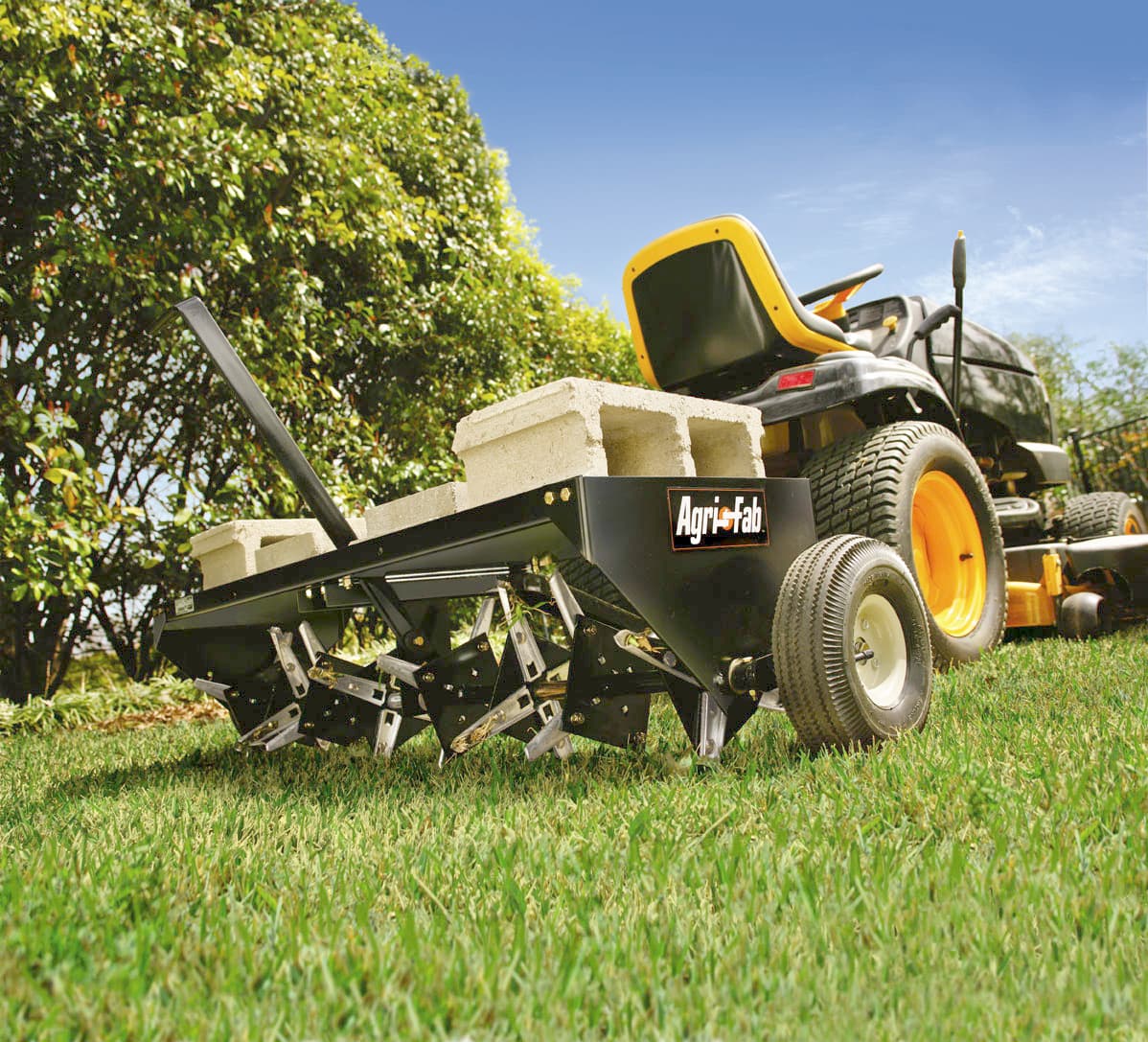
- Soil preparation. Core aeration, vertical mowing or tilling, then lime and fertilizer.
- Seeding and watering. Newly seeded lawns need more frequent watering for the first three to four weeks,[3] starting with light, frequent watering until the seed is up.[1]
When doing it yourself makes sense
- The lawn is a size you can cover with a rented core aerator and a walk-behind spreader in a day.
- The ground is fairly level and drains, so no soil needs moving.
- You are home enough to water every day or two for the first few weeks.
- You are comfortable reading and following an herbicide label, or the weeds are few enough to pull.
Equipment is not the barrier it seems. Virginia Tech's turf specialists point out that a core aeration machine can be rented, or you can hire a professional to aerate the lawn for you.[2] Seed, lime and starter fertilizer come from any farm supply store, and a farmers cooperative, specialty nursery or turf supply store is more likely than a big-box garden center to carry the top-rated cultivars.[1]
When hiring a company makes sense
- The yard needs grading or drainage. Virginia's contractor regulations define landscape service contracting as the alteration or improvement of a land area by means of excavation, clearing, grading, construction of retaining walls for landscaping purposes, or placement of landscaping timbers.[9] That is contractor work regulated by DPOR, so look up the licence, and soil moving is where most DIY renovations go wrong.
- Irrigation is part of the plan. Under the same rules, installing, repairing or removing irrigation sprinkler systems is landscape irrigation contracting,[9] another licensed specialty.
- The area is large or steep. Hydroseeding and commercial seedbed equipment cover ground quickly. Commercial applicators may use a tool with vibrating solid tines, called an aeravator, to prepare a seedbed,[1] which is faster than several passes with a rental aerator.
- The problem needs professional products. Some of the most effective treatments are not sold to homeowners. Virginia Tech notes that many lawn fungicides can only be used by a certified applicator,[4] and that the best chemical control for moss in home lawns, carfentrazone, is labeled only for professional applicators.[2]
- You cannot water. If you travel or work long days, a renovation with sod, or a company that includes follow-up watering, may be the only way it takes.
A word of caution about cheap offers: a seed-only job tends to fail when the soil underneath has not been prepared.[1] Ask exactly how the seed will reach the soil.
Licences and insurance to check
Several parts of a renovation are regulated in Virginia, and a good company will show you its paperwork without being pushed.
Spraying weeds. Under Virginia law, "No person may apply or recommend for use any pesticide commercially without a pesticide business license and the employment of a certified commercial applicator"[6] responsible for the application. To get that license, a business files a certificate of insurance showing at least $100,000 for property damage, $100,000 for injury to or death of one person, and $300,000 per occurrence,[7] and every pesticide business license expires on March 31 and must be renewed each year.[7] Ask to see the current one. Our guide to whether a lawn company needs a licence to spray has more.
Fertilizer. Virginia requires certification for licensees and contractor-applicators who apply fertilizer commercially to non-agricultural land,[8] so ask whether the crew includes a Certified Fertilizer Applicator.
Grading and irrigation. Look the business up on DPOR's License Lookup[10] before you sign for any soil moving or sprinkler work.
Utilities. Tilling and core aeration break ground. Whoever does the work should contact Virginia 811 at least 3 working days in advance[11] to have buried lines marked.
What to get in writing
- What caused the decline, and what the plan does about it.
- How weeds and old turf will be removed, and with what product.
- The prep method, the grass species and cultivars, and the pounds of seed per 1,000 square feet.
- Lime and fertilizer, tied to a soil test.
- Who waters and for how long, and what happens if patches fail.
- The pesticide license number and the certificate of insurance.
Prices are covered in what it costs to redo a lawn in Virginia.
Stop and call a pro if
- Water stands on the lawn or flows toward the foundation, or the yard needs soil moved.
- Moss, disease or grubs keep killing grass after you have corrected the soil, mowing and watering.
- Bermudagrass or another perennial grass weed survives two rounds of spraying.
- The area is a slope you cannot safely run a tiller or aerator across.
Browse more lawn and landscaping answers, see lawn renovation services, or look up lawn and landscaping businesses around Blacksburg. To compare real quotes, describe the job once and local businesses quote it.
Common questions
- Is lawn renovation a realistic DIY job?
- For a typical suburban yard on fairly level ground, yes. The work is a soil test, killing weeds, aerating or tilling, liming, seeding and then weeks of light, frequent watering. The hardest part for most people is the watering schedule and getting the timing right in late summer or early fall.
- Does a lawn company need a licence in Virginia?
- It depends on the work. A business that applies or recommends pesticides commercially, including weed killers, needs a VDACS pesticide business license and a certified commercial applicator. Commercial fertilizer applicators need Virginia certification. Grading and irrigation work fall under DPOR contractor licensing specialties.
- Can I hire out only part of the job?
- Yes, and it is often the best value. Many homeowners hire the heavy steps, such as spraying, tilling, core aeration or hydroseeding, and do the soil test, watering and mowing themselves. Ask for each task to be priced separately so you can choose.
- What should I ask a lawn company before hiring it?
- Ask what caused the decline and how they will fix it, how they will remove the weeds, what grass and seed rate they will use, whether lime and fertilizer follow a soil test, who waters, what happens if areas fail, and for their pesticide business license number and certificate of insurance.
- Do I need to call 811 for aeration or tilling?
- Virginia 811's homeowner guidance is that there is no allotted depth before you need to contact it, because many utilities are buried just a few inches below the surface. Request markings at least 3 working days before tilling or core aeration, whether you or a company does the work.
Sources
- [1] Fall Lawn Care (430-520), Virginia Cooperative Extension, Virginia Tech. Checked October 27, 2026.
- [2] Lawn Moss: Friend or Foe? (430-536), Virginia Cooperative Extension, Virginia Tech. Checked October 27, 2026.
- [3] Summer Lawn Management: Watering the Lawn (430-010), Virginia Cooperative Extension, Virginia Tech. Checked October 27, 2026.
- [4] Pest Management Guide: Home Grounds and Animals 2026, Lawn chapter (456-018), Virginia Cooperative Extension, Virginia Tech. Checked October 27, 2026.
- [5] Sample Submission: Virginia Tech Soil Tests and Their Cost, Virginia Tech Soil Testing Laboratory. Checked October 27, 2026.
- [6] § 3.2-3924. Annual business license required, Code of Virginia (Virginia Law). Checked October 27, 2026.
- [7] Pesticide Business License, Virginia Department of Agriculture and Consumer Services. Checked October 27, 2026.
- [8] Certified Fertilizer Applicator Training, Virginia Department of Agriculture and Consumer Services. Checked October 27, 2026.
- [9] 18VAC50-22-30. Definitions of specialty services, Virginia Administrative Code (Virginia Law). Checked October 27, 2026.
- [10] License Lookup, Virginia Department of Professional and Occupational Regulation. Checked October 27, 2026.
- [11] Homeowners, Virginia 811. Checked October 27, 2026.
Want a pro to handle it?
Describe the job once. Licensed local businesses send quotes, and you pay only when you book one.
Get a quote from a local pro