How much does it cost to redo a lawn in Virginia?
It depends mostly on the method and the soil work. Seeding is far cheaper than sod: EPA fact sheets from December 2021, using 2020 RSMeans data, put hydroseeding bluegrass at about $50 to $100 per 1,000 square feet and installed sod at $25 to $100 per square yard. Weed removal, tilling, grading, topsoil and lime move a Virginia quote most.
Free to ask. Local shops send quotes, and you pay only when you book one.
By Kasra Taheri, Founder, LoclisPublished
Researched and drafted with AI, then checked claim by claim against the sources listed below before it was published. Prices and rules change; the dates beside each source say when it was last checked.
Step by step
Read when to stop and call a pro, further down this page, before you start.
Step 1: Measure the lawn
Measure the area to be redone in square feet, since seed, sod, lime and labor are all priced by area; 1,000 square feet is 111.1 square yards.[3]
Step 2: Test the soil
Get a soil test first so lime and fertilizer are quoted to what the soil needs rather than guessed.[4]
Step 3: Choose the method
Decide between overseeding a thin lawn, a full seeded renovation, hydroseeding or sod, because the method sets most of the price.
Step 4: List the prep work
Note what has to happen before planting: killing weeds, removing old turf, tilling, grading, topsoil, or fixing drainage.
Step 5: Ask for written quotes
Ask two or three businesses for written quotes that name the grass, the seed rate per 1,000 square feet, the lime and fertilizer, and every prep task.
Step 6: Ask who waters and what if it fails
Get in writing who does the watering for the first weeks and what happens if areas wash out or fail to come up.
Redoing a lawn in Virginia can mean anything from overseeding a thin yard to stripping the whole thing and laying sod, and the price follows the method. There is no official Virginia price list, so the most useful dated figures are federal. In its December 2021 stormwater fact sheets, EPA reported that seeding bluegrass by hydroseeding generally cost around $50 to $100 per thousand square feet, based on 2020 RSMeans construction cost data,[1] and that sod including installation could run $25 to $100 per square yard.[2] Since 1,000 square feet is 111.1 square yards,[3] that sod range works out to roughly $2,800 to $11,100 per 1,000 square feet.
Those are national construction-cost benchmarks from 2020, not Virginia residential quotes, and prices have moved since. Use them for scale: seeding costs a small fraction of sod, and the work around the planting often costs more than the seed itself.
The three ways to redo a lawn
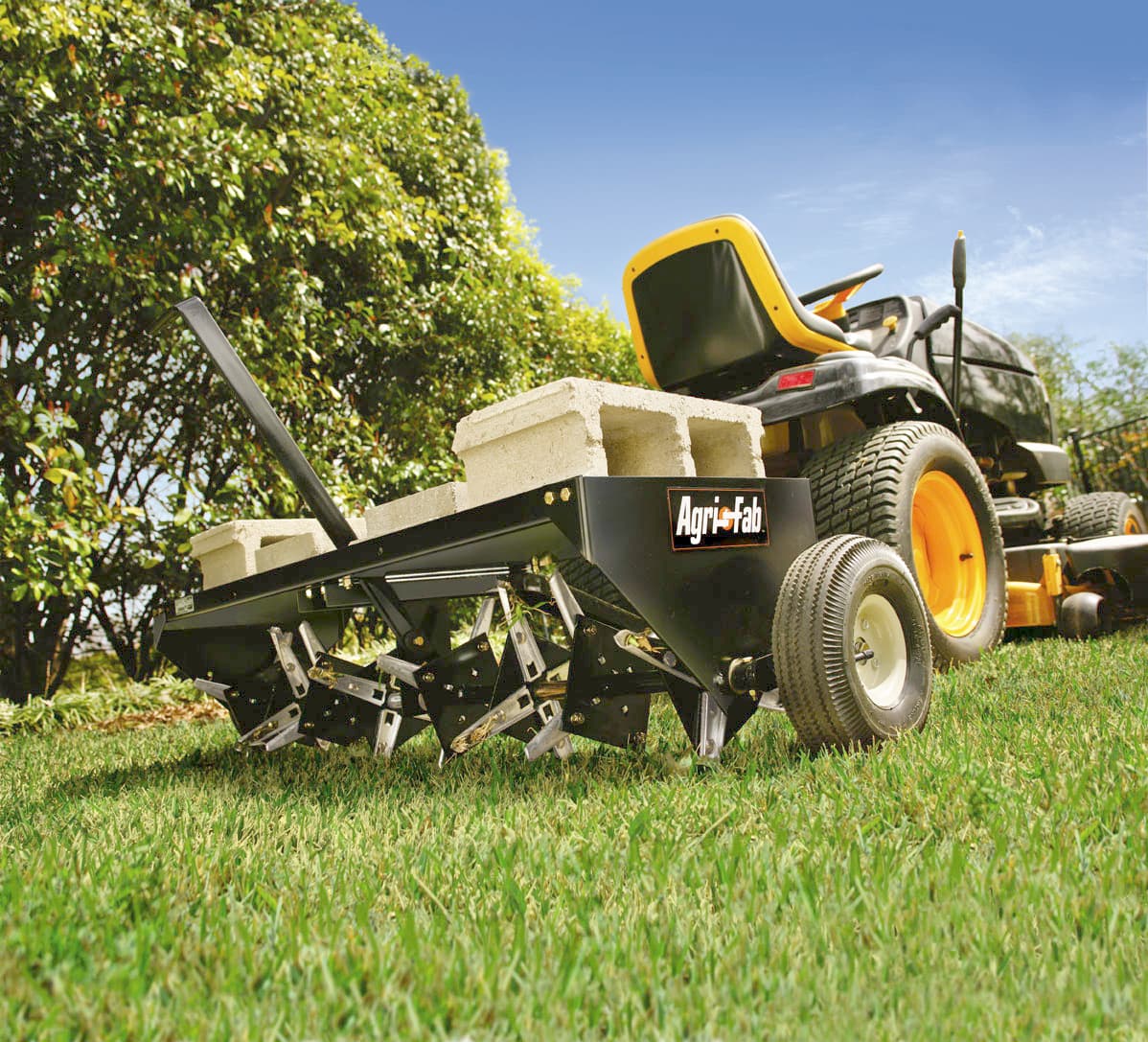
Overseeding suits a lawn that is thin but still mostly grass. The crew core aerates or vertical mows and seeds into the existing turf. It is the cheapest option, but it only works with real soil preparation: seed applied over existing turf without any soil preparation usually does nothing more than feed birds and wildlife.[7]
A full seeded renovation is for a lawn that is mostly weeds or bare soil. The old cover is killed, the soil is loosened, often by tilling to a 4- to 6-inch depth,[7] then limed, fertilized and seeded, by hand or by hydroseeding. This is the middle of the range and the usual choice for a cool-season lawn in fall. Our guide to fixing a lawn that is mostly weeds and bare spots walks through each step.
Sod costs the most and gives a finished lawn the day it goes down. It still needs the same soil preparation underneath.
What drives the price
EPA lists the factors that move seeding costs as availability and proximity of materials, application method, time of year, prevailing wage rates and regional cost trends.[1] On a Virginia home lawn, these are the items that change a quote most:
- Area and minimum charge. A crew brings equipment either way, so a small side yard often costs more per square foot than a whole lot.
- Weed control. Killing the existing weeds is a separate line, and a lawn full of bermudagrass may need two sprays weeks apart before anything is planted.
- Soil preparation. Tilling, removing debris, rough grading, hauling topsoil and final raking are labor and equipment charges that grow fast on compacted new-construction lots.
- Lime. Henrico County's Extension office notes that in some soils it can take 100 pounds of lime per 1,000 square feet to raise the pH by one point, no more than 50 pounds per 1,000 square feet should go on at once, and later applications should be about four weeks apart.[5] A soil test tells you which end of that you are on. When we checked on October 27, 2026, the Virginia Tech Soil Testing Lab charged $10.00 per sample for its routine test for Virginia residents.[4]
- Seed type and rate. Virginia Tech recommends 6 to 8 pounds of seed per 1,000 square feet for tall fescue against 2 to 3 pounds for Kentucky bluegrass[6] when starting a lawn, and Henrico's guide uses 2 to 3 pounds of seed per 1,000 square feet when overseeding a fescue lawn.[5] Premium cultivars cost more per pound than garden-center blends.
- Fertilizer. In a cost comparison in its SMART Lawns booklet, revised in March 2022, Henrico's Extension office worked out that one feeding of 0.9 pound of nitrogen per 1,000 square feet cost from $3.19 with a conventional 32-0-4 product to $10.75 with one organic product.[5] It is a small line next to labor, but a renovation usually includes starter fertilizer and follow-up feedings.
- Sod logistics. A pallet of standard rolls usually holds 450 to 700 square feet,[3] and Virginia sod farms may charge separately for pallet charges, delivery, and site grading, fertilization and installation.[3] Sod is perishable and should be installed within eight hours of harvest,[3] so the prep has to be finished before it arrives.
- Slopes, access and drainage. Banks, narrow gates and wet spots that need regrading slow the job and add equipment.
The costs that are not on the quote
Water and time. Newly sodded or seeded lawns need more frequent watering for the first three to four weeks,[8] and that usually falls to you. There is also the season: a cool-season lawn redone in spring instead of fall competes with crabgrass and summer heat, and a failed seeding means paying twice.
What a good written quote includes
- The area in square feet and the price per 1,000 square feet or per square yard.
- How the existing weeds and turf will be removed, and with what.
- The prep method: aeration, vertical mowing, tilling or grading, and any topsoil.
- The grass species and cultivars, and the pounds of seed per 1,000 square feet.
- Lime and fertilizer, based on a soil test.
- Who waters, for how long, and what happens if areas wash out or fail to come up.
Ask about licences too. Under Virginia law, "No person may apply or recommend for use any pesticide commercially without a pesticide business license and the employment of a certified commercial applicator"[9] responsible for the application, so a company that sprays your weeds needs both. If the job includes regrading, Virginia's contractor regulations say grading is landscape service contracting,[10] a trade regulated by DPOR, so look up the contractor's licence. Our guide on whether to renovate yourself or hire a lawn company covers what to ask.
Stop and call a pro if
- The yard needs grading, fill or drainage before anything can be planted, or water drains toward the house.
- You are laying sod over more area than you can prepare and install in one day.
- A steep bank or a gullied area needs erosion control as well as grass.
- Perennial weeds such as bermudagrass survived a first round of spraying.
Browse more lawn and landscaping answers, see lawn renovation services, or compare with hydroseeding costs in Virginia. When you want real prices for your yard, describe the job once and local businesses quote it.
Common questions
- Is it cheaper to reseed or to lay sod?
- Reseeding, by a wide margin per square foot. In EPA's December 2021 fact sheets, based on 2020 RSMeans data, hydroseeding bluegrass ran about $50 to $100 per 1,000 square feet while installed sod ran $25 to $100 per square yard, which is roughly $2,800 to $11,100 per 1,000 square feet. Sod gives a finished lawn on day one; seed takes weeks of watering.
- Why are renovation quotes so different from each other?
- They often describe different jobs. One company may plan to aerate and overseed over the weeds, another to kill everything, till, lime and reseed. Compare the written scope line by line: weed control, prep method, seed type and rate, lime and fertilizer, and who waters.
- What does a soil test cost in Virginia?
- When we checked on October 27, 2026, the Virginia Tech Soil Testing Lab charged $10.00 per sample for its routine test for Virginia residents, which includes pH, the major nutrients and a lime and fertilizer recommendation. Your local Extension office can help you send one.
- Can I save money by doing part of the work myself?
- Often. Soil testing, watering and the first season of mowing are easy to do yourself, and some homeowners hire out only the heavy steps such as tilling, grading or hydroseeding. Ask for quotes with each task priced separately so you can see what each one costs.
- Does the price include watering?
- Usually not. Newly seeded or sodded lawns need more frequent watering for the first three to four weeks, and that is normally the homeowner's job, using your own water. Ask whether any follow-up visits or touch-up seeding are included.
Sources
- [1] Stormwater Best Management Practice: Permanent Seeding (EPA-832-F-21-028FF), U.S. Environmental Protection Agency. Checked October 27, 2026.
- [2] Stormwater Best Management Practice: Sodding (EPA-832-F-21-028LL), U.S. Environmental Protection Agency. Checked October 27, 2026.
- [3] Sod Source Selection, Installation, Maintenance, and Producers in Virginia (418-040), Virginia Cooperative Extension, Virginia Tech. Checked October 27, 2026.
- [4] Sample Submission: Virginia Tech Soil Tests and Their Cost, Virginia Tech Soil Testing Laboratory. Checked October 27, 2026.
- [5] SMART Lawns: A Residential Lawn Care Program to Protect Water Quality (revised March 2022), Virginia Cooperative Extension, Henrico County Office. Checked October 27, 2026.
- [6] Maintenance Calendar for Cool-Season Turfgrasses in Virginia (430-523), Virginia Cooperative Extension, Virginia Tech. Checked October 27, 2026.
- [7] Fall Lawn Care (430-520), Virginia Cooperative Extension, Virginia Tech. Checked October 27, 2026.
- [8] Summer Lawn Management: Watering the Lawn (430-010), Virginia Cooperative Extension, Virginia Tech. Checked October 27, 2026.
- [9] § 3.2-3924. Annual business license required, Code of Virginia (Virginia Law). Checked October 27, 2026.
- [10] 18VAC50-22-30. Definitions of specialty services, Virginia Administrative Code (Virginia Law). Checked October 27, 2026.
Want a pro to handle it?
Describe the job once. Licensed local businesses send quotes, and you pay only when you book one.
Get a quote from a local pro