How do I keep a renovated lawn thick?
Water the new grass lightly and often for the first few weeks, then deeply and less often. Mow tall with a sharp blade, never taking more than a third of the blade, and leave the clippings. For tall fescue, fertilize mainly in September, October and November, hold weed killers until after the second mowing unless the label says otherwise, and core aerate and overseed thin spots in early fall.
Free to ask. Local shops send quotes, and you pay only when you book one.
By Kasra Taheri, Founder, LoclisPublished
Researched and drafted with AI, then checked claim by claim against the sources listed below before it was published. Prices and rules change; the dates beside each source say when it was last checked.
Step by step
Read when to stop and call a pro, further down this page, before you start.
Step 1: Keep the seedbed moist
Water lightly and frequently until the seed is up, then gradually water less and more deeply to push roots down.[1]
Step 2: Mow at the right height
Mow tall fescue at 3 to 4 inches with a sharp blade, and never remove more than one-third of the leaf blade at a time.[3]
Step 3: Leave the clippings
Let clippings fall back onto the lawn, where they return nutrients and do not add to thatch.[3]
Step 4: Fertilize in fall
Feed cool-season grass in September, October and November, following the label rate and your soil test, and never on frozen soil.[1]
Step 5: Wait on weed killers
Hold herbicides until after the second mowing of the new grass, and read the label for seedling restrictions.[5]
Step 6: Water deeply in summer
Once established, soak the root zone about 4 inches deep in the early morning instead of sprinkling lightly every day.[2]
Step 7: Clear fallen leaves
Mulch leaves into the lawn with the mower if they sift in, or rake them off so they do not mat down the grass over winter.[3]
Step 8: Aerate and overseed thin spots
Core aerate, then overseed thin areas with 2 to 3 pounds of seed per 1,000 square feet between September 1 and October 15.[3]
Step 9: Retest the soil
Test the soil at least once every three years and lime only when the test calls for it.[1]
A renovated lawn stays thick when the new grass gets the first few weeks right and the routine after that favors grass over weeds: mow tall, feed in fall, water deeply rather than often, and patch thin spots every fall before they turn into bare ones. Here is what to do, in the order you will need it.
The first month: water
New seed has no reserves. After seeding, water lightly and frequently until the seed has germinated and established, avoiding so much water that seed washes away or drowns.[1] Newly seeded lawns need more frequent watering for the first three to four weeks;[2] in warm, dry weather that can mean a short watering more than once a day. As the grass fills in, gradually cut back the amount of water to start building a deep root system.[1]
Stay off the new lawn as much as you can, and keep pets and kids to a path. Remember too that seedlings and lawns less than a year old have little to no drought tolerance,[2] so the first summer is the one to watch.
Mowing
Start mowing as soon as the grass needs it, on firm soil, and never remove more than one-third of the leaf blade at a time.[1] For fescue, Henrico County's Extension office says to set the mower at 3 to 4 inches for fescue lawns,[3] which shades the soil and holds back weeds. Keep the blade sharp: a dull blade tears leaf blades, which can lead to disease or insect attack.[3] Our guide to mowing height for fescue has more.
Leave the clippings. Returned clippings supply about one-fourth of a lawn's annual nitrogen needs and do not contribute to thatch.[3]
Fertilizing
A new lawn needs feeding to thicken up. Newly established lawns or lawns that lack density benefit from properly timed nitrogen until they reach the cover you want.[4] For tall fescue and other cool-season grasses, the time is fall: Virginia Tech's shorthand is "SON," for September, October and November,[1] with up to 0.7 pound of water-soluble nitrogen per 1,000 square feet every four weeks,[1] and never fertilize frozen soil.[1] For a sense of the yearly total, Henrico's guide says tall fescue needs about 2.7 pounds of nitrogen per 1,000 square feet per year.[3]
Go easy in spring. Virginia Tech advises cool-season lawn owners to avoid large spring applications of nitrogen,[2] and fertilizing in late summer or early fall instead favors root growth and better drought tolerance.[2] Base phosphorus, potassium and lime on a soil test. Our guide to when to fertilize a lawn in Virginia lays out the calendar.
Weeds
The thickest lawn is the best weed control, but a new one needs protecting from the weed killers too. Virginia Tech says herbicides may typically be applied after the second mowing on new turfgrass, with some exceptions,[5] and the label has the final word.
Watch the preventers. Henrico's guide notes that crabgrass preventers other than Tupersan also stop grass seed from germinating,[3] so they cannot go down in spring where you plan to overseed. Likewise, seeding must be delayed two to four months after a preemergence herbicide for annual bluegrass,[5] the kind applied in late summer. If you need crabgrass control on a spring seeding, Virginia Tech notes that siduron and mesotrione control crabgrass without harming germinating cool-season grass.[5] More in our guides to getting rid of weeds without killing grass and why a lawn fills with crabgrass.
Summer watering
Once the lawn is established, change the habit. Deep, infrequent watering that soaks the root zone to a 4-inch depth keeps roots healthy and reduces weeds,[2] while light daily sprinkling keeps roots shallow. As a rule of thumb, most turfgrasses need about 1 inch of water a week, from rain or irrigation, to keep growing in warm weather,[2] but applying a full inch in one go is likely impossible on most Virginia soils,[2] so split it into two or more waterings. Water early in the morning, a few hours before or just after sunrise.[2] Night watering greatly increases the chance of fungal disease.[2]
Every fall: aerate, overseed, clear leaves
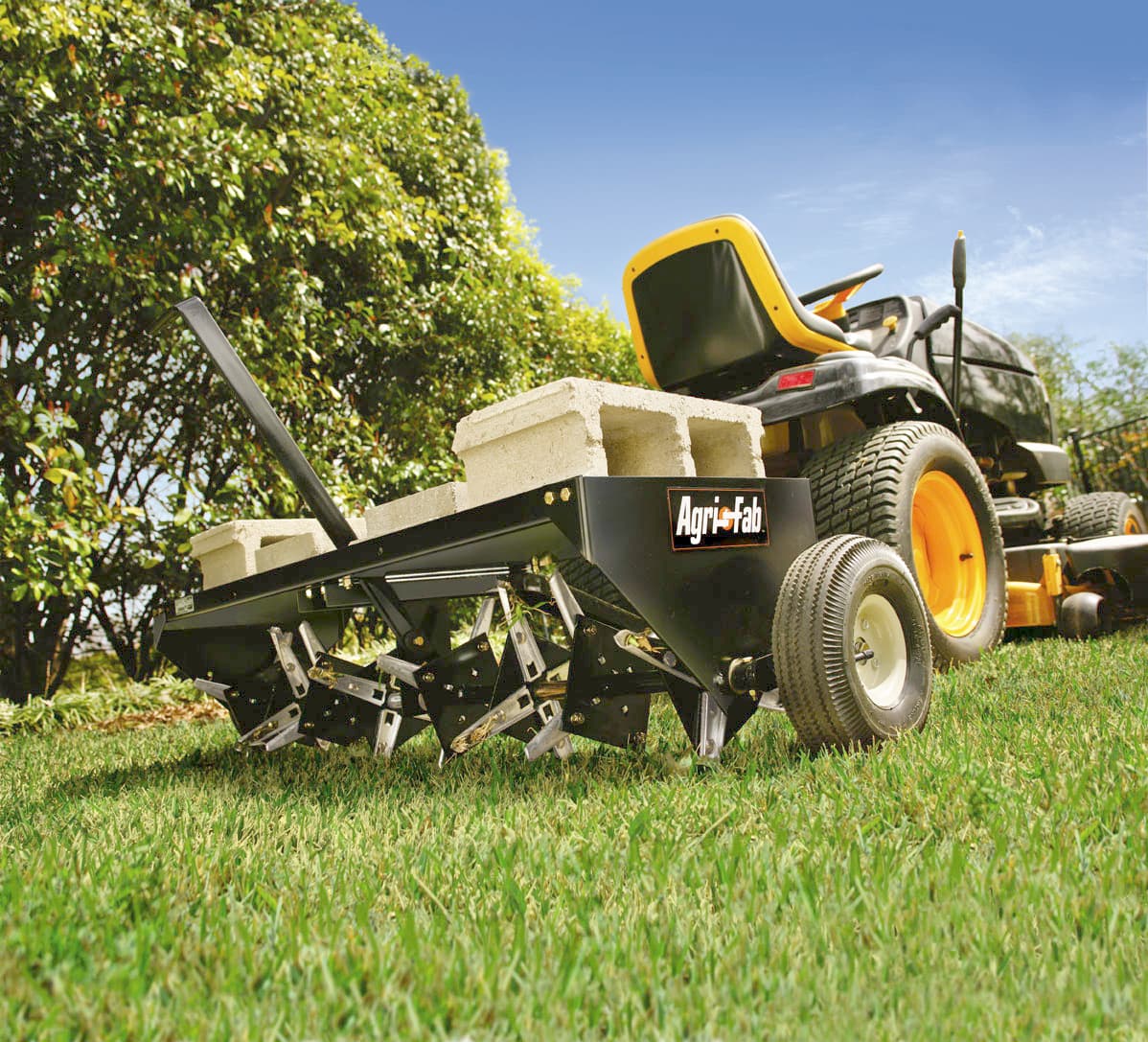
Tall fescue, the grass in most Virginia lawns, has limited to no recuperative potential,[6] so it does not spread to fill thin spots. Overseeding is how you keep it dense. Henrico's checklist says to overseed between September 1 and October 15 at 2 to 3 pounds of seed per 1,000 square feet, using turf-type tall fescue in sun and fine fescue in shade,[3] and that core aeration is a must before overseeding[3] so the seed reaches soil. For aeration itself, the same guide suggests fall aeration every two to three years for a regularly maintained lawn and every year for a high-maintenance one.[3]
One caution on timing: severe gray leaf spot outbreaks have coincided with fall overseeding in recent years, and seedlings are more susceptible.[5] Water new seed in the early morning, not the evening, and choose seed of the newer tall fescue varieties bred to resist gray leaf spot.[5]
Leaves come next. Mow them into the lawn if they break up and sift down, or rake or vacuum leaves in fall so they do not pack down the grass over winter.[3]
Every few years: the soil
Virginia Tech suggests you test the soil at least once every three years[1] and lime only when the test calls for it. Keep expectations realistic: Henrico's guide tells homeowners it may take two to three years to see the full benefit[3] of good care. If the lawn thins again in the same places, the cause is still there; our guide to why a lawn has bare patches helps find it.
Stop and call a pro if
- Patches of new grass collapse or die quickly in warm, wet weather, which can be disease.
- The lawn stays soggy in the same spots after rain, or water runs toward the house.
- Grubs, moles or other pests are tearing up the new turf.
- You want weed or insect control done for you; use a business with a Virginia pesticide license.
See all lawn and landscaping answers, browse lawn renovation services, or look up lawn and landscaping businesses around Blacksburg. If you would like a company to take over the care, describe the job once and local businesses quote it.
Common questions
- How often should I water a newly seeded lawn?
- Lightly and frequently until the seed has germinated, often more than once a day in warm, dry weather, without letting water run off. Newly seeded lawns need more frequent watering for the first three to four weeks; after that, water less often and more deeply.
- When can I mow new grass?
- When it needs it, with a sharp blade and firm soil, removing no more than one-third of the blade. For a tall fescue lawn kept at 3 to 4 inches, that means the first cut comes when the grass is a bit over 4 inches tall.
- When can I use weed killer on a new lawn?
- Herbicides can typically go on only after the second mowing of new grass, with some exceptions, and seedlings are much more sensitive than mature grass. Crabgrass preventers also stop grass seed from germinating, so skip them where you plan to overseed. Check every label for seeding intervals.
- Should I overseed every year?
- Only where the lawn is thin. Tall fescue does not spread to fill gaps, so overseeding thin areas in early fall, after core aeration, is how a fescue lawn stays dense. A lawn that stays thick may need it only every few years.
- How long until a renovated lawn looks its best?
- It usually looks presentable by the following spring, but density keeps improving. Henrico County's Extension office tells homeowners on its SMART Lawns program that it may take two to three years to see the full benefit of good care.
Sources
- [1] Fall Lawn Care (430-520), Virginia Cooperative Extension, Virginia Tech. Checked October 27, 2026.
- [2] Summer Lawn Management: Watering the Lawn (430-010), Virginia Cooperative Extension, Virginia Tech. Checked October 27, 2026.
- [3] SMART Lawns: A Residential Lawn Care Program to Protect Water Quality (revised March 2022), Virginia Cooperative Extension, Henrico County Office. Checked October 27, 2026.
- [4] Lawn Fertilization in Virginia (430-011), Virginia Cooperative Extension, Virginia Tech. Checked October 27, 2026.
- [5] Pest Management Guide: Home Grounds and Animals 2026, Lawn chapter (456-018), Virginia Cooperative Extension, Virginia Tech. Checked October 27, 2026.
- [6] Selecting Turfgrass for Virginia (SPES-748), Virginia Cooperative Extension, Virginia Tech. Checked October 27, 2026.
Want a pro to handle it?
Describe the job once. Licensed local businesses send quotes, and you pay only when you book one.
Get a quote from a local pro