What does an appliance technician do to fix a gas oven that won't light?
A technician confirms the symptom, rules out power and gas supply, then tests the igniter, controls and gas valve before replacing the part that failed. You can check the breaker and shutoff valve yourself, but igniter, valve and gas-side work is licensed gas work. If you smell gas, leave and call 911 and your gas utility.
Free to ask. Local shops send quotes, and you pay only when you book one.
By Kasra Taheri, Founder, LoclisPublished
Researched and drafted with AI, then checked claim by claim against the sources listed below before it was published. Prices and rules change; the dates beside each source say when it was last checked.
This is a job for a licensed pro in Virginia
This page explains what the work involves, the permits, what a licensed pro does and what drives the cost. It does not give step-by-step instructions, because this work needs a licence, a permit or both, and doing it wrong can injure someone. Before you hire, check the licence on Virginia's DPOR record.
A technician works through a short list: confirm the oven really is dead, rule out power and gas supply, test the igniter, then the controls and gas valve, and only then replace the part that failed. The first checks are quick. The last ones involve live gas and electrical parts, which is why a gas oven that will not light is a job for a licensed pro, not a weekend repair.
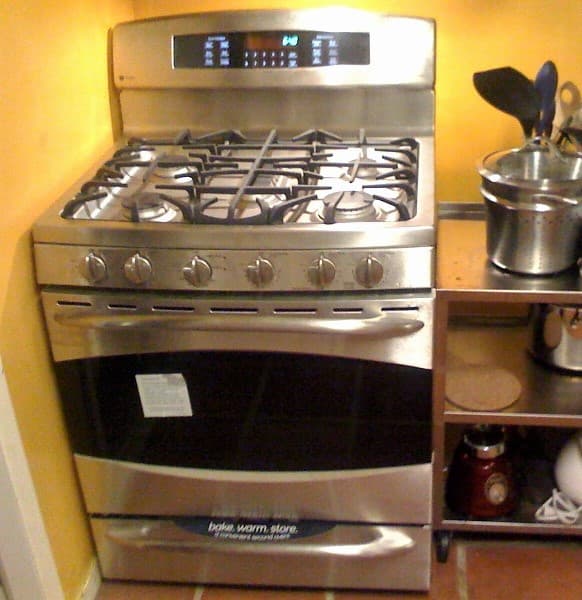
What you can check before you call
Some of what a technician checks first needs no tools, and GE's support guidance for gas ovens lists the same things. These are observations, not repairs:
- Controls set to Bake or Broil, with knobs back in the right position if they were removed for cleaning.
- Power: GE says to "Check the house fuse or circuit breaker box to be sure the breakers are ON or that the fuses are good."[1]
- A reset: GE suggests turning the circuit breaker off, waiting one minute and turning it back on to reset electronic oven controls on models that have them.[1]
- A locked door latch on a self-clean range, or Sabbath Mode on models that have it.[1]
- The gas supply: GE says to "Make sure the gas to the Range or Wall Oven is turned on by checking the gas shutoff valve."[1]
If none of that fixes it, GE's own advice is to schedule a repair appointment.[1] Having these answers ready saves the technician time and you a longer visit.
What the technician does on site
Confirms the symptom. Does the oven not try to light at all, does it glow but not ignite, or does it light and shut off? Each points to a different part, so a good technician asks before touching anything.
Checks power and gas supply. They confirm the range is getting power, because a gas oven still needs electricity for its igniter and controls, and that gas is reaching the appliance.
Looks at the igniter. Many modern gas ovens light with an electric glow-bar igniter rather than a standing pilot. GE's test is to set the oven to Bake and "look for a red glow in the bottom of the oven towards the back." If none appears, "there may be a malfunction with the Glo-Bar, the oven controls or other electrical components."[1] That is as far as the manufacturer's homeowner guidance goes, and the next step belongs to the technician.
Narrows down the cause. A technician usually works from the igniter to the parts that feed it: the wiring, the oven control, the temperature sensor and the gas valve. A weak or cracked igniter, a failed sensor and a faulty gas valve can all show up as an oven that will not light, and they cost very different amounts to fix.
Replaces the failed part and tests. Once the part is replaced, the technician lights the oven, watches the flame and runs it through a cycle. Any work that touches the gas side should be followed by a leak check.
Looks at the rest of the range. Columbia Gas of Virginia tells customers to contact a qualified professional if they notice a change in an appliance, such as "a yellow flame or the presence of soot around a burner on your gas stove."[2] It is a good time to mention it.
If your oven has a standing pilot that has gone out, Columbia Gas says that "If your pilot light goes out, it could be a sign that your appliance needs to be inspected and repaired by a qualified professional."[3]
Why this is not a DIY job
The part most often at fault, the igniter, is a replaceable component, which tempts people to order one online. But it sits beside the burner, wired to household power, next to a gas supply. Columbia Gas states plainly: "For your safety, a qualified professional should perform all work on natural gas lines and equipment inside the home."[2]
Virginia licenses gas fitting. The state's rules define gas fitting-related work as including "the installation, repair, improvement, or removal of industrial gas, fuel gas, gaseous hydrogen, liquefied petroleum or natural gas piping, tanks, chimneys and vents, direct vents, equipment, and appliances annexed to real property."[5] See who can repair a gas range in Virginia for which licence to look for.
When to call a licensed pro
Call one for any gas oven that will not light after the basic checks above. Call right away, and treat it as an emergency, if you smell gas. Virginia Natural Gas says to leave the area, and "Do not try to identify the source or stop the leak yourself."[4] Columbia Gas says to "go outside and call 911 and then call us at 1-800-544-5606 (24/7)."[2]
Do not try to light the oven with a match, and do not use an oven to heat the house.
Once the smell is dealt with, hire a technician who is licensed for gas work. Under Va. Code § 54.1-1129, no individual may engage in work as a liquefied petroleum gas fitter or natural gas fitter provider unless licensed.[6] Ask for the licence number and check it with DPOR before the visit.
What it costs
The cost depends on which part failed, whether it is in stock and how the business charges for the visit. We cover that in how much oven repair costs in Virginia. For a nearby example of weighing a repair against a new appliance, see whether to repair or replace a range hood.
Browse more appliance repair answers or find appliance repair businesses on Loclis.
When you are ready, describe the oven problem once and licensed local businesses quote it.
Common questions
- Can I relight my gas oven myself?
- On a model with a standing pilot, the owner's manual may describe how. But if the oven will not light with an electric igniter, do not try to force it with a match, because gas that builds up in the oven can ignite. Call a licensed technician.
- What if I smell gas?
- Leave the house, do not use switches or phones inside, and call 911 and your gas utility from outside. Virginia Natural Gas says not to try to find the source or stop the leak yourself.
- Does a gas oven need electricity?
- Yes. GE's guidance for gas ovens starts with the breaker, the power cord and resetting the electronic controls, because the igniter and controls are electric.
- What does no red glow mean?
- GE says that with no red glow the Glo-Bar, the oven controls or other electrical components may be at fault. A technician confirms which one before replacing anything.
- Who should I hire?
- A business with a Virginia contractor licence that covers gas work, whose technician holds the gas licence. Check both on DPOR's lookup before the visit.
Sources
- [1] Gas Range & Wall Oven - Oven Will Not Come On, GE Appliances. Checked October 27, 2026.
- [2] Safe Appliance Installation, Columbia Gas of Virginia. Checked October 27, 2026.
- [3] Care for Your Appliances, Columbia Gas of Virginia. Checked October 27, 2026.
- [4] Smell Gas? Act Fast!, Virginia Natural Gas. Checked October 27, 2026.
- [5] 18VAC50-30-10, Definitions (Individual Licensing and Certification Regulations), Virginia Administrative Code, Legislative Information System. Checked October 27, 2026.
- [6] Va. Code § 54.1-1129, Necessity for licensure, Code of Virginia, Virginia General Assembly. Checked October 27, 2026.
Want a pro to handle it?
Describe the job once. Licensed local businesses send quotes, and you pay only when you book one.
Get a quote for Appliance Repair