What does a GFCI outlet do?
A GFCI outlet shuts off power within a moment when electricity leaks out of the circuit, as it would through a person standing in water. The CPSC says GFCIs can prevent electrocutions, and recommends testing each one monthly with its test and reset buttons. A GFCI that will not reset needs an electrician.
Free to ask. Local shops send quotes, and you pay only when you book one.
By Kasra Taheri, Founder, LoclisPublished
Researched and drafted with AI, then checked claim by claim against the sources listed below before it was published. Prices and rules change; the dates beside each source say when it was last checked.
This is a job for a licensed pro in Virginia
This page explains what the work involves, the permits, what a licensed pro does and what drives the cost. It does not give step-by-step instructions, because this work needs a licence, a permit or both, and doing it wrong can injure someone. Before you hire, check the licence on Virginia's DPOR record.
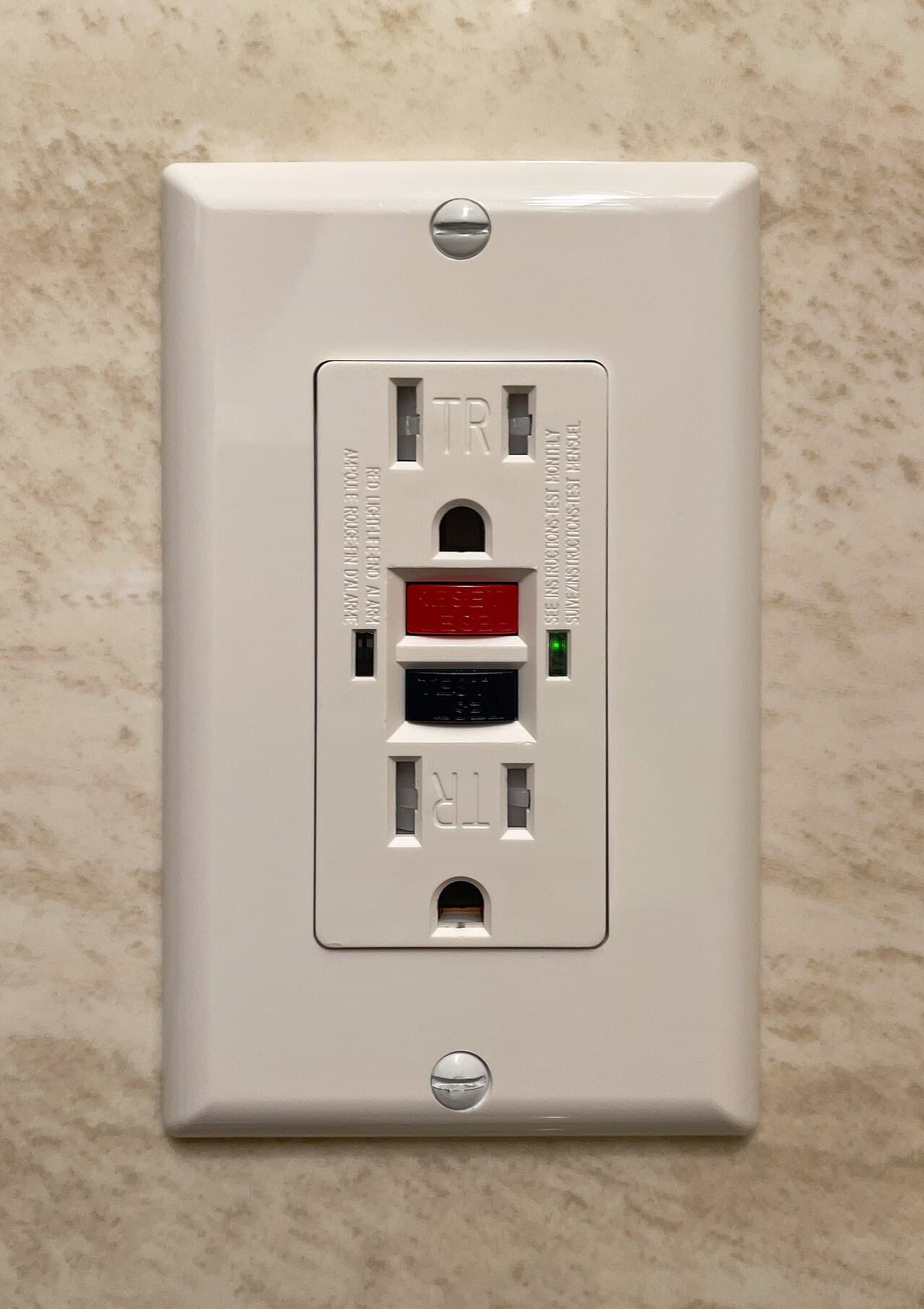
A GFCI outlet cuts power when electricity leaks out of the circuit, which is what happens when current passes through a person or through water. Its job is to stop a serious shock before it does harm. The U.S. Consumer Product Safety Commission says GFCIs can prevent electrocutions.[1]
How it works
An ordinary outlet delivers power until a breaker trips from an overload or short circuit, and that can be too slow or too weak a response to protect a person. A ground fault circuit interrupter compares the current going out on the hot wire with the current coming back on the neutral. If some of it is going somewhere else, for example through your body to a wet floor, the device shuts the circuit off almost immediately.
You can see the parts on the face of the outlet: a test button and a reset button. When the outlet trips, the reset button pops out and everything it feeds goes dead until you press it back in.
Why it matters near water
The CPSC puts the risk plainly: mixing electricity and water can result in an electric shock or fire hazard, and using a GFCI reduces the chance of a serious shock or electrocution.[1] That is why the CPSC points to kitchens, bathrooms, garages, unfinished basements and the area near laundry tubs or wet bar sinks.[1] For the locations Virginia's code covers, read where Virginia code requires GFCI outlets.
The CPSC also advises against portable heaters in bathrooms, and says that if you use one, it should be plugged into a GFCI outlet or have a GFCI plug.[1] Counter-top appliances near a sink are a similar case: if you cannot move them away, the CPSC says to plug them into GFCI-protected outlets.[1]
One GFCI can protect other outlets
A GFCI receptacle can be wired so that it also protects ordinary outlets further along the same circuit, which are then "downstream" of it. That is why a GFCI in a garage or bathroom can be the reason an outlet somewhere else is dead. If an outlet has no power and no reset button, look for a GFCI nearby that has tripped. The longer story is in when to call an electrician about a dead outlet.
Testing and replacing
The CPSC says to test every GFCI once a month according to the manufacturer's instructions.[1] Its fallback method is to plug in a light and turn it on, press the test button, and see whether the light goes out, then press reset and see whether it comes back on. If either step fails, the CPSC says to replace the GFCI.[1] A GFCI can fail without showing any sign of failure, so regular testing may save your life.[1]
Plug-in GFCI adapters exist too. The CPSC says portable GFCIs are as effective as installed GFCIs,[1] which makes one a sensible stopgap for an outdoor outlet or a tool while you arrange a permanent fix.
When to call a licensed pro
Pressing test and reset is fine for anyone. Swapping the device is a different matter, because it means working on wiring that may be live and on a circuit that can feed other outlets. The Code of Virginia defines a tradesman as any individual who engages in, or offers to engage in, work for the general public for compensation in the trades of electrical, plumbing and heating, ventilation and air conditioning,[2] and says no individual shall engage in, or offer to engage in, work as a tradesman unless licensed under that article, apart from individuals working under the supervision of a licensed tradesman in that specialty.[3]
Call an electrician if a GFCI will not reset, trips again right away, feels warm, or was damaged by water. A GFCI that will not reset can mean the device has failed or that there is a fault on the circuit, and only testing on site tells you which. Look up the licence first with how to check if a contractor is licensed in Virginia.
Next steps
For price, see how much it costs to replace a GFCI outlet in Virginia. You can browse more electrical repair answers or electrical services.
If a GFCI is dead, tripping or failing its test, describe the problem once and licensed local electricians quote the repair.
Common questions
- Is a GFCI the same as a circuit breaker?
- No. A breaker protects the wiring from overload and short circuits. A GFCI protects people from shock by cutting power when current leaks out of the circuit. Some GFCIs are built into the breaker panel and some into the outlet.
- What are the test and reset buttons for?
- Test trips the outlet on purpose to prove the protection works, and reset restores power. The CPSC recommends testing every GFCI once a month according to the manufacturer's instructions.
- Why is an outlet dead when nothing is wrong with it?
- It may be downstream of a GFCI that has tripped. Find the GFCI, which is often in a bathroom, garage, kitchen or outdoors, and press reset after unplugging what was on it. If it will not reset, call an electrician.
- Can I use a plug-in GFCI instead?
- As a temporary measure, yes. The CPSC says portable GFCIs are as effective as installed GFCIs. They do not fix a failed outlet.
- Does a GFCI stop all shocks?
- No. It reacts to current leaking out of the circuit, so it reduces risk but does not replace care around water and damaged cords.
Sources
- [1] Home Electrical Safety Checklist (Publication 513), U.S. Consumer Product Safety Commission. Checked October 27, 2026.
- [2] Va. Code § 54.1-1128, Definitions (tradesmen), Code of Virginia, Virginia General Assembly. Checked October 27, 2026.
- [3] Va. Code § 54.1-1129, Necessity for licensure (tradesmen), Code of Virginia, Virginia General Assembly. Checked October 27, 2026.
Want a pro to handle it?
Describe the job once. Licensed local businesses send quotes, and you pay only when you book one.
Get a quote for Electrical Repair