Where does Virginia code require GFCI outlets?
Virginia's residential code requires GFCI protection for outlets in bathrooms, garages, outdoor locations, basements and laundry rooms. Since the 2021 code it covers all basements, finished or not, 240-volt receptacles in those areas, and other damp or wet spaces. The CPSC lists kitchens too. A licensed electrician can confirm what applies to your house.
Free to ask. Local shops send quotes, and you pay only when you book one.
By Kasra Taheri, Founder, LoclisPublished
Researched and drafted with AI, then checked claim by claim against the sources listed below before it was published. Prices and rules change; the dates beside each source say when it was last checked.
This is a job for a licensed pro in Virginia
This page explains what the work involves, the permits, what a licensed pro does and what drives the cost. It does not give step-by-step instructions, because this work needs a licence, a permit or both, and doing it wrong can injure someone. Before you hire, check the licence on Virginia's DPOR record.
Virginia's residential code requires GFCI protection for receptacles in bathrooms, garages, outdoor locations, basements and laundry rooms, and in any other damp or wet location, and the CPSC lists kitchens among the locations the National Electrical Code requires. The state's 2021 Residential Code made three things broader: all basements, 240-volt outlets in GFCI areas, and other damp or wet spaces.
Your electrician or building official will confirm what applies to a specific house and permit, because the edition and the local amendments in force matter.
What Virginia's building codes office says
The State Building Codes Office of the Virginia Department of Housing and Community Development publishes a plain-language FAQ on the 2021 Virginia Residential Code, which covers one- and two-family homes. It says previous editions already required GFCI protection for receptacles in most wet and damp locations: outdoor locations, garages, basements, bathrooms and laundry rooms.[1]
The 2021 code added three requirements.
Basements, finished or unfinished. The 2021 code requires GFCI protection of all outlets in basements, finished or unfinished.[1] Fairfax County's finished-basement guide, based on the 2021 code, repeats it: all receptacles installed in basements must be provided with ground-fault circuit-interrupter (GFCI) protection.[2] The state's office adds that, in its opinion, bedrooms in finished basements should still have arc-fault protection, and that all other basement areas need GFCI-protected outlets.[1]
240-volt outlets. The amperage limit of 15 and 20 amps was removed from the GFCI provisions, and the 125-volt designation expanded to receptacles up to 250 volts.[1] The state's example is 240-volt, 30-amp dryer receptacles in laundry rooms, and 240-volt, 50-amp kitchen range receptacles if they are within 6 feet of a sink.[1]
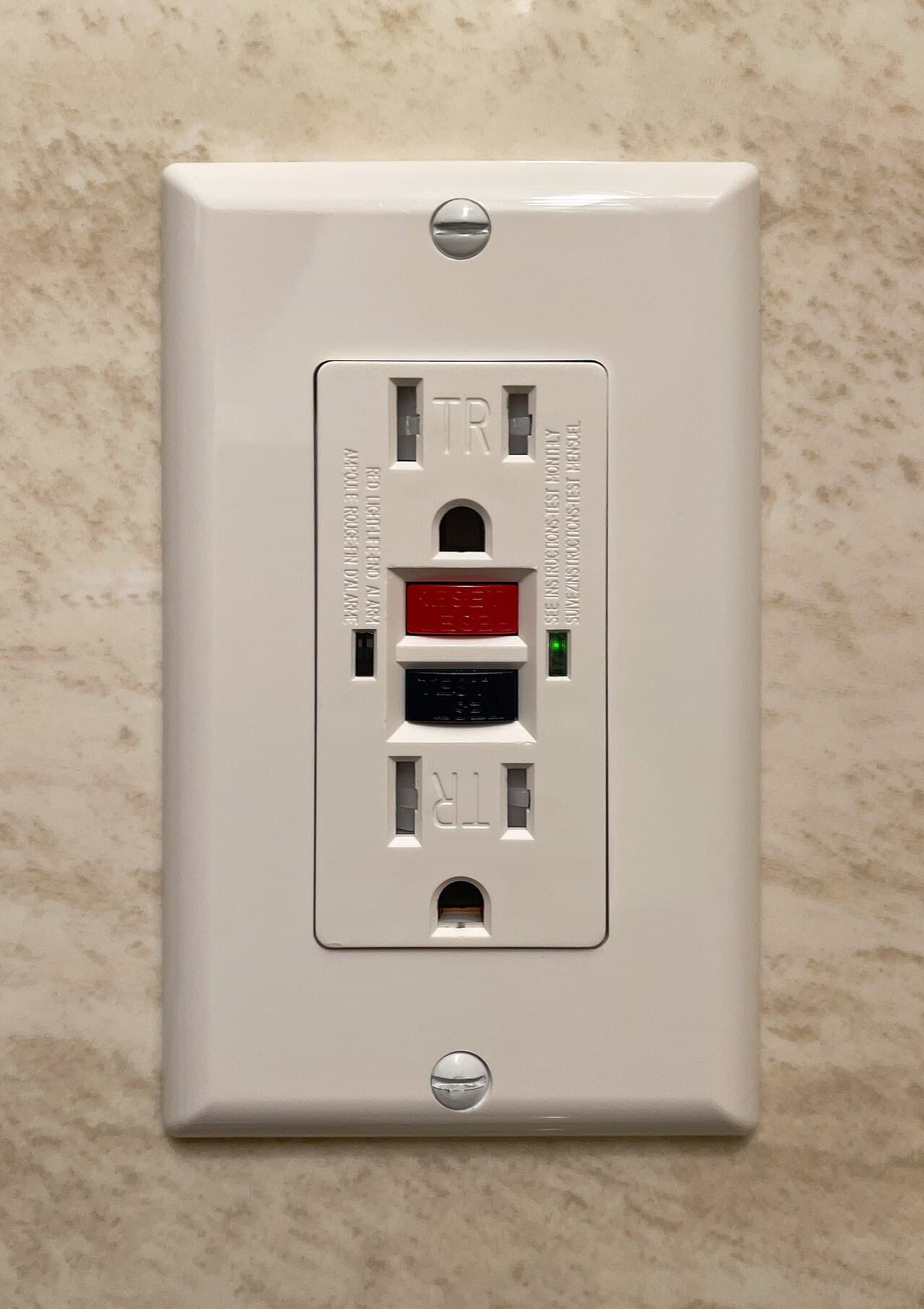
Other damp or wet locations. The 2021 code covers any other damp or wet location that might create similar shock hazards, such as an indoor grow room or a dog wash area with a sprayer hose.[1]
Kitchens and the NEC
The CPSC recommends having GFCIs installed in locations required by the National Electrical Code, such as kitchens, bathrooms, garages, unfinished basements and near laundry tubs or wet bar sinks.[3] Ask your building official for the exact kitchen wording that applies in your locality.
Existing homes
Whether an older house must be upgraded when you replace a failed outlet is a question for your building official. Virginia's building code lists replacement of 125 volt, 15 or 20 ampere receptacles in a single dwelling unit among the work that needs no permit, and the exemption does not exempt the work from other applicable requirements of the code.[4] The CPSC suggests testing each GFCI once a month[3] and considering GFCIs in the locations the National Electrical Code requires.[3]
When to call a licensed pro
For adding GFCI protection, changing a circuit or finding out why an existing GFCI is not working. Under the Code of Virginia, no individual shall engage in, or offer to engage in, work as a tradesman unless licensed under that article, apart from individuals working under the supervision of a licensed tradesman in that specialty.[5] The tradesman definition covers the electrical trade.[6] Check the licence with how to check if a contractor is licensed in Virginia.
A licensed electrician can walk through the house and tell you which outlets need protection, which are protected by an upstream GFCI and which are not. Read what a GFCI outlet does and what replacement costs, and browse electrical repair answers or electrical services.
To have your outlets checked or protection added, describe the job once and licensed local electricians quote it.
Common questions
- Are GFCIs required in basements in Virginia?
- Under the 2021 Virginia Residential Code, yes: the state's building codes office says GFCI protection is required for all outlets in basements, finished or unfinished.
- Does a dryer outlet need GFCI protection?
- Under the 2021 code, the 15 and 20 amp limit was removed and 240-volt receptacles in GFCI areas are covered. The state's example is a 240-volt, 30-amp dryer receptacle in a laundry room.
- Which rooms need GFCI outlets?
- Virginia's building codes office lists outdoor locations, garages, basements, bathrooms and laundry rooms, plus other damp or wet locations under the 2021 code. The CPSC adds kitchens and areas near laundry tubs or wet bar sinks.
- Does my older house have to be upgraded?
- That depends on the work and your locality. Ask your building official. Replacing a standard receptacle needs no permit, but the work must still meet the code's other requirements.
- Who checks that the work meets code?
- Your locality's building department enforces the Virginia Uniform Statewide Building Code. A licensed electrician knows which work needs a permit and inspection.
Sources
- [1] 2021 Virginia Residential Code Significant Changes Frequently Asked Questions, State Building Codes Office, Virginia Department of Housing and Community Development. Checked October 27, 2026.
- [2] Typical Finished Basement Details (2021 Virginia Residential Code), Fairfax County Land Development Services, Virginia. Checked October 27, 2026.
- [3] Home Electrical Safety Checklist (Publication 513), U.S. Consumer Product Safety Commission. Checked October 27, 2026.
- [4] 13VAC5-63-80. Section 108 Application for permit (Virginia Uniform Statewide Building Code), Virginia Administrative Code, Virginia General Assembly. Checked October 27, 2026.
- [5] Va. Code § 54.1-1129, Necessity for licensure (tradesmen), Code of Virginia, Virginia General Assembly. Checked October 27, 2026.
- [6] Va. Code § 54.1-1128, Definitions (tradesmen), Code of Virginia, Virginia General Assembly. Checked October 27, 2026.
Want a pro to handle it?
Describe the job once. Licensed local businesses send quotes, and you pay only when you book one.
Get a quote for Electrical Repair