What does heat pump maintenance include?
A heat pump maintenance visit is a licensed technician's check of the outdoor unit and the indoor air handler: refrigerant charge and leaks, electrical connections, coils, airflow, the condensate drain, the reversing valve, the defrost cycle and the backup heat. The fall visit should test defrost and aux heat. Your share between visits is the filter and a clear space around the outdoor unit.
Free to ask. Local shops send quotes, and you pay only when you book one.
By Kasra Taheri, Founder, LoclisPublished
Researched and drafted with AI, then checked claim by claim against the sources listed below before it was published. Prices and rules change; the dates beside each source say when it was last checked.
This is a job for a licensed pro in Virginia
This page explains what the work involves, the permits, what a licensed pro does and what drives the cost. It does not give step-by-step instructions, because this work needs a licence, a permit or both, and doing it wrong can injure someone. Before you hire, check the licence on Virginia's DPOR record.
A heat pump maintenance visit is an inspection and cleaning of the whole system by a licensed technician: the outdoor unit, the indoor air handler, the controls that tie them together and the backup heat. Because a heat pump both heats and cools, a good visit tests it in both modes, and the fall visit adds the defrost checks that matter in a Virginia winter. Your part between visits is small: the filter and a clear space around the outdoor unit.
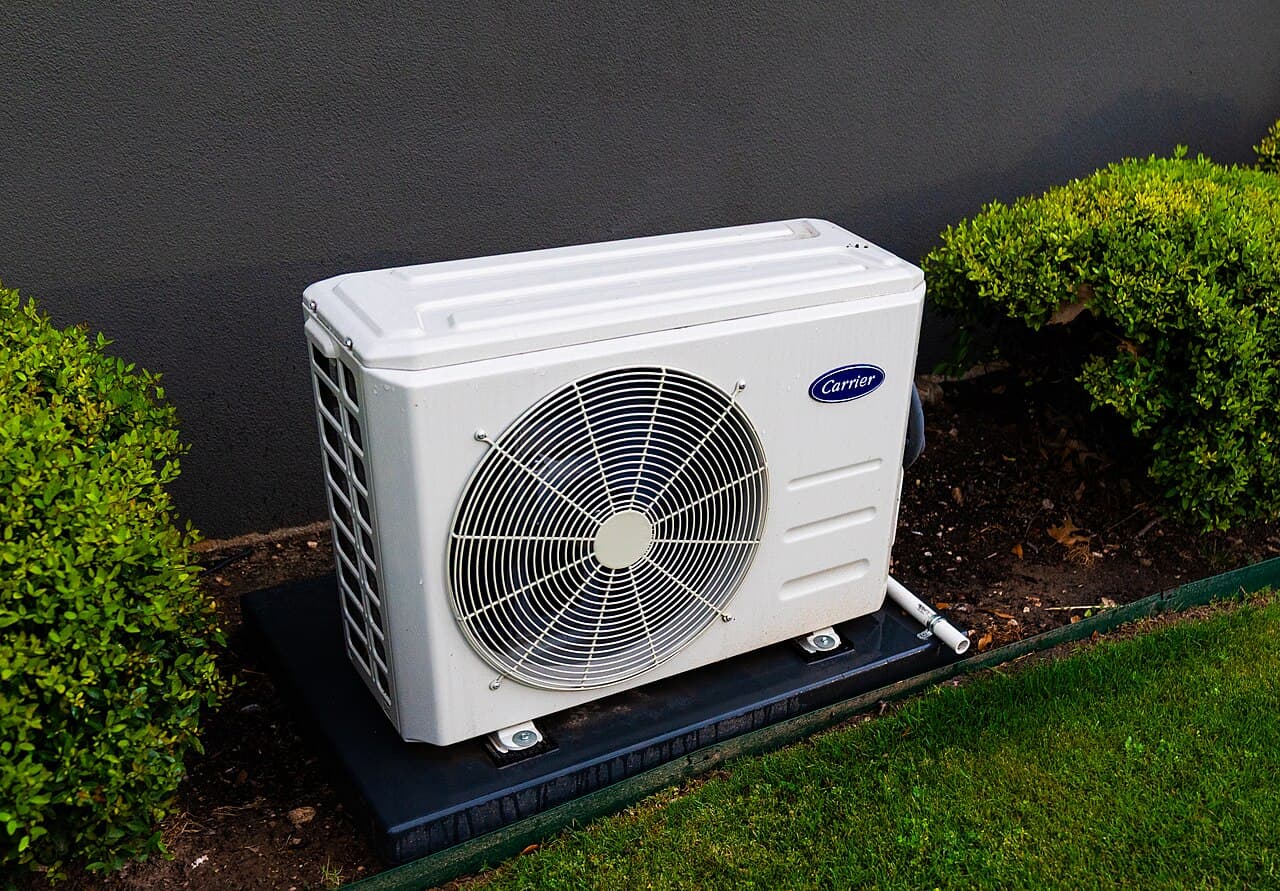
What the technician checks
A professional heat pump service typically includes inspecting electrical connections, checking refrigerant levels and system pressures, cleaning coils, inspecting the blower and fan, checking airflow, and testing heating and cooling performance.[1] Here is what that covers, part by part.
Outdoor unit. The technician cleans and inspects the outdoor coil, checks the outdoor fan motor, and clears the condensing unit base-pan drain holes of debris.[1][2] The run capacitor should get an inspection for bulging, unusual markings, or discoloration.[1]
Refrigerant. The technician reads the charge and pressures, and should check for refrigerant leaks and replace any lost refrigerant.[2] Low refrigerant is generally the result of a leak,[5] so if the technician wants to add some, ask where it went before paying for a top-up.
Reversing valve, defrost and backup heat. These are the parts that make a heat pump different from an air conditioner. The technician should check and inspect the reversing valve operation, test the defrost cycle to ensure winter reliability, and check the auxiliary heat system and test heating in defrost mode.[1] On a twice-a-year schedule, the defrost control check falls on the fall visit.[2]
Indoor unit. Inside, the visit covers the indoor coil, the blower assembly in the air handler, the air filter, and the condensate drainage system, which is checked and cleaned to prevent water damage.[1]
Electrical and controls. The technician should tighten all electrical connections and measure voltage and current on motors, because faulty connections can cause unsafe operation and reduce the life of major components.[3] The visit should also lubricate moving parts and check the starting cycle so the system starts, operates and shuts off properly.[3] A heat pump also needs a check for correct electric control, making sure that heating is locked out when the thermostat calls for cooling and vice versa.[2]
Ducts and airflow. The technician should check all ducts, filters, blower, condenser fan motor, indoor coil, and outdoor coil for dirt and other obstructions, and confirm that your heat pump is receiving adequate airflow.[2] Low airflow can be caused by dirty filters, dirty blowers, dirty coils, closed supply registers, or (most commonly) by improper duct sizing.[4]
Spring visit and fall visit
Annual pre-season check-ups mean the cooling system in the spring and the heating system in the fall, because contractors get busy once summer and winter come.[3] A heat pump is both systems in one, so schedule a preventative maintenance checkup twice a year, in the fall before winter weather arrives and in the spring before AC season.[2]
The two visits share most of the list. The spring visit leans on cooling performance and the drain, since a heat pump's condensate drain is checked when it is in cooling mode.[3] The fall visit is where the defrost control and the backup heat get tested, the checks that keep the house warm through a cold snap. For how often to book, see how often a heat pump should be serviced.
What a visit usually does not include
Some work can be quoted on its own. Cleaning coils may need a separate service visit, and the dealer may need to schedule another appointment for repairs.[2] Ask before the visit whether coil cleaning, refrigerant and repairs are in the price; what annual heat pump service costs in Virginia covers what to ask for in a written quote.
Ask for the results, too. Many contractors provide a written summary of the results after the service.[1] The inspection should be thorough and include the use of testing and diagnostic equipment.[4] A report with measured readings, not just ticked boxes, shows what was actually checked and gives the next technician something to compare against.
Why it is worth doing
Of all residential mechanical systems, heat pumps and air conditioners can benefit most from professional maintenance, and field studies have shown their efficiency can be commonly improved as much as 30% through proper tune-up and repair.[4] Dirty coils make the system run longer, increasing energy costs and reducing the life of the equipment, and too much or too little refrigerant makes it less efficient.[3]
Your part between visits
Inspect, clean, or change air filters once a month; your contractor can show you how.[3] Keep shrubs and plants at least 2 ft. away from the heat pump on all sides and check for snow or ice build up during the winter.[2] Leave the rest to the technician: refrigerant checks, electrical testing and mechanical repairs should be performed by a qualified HVAC professional.[1] If you are weighing a yearly contract for these visits, read whether a heat pump maintenance plan is worth it.
When to call a licensed pro
The technician's side of this list is licensed trade work in Virginia. Under the Code, no individual may work as a tradesman without a licence unless working under the supervision of a licensed tradesman in that specialty, and a tradesman is anyone who does electrical, plumbing or heating, ventilation and air conditioning work for the general public for compensation.[6][7] Federal rules say technicians who maintain, service, repair, or dispose of equipment that could release ozone depleting refrigerants into the atmosphere must be certified.[8] Check a business on DPOR's License Lookup before you book.[9]
Do not wait for the next scheduled visit if ice stays on the outdoor unit, the system runs constantly without reaching the set temperature, or the unit makes new rattling, grinding or hissing noises.[1] An aux heat light that stays on when it is above 40 degrees outside most likely means an issue that needs professional attention.[5] Start with why a heat pump runs constantly in winter.
Loclis lists DPOR-licensed HVAC businesses with their licence number and class. Find HVAC businesses in Blacksburg, browse heat pump service, or read more heating and cooling answers.
Describe your heat pump and what it needs and licensed local HVAC businesses quote the work.
Common questions
- Is heat pump maintenance different from air conditioner maintenance?
- Mostly it is the same list: coils, refrigerant charge, electrical connections, airflow and the drain. A heat pump adds the parts that make it heat: the reversing valve, the defrost controls and the backup heat strips. The technician should check the reversing valve, test the defrost cycle and test heating in defrost mode, and the defrost control check belongs on the fall visit.
- Does a tune-up include adding refrigerant?
- Checking the charge and looking for leaks is part of the visit, and a full dealer checklist includes replacing any lost refrigerant. Ask before booking whether refrigerant is included in the price or billed on top. Since low refrigerant is generally the result of a leak, ask where the leak is before paying for a top-up. EPA rules require technicians who service equipment that could release ozone-depleting refrigerants to be certified.
- Should coil cleaning be part of every visit?
- Coils are checked every time and cleaned when they need it. A coil cleaning may need a separate service visit, so ask whether it is included in the price or quoted on its own.
- What should I get in writing after the visit?
- A service report listing what was checked and what was found, ideally with the measured readings. Many contractors provide a written summary of the results. Keep it with your past reports so the next technician can compare.
- What maintenance can I do on a heat pump myself?
- The filter and the space around the outdoor unit. Inspect, clean or change the filter once a month, keep shrubs and plants at least 2 feet from the unit, and watch for heavy snow or ice in winter. Refrigerant, electrical and mechanical work is for a licensed technician.
Sources
- [1] Heat Pump Service & Maintenance Tips, Carrier. Checked October 26, 2026.
- [2] Heat pump maintenance tips for homeowners, Trane. Checked October 26, 2026.
- [3] Maintenance Checklist, ENERGY STAR, U.S. Environmental Protection Agency. Checked October 26, 2026.
- [4] Virginia Energy Savers Handbook, Virginia Tech and the Commonwealth of Virginia. Checked October 26, 2026.
- [5] What Does Aux Heat Mean on My Thermostat?, Lennox. Checked October 26, 2026.
- [6] Va. Code § 54.1-1129, Necessity for licensure, Code of Virginia, Virginia General Assembly. Checked October 26, 2026.
- [7] Va. Code § 54.1-1128, Definitions, Code of Virginia, Virginia General Assembly. Checked October 26, 2026.
- [8] Section 608 Technician Certification, U.S. Environmental Protection Agency. Checked October 26, 2026.
- [9] License Lookup, Virginia Department of Professional and Occupational Regulation. Checked October 26, 2026.
Want a pro to handle it?
Describe the job once. Licensed local businesses send quotes, and you pay only when you book one.
Get a quote for HVAC Repair