Why is my heat pump running constantly in winter?
In real cold, long run times are normal: a heat pump's output falls as the outdoor air gets colder, so it may run almost nonstop to hold the temperature. Running constantly in mild weather is not normal. Check that the thermostat is on Heat, the filter is clean and the outdoor unit is clear; if it still runs nonstop, a licensed technician should look for refrigerant, defrost or fan faults.
Free to ask. Local shops send quotes, and you pay only when you book one.
By Kasra Taheri, Founder, LoclisPublished
Researched and drafted with AI, then checked claim by claim against the sources listed below before it was published. Prices and rules change; the dates beside each source say when it was last checked.
This is a job for a licensed pro in Virginia
This page explains what the work involves, the permits, what a licensed pro does and what drives the cost. It does not give step-by-step instructions, because this work needs a licence, a permit or both, and doing it wrong can injure someone. Before you hire, check the licence on Virginia's DPOR record.
On a truly cold Virginia day, a heat pump that runs almost nonstop is usually working as designed. The colder the outdoor air, the less heat it can pull from it, so it runs longer to keep up. What is not normal is a heat pump that runs constantly in mild weather, or one that runs all day and never reaches the setting. Those point to a setting, an airflow problem, or a fault a licensed technician has to find.
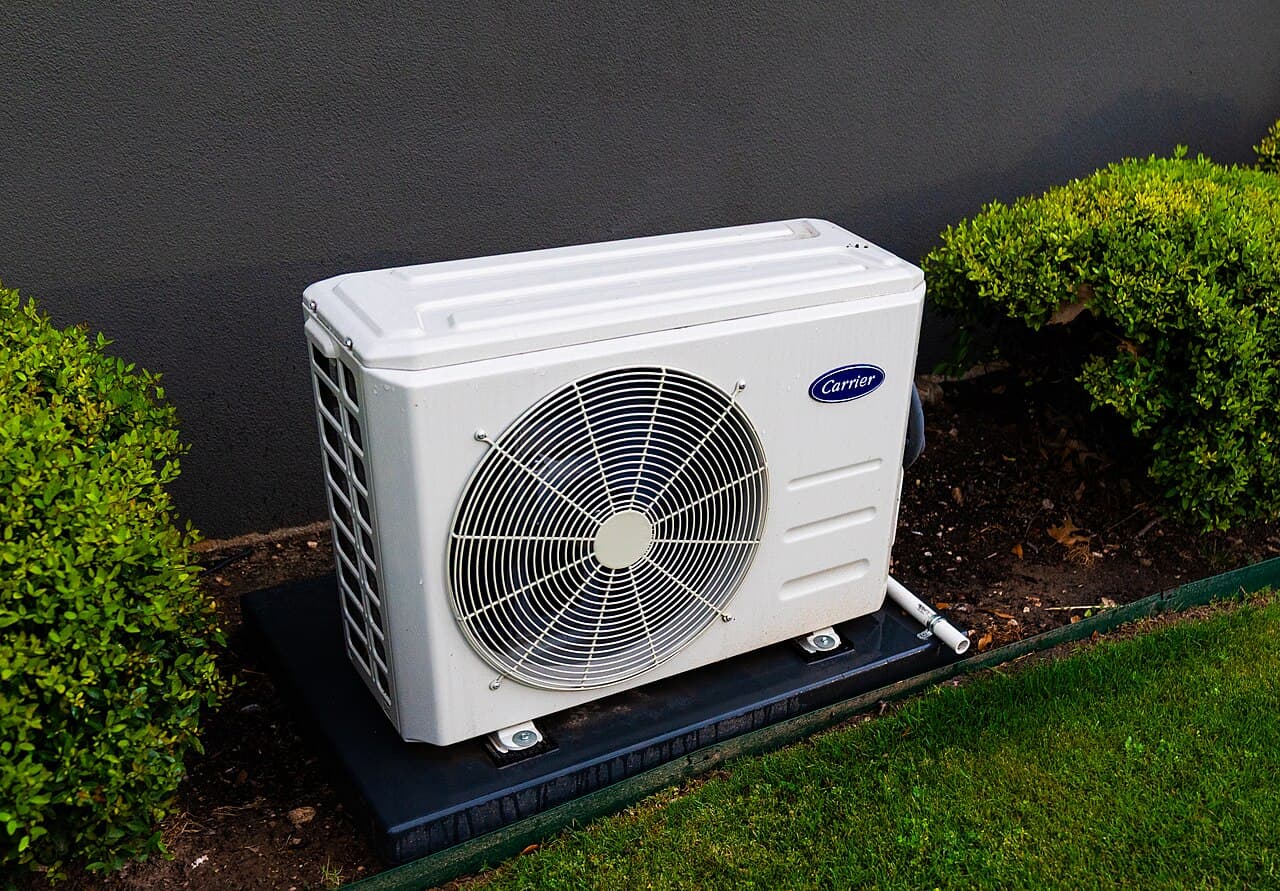
In real cold, long cycles are normal
A heat pump draws its heat from the outdoor air, so it can be completely normal for it to run all the time in extreme temperatures as it tries to extract enough heat for your home.[1]
As the temperature drops, the heat pump may operate at higher capacity and run longer to maintain the thermostat setting.[2] Below a certain point it needs help. That point is the thermal balance point: the outdoor temperature at which a heat pump's heating capacity intersects with a home's heating demand.[2] There is no single outdoor temperature at which every Carrier heat pump activates auxiliary heat; the balance point is specific to the heat pump, home, and system design rather than a universal temperature such as 30°F or 35°F.[2] As a rule of thumb, Lennox says the most common reason aux heat will be engaged is when outside temperatures drop below 40º,[5] and Trane says the thermostat will trigger it when the outside temperature is below 40 degrees or a set aux heat trigger temperature.[7] So some aux heat on a 30-degree morning can be normal. Aux heat that stays on when it is above 40 degrees is the warning sign covered below.
Defrost adds to the run time. A light layer of frost on the outdoor coils is completely normal, especially in cold, humid weather.[6] A typical defrost cycle lasts about 5–10 minutes,[1] and in frosty weather a heat pump should automatically defrost itself every 30 to 90 minutes.[6] For more on what happens as it gets colder, see how a heat pump works in cold weather.
The test is the house. If it holds the temperature you set, long run times in a cold snap are not a fault.
When it is not normal
Constant running in moderate weather is a different story. A heat pump that runs constantly in moderate weather may have a dirty air filter, an incorrect thermostat setting, or a dirty outdoor coil.[1] Start with the checks below before you book a visit.
Check the thermostat
First, make sure the heat pump is not set to air conditioning mode.[1][4]
Then look at how it is being run. Avoid dropping the thermostat temperature significantly at night, because recovering that heat in the morning often forces the auxiliary heat to turn on.[2] Raising the setting by more than 3-4 degrees can bring on the auxiliary heat,[7] so when you do want it warmer, raise it one degree at a time.[5]
Check airflow
Filter. A dirty or clogged air filter can cause the system to run longer and less effectively.[1] Replace air filters every 60-90 days or according to the manufacturer's instructions.[1]
Outdoor unit. Look at it from the yard. As a general guideline, keep at least 24 inches of clear space around the heat pump for proper airflow, while following the clearance requirements for your specific model.[1] A light frost that clears in defrost is fine, but ice buildup thicker than 1/4 inch, a solid coating of ice, or ice that does not clear during defrost is not normal and requires attention.[1] Water from melting snow or ice, often from a leaky gutter, can drip onto the coil and freeze.[1]
Coil. An extremely dirty coil can leave the system struggling to keep up with heating demand.[1] Coil cleaning is part of a technician's visit; see what heat pump maintenance includes.
Watch the aux heat light
The thermostat's AUX or auxiliary heat indicator tells you a lot. If it's above 40 degrees and the thermostat shows AUX HEAT for more than an hour or two, it is worth investigating.[7] An aux heat light that comes on frequently or stays on more than about 30 minutes at a time is an indicator that your heat pump can't handle the workload it's being handed.[5] Aux heat running above 40°F may indicate a dirty air filter, a refrigerant leak, a malfunctioning sensor, or that the thermostat was raised too quickly.[2]
Faults a technician has to find
When the settings, filter and outdoor unit check out, the cause is usually inside the system:
- a faulty outdoor fan motor, which leaves too little air moving across the coil[5]
- low refrigerant, which is generally the result of a leak[5]
- a faulty defrost board, which can let the coil freeze or make the system think it is defrosting more than necessary, or all the time[5]
- a reversing valve stuck in cooling mode, which leaves the backup heat doing the work[5]
- a failing compressor[5]
Sometimes the heat pump is fine and the house is the problem: an undersized heat pump, or poor insulation and drafty windows and doors, can keep it running.[1] Ducts matter too: in a typical home, about 20–30% of the air moving through the duct system can be lost through leaks, holes and poorly connected ducts.[3]
If the air from the vents also feels cool, read why a heat pump blows cool air in winter.
What not to do
- Do not open it up or work on internal components.[1]
- Do not attack the ice. Never try to chip ice from the coil.[1]
- If a breaker trips repeatedly, don't keep resetting it; contact a qualified HVAC professional.[1]
If the heat pump has clearly failed and the house is getting cold, emergency heat is the stopgap. Emergency heat shuts down the heat pump and makes the auxiliary system the main heating system; if you engage it, call for HVAC service right away.[7] Electric heat strips use more energy than the heat pump,[7] so treat it as a bridge to the service call.
When to call a licensed pro
Call when the system runs nonstop in mild weather, the house will not reach the setting, ice stays on the coil, or the aux light stays on above 40 degrees. Refrigerant leaks, fan motors, defrost boards, reversing valves and compressors are licensed work. Federal rules say technicians who maintain, service, repair, or dispose of equipment that could release ozone depleting refrigerants into the atmosphere must be certified,[8] and in Virginia no individual may work as a tradesman without a licence unless working under the supervision of a licensed tradesman in that specialty,[9] where a tradesman is anyone who does electrical, plumbing or heating, ventilation and air conditioning work for the general public for compensation.[10] Check a business on DPOR's License Lookup.[11]
To head off the next cold-weather problem, read how to keep a heat pump running well in winter. Loclis lists DPOR-licensed HVAC businesses with their licence number and class: find HVAC businesses in Blacksburg, browse heat pump service, or read more heating and cooling answers.
Describe what your heat pump is doing and licensed local HVAC businesses quote the repair.
Common questions
- Is it normal for a heat pump to run all day when it is very cold?
- Yes. Carrier says it can be completely normal for a heat pump to run all the time in extreme temperatures as it pulls enough heat from the outdoor air. What matters is whether the house holds the temperature you set. If it does, the system is doing its job.
- At what temperature does a heat pump start running nonstop?
- There is no single number. It depends on the heat pump's capacity and how much heat the house loses. Carrier calls the crossover the thermal balance point and says it is specific to the heat pump, home and system design, not a universal temperature such as 30°F or 35°F. Lennox and Trane both treat outdoor temperatures below about 40 degrees as the usual time for aux heat to come on, so long run times and some aux heat in freezing weather are normal.
- Should I turn my heat pump down at night to save money?
- Only a little, if at all. Carrier advises against dropping the thermostat significantly at night, because recovering that heat in the morning often brings on the more expensive auxiliary heat. When you want it warmer, raise the setting a degree at a time, because Trane says raising it by more than 3-4 degrees can bring on the aux heat.
- My heat pump runs constantly and the house is still cold. What now?
- Check that the thermostat is on Heat, the filter is clean and the outdoor unit is not buried in snow or ice. If all of that is fine, call a licensed technician: low refrigerant, a failing outdoor fan motor, a bad defrost board, a stuck reversing valve or a failing compressor can all keep it running without catching up.
- Is it a problem if the aux heat light is on all the time?
- In mild weather, yes. Trane says to investigate if it is above 40 degrees and AUX HEAT shows for more than an hour or two, and Lennox treats aux heat that stays on more than about 30 minutes at a time as a sign the heat pump cannot keep up.
Sources
- [1] Heat Pump Troubleshooting Guide, Carrier. Checked October 26, 2026.
- [2] What Is Auxiliary Heat?, Carrier. Checked October 26, 2026.
- [3] Heat Pump Not Heating? Here's How to Troubleshoot, Carrier. Checked October 26, 2026.
- [4] Heat Pump Service & Maintenance Tips, Carrier. Checked October 26, 2026.
- [5] What Does Aux Heat Mean on My Thermostat?, Lennox. Checked October 26, 2026.
- [6] What to Do If Your Heat Pump Is Frozen?, Lennox. Checked October 26, 2026.
- [7] What Is Auxiliary Heat and How Does it Affect HVAC Performance?, Trane. Checked October 26, 2026.
- [8] Section 608 Technician Certification, U.S. Environmental Protection Agency. Checked October 26, 2026.
- [9] Va. Code § 54.1-1129, Necessity for licensure, Code of Virginia, Virginia General Assembly. Checked October 26, 2026.
- [10] Va. Code § 54.1-1128, Definitions, Code of Virginia, Virginia General Assembly. Checked October 26, 2026.
- [11] License Lookup, Virginia Department of Professional and Occupational Regulation. Checked October 26, 2026.
Want a pro to handle it?
Describe the job once. Licensed local businesses send quotes, and you pay only when you book one.
Get a quote for HVAC Repair