How often should a heat pump be serviced?
Have a licensed technician service a heat pump at least once a year, and ideally twice: in spring before cooling season and in fall before heating season, because it does both jobs. The fall visit is the one that tests defrost and backup heat. Between visits, check the filter monthly and keep the outdoor unit clear of leaves, shrubs and heavy snow.
Free to ask. Local shops send quotes, and you pay only when you book one.
By Kasra Taheri, Founder, LoclisPublished
Researched and drafted with AI, then checked claim by claim against the sources listed below before it was published. Prices and rules change; the dates beside each source say when it was last checked.
This is a job for a licensed pro in Virginia
This page explains what the work involves, the permits, what a licensed pro does and what drives the cost. It does not give step-by-step instructions, because this work needs a licence, a permit or both, and doing it wrong can injure someone. Before you hire, check the licence on Virginia's DPOR record.
Book professional service for a heat pump at least once a year, and twice if you can: once in spring before the cooling season and once in fall before the heating season. A heat pump is your air conditioner and your heater in one, so it works through both seasons and each season's visit checks a different set of parts. Between visits, your job is the filter and a clear outdoor unit.
Once a year at minimum, twice is better
At a minimum, schedule heat pump service annually. Ideally, service should be performed twice a year: once in the spring for cooling and once in the fall for heating.[1] Book the fall checkup before winter weather arrives and the spring one before AC season.[2] A professional check-up and/or tune-up twice a year during the spring and fall transition periods helps catch an issue before it becomes an emergency.[4]
Two to three years is the outer limit, not a target. At a minimum, regular inspection of a heat pump is recommended every two to three years, but an annual check up is a good idea as well.[7] Have your HVAC system serviced or tuned-up annually to maximize efficiency and comfort.[8]
Why a heat pump needs two visits
Because heat pumps can heat and cool your home, they get a lot of use and need proper servicing to perform at their best.[2] The two visits are not duplicates.
The fall visit gets the heat pump ready for winter. The defrost control operation is checked in the fall only,[2] and the technician should check the auxiliary heat system and test heating in defrost mode.[1] These are the parts that keep the house warm when the outdoor coil frosts over or the weather turns hard.
The spring visit gets it ready for cooling. The condensate drain on a heat pump is checked when it is in cooling mode, because a plugged drain can cause water damage in the house and affect indoor humidity levels.[6]
Timing helps too. Contractors get busy once summer and winter come, so plan the check-ups around the time changes in the spring and fall.[6] For what each visit covers, see what heat pump maintenance includes.
Your part, and how often
The homeowner jobs are small and frequent:
- Every month: Inspect, clean, or change air filters once a month.[6] As a general range, change your HVAC air filter every 30-90 days; higher quality, thicker filters may need to be changed less often than thinner 1-inch filters.[2] See how often to change a furnace filter, which applies to a heat pump's air handler too.
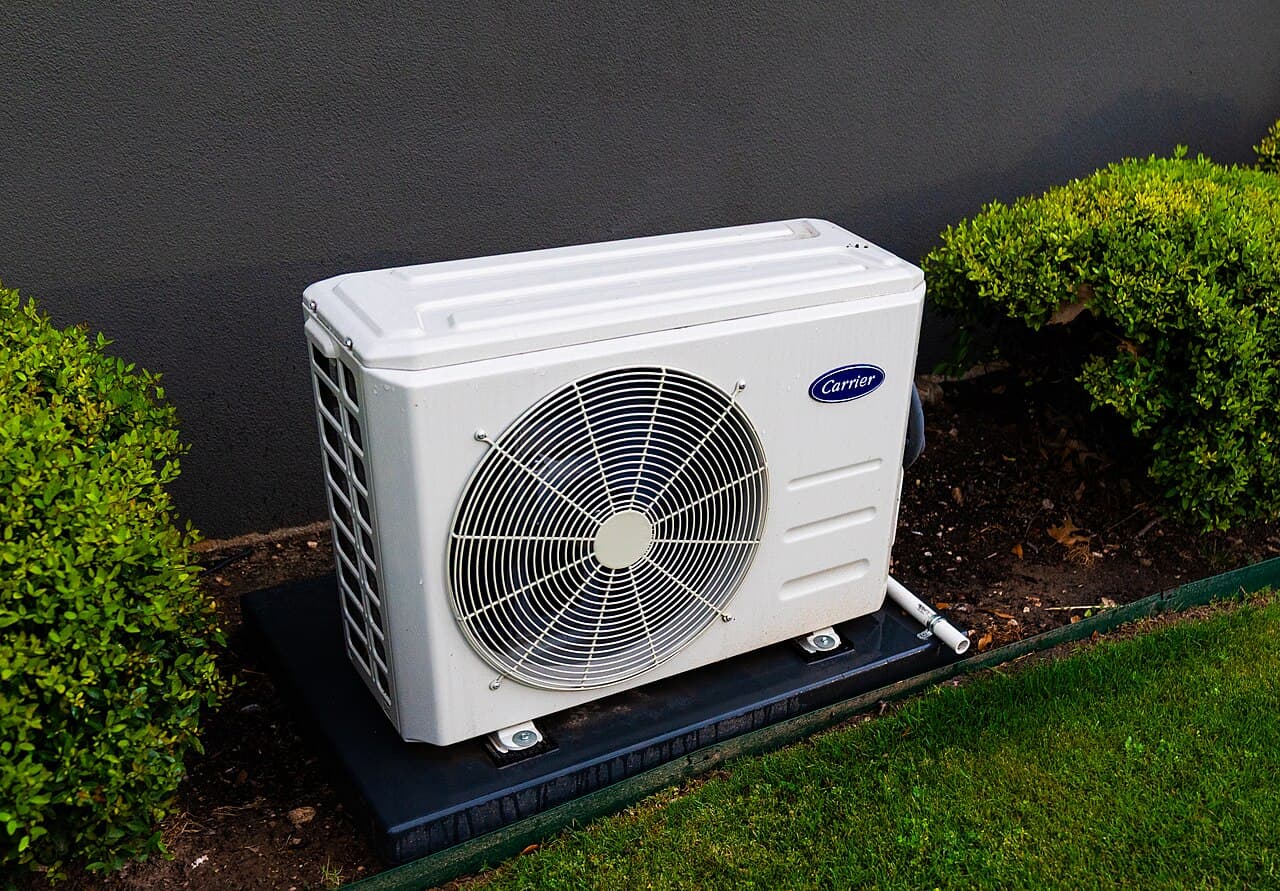
- Through the year: Keep shrubs and plants at least 2 ft. away from the heat pump on all sides.[2]
- After a storm: Keep your heat pump clear of obstructions, including snow.[8] That means heavy snowfall; the defrost cycle will deal with minor icing.[2] Make sure the outdoor unit does not sit below a leaking gutter, where water may collect and freeze.[2]
- Indoors: keep the registers and return air vents open and clear of obstructions.[2]
Anything behind a panel is the technician's.
Book a visit sooner if
Do not wait for the next season if the unit is frozen over, running constantly, blowing cold air in heat mode, or making rattling, grinding, or hissing noises.[1] Watch the thermostat's aux heat light as well. Backup heat coming on in cold weather is normal; it is only a bad thing if it comes on and stays on when temperatures are above 40 degrees.[5] For the most common winter complaint, read why a heat pump runs constantly in winter.
New systems and older ones
Regular service is how a heat pump reaches a full life. A heat pump can last about 15 years, but it can last longer with regular maintenance.[2] Regular servicing is vital to maintain energy efficiency ratings, validate warranty coverage, and prevent the premature failure of expensive components like the compressor.[1]
For a new system, book the same seasonal visits from the first year and keep every dated service report. If you have a new HVAC system, go with the company that installed it; this can help make any warranty issues go more smoothly.[3] Read the warranty itself for any maintenance it requires. If a yearly contract would help you keep to the schedule, see whether a heat pump maintenance plan is worth it and what annual heat pump service costs in Virginia.
When to call a licensed pro
The service visits themselves are licensed work. In Virginia, no individual may work as a tradesman without a licence unless working under the supervision of a licensed tradesman in that specialty,[9] and a tradesman is anyone who does electrical, plumbing or heating, ventilation and air conditioning work for the general public for compensation.[10] Federal rules say technicians who maintain, service, repair, or dispose of equipment that could release ozone depleting refrigerants into the atmosphere must be certified.[11] Check a business on DPOR's License Lookup before you book.[12]
If you also have central air on a separate system, see how often an air conditioner should be serviced. Loclis lists DPOR-licensed HVAC businesses with their licence number and class: find HVAC businesses in Blacksburg, browse heat pump service, or read more heating and cooling answers.
Describe your heat pump and what it needs and licensed local HVAC businesses quote the work.
Common questions
- Is once a year enough for a heat pump?
- Once a year is the minimum Carrier gives. The Virginia Energy Savers Handbook recommends inspecting a heat pump every two to three years at the very least and calls an annual check up a good idea as well. Carrier, Trane and Lennox all say twice a year is better for a heat pump, because it heats in winter and cools in summer. If you only book one visit, make it the fall one, which tests defrost and backup heat.
- When is the best time to book heat pump service?
- Spring before cooling season and fall before heating season. ENERGY STAR notes that contractors get busy once summer and winter come, and suggests planning the check-ups around the spring and fall time changes so they are easy to remember.
- How often should I change the filter in a heat pump?
- ENERGY STAR says to inspect, clean or change it once a month. Trane gives a general range of every 30-90 days, with thicker, higher-quality filters often lasting longer than 1-inch ones. Check it monthly and change it when it looks dirty or when its label says to.
- Does a new heat pump need service in its first year?
- Yes. A new system gets the same seasonal visits, and keeping dated service records helps with warranty questions. Trane suggests using the company that installed a new system, so any warranty issue goes more smoothly. Read the warranty itself for what it requires.
- Can I service my heat pump myself?
- Only the basics. You can check the filter and keep the outdoor unit clear of plants, debris and heavy snow. Carrier says checking refrigerant charges, electrical testing and deep coil cleaning need the tools and expertise of a licensed professional, and in Virginia that work for pay requires a licensed HVAC tradesman.
Sources
- [1] Heat Pump Service & Maintenance Tips, Carrier. Checked October 26, 2026.
- [2] Heat pump maintenance tips for homeowners, Trane. Checked October 26, 2026.
- [3] HVAC Maintenance: The Key to HVAC Efficiency, Trane. Checked October 26, 2026.
- [4] What Does Aux Heat Mean on My Thermostat?, Lennox. Checked October 26, 2026.
- [5] What Is Auxiliary Heat and How Does it Affect HVAC Performance?, Trane. Checked October 26, 2026.
- [6] Maintenance Checklist, ENERGY STAR, U.S. Environmental Protection Agency. Checked October 26, 2026.
- [7] Virginia Energy Savers Handbook, Virginia Tech and the Commonwealth of Virginia. Checked October 26, 2026.
- [8] Heating & Cooling energy-saving tips, Appalachian Power. Checked October 26, 2026.
- [9] Va. Code § 54.1-1129, Necessity for licensure, Code of Virginia, Virginia General Assembly. Checked October 26, 2026.
- [10] Va. Code § 54.1-1128, Definitions, Code of Virginia, Virginia General Assembly. Checked October 26, 2026.
- [11] Section 608 Technician Certification, U.S. Environmental Protection Agency. Checked October 26, 2026.
- [12] License Lookup, Virginia Department of Professional and Occupational Regulation. Checked October 26, 2026.
Want a pro to handle it?
Describe the job once. Licensed local businesses send quotes, and you pay only when you book one.
Get a quote for HVAC Repair