What does repairing a septic drain field involve?
In Virginia a drain field repair is a permitted job, not a weekend project. A licensed onsite soil evaluator or engineer finds the cause and designs the fix, the local health department issues a repair permit, a licensed installer builds it, and the designer inspects it. The fix can be a new section of trench, a move to a reserve area, or an alternative system.
Free to ask. Local shops send quotes, and you pay only when you book one.
By Kasra Taheri, Founder, LoclisPublished
Researched and drafted with AI, then checked claim by claim against the sources listed below before it was published. Prices and rules change; the dates beside each source say when it was last checked.
This is a job for a licensed pro in Virginia
This page explains what the work involves, the permits, what a licensed pro does and what drives the cost. It does not give step-by-step instructions, because this work needs a licence, a permit or both, and doing it wrong can injure someone. Before you hire, check the licence on Virginia's DPOR record.
The short version
A failing drain field in Virginia is fixed through a permit, by licensed people, in a set order: someone licensed works out why it failed and designs the repair, the local health department approves it, a licensed installer builds it, and the designer inspects it. What gets built depends on the soil, the space on the lot and what went wrong. Knowing that sequence helps you hire the right person first and avoid paying for a repair that fails again.
What the drain field does, and why it fails
A drain field, also called an absorption field, is the last stage of an onsite sewage system.[2] It spreads wastewater through trenches or pads below the ground so the water can soak into the soil[2] and finish being treated. When the soil stops taking water, effluent backs up into the house or rises to the surface.
The cause matters, because a new field built for the same mistake fails the same way:
- Solids from the tank. A tank that is not pumped often enough is among the most common causes of failure,[1] and a degraded outlet baffle lets solids into the trenches, where they clog the soil.[1]
- Too much water. A system too small for the household can overload the drainfield with water.[1]
- Damage to the field. Trouble also comes from building or planting on the field, long spells of very heavy rain that leave water standing over it, and tree or shrub roots that grow into the drainlines and distribution box.[1]
Is it really the drain field?
Not every backup or wet spot means a new field. Sometimes the trouble is inside the tank,[1] such as a broken baffle, and a blocked line between the house and the tank can look like a failure too. Our guide to why a septic system backs up into the house covers the usual suspects.
Some fixes count as maintenance rather than repair. Virginia Cooperative Extension classes replacing the distribution box, or piping outside the drainfield area, as maintenance.[1] The onsite licensing board's definition, last amended effective December 17, 2025, counts in-kind replacement of worn parts that need no construction permit, such as pumps, sewer lines, conveyance lines, distribution boxes and header lines, as maintenance "unless otherwise provided in local ordinance".[6] The same definition says maintenance never includes "replacement of tanks, drainfield piping, subsurface drainfields, or work requiring a construction permit and a licensed onsite sewage system installer".[6] It also lets a licensed conventional or alternative installer do in-kind replacement of parts such as pumps, filters, sewer lines and distribution boxes, unless a local ordinance prohibits it.[6]
An older definition in the Board of Health's regulations, 12VAC5-613-10 as amended in 2017, draws the line differently: it leaves distribution boxes out of maintenance.[5] Because the two definitions disagree and a local ordinance can change the board's, ask the local health department how your job is classed before anyone digs.
What the repair process looks like
Fixing a failed system is the owner's responsibility.[1] The work needs a repair permit, and in most cases a private onsite soil evaluator, sometimes with an engineer, studies the site and soils and designs the repair.[1] Since August 11, 2019, every application for an onsite sewage system in Virginia must come with supporting work from a private sector consultant licensed through DPOR,[4] unless the owner qualifies on income or under the health department's hardship guidelines.[4]
The local health department approves the repair application, and the permit has to be issued before work starts.[1] The Virginia Department of Health sums up the full sequence for a seller who finds a major problem: "hire a private sector consultant to design a system repair; obtain a construction permit from VDH to repair the system; have a licensed service provider install the repairs; have the system inspected by the designer; and provided necessary paperwork to VDH to receive a new operations permit".[3] This process can take weeks to complete.[3]
While you wait, sewage still has to go somewhere. In some cases licensed professionals can pump the effluent out and haul it away on a schedule ("pump and haul"),[1] but only for a limited time, as a bridge to the repair or replacement.[1] Using less water in the house helps in the meantime.
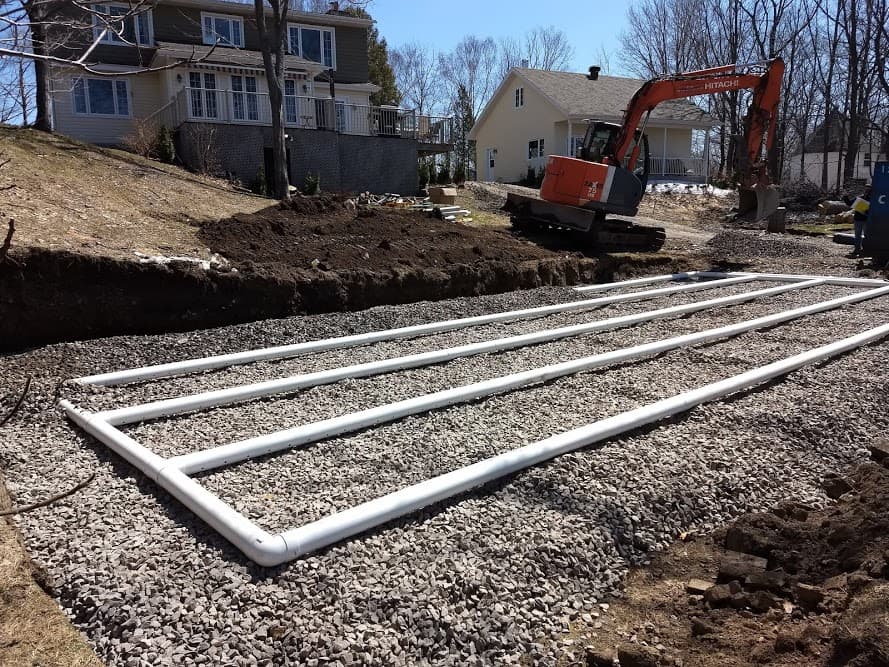
The repair options a designer weighs
Some properties have a reserve area set aside for a replacement drainfield, and a repair may move the system there.[1] Where there is no reserve, the soil between the existing trenches, a new area on the property, or an adjacent property may be considered.[1] On a tight or wet lot, the answer may be an alternative system that treats the effluent and disperses it in a smaller area.[1]
Whether you have a reserve depends on the soil and the locality. Virginia's sewage regulations require a 50% reserve only where trenches sit in silty and clayey soils,[1] although some counties and cities require a full 100% reserve for all new construction.[1] The permit file at your local health department shows what was approved for your lot.
The law also limits how much the repair can be made to upgrade. Under Va. Code § 32.1-164.1:1, the owner of a failing system serving one to four dwelling units may request a waiver from a requirement for treatment beyond what the existing system provided when working properly, or from a new requirement for pressure dosing.[7] The waiver is recorded in the land records, is not transferable and becomes void when the property is sold, except for transfers the law specifically allows, such as court-ordered and foreclosure transfers, transfers in settling an estate, and transfers between spouses in a divorce.[7][3] After an ordinary sale, the added treatment or pressure dosing requirements apply.[7] Ask your designer whether it applies, and what it would mean if you plan to sell. The price side of these choices is in our guide to drain field repair costs.
What changes after the repair
A conventional repair usually leaves you with the same routine as before: regular inspection and pumping. An alternative system brings more. Under Virginia rules, an alternative system has to be inspected by a licensed operator at least once a year,[10] which usually means a service contract. Keep the new permit, the as-built drawing and every service record with the house papers.
When to call a licensed pro
Call as soon as you see sewage on the ground, smell it over the field, or have backups that pumping does not fix. This is licensed work from start to finish. Virginia's licensing rules bar anyone from installing a conventional or alternative onsite sewage system without an installer licence from the board in the right class,[8] and the same board's rules require a valid licence to work as an onsite soil evaluator.[9] Look up both on DPOR before you sign, and read whether you need a permit for the paperwork side.
Never go into the tank, and keep children and pets away from wet areas. Toxic gases build up inside septic tanks,[11] and effluent that rises to the surface can expose people to the organisms behind diseases such as dysentery, hepatitis and typhoid.[11]
Find a licensed septic professional
Loclis lists licensed businesses from Virginia's DPOR register. Browse septic system services, find excavation contractors in Blacksburg, or read more plumbing repair answers. When you are ready, describe the job once and licensed local businesses quote it.
Common questions
- Can I repair my own septic drain field in Virginia?
- No. Virginia requires a licence to install a conventional or alternative onsite sewage system and to do the soil evaluation and design, and a failing system needs a repair permit from the local health department before work starts. The owner is responsible for getting the repair done, by licensed people.
- How long does a drain field repair take?
- The building work is often the shorter part. The evaluation, design, permit and final inspection come first and last, and the Virginia Department of Health notes that the repair process can take weeks to complete. Ask your designer for a realistic timeline at the first visit.
- What if my property has no reserve area?
- Then the designer looks for other room: the soil between the existing trenches, a new area on the property, or sometimes an adjacent property. Where none of those works, an alternative system that treats the effluent and disperses it in a smaller area may be the answer.
- Will the health department make me install an expensive alternative system?
- Not necessarily. Under Va. Code § 32.1-164.1:1, the owner of a failing system serving one to four homes can ask for a waiver from added treatment or new pressure dosing requirements, unless the system was installed illegally. The waiver is recorded in the land records and becomes void when the property is sold, apart from transfers the law exempts, such as foreclosures, estate transfers and divorce settlements.
- Is a broken distribution box a drain field repair?
- Often not. Virginia Cooperative Extension treats replacing the distribution box, or piping outside the drainfield, as maintenance, and the licensing board's current definition counts in-kind replacement of a distribution box as maintenance unless a local ordinance says otherwise. An older Board of Health definition leaves distribution boxes out, so ask the local health department how your job is classed before work starts.
Sources
- [1] What Happens if My Septic System Fails? (SPES-379), Virginia Cooperative Extension, Virginia Tech. Checked October 26, 2026.
- [2] How Systems Work, Virginia Department of Health. Checked October 26, 2026.
- [3] What You Should Know When Buying a House with an Onsite System, Virginia Department of Health. Checked October 26, 2026.
- [4] Septic, Sewage, and Well Applications: Have You Considered Using the Private Sector?, Virginia Department of Health. Checked October 26, 2026.
- [5] 12VAC5-613-10, Regulations for Alternative Onsite Sewage Systems: Definitions, Virginia Administrative Code, Legislative Information System. Checked October 26, 2026.
- [6] 18VAC160-40-10, Onsite Sewage System Professionals Licensing Regulations: Definitions, Virginia Administrative Code, Legislative Information System. Checked October 26, 2026.
- [7] Code of Virginia § 32.1-164.1:1, Validity of certain septic tank permits, Code of Virginia, Legislative Information System. Checked October 26, 2026.
- [8] 18VAC160-40-110, Onsite Sewage System Professionals Licensing Regulations: License required (installers), Virginia Administrative Code, Legislative Information System. Checked October 26, 2026.
- [9] 18VAC160-40-230, Onsite Sewage System Professionals Licensing Regulations: License required (onsite soil evaluators), Virginia Administrative Code, Legislative Information System. Checked October 26, 2026.
- [10] Onsite Sewage System Owner Responsibilities, Virginia Department of Health. Checked October 26, 2026.
- [11] What to Expect When Getting Your Septic Tank Pumped (SPES-574), Virginia Cooperative Extension, Virginia Tech. Checked October 26, 2026.
Want a pro to handle it?
Describe the job once. Licensed local businesses send quotes, and you pay only when you book one.
Get a quote for Plumbing Repair