Why is my septic system backing up into the house?
Wastewater is not getting out of the house or through the system. The usual causes are a blocked line between the house and the tank, a tank overdue for pumping, a broken baffle, a drain field that is failing or waterlogged, or a stopped pump on a pumped system. Stop using water, keep people away from the sewage, and call a licensed septic professional.
Free to ask. Local shops send quotes, and you pay only when you book one.
By Kasra Taheri, Founder, LoclisPublished
Researched and drafted with AI, then checked claim by claim against the sources listed below before it was published. Prices and rules change; the dates beside each source say when it was last checked.
This is a job for a licensed pro in Virginia
This page explains what the work involves, the permits, what a licensed pro does and what drives the cost. It does not give step-by-step instructions, because this work needs a licence, a permit or both, and doing it wrong can injure someone. Before you hire, check the licence on Virginia's DPOR record.
The short version
A septic backup means wastewater cannot leave the house or cannot get through the system fast enough, so it comes back up the lowest drains. The usual causes are a blocked line to the tank, a tank that needs pumping, a broken baffle, a drain field that has failed or is waterlogged, or a pump that has stopped. A licensed septic professional can work out which one. What you do in the first hour is limit the mess and stay safe.
First, limit the damage
Stop running water. Hold off on laundry, showers and the dishwasher until the cause is found. When a system is damaged or the soil is saturated, the Virginia Department of Health advises keeping water use in the house as low as you can, so raw sewage is not pushed out onto the ground.[2] Keep contact with sewage-contaminated water to a minimum, wear gloves and protective gear, and wash any skin that gets exposed with soap and water right away.[2]
Treat the sewage as a health hazard. Effluent from a failing system can expose people to the organisms behind diseases such as dysentery, hepatitis and typhoid,[6] so keep children and pets away from it.
Do not open or lean into the tank. Nobody should ever go into a septic tank: toxic gases build up inside and can quickly overcome a person, potentially with fatal results.[6] A large spill in a finished basement is a job for a sewage cleanup company.
One drain or the whole house?
Start by noticing where the water shows up. VDH suggests checking the fixtures on the lowest level of the house for backups,[2] such as the basement or first-floor toilet and tub. If one sink is slow and everything else drains, the clog is probably in that fixture's drain, and our guide to when to call a plumber for a clogged drain applies. If the lowest fixtures fill when a toilet upstairs is flushed, the problem is further down the line.
The usual causes
A blocked line between the house and the tank. Wastewater runs by gravity through the conveyance line from the house to the septic tank.[3] That line typically has two vertical cleanout pipes for clearing blockages,[3] so a plumber or septic service can often clear it without digging. Wipes, grease and roots are common culprits. Slow drains in tubs and sinks can point to the absorption field, but they can also be nothing more than clogged pipes.[1]
A full tank. A tank that is not pumped often enough is among the most common causes of septic failure.[1] A household tank should be pumped every three to five years.[8] The EPA's rule of thumb is to pump when "the bottom of the scum layer is within six inches of the bottom of the outlet", when the top of the sludge sits within 12 inches of the outlet, or when sludge and scum fill more than 25 percent of the liquid depth.[5] If you cannot remember the last pumping, start here.
A broken baffle. The tees inside the tank keep solids where they belong, and they wear out, more often in concrete tanks.[1] A degraded baffle can let septic waste come back into the house through the outlet pipes,[1] and a failed outlet baffle lets solids into the drain field, where they clog the soil.[1]
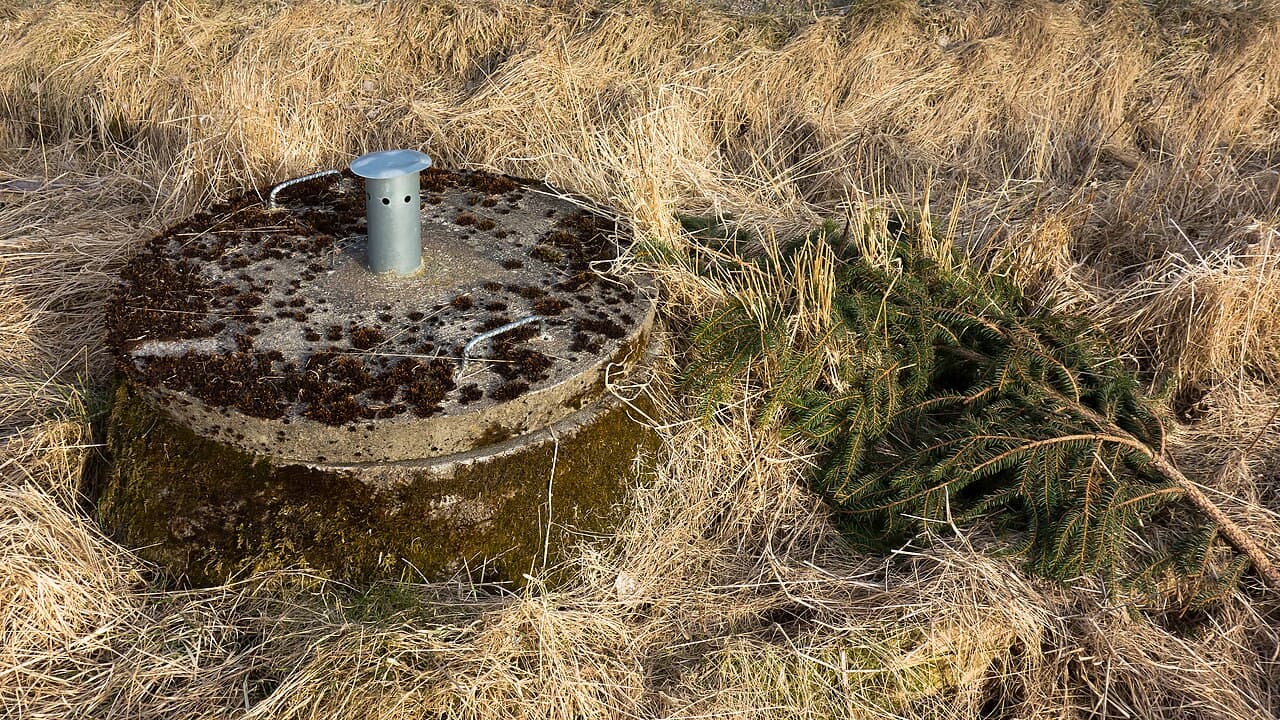
A drain field that cannot take more water. A drainfield overloaded with liquid can flood, sending sewage up to the ground surface or back into toilets and sinks.[4] Overload can start inside the house: a single toilet that leaks or keeps running can add up to 200 gallons of water a day.[5] It can also come from the weather. A flooded system may simply run sluggishly because the dispersal area's soil is saturated,[2] and once the storm passes, that soil should start to drain and many sluggish systems recover.[2]
A stopped pump or tripped alarm. Some systems on hilly or sloping lots need a pump to move wastewater along,[3] and many alternative systems include a pump too.[2] A pump-fed or dosed system has high and low water alarms to warn the owner of a problem.[7] Without power the pump stops, but most pumped systems should hold 100 to 200 gallons above the high-level alarm,[2] so use water sparingly until power returns. If an alternative system's alarm goes off, call your service provider right away.[8]
Roots. The water and nutrients in a septic system draw tree and shrub roots, which can get into and damage the drainlines, the distribution box or the tank itself.[1]
Signs that point at the drain field
Look over the field from a distance. Standing water over the drainfield can be a sign of failure, especially when it is discolored and smells bad.[1] Grass that is greener over the drainfield lines can be another,[1] though drought and poor soil fertility can produce the same look.[1] Backups that return soon after the tank is pumped also point at the field. Our guide to what a drain field repair involves explains what happens next.
What a septic professional checks
Expect the visit to start at the tank. A septic service provider checks for leaks and looks at the scum and sludge layers in the tank.[8] They will usually also look at the liquid level against the outlet, the condition of the baffles, and the line from the house, then the distribution box and the field. Have the permit or as-built drawing from the local health department ready if you can find it; it shows where everything is buried.
Skip the shelf products while you wait. Many chemicals sold to clean or unclog septic systems are harsh enough to kill the bacteria that break down solids, and some contain sulfuric acid, which can corrode concrete septic tanks.[10]
When a backup is a legal failure
Under Virginia's sewage regulations: "Pollution of the groundwater or backup of sewage into plumbing fixtures may also indicate system failure."[9] Fixing a failed system is the owner's responsibility, and the repair needs a permit that the local health department must issue before work starts;[1] our guide to whether you need a permit explains the process.
When to call a licensed pro
Call the same day when sewage comes up through a fixture, surfaces in the yard, or an alarm sounds. A blocked house line may be a plumber's job, but anything at the tank, pump or field is for a licensed septic professional. Virginia law says: "No person shall operate a waterworks or wastewater works, perform the duties of an onsite soil evaluator, or install or operate an alternative onsite sewage system, without a valid license."[11] Ask for the licence number and check it on DPOR before work starts.
Get help from a licensed pro
Loclis lists licensed businesses from Virginia's DPOR register. Book septic pumping, find plumbers in Blacksburg, or read more plumbing repair answers. When you are ready, describe the job once and licensed local businesses quote it.
Common questions
- Is it a clogged drain or a septic problem?
- If one sink or toilet is slow and the rest of the house drains normally, a clog in that fixture's drain is more likely. If the lowest fixtures in the house fill with sewage, or several drains gurgle and back up together, the problem is in the main line, the tank or the drain field.
- Will pumping the tank fix a backup?
- It fixes a full tank and buys time on a failing field, but it does not fix a blocked line, a broken baffle or a field that no longer drains. If backups come back soon after pumping, ask for the drain field to be evaluated.
- Can heavy rain make my septic back up?
- Yes. When the soil in the drain field is saturated, effluent has nowhere to go and the system runs sluggishly. VDH expects saturated soil to start draining once the weather clears, which brings many sluggish systems back; if yours stays sluggish or was damaged, you will need to apply to the local health department for a repair.
- Should I use a septic additive or drain cleaner?
- No. Virginia Cooperative Extension warns that many chemicals sold to clean or unclog septic systems are harsh enough to kill the bacteria the tank relies on, and some contain sulfuric acid, which can corrode concrete tanks. Extension also says it has no data to confirm that additives improve the performance of a septic system, and they should never take the place of checking and pumping the tank.
- Is a sewage backup a health hazard?
- Yes. Effluent from a failing system can expose people to the organisms behind diseases such as dysentery, hepatitis and typhoid. Keep children and pets away, wear gloves and protective gear around it, and hire a sewage cleanup company for anything beyond a small spill.
Sources
- [1] What Happens if My Septic System Fails? (SPES-379), Virginia Cooperative Extension, Virginia Tech. Checked October 26, 2026.
- [2] Before and After the Storm: Private Wells and Onsite Sewage Systems, Virginia Department of Health. Checked October 26, 2026.
- [3] How Systems Work, Virginia Department of Health. Checked October 26, 2026.
- [4] How Your Septic System Works, U.S. Environmental Protection Agency. Checked October 26, 2026.
- [5] How to Care for Your Septic System, U.S. Environmental Protection Agency. Checked October 26, 2026.
- [6] What to Expect When Getting Your Septic Tank Pumped (SPES-574), Virginia Cooperative Extension, Virginia Tech. Checked October 26, 2026.
- [7] Septic Systems: What to Ask When Buying a House (SPES-575), Virginia Cooperative Extension, Virginia Tech. Checked October 26, 2026.
- [8] Onsite Sewage System Owner Responsibilities, Virginia Department of Health. Checked October 26, 2026.
- [9] 12VAC5-610-350, Sewage Handling and Disposal Regulations: Failure of a sewage disposal system, Virginia Administrative Code, Legislative Information System. Checked October 26, 2026.
- [10] Septic Tank Best Management Practices (SPES-380), Virginia Cooperative Extension, Virginia Tech. Checked October 26, 2026.
- [11] Code of Virginia § 54.1-2302, License required, Code of Virginia, Legislative Information System. Checked October 26, 2026.
Want a pro to handle it?
Describe the job once. Licensed local businesses send quotes, and you pay only when you book one.
Get a quote for Plumbing Repair