What does a standby generator service visit include?
A standby generator service visit usually covers an oil and filter change, air cleaner and spark plug service when they are due, a battery and charger check, an inspection of fuel lines and the exhaust area, tightened wiring connections, and a test run while the technician reads the controller's fault history. Manufacturers set the intervals by calendar time and engine run hours.
Free to ask. Local shops send quotes, and you pay only when you book one.
By Kasra Taheri, Founder, LoclisPublished
Researched and drafted with AI, then checked claim by claim against the sources listed below before it was published. Prices and rules change; the dates beside each source say when it was last checked.
This is a job for a licensed pro in Virginia
This page explains what the work involves, the permits, what a licensed pro does and what drives the cost. It does not give step-by-step instructions, because this work needs a licence, a permit or both, and doing it wrong can injure someone. Before you hire, check the licence on Virginia's DPOR record.
A standby generator service visit is a scheduled tune-up and inspection of the engine, its fuel and battery systems, and the controls that start it in an outage. The core of most visits is the same: fresh oil and filter, air cleaner and spark plugs when they are due, a battery and charger check, a look over the fuel supply and exhaust area, tightened connections, and a test run while the technician reads the controller.
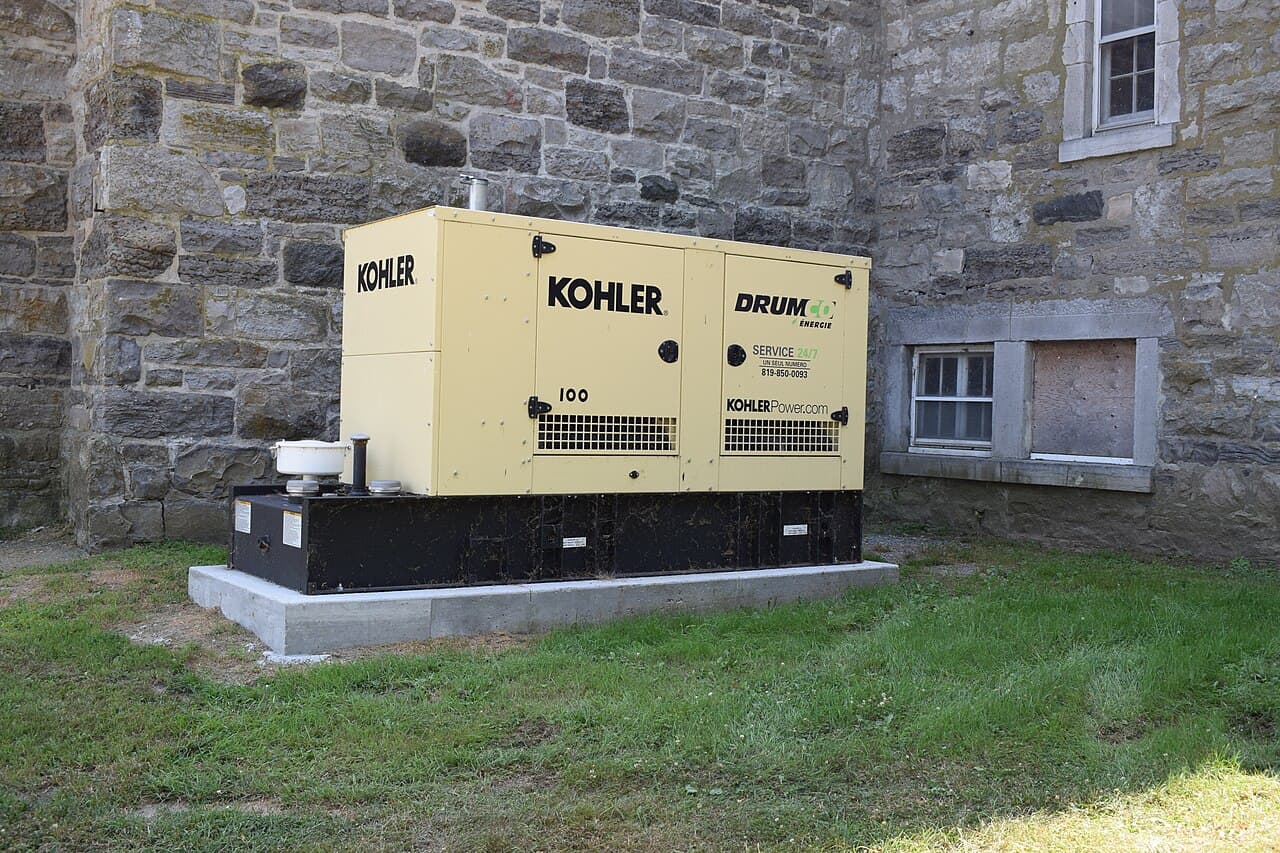
How often a generator needs service
Generac puts it plainly: all generators require periodic maintenance, such as oil and filter changes,[1] and the company recommends you have your unit serviced every 6 months by an authorized independent service dealer.[1] Kohler's operation manual for its 14 and 20 kW home models tells owners to have an authorized distributor/dealer service the generator set at the designated intervals in the service schedule for the life of the generator set.[2]
Intervals run on calendar time or engine hours, whichever comes first. On Kohler's 20 kW home models, the oil and filter are changed yearly or every 150 hours of run time,[2] and the 14 kW models are on a yearly or 100-hour oil change.[2] A long outage can use up those hours well before the calendar does, so a generator that ran for a week after a storm may be due early. Kohler also says to service units subject to extreme weather, long operating hours, or dusty or dirty conditions more frequently.[2]
Your own owner's manual is the schedule that counts. The model and serial number on the nameplate let a dealer pull the right one.
What the technician checks
Kohler publishes its whole schedule, so it makes a good checklist to compare against what your dealer quotes. Other brands cover the same systems with their own intervals.
Engine oil and filter. The oil and filter change is the centre of most visits. Kohler specifies 5W-30 or 10W-30 synthetic oil for these engines,[3] and a good technician uses what your manual calls for rather than whatever is on the truck.
Air cleaner and spark plugs. Kohler's schedule services the air cleaner and spark plugs yearly or at set run-hour intervals, more often in dusty conditions.[2] A clogged air cleaner or worn plugs can make an engine start hard or not at all.
Battery and charger. The battery cranks the engine, so it gets attention every time. Kohler's schedule calls for checking the battery charger's operation monthly, and cleaning the battery, its rack and its terminals yearly.[2] Between visits, the controller checks battery voltage before each exercise run to verify that the battery can start the engine.[2] Ask the technician to load-test the battery and tell you its age.
Fuel system. On Kohler's schedule, flexible fuel lines and connections are inspected quarterly and the fuel piping yearly.[2] Kohler's service manual has the technician check a gas fuel system for leaks with a soap-and-water solution while the system is under test pressure.[3] On a propane system, the technician should also note the tank level.
Exhaust and enclosure. The technician checks for exhaust leaks and for obstructions or combustible materials near the exhaust outlet,[2] and looks inside the sound enclosure for nests, debris, leaks and chafed wiring.
Wiring and controls. On Kohler's schedule, control and power wiring connections are tightened yearly, and wiring that moves is checked for abrasion every six months.[2] Less often, the schedule calls for measuring the alternator windings' insulation resistance every 3 years, a task Kohler marks as authorized distributor/dealer only.[2]
Controller and test run. The technician reads the fault and event history, clears the maintenance reminder and confirms the clock and exercise schedule. On Kohler's models, the RDC2 controller displays a reminder message every 150 hours of engine run time.[3] Firmware matters too: Kohler says nuisance shutdowns seen with earlier firmware versions of one of its controllers are eliminated by a firmware update.[3] Ask whether your controller is on current firmware.
The weekly exercise
Between visits, the generator tests itself. Kohler's manual says: "Exercising the generator set weekly or every two weeks is required to keep the engine and alternator in good operating condition."[2] On those models, the default exercise runs the engine for 20 minutes[2] and checks battery voltage, engine speed, output voltage and frequency, and oil pressure.[2] A service visit should confirm that the exercise is set and running. If you never hear your generator run on its scheduled day, mention it when you book.
What to watch for between visits
You do not need tools to keep an eye on a generator. Look at the controller display or app now and then for warnings. Generac's Mobile Link app shows a connected generator's operating status and maintenance schedule.[1] Keep the area around the unit clear: Kohler's installation manual says "No plants, shrubs, or other combustible materials are allowed within 1.2 m (4 ft.) of the exhaust end of the generator set."[4] Note any oil on the pad, new noises during the exercise run, or a smell of exhaust near doors and windows, and tell the technician.
A generator burns fuel, and any fuel-burning appliance in your home is a potential CO source.[5] The CPSC says "Every home should have a CO alarm in the hallway near the bedrooms in each separate sleeping area."[5]
Why the service itself is a pro's job
Some of the work needs equipment homeowners rarely have. Kohler's service manual says "Tools and instruments used to perform some maintenance items are not generally available to the generator set owner."[3] There is also a safety reason. Generator sets connected to automatic transfer switches start automatically during exercise periods and power outages,[4] and Kohler's manual warns that "Accidental starting can cause severe injury or death."[2] A technician knows how to disable the unit before working on it.
The law draws the line as well. Virginia defines an electrician as a tradesman who performs the construction, repair, maintenance, alteration, or removal of electrical systems regulated under the Uniform Statewide Building Code,[7] and a gas fitter's work includes the installation, repair, improvement, or removal of liquefied petroleum or natural gas piping, tanks, equipment and appliances annexed to real property.[7] Virginia law requires a licence to work as a tradesman or as a liquefied petroleum gas fitter.[8] For more on where the line falls, see whether a homeowner can do their own electrical work in Virginia.
When to call a licensed pro
Book a service visit at your manufacturer's interval, after any long outage, and whenever the controller shows a warning or fault. Call sooner for oil or fuel on the pad, a failed or missed exercise run, or a breaker that trips when the generator carries the house. If you smell gas, Columbia Gas of Virginia tells customers to get out immediately and, from a safe location away from the building, call 911 and the company's emergency number, 1-800-544-5606.[6] Customers of another gas company or a propane supplier should use that supplier's emergency line.
If you would rather not track the schedule, many Generac authorized dealers offer annual maintenance contracts.[1] Whatever you choose, get the terms on paper: Virginia law requires all licensed contractors to provide a written contract for residential work.[9] Ask that every visit leave you with a list of the tasks done, the parts and oil used, the run hours and any faults found. Check the licence of any company before it touches the fuel or wiring.
For what a visit costs, read how much standby generator service costs in Virginia. If your unit will not run at all, start with why a standby generator won't start. Browse generator repair, find electricians in Blacksburg, or read more electrical repair answers.
When your generator is due, describe the job once and licensed local businesses quote it.
Common questions
- How often should a home standby generator be serviced?
- Follow your manufacturer's schedule. Generac recommends service every 6 months by an authorized independent service dealer. Kohler's 20 kW home models call for an oil and filter change yearly or every 150 hours of run time, whichever comes first, so a long outage can bring the next visit forward.
- Does the technician run the generator during the visit?
- Yes. A test run lets the technician read the controller, hear the engine and confirm the weekly exercise is set. On Kohler's controllers the default exercise runs 20 minutes and checks battery voltage, engine speed, output voltage and frequency, and oil pressure.
- Why can't I do the service myself?
- Some of it needs tools owners do not have, and Kohler says service must be performed by an authorized distributor/dealer or trained service technician. A generator wired to an automatic transfer switch can start on its own at any time, and the fuel and electrical work involved is licensed trade work in Virginia.
- What should a service visit leave me with?
- A written record: the tasks done, the oil and parts used, the run hours, any fault messages found and fixed, and anything the technician recommends before the next visit. Keep it with your manual and your purchase paperwork.
- Is a maintenance contract worth it?
- It can be if you would otherwise forget the schedule. Many Generac authorized dealers offer annual maintenance contracts. Ask what each visit includes, whether parts are extra, and whether contract customers get priority after a storm.
Sources
- [1] Home Standby Generator FAQ, Generac Power Systems. Checked October 27, 2026.
- [2] Operation Manual TP-6804, Residential/Commercial Generator Sets 14/20RESA, 20RESC, Kohler Co.. Checked October 27, 2026.
- [3] Service Manual TP-6805, Residential/Commercial Generator Sets 14RESA-20RESD, Kohler Co.. Checked October 27, 2026.
- [4] Installation Manual TP-6803, Residential/Commercial Generator Sets 14RESA, 20RESC, Kohler Co.. Checked October 27, 2026.
- [5] The "Invisible" Killer: Carbon Monoxide (CPSC-464), U.S. Consumer Product Safety Commission. Checked October 27, 2026.
- [6] Report Gas Leaks, Columbia Gas of Virginia. Checked October 27, 2026.
- [7] 18VAC50-30-10, Definitions (Tradesman Rules and Regulations), Virginia Administrative Code, Board for Contractors. Checked October 27, 2026.
- [8] Va. Code § 54.1-1129, Necessity for licensure, Code of Virginia, Virginia General Assembly. Checked October 27, 2026.
- [9] What You Should Know Before You Hire a Contractor, Virginia Department of Professional and Occupational Regulation. Checked October 27, 2026.
Want a pro to handle it?
Describe the job once. Licensed local businesses send quotes, and you pay only when you book one.
Get a quote for Electrical Repair