Can a homeowner do their own electrical work in Virginia?
On the home you own and live in, yes, within limits. Virginia's licensing law does not apply to an owner working on one primary residence for their own use in any 24-month period, but that owner must still follow the building code, which means a permit and inspection for most wiring work. Anyone you pay to do electrical work must be licensed.
Free to ask. Local shops send quotes, and you pay only when you book one.
By Kasra Taheri, Founder, LoclisPublished
Researched and drafted with AI, then checked claim by claim against the sources listed below before it was published. Prices and rules change; the dates beside each source say when it was last checked.
This is a job for a licensed pro in Virginia
This page explains what the work involves, the permits, what a licensed pro does and what drives the cost. It does not give step-by-step instructions, because this work needs a licence, a permit or both, and doing it wrong can injure someone. Before you hire, check the licence on Virginia's DPOR record.
Yes, on the home you own and live in, within limits. Virginia's contractor and tradesman licensing law has an exemption for owners working on their own primary residence, so you do not need an electrician's licence to work on your own house. You still have to follow the Uniform Statewide Building Code, which means a permit and inspection for most wiring work, and anyone you pay to do electrical work must hold a licence.
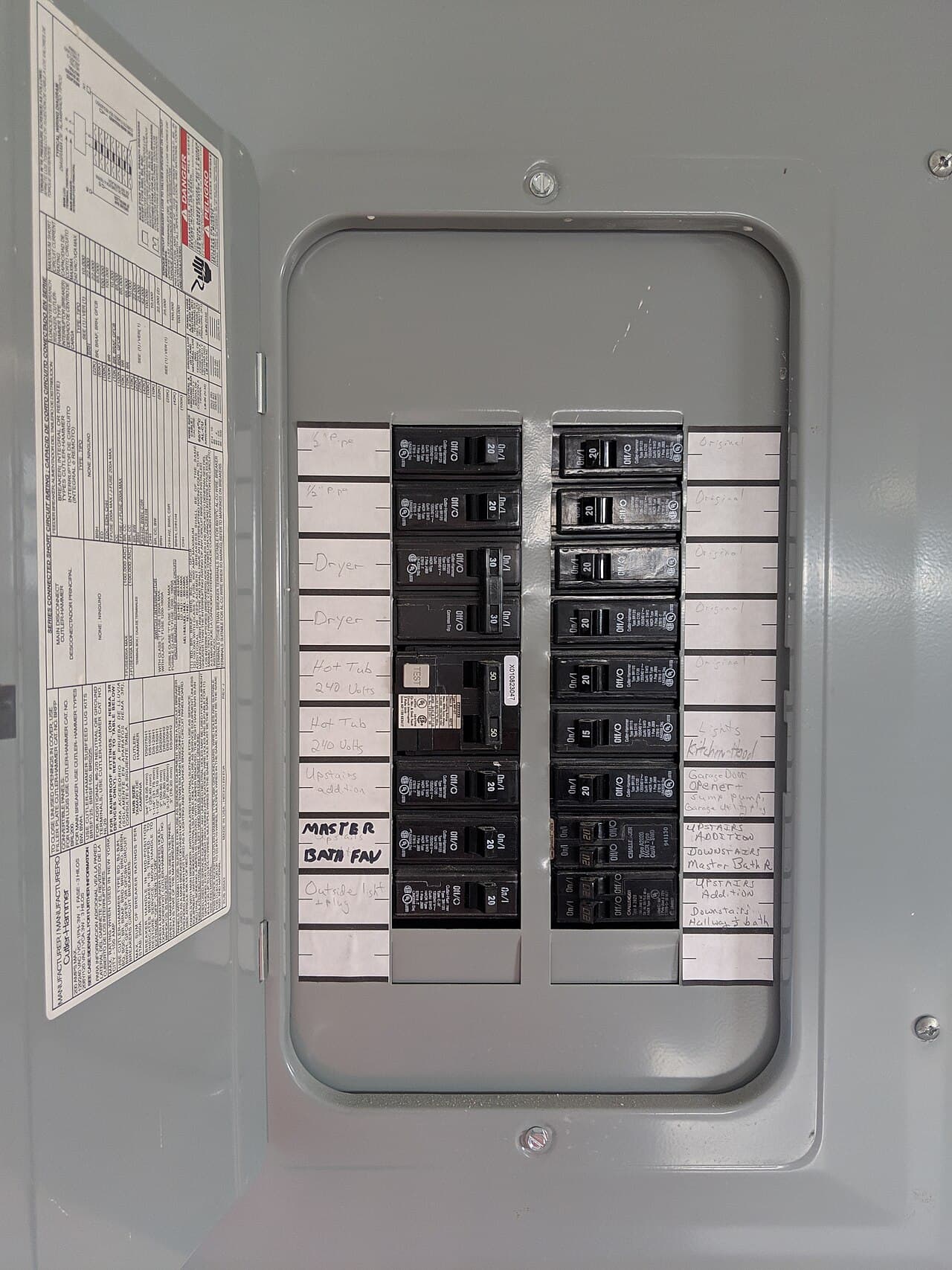
The owner's exemption
Chapter 11 of Title 54.1 of the Code of Virginia is where the state licenses contractors and tradesmen, electricians among them. Section 54.1-1101 lists who it does not apply to, including any person who performs or supervises the construction, removal, repair, or improvement of no more than one primary residence owned by him and for his own use during any 24-month period.[1]
Read that closely. It covers:
- A home you own. Not a friend's house, and not a relative's, apart from a separate exemption for a house on your own land built as a bona fide gift to an immediate family member who lives in it.[1]
- Your primary residence, for your own use. A second home or a flip is not covered by this exemption.
- One residence in any 24-month period.
There is a separate exemption for landlords: the chapter also does not apply to the repair or improvement of residential dwelling units owned by him that are subject to the Virginia Residential Landlord and Tenant Act.[1]
Neither exemption is an exemption from the building code. The statute says an owner using either exemption must comply with the Uniform Statewide Building Code.[1]
Anyone you pay needs a licence
The exemption is personal to the owner. Virginia's Code says a tradesman is defined as any individual who engages in, or offers to engage in, electrical, plumbing or HVAC work for the general public for compensation,[2] and no individual may do that work unless licensed.[3] The one carve-out is that someone working under the supervision of a tradesman licensed in the specialty being performed does not need a licence of their own.[3]
So a handyman, a relative or a neighbour you pay to wire a circuit needs an electrical licence, or a licensed electrician supervising them. Prince William County's owner affidavit spells it out: "If the work is performed by any other person or firm employed by me, that person or firm must comply with state and local contractor licensing laws."[6]
Permits and inspections still apply
Virginia's building code says a permit is required before work starts on installations or alterations involving electric wiring.[5] It also lists minor jobs that need no permit application: replacement of general use switches, dimmers, 125-volt 15- or 20-amp receptacles, light fixtures and ceiling fans needs no permit application in Groups R-3, R-4 and R-5, and in Group R-2 where serving a single dwelling unit.[5] That list does not exempt the work from the code's other requirements, and when an owner asks for a permit for exempt work, one is issued and the related inspections are required.[5]
Anything beyond that list, such as a new circuit, new outlets, a subpanel or work at the service, is an installation or alteration involving electric wiring. Your local building official decides where a particular job falls.
When an owner applies for that permit, Virginia's Code says anyone applying for a building permit must either show proof of a licence or file a written statement that they are not subject to licensure as a contractor or subcontractor.[4] Localities use their own forms for that statement. Prince William County's Affidavit of Owner has the owner affirm that they are not subject to licensure and that "I will be solely responsible for all construction on the described property allowed by the permit(s) hereby issued."[6] Craig County's building office uses an Owner/Builder Affidavit that sets out the same exemptions and the penalty for unlicensed contracting: a fine of up to $500 a day on top of the penalties for a Class 1 misdemeanor.[7]
When you sell
The exemption has a consequence later. Under § 54.1-1101, an owner who uses the primary-residence or rental exemption must obtain a certificate of occupancy for any building constructed, repaired or improved by him before selling it to a third party, unless the buyer acknowledges in writing that none has been issued and agrees to buy without one.[1] Violating that rule, or the duty to follow the building code, is a Class 1 misdemeanor.[1] Keeping your permits and inspection records makes a sale simpler.
Don't let a contractor use your exemption
Some contractors ask the homeowner to pull the permit in the owner's name. The Board for Contractors warns against it: "Anyone who tries to talk you into getting your own building permit is not doing you any favors."[8] It explains that the permit holder becomes the general contractor and assumes responsibility for the overall job.[8] If you are hiring, the licensed electrician should pull the permit in their own name.
Being allowed is not the same as being safe
The law lets you work on your own wiring; it does not make the work low-risk. Wiring mistakes usually end up hidden inside walls and boxes, where nobody sees them until something goes wrong. For aluminum-wired homes with signs of a problem, the U.S. Consumer Product Safety Commission says to have a qualified electrician determine the cause rather than doing it yourself, because "You could be electrocuted, or you could make the problem worse."[9] Our answer on the warning signs of bad wiring covers what an electrician looks for.
When to call a licensed pro
Hire a licensed electrician for any electrical work on a house you do not own and live in, for anything at the panel or service, and whenever you are unsure what is behind the wall. Call one the same day for a warm outlet or switch, a burning smell, a breaker that trips again right after reset, or any shock. Before hiring, check the electrician's licence on DPOR's record, and see what happens during a service call.
Find an electrician
Browse electrical services on Loclis, look up electricians in Blacksburg, or read more electrical answers.
Describe your electrical job and licensed local electricians quote it.
Common questions
- Can I do electrical work on a house I rent out?
- Virginia's licensing chapter also exempts an owner repairing or improving residential units they own that are subject to the Virginia Residential Landlord and Tenant Act. The building code still applies, so wiring work needs a permit and inspection, and anyone you pay to do it must be licensed.
- Can a friend or relative do the wiring for me?
- If you pay them, they need a Virginia electrical licence or must work under the supervision of a licensed electrician. Prince William County's owner affidavit puts it plainly: anyone the owner employs to do the work must comply with state and local licensing laws.
- Do I need a permit to replace an outlet or a light fixture?
- Usually not. Virginia's building code lists like-for-like replacement of switches, standard 125-volt receptacles, light fixtures and ceiling fans among the jobs that need no permit application in most homes. Running a new circuit or adding outlets is new wiring and needs one.
- Will the building department inspect work I did myself?
- Yes, when the work needs a permit. The permit comes with inspections, and the inspector checks the work against the code whether an owner or an electrician did it. Ask your local building office which inspections apply before work starts.
- Does doing my own wiring cause problems when I sell?
- It can. Virginia law requires an owner who used the primary-residence exemption to get a certificate of occupancy for work they did before selling to a third party, unless the buyer agrees in writing to buy without one. Unpermitted work can also surface in a buyer's inspection.
Sources
- [1] Code of Virginia § 54.1-1101, Exemptions; failure to obtain certificate of occupancy; penalties, Code of Virginia, Legislative Information System. Checked October 26, 2026.
- [2] Code of Virginia § 54.1-1128, Definitions (tradesmen), Code of Virginia, Legislative Information System. Checked October 26, 2026.
- [3] Code of Virginia § 54.1-1129, Necessity for licensure, Code of Virginia, Legislative Information System. Checked October 26, 2026.
- [4] Code of Virginia § 54.1-1111, Prerequisites to obtaining building, etc., permit, Code of Virginia, Legislative Information System. Checked October 26, 2026.
- [5] 13VAC5-63-80, Virginia Uniform Statewide Building Code, Section 108 Application for permit, Virginia Administrative Code, Legislative Information System. Checked October 26, 2026.
- [6] Affidavit of Owner, Prince William County, Department of Development Services, Building Development Division. Checked October 26, 2026.
- [7] Owner/Builder Affidavit, Craig County, Virginia, Building Office. Checked October 26, 2026.
- [8] What You Should Know Before You Hire a Contractor, Virginia Board for Contractors, DPOR. Checked October 26, 2026.
- [9] Repairing Aluminum Wiring (Publication 516), U.S. Consumer Product Safety Commission. Checked October 26, 2026.
Want a pro to handle it?
Describe the job once. Licensed local businesses send quotes, and you pay only when you book one.
Get a quote for Electrical Repair