What problems can a sewer scope find?
A sewer scope shows the inside of the buried line from your house to the sewer main. It can reveal tree roots growing in, cracked or broken pipe, grease build-up and trash or debris, the problems Seattle Public Utilities lists for a video inspection. It cannot repair anything or price a repair, so show the recording to a licensed plumber.
Free to ask. Local shops send quotes, and you pay only when you book one.
By Kasra Taheri, Founder, LoclisPublished
Researched and drafted with AI, then checked claim by claim against the sources listed below before it was published. Prices and rules change; the dates beside each source say when it was last checked.
Step by step
Read when to stop and call a pro, further down this page, before you start.
Step 1: Write down the symptoms
Note frequently clogged drains, odor of sewage and basement backups during rain, the signs Fairfax County lists for a lateral that may need repair.[2]
Step 2: Find the cleanout
Look for a capped pipe at ground level near the house; Spotsylvania County says a cleanout is usually 4 inches across with a tight-fitting cap.[4]
Step 3: Hire a camera inspection
Book a licensed plumber, drain service or inspector who will run a video camera through the line and film it.[1]
Step 4: Ask for the recording and a written report
Ask for the video itself and for each problem to be located by its distance from where the camera went in.
Step 5: Ask what the camera could not see
Ask whether the camera stopped at a blockage, a bend or a collapse, and what that left unchecked.
Step 6: Get a repair quote if it shows damage
Show the recording to a licensed plumber and get a written quote; a repair on private property needs a plumbing permit in Fairfax County.[2]
A sewer scope finds what is wrong inside the buried pipe between your house and the public sewer: roots that have grown in, cracks and broken sections, grease build-up, and trash or other debris. Seattle Public Utilities lists those four as the problems you may find when a video camera is run through the line.[1] The scope does not repair anything. It shows you the pipe, so you can decide what, if anything, to fix.
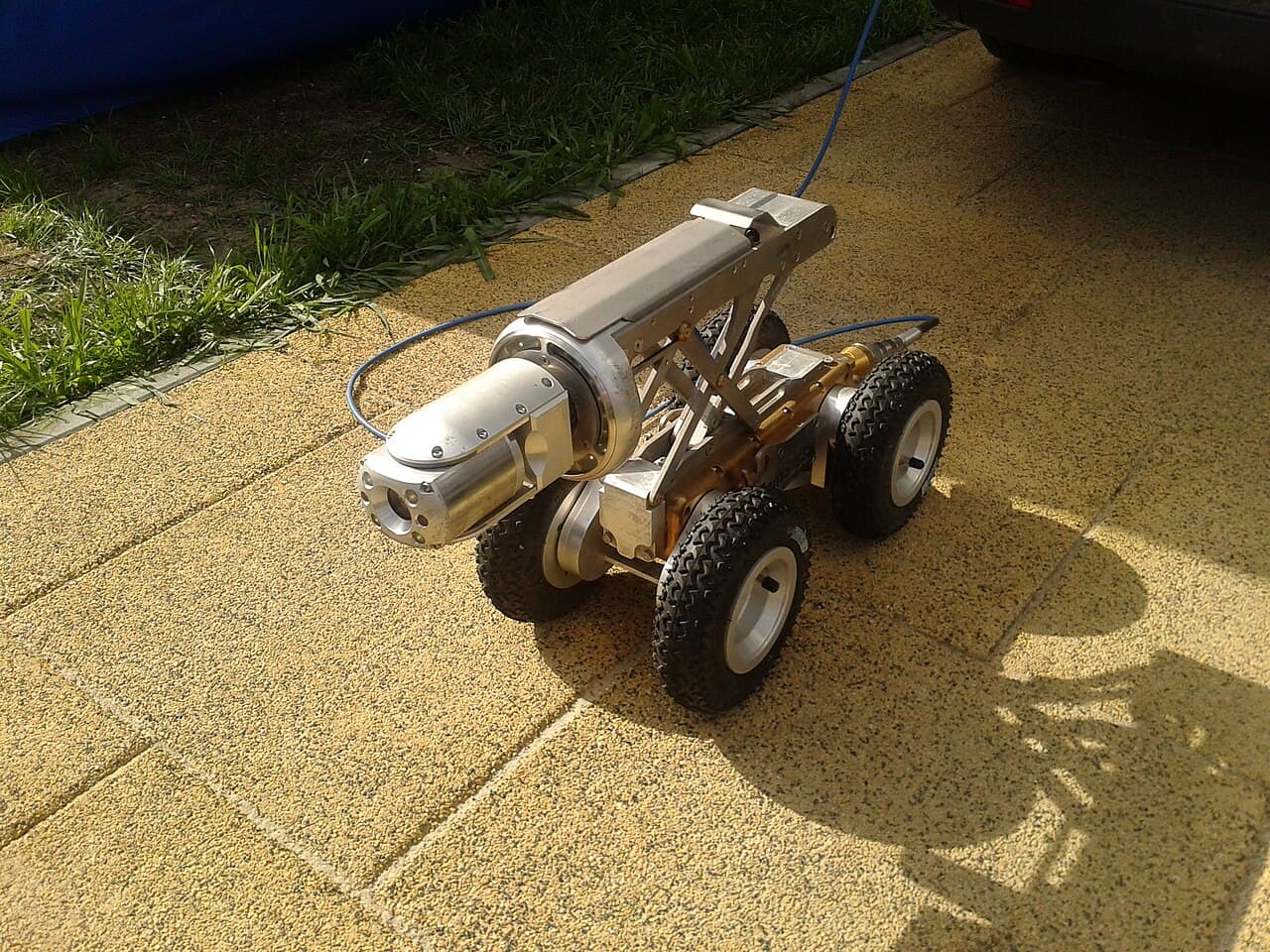
What a scope can show
Tree and shrub roots. Roots can easily grow into cracks or holes, especially in older pipes.[1] Spotsylvania County makes the same point from the other direction: broken sewer laterals can allow tree roots or debris into the pipe, which may cause blockages, building backups, or overflows in the environment.[4] On camera, roots usually look like a mass of fine threads or a thick plug at a joint. The recording lets a plumber see whether that is a light fringe or a pipe that is mostly closed.
Cracks and broken pipe. Seattle says cracked pipes leak sewage and invite tree root damage.[1] Fairfax County lists cracked or broken laterals, along with root intrusion, among the causes of basement backups.[2] A crack that is only a hairline is a very different finding from a section that has collapsed or shifted so the pipe no longer lines up, and the footage is how you tell them apart.
Grease. Oil and grease from food builds up in pipes and can cause sewer backups.[1] A scope shows whether the walls are coated and by how much, which usually points to cleaning rather than repair.
Debris. Seattle notes that debris could include flushed trash or other non-degradable materials.[1] The City of Salem warns that even wipes labeled "flushable" build up in pipes, causing blockages.[6]
Low spots and standing water. A line that sags can hold water and waste instead of draining it. Inspectors often note this as a belly in the pipe; it can be hard to judge from the recording alone, so ask the inspector to describe what they saw and where.
What a scope cannot tell you
A scope shows the inside of the pipe, as far as the camera can travel. It will not show what is wrong with the fixtures in your house, and it may stop short at a blockage, a sharp bend or a collapse. It also does not tell you what a repair costs; for that you need a quote from a licensed plumber. Fairfax County says the best way to assess the condition of a lateral is by Closed Circuit Television Video (CCTV) examination,[2] and Spotsylvania County requires a video inspection before it will set the water meter at a new connection,[5] but neither promises that the camera sees everything.
When a scope is worth ordering
Fairfax County lists the signs that a lateral may need repair: frequently clogged drains, odor of sewage, and basement backups during rain.[2] Its wastewater division adds that recurring clogs, sewer odors, or basement backups may be a sign of a failing lateral, and that homeowners who want to check their lateral's condition can hire a licensed contractor to perform a video inspection or evaluation.[3] If you are buying an older house, a scope before you buy is the usual way to find out what you would inherit, and what a scope costs in Virginia depends mainly on access and the length of the line.
Getting it done
The steps above are what you can do yourself: note the symptoms, find the cleanout, hire the camera inspection and ask the right questions about the result. Spotsylvania County says a cleanout is usually 4 inches across with a tight-fitting cap.[4] If you cannot find one, a plumber can help locate it, and the scope company will want to know before they arrive.
When you read the report, ask for the recording itself and for each problem to be located by distance from the point where the camera went in. Then show it to a licensed plumber. Fairfax County says a repair or replacement on private property requires a plumbing permit,[2] so a quote should say who pulls it.
Stop and call a pro if
- sewage is coming up in a drain, a basement floor or the yard right now
- the scope found a collapsed or offset section, or the camera could not get past a blockage
- you are tempted to dig, pull a toilet or force the cleanout open yourself; leave that to a licensed plumber, and call 811 before any dig on the lot
Getting help in Virginia
Loclis lists DPOR-licensed businesses with their licence number and class. Browse inspection services or read more inspection answers. To plan how often to repeat the camera inspection, see how often a sewer line should be scoped.
When you are ready, describe the job once and licensed local pros quote it.
Common questions
- Can a sewer scope find tree roots?
- Yes. Roots that have grown into cracks or joints show up on the camera, and Seattle Public Utilities lists tree and shrub roots as a problem you may find. The recording shows how heavy the growth is, which tells a plumber whether cleaning may be enough.
- Can a sewer scope find a crack or a collapsed pipe?
- Usually, if the camera can reach the damaged section. Cracks and breaks are among the main things a scope is ordered to find. If a collapse or blockage stops the camera, the report should say where it stopped.
- Will a sewer scope show a leak into the ground?
- It can show cracks and broken joints, which are where leaks happen, but it does not measure leakage. Ask the inspector to point out any damaged section on the recording.
- Does a sewer scope check the plumbing inside the house?
- No. It films the buried line from the cleanout or access point toward the sewer main. Drains and fixtures inside the house are a plumber's separate job.
- What do I do if the scope finds a problem?
- Get the recording and a written report, then ask a licensed plumber for a written quote. Fairfax County notes that a repair on private property requires a plumbing permit, so ask who will pull it.
- Does a clean scope mean the pipe is fine for good?
- No. It tells you the pipe's condition on the day it was filmed, as far as the camera went. Roots, grease and debris can build up again, which is why people repeat the scope.
Sources
- [1] Taking Care of Your Sewer Pipe, Seattle Public Utilities, City of Seattle. Checked October 28, 2026.
- [2] Sanitary Sewer House Lateral (published November 2024), Fairfax County Department of Code Compliance. Checked October 28, 2026.
- [3] Residential Wastewater Management, Fairfax County Department of Public Works and Environmental Services. Checked October 28, 2026.
- [4] Utilities: Sanitary Sewer Lateral, frequently asked questions, Spotsylvania County, Virginia. Checked October 28, 2026.
- [5] Sanitary Sewer Lateral Inspections, Spotsylvania County Utilities, Virginia. Checked October 28, 2026.
- [6] Water & Sewer: Backup vs. Overflow, frequently asked questions, City of Salem, Virginia. Checked October 28, 2026.
Want a pro to handle it?
Describe the job once. Licensed local businesses send quotes, and you pay only when you book one.
Get a quote from a local pro