When is it time to replace a furnace?
Start planning a replacement once the furnace is past about 15 years and showing its age: repairs every winter, rising fuel bills, uneven heat, new noises or a yellow burner flame. A safety finding such as a cracked heat exchanger needs a licensed diagnosis at any age. Have a licensed HVAC business inspect it and price both repair and replacement before it fails in the cold.
Free to ask. Local shops send quotes, and you pay only when you book one.
By Kasra Taheri, Founder, LoclisUpdated
Researched and drafted with AI, then checked claim by claim against the sources listed below before it was published. Prices and rules change; the dates beside each source say when it was last checked.
This is a job for a licensed pro in Virginia
This page explains what the work involves, the permits, what a licensed pro does and what drives the cost. It does not give step-by-step instructions, because this work needs a licence, a permit or both, and doing it wrong can injure someone. Before you hire, check the licence on Virginia's DPOR record.
It is time to start planning a new furnace when it is past about 15 years old and showing its age: repairs every winter, fuel bills creeping up, uneven heat, new noises, or a yellow burner flame. A safety finding, such as a cracked heat exchanger, needs a licensed technician's diagnosis at any age and can bring the decision forward. The best time to decide is before the furnace quits in January, with a licensed technician's diagnosis and written prices for both repair and replacement in hand.
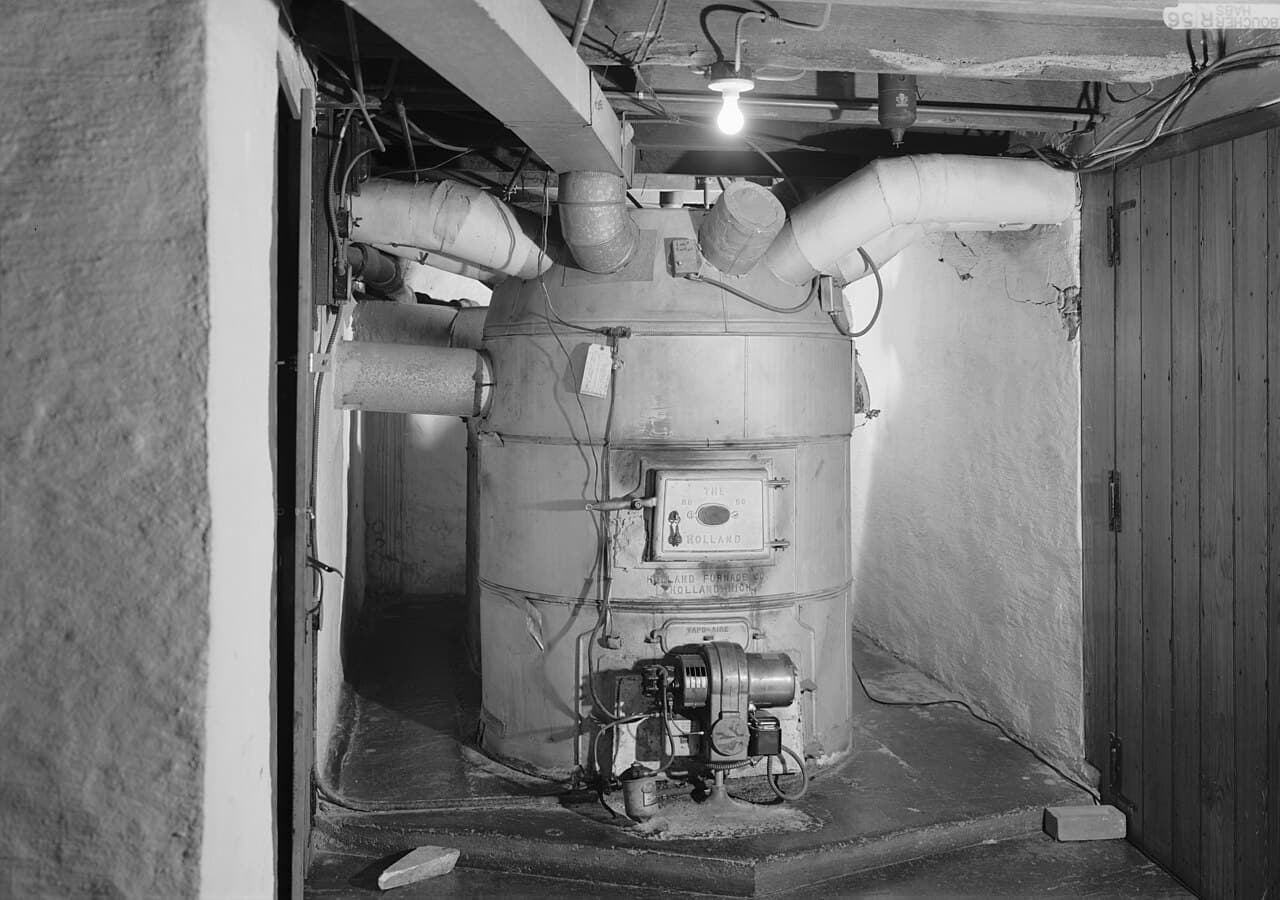
Age is the first thing to check
ENERGY STAR says it may be time to call a professional contractor about replacing a furnace or boiler that is more than 15 years old.[1] Manufacturers give similar numbers. Lennox puts it simply: "The average lifespan of furnaces is 15-20 years."[2] By type, it says gas furnaces can last 15 to 20 years and electric furnaces 20 to 30 years.[2]
Age is a prompt, not a verdict. Bryant puts it directly: age alone does not determine when replacement is necessary.[3] A 17-year-old furnace serviced every fall may have years left; a 10-year-old one that was badly installed may not.
If you do not know how old yours is, Lennox suggests you find the owner's manual or look up the serial number on the furnace itself.[2] The data plate is usually inside the front panel door. For more on what shortens or stretches that lifespan, see how long a furnace lasts.
The signs that a furnace is wearing out
ENERGY STAR lists equipment that needs frequent repairs while energy bills go up[1] among the signs to call a contractor. Bryant lists rising energy bills, frequent repair calls, uneven heating, strange mechanical noises, and declining performance[3] as signs a furnace may be nearing replacement age. Lennox adds that a furnace that takes a long time to turn on may be starting to fail,[2] and that multiple furnace repairs within a few years are a sign the furnace is failing.[2]
Not every comfort problem is the furnace's fault. ENERGY STAR says rooms that are too hot or too cold can come from improper equipment operation, duct problems or inadequate insulation.[1] A new furnace on leaky ducts can leave the same bedroom cold, so ask the contractor to look at the ducts as part of the assessment.
Safety problems come first
Some findings need attention before any talk of age or efficiency. ENERGY STAR's maintenance checklist warns: "A dirty burner or cracked heat exchanger causes improper burner operation."[5] Carrier explains that a severely clogged filter can result in an overheated and possibly cracked heat exchanger, which can lead to a carbon monoxide leak.[6] Bryant notes that a yellow or abnormal burner flame can indicate a combustion or ventilation problem[3] that needs a professional inspection, and Lennox warns of health issues from carbon monoxide if components in your furnace are damaged.[2]
If a technician tells you the heat exchanger is cracked, ask to see the evidence, get the finding in writing, and get a second licensed opinion before you decide between a repair and a new furnace. If you smell gas or have carbon monoxide symptoms, Columbia Gas of Virginia tells its customers to "go outside and call 911" and then call the gas company.[12]
Weighing the repair bill
The common rule of thumb is Lennox's: "It's best to replace your furnace if a repair costs more than half the cost of a new furnace."[2] Bryant is more cautious, saying there is no universal rule that a repair must exceed 50% of replacement cost before replacement makes sense.[4] It suggests looking at the furnace's age and condition, repair history, efficiency, expected remaining service life, and the cost of the proposed repair compared with replacement.[4]
Efficiency is part of that sum. ENERGY STAR says an ENERGY STAR qualified furnace is 15% more efficient than a conventional furnace,[1] so an old, inefficient furnace costs you every winter it stays. For the full comparison, read should I repair or replace my furnace; for prices, how much a new furnace costs in Virginia.
Replace on your schedule, not the furnace's
A furnace that dies on the coldest night of the year leaves you choosing from whatever a busy contractor has in stock. Virginia's building code makes room for that: the work can start first, but applications for emergency equipment replacement must be submitted by the end of the first working day after the day the work starts.[8] But planning ahead gives you time to collect quotes, ask about sizing and compare efficiency.
Whether it is planned or an emergency, the code only exempts the replacement of mechanical appliances that are not fueled by gas or oil,[8] so a gas, propane or oil furnace replacement needs a permit. See do you need a permit to replace an HVAC system in Virginia.
Getting the assessment
Before you call, ENERGY STAR suggests you know the model of your current system and its maintenance history, and make a note of any uncomfortable rooms.[7] It also says the contractor should spend significant time inspecting your current system and home,[7] not just read the old furnace's label. Ask each business for:
- a written description of what is wrong, with photos if it is a safety finding;
- a written repair price and a written replacement price from the same visit;
- how they would size a new furnace, and whether that includes a heating-load calculation;
- what the permit, removal of the old furnace and any venting or duct changes add.
What replacing a furnace involves explains each part of the job, so you can see when a quote leaves something out.
When to call a licensed pro
Deciding when to replace is a judgment you make, but the inspection behind it, and the replacement itself, are licensed work. Under Virginia law, no individual may work as a tradesman without a licence, and the Code's definition of a tradesman includes anyone doing heating, ventilation and air conditioning work for the public for pay.[9][10] Check a business on DPOR's License Lookup[11] or read does an HVAC technician need a licence in Virginia.
Book an inspection and both prices when:
- the furnace is past 15 years old and has needed a repair this season;
- a single repair quote is large, or it is the second or third repair in two winters;
- a technician reports a cracked heat exchanger, a yellow flame or another combustion problem;
- fuel bills keep rising with no change in how you use the house.
Getting quotes in Virginia
Loclis lists DPOR-licensed HVAC businesses with their licence number and class. Look up HVAC businesses in Blacksburg, browse furnace replacement, or read more heating and cooling answers.
Describe your furnace and what it is doing and licensed local HVAC businesses quote the repair, the replacement, or both.
Common questions
- Should I replace a 20-year-old furnace that still works?
- Not automatically, but start planning. Lennox puts the average furnace lifespan at 15 to 20 years, and Bryant says age alone does not decide it. Have a licensed technician inspect it and give you a written replacement price now, so you are choosing on your own schedule rather than in an emergency.
- Is a cracked heat exchanger a reason to replace the furnace?
- It is a safety problem to deal with before anything else. ENERGY STAR says a cracked heat exchanger causes improper burner operation, and Carrier says one can lead to a carbon monoxide leak. Whether to repair or replace is a decision to make with the written finding and prices for both. Ask the technician to show you what they found, and get a second licensed opinion.
- Does the 50 percent rule work for furnaces?
- As a rough guide. Lennox says it is best to replace a furnace if a repair costs more than half the cost of a new one, while Bryant says there is no universal 50% rule and points to age, condition, repair history and efficiency as well. Use it with written prices for both options.
- Is it better to replace a furnace before it breaks?
- Usually. A planned replacement gives you time to get several quotes and a proper sizing. If it fails in winter, Virginia's building code lets the work start first, but the permit application must be submitted by the end of the first working day after the day the work starts, and you will have fewer choices.
- Can uneven heating mean I need a new furnace?
- Sometimes, but not always. ENERGY STAR says rooms that are too hot or too cold can come from improper equipment operation, duct problems or inadequate insulation. Ask the contractor to check the ducts before you pay for a new furnace to fix one cold room.
Sources
- [1] When is it time to replace?, ENERGY STAR, U.S. Environmental Protection Agency. Checked October 26, 2026.
- [2] How Long Does a Furnace Last?, Lennox. Checked October 26, 2026.
- [3] How Long Does a Furnace Last?, Bryant. Checked October 26, 2026.
- [4] What is Furnace Short Cycling and How Can You Fix It?, Bryant. Checked October 26, 2026.
- [5] Maintenance Checklist, ENERGY STAR, U.S. Environmental Protection Agency. Checked October 26, 2026.
- [6] Annual Furnace Maintenance Guide, Carrier. Checked October 26, 2026.
- [7] 10 Tips for Hiring a Heating and Cooling Contractor, ENERGY STAR, U.S. Environmental Protection Agency. Checked October 26, 2026.
- [8] 13VAC5-63-80, Section 108 Application for permit, Virginia Uniform Statewide Building Code, Virginia Administrative Code. Checked October 26, 2026.
- [9] Va. Code § 54.1-1129, Necessity for licensure, Code of Virginia, Virginia General Assembly. Checked October 26, 2026.
- [10] Va. Code § 54.1-1128, Definitions, Code of Virginia, Virginia General Assembly. Checked October 26, 2026.
- [11] License Lookup, Virginia Department of Professional and Occupational Regulation. Checked October 26, 2026.
- [12] Natural Gas Safety, Columbia Gas of Virginia. Checked October 27, 2026.
Want a pro to handle it?
Describe the job once. Licensed local businesses send quotes, and you pay only when you book one.
Get a quote for HVAC Repair