Do you need a permit to replace an HVAC system in Virginia?
Often, yes. Virginia's building code requires a permit for mechanical work but, for the residential groups it lists, exempts replacing appliances not fueled by gas or oil, so a gas or oil furnace swap needs one. Counties read the exemption differently: Pittsylvania County needs no permit for the same type, size and location, while Fairfax County's mechanical permit page lists HVAC replacement as needing one. Ask your building department.
Free to ask. Local shops send quotes, and you pay only when you book one.
By Kasra Taheri, Founder, LoclisUpdated
Researched and drafted with AI, then checked claim by claim against the sources listed below before it was published. Prices and rules change; the dates beside each source say when it was last checked.
This is a job for a licensed pro in Virginia
This page explains what the work involves, the permits, what a licensed pro does and what drives the cost. It does not give step-by-step instructions, because this work needs a licence, a permit or both, and doing it wrong can injure someone. Before you hire, check the licence on Virginia's DPOR record.
Often, yes, and the honest answer depends on what is being replaced and where you live. Virginia has one building code for the whole state, and its exemption for replacing equipment is narrow: it does not cover anything fueled by gas or oil.[1] Counties publish their own guidance on the rest, and as the examples below show, that guidance does not always match. A like-for-like electric heat pump or air conditioner swap is where it differs most.
What the statewide code says
Under the Uniform Statewide Building Code, a permit has to be obtained before work starts on mechanical systems, fuel supply systems, electric wiring and any equipment the code regulates.[1] The code then lists work that needs no permit. The entry that matters for heating and cooling reads: "Replacement of mechanical appliances provided such equipment is not fueled by gas or oil".[1] It applies in Group R-2 where serving a single-family dwelling and in Groups R-3, R-4 and R-5,[1] and the code separately exempts other repair work the building official deems minor and ordinary.[1]
Two things follow. A gas or oil furnace is outside the exemption, so replacing one needs a permit even like for like. And even where a permit is not required, the exemption does not excuse the work from the rest of the code.[1] An unpermitted heat pump still has to be installed to code.
How Virginia localities apply it
The same code produces different local answers, which is why the first call is to your own building department.
Fairfax County points both ways, so ask. Fairfax County's general permit guidance lists direct replacement of household appliances, including HVAC, among residential projects that need a permit,[2] but the same page also lists direct replacement of mechanical work, with no change in location and like for like, among residential projects that do not.[2] Its residential mechanical permit page says a permit is required for new, replacement, repair or conversion of HVAC systems and for new or replacement ductwork.[3] Fairfax also notes that a Residential HVAC Certification may be required for HVAC projects.[3]
Pittsylvania County applies the exemption. Pittsylvania County says replacing mechanical equipment of the same type, size and location does not need a permit,[4] but it requires one for a first-time installation, for replacing any gas or oil-fueled appliance, and for adding, moving or removing air-conditioning, ventilation and refrigeration systems, furnaces and ductwork.[4]
Spotsylvania County issues a permit for replacements. Spotsylvania County's mechanical application, updated in August 2025, asks whether the job is a "Replacement: YES – Like for Like" or a "New Install", and lists an HVAC or furnace replacement permit at $147.00.[5] It adds that an HVAC system design worksheet, covering loads, equipment and ducts, is due at inspection when new ductwork is installed, such as for a unit that never existed on the home.[5]
Prince William County shows the electrical side. Its 2019 guidelines for replacing mechanical equipment without plan review say: "If homeowner/contractor is replacing a heat pump with the same, no permit is required."[6] The conditions they list for a replacement include the same capacity, the same location, existing ductwork not moved without full plan review, and "Electrical permit required."[6] Ask whether those guidelines are still current before relying on them.
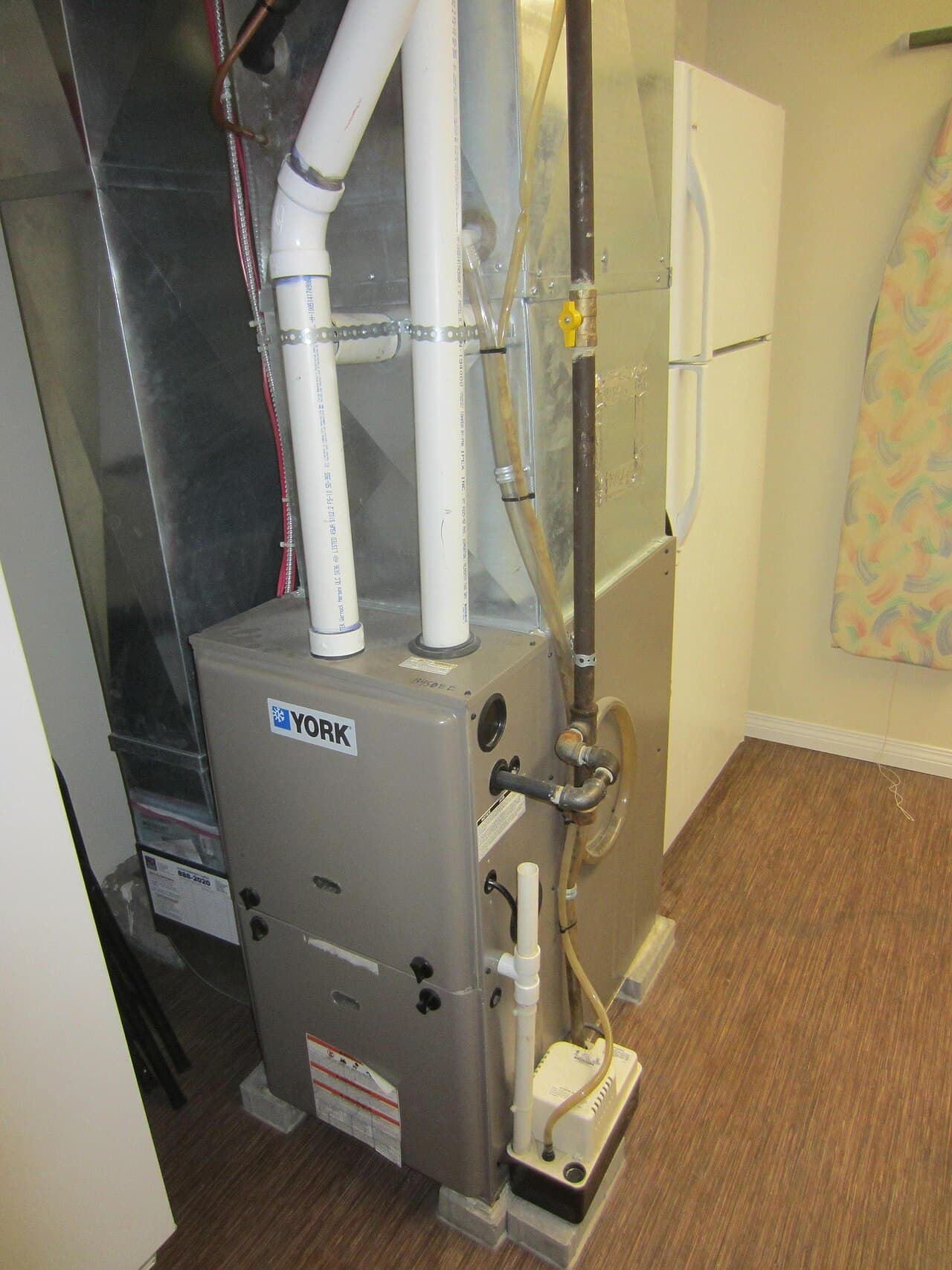
What usually changes the answer
Under the statewide code, anything fueled by gas or oil falls outside the replacement exemption,[1] and installing electric wiring, such as a new circuit, is on the code's list of work that needs a permit.[1]
The county rules above add their own conditions. Pittsylvania County exempts only a replacement of the same type, size and location, and requires a permit for a first-time installation and for adding, relocating or removing systems and ductwork.[4] Prince William County's 2019 guidelines required the same capacity and location for a replacement without plan review.[6] If your job changes the equipment type, size, location or ductwork, ask your building department before assuming the exemption applies.
Emergencies, inspections and asking for a permit anyway
A dead system in July does not have to wait on paperwork. Under the code, an application for emergency equipment replacement can be filed by the end of the first working day after the work starts.[1]
You can also choose inspection where it is optional. If an owner asks for a permit for exempt work, the building official has to issue one and the related inspections are required.[1] For a system you will live with for years, asking for the permit means a building inspector looks at the work.
Where a permit is issued, Pittsylvania County says most mechanical permits need two inspections, one at rough-in before insulation and wallboard go up and one when the equipment is installed and operating.[4]
Who pulls the permit
The contractor should. Under Virginia law, anyone applying for a building permit must give the building official proof that they are licensed under Virginia's contractor law or a written statement that they are not subject to licensure.[7] Fairfax County puts the practical advice plainly: "Property owners may obtain permits in their own name, however, it is strongly recommended a properly licensed contractor pull the permits as the responsible party".[3]
The Board for Contractors backs this up. Its list of prohibited acts includes "Failure to obtain a building permit or applicable inspection, where required",[8] and a residential contract must include a statement of assurance that the contractor will comply with all local requirements for building permits, inspections and zoning.[8]
When to call a licensed pro
For any HVAC replacement. Under Virginia law, an individual who does heating, ventilation and air conditioning work for the general public for compensation is a tradesman,[10] and must be licensed, or work under the supervision of a tradesman licensed in that specialty.[9] Before you hire, check the contractor's licence and ask each one to say in writing whether the quote includes the permit and inspections. If a contractor skipped a required permit, see how to file a complaint against a contractor in Virginia.
To see the whole job, read what installing a new HVAC system involves. Browse heating and cooling services, find HVAC businesses in Blacksburg, or read more heating and cooling answers.
When you are ready, describe the job once and licensed local HVAC businesses quote it.
Common questions
- Do I need a permit to replace a gas furnace in Virginia?
- Yes. The statewide code only exempts replacing mechanical appliances that are not fueled by gas or oil, so a gas or oil furnace replacement needs a permit even when the new one matches the old.
- Do I need a permit to replace a heat pump with the same size heat pump?
- It depends on your locality. The statewide code exempts replacing equipment that is not gas or oil fired, and Pittsylvania County needs no permit for the same type, size and location. Fairfax County's pages point both ways, listing HVAC replacement as needing a permit but like-for-like mechanical replacement as exempt. Prince William County's 2019 guidelines said no permit, while listing an electrical permit among their conditions. Call your building department.
- My system died in a heat wave. Does the contractor have to wait for a permit?
- No. For emergency equipment replacement, Virginia's building code lets the permit application be filed by the end of the first working day after the work starts, and the building official can let work begin before a permit is issued.
- Can I pull the permit myself and hire someone to do the work?
- Some counties let owners pull permits in their own name, but Fairfax County, for example, strongly recommends that a licensed contractor pull them as the responsible party. If a contractor asks you to pull the permit for its own work, ask why.
- What happens if my contractor skips a required permit?
- Failing to obtain a required building permit or inspection is a prohibited act under the Board for Contractors' regulations, and you can file a complaint with DPOR.
Sources
- [1] 13VAC5-63-80, Virginia Uniform Statewide Building Code, Section 108 Application for permit, Virginia Administrative Code, Legislative Information System. Checked October 26, 2026.
- [2] Does My Project Require a Permit?, Fairfax County Land Development Services. Checked October 26, 2026.
- [3] Mechanical (MECHR) - Residential, Fairfax County Land Development Services. Checked October 26, 2026.
- [4] Mechanical Permits, Pittsylvania County Building Inspections. Checked October 26, 2026.
- [5] Residential Permit Application, Mechanical HVAC Only, Spotsylvania County Community Development. Checked October 26, 2026.
- [6] Guidelines for Replacement of Mechanical Equipment without Building Plan Review (2019), Prince William County Department of Development Services. Checked October 26, 2026.
- [7] Va. Code § 54.1-1111, Prerequisites to obtaining business license; building, etc., permit, Code of Virginia, Virginia General Assembly. Checked October 26, 2026.
- [8] 18VAC50-22-260, Filing of charges; prohibited acts, Virginia Administrative Code, Board for Contractors. Checked October 26, 2026.
- [9] Va. Code § 54.1-1129, Necessity for licensure, Code of Virginia, Virginia General Assembly. Checked October 26, 2026.
- [10] Va. Code § 54.1-1128, Definitions, Code of Virginia, Virginia General Assembly. Checked October 27, 2026.
Want a pro to handle it?
Describe the job once. Licensed local businesses send quotes, and you pay only when you book one.
Get a quote for HVAC Repair