Who do I call for a wet yard, a landscaper or a drainage contractor?
It depends on the cause and the size of the fix. A landscaper can usually regrade a small low spot, amend soil or plant a wet area. Buried drains, long trenches and dry wells call for a drainage or excavation contractor. A yard that stays wet in dry weather may be a leak for a plumber or the water utility. Either way, hire a Virginia-licensed contractor.
Free to ask. Local shops send quotes, and you pay only when you book one.
By Kasra Taheri, Founder, LoclisPublished
Researched and drafted with AI, then checked claim by claim against the sources listed below before it was published. Prices and rules change; the dates beside each source say when it was last checked.
This is a job for a licensed pro in Virginia
This page explains what the work involves, the permits, what a licensed pro does and what drives the cost. It does not give step-by-step instructions, because this work needs a licence, a permit or both, and doing it wrong can injure someone. Before you hire, check the licence on Virginia's DPOR record.
Call the trade that matches the cause. A landscaper with a contractor licence is usually right for a small low spot, compacted soil or a wet bed that needs different plants. A drainage or excavation contractor is the call for buried pipe, long trenches, catch basins and dry wells. A yard that stays wet in dry weather may be a leaking pipe, which is a job for a plumber or the water utility. Working out which you have, before anyone quotes, saves money.
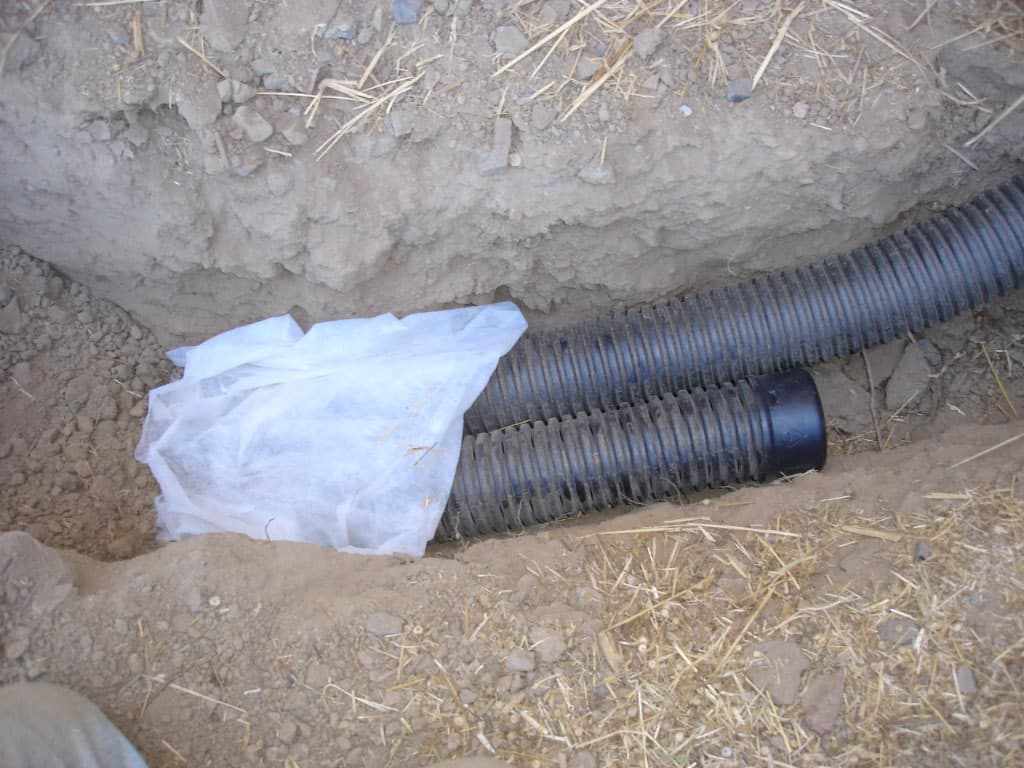
Start with what is causing the water
How long the water stays tells you a lot. If the yard dries out within a day or two after a rainstorm, the Northern Virginia Soil and Water Conservation District counts that as normal.[1] Wet areas that last several days are commonly caused by improper grading, such as low spots or depressions, or by poor infiltration from compacted soil, soil with high clay content or a shallow depth to bedrock.[1] Wet areas that last for months or never dry out are commonly caused by leaking water pipes or other sources, or by naturally high groundwater.[1]
The district adds a warning worth remembering when you hire: the actual source of the wetness may not be where you see it on the surface.[1] A good contractor walks the whole property in the rain or right after it, watches where the water comes from, and checks gutters and downspouts before quoting anything.
For a fuller checklist of causes, read why your yard floods when it rains.
When a landscaper is the right call
Many wet-yard problems are surface problems, and surface work is what landscapers do. For small wet spots, the district's own fixes are replanting with water-tolerant species, or filling the depression with soil, compacting it and grading it so water flows away from the foundation.[1] For sunken spots in a lawn, the district says landscaping companies should be able to do most jobs.[3]
A landscaper is a good fit for:
- filling and regrading a low spot, or regrading beside the house;
- loosening compacted soil and working in compost;
- replanting a soggy area with plants that tolerate wet feet;
- shallow swales and small rain gardens.
Not every landscaper is licensed for grading work. Virginia's Board for Contractors defines landscape service contracting as altering or improving a land area by excavation, clearing, grading, landscaping retaining walls or landscaping timbers, and lists the home improvement contractor specialty among those that also cover it.[7] A mowing crew without either may not be the right hire for regrading.
When you need a drainage or excavation contractor
Buried systems are a step up: the fall of the pipe, the outlet and the buried lines all have to be right, and mistakes are hidden once the trench is filled. Where an underground spring has washed out a large area, the district suggests hiring a landscaping or drainage company to capture the flow with a French drain or catch basin and pipe.[3] Its homeowner guide says plainly: "Larger projects may require permits or hiring a contractor."[2]
Call a drainage or excavation contractor for:
- French drains and other perforated-pipe systems;
- catch basins and long buried runs from downspouts or a sump pump;
- dry wells and other underground storage;
- regrading that needs a machine, or any job near a foundation that is already letting water in.
When it is someone else's job
Some wet yards are not yours to pay for.
- A new subdivision. In a new development under bond, the builder may be responsible for fixing drainage problems that come from inadequate grading.[2] If runoff from neighboring properties still under bond is causing problems on your lot, the builder of those properties may be responsible for repairs on yours.[4] Your county's site inspection or public works office can tell you whether a bond is still in place.
- A shared problem. The district also notes that wet conditions often occur throughout a neighborhood, and that coordinating with neighbors and addressing problems at the source can save everyone time and money.[2]
- A leak. If the wet spot never dries, ask the water utility or a licensed plumber to check for a leak first. Virginia law requires a master tradesman licence as a condition of licensure for plumbing contractors.[8]
Who owes what when water crosses a property line is a legal question; for that, talk to the locality or a lawyer, not a contractor.
When to bring in an engineer or landscape architect
Most single-lot fixes do not need a designer. Large ones may. Virginia Cooperative Extension notes that an engineer or grading contractor might need to be consulted on larger, wider and longer swales, or on swales in property rights of way or easements.[6] Virginia's definition of land surveying includes preparing incidental plans for grading, drainage on the surface, culverts and erosion control measures, and landscape architecture covers planning projects principally directed at the functional and aesthetic use of land.[9] A plan from one of these professionals makes sense when the work needs a permit, sits near a stream or floodplain, or has to move a lot of water.
Free advice often comes first. Local soil and water conservation districts help homeowners with drainage. The Northern Virginia district, for example, offers site visits for its cost-share programs and gives every site visit recipient a list of designers and installers.[5]
When to call a licensed pro
Whoever you call, check the licence. Virginia licenses contractors by the size of the job: Class C covers a single job over $1,000 but less than $30,000, Class B from $30,000 to less than $150,000, and Class A $150,000 or more.[8] Check the name and licence number on DPOR's License Lookup[12] and confirm the specialty fits the work.
Before any digging, your contractor is responsible for contacting Virginia 811, and you should confirm they have done it.[11] Residential contractors must use a written contract signed by both sides before work starts or payment is accepted.[10]
Ask each one what they think is causing the water, what they would do first and why, and where the water will end up. To compare their plans, read how a French drain works and what a French drain costs in Virginia.
Browse drainage and French drain businesses or landscape design and installation businesses, find excavation businesses in Blacksburg, or see more excavation answers.
Describe the wet yard once, and licensed local businesses that do this work quote it.
Common questions
- Can a landscaper install a French drain?
- Many do. What matters is that the business holds a Virginia contractor licence for the size of the job, such as a landscape service or home improvement specialty, and that it has built drains with a working outlet before. Ask for addresses of past drainage jobs you can look at.
- My yard is wet even when it has not rained. Who do I call?
- Start with a leak. Leaky water pipes, sprinkler systems, outdoor faucets, ponds and pools can keep a yard wet, and the source may not be where the water shows. Call your water utility or a licensed plumber before paying for drainage work.
- Do I need an engineer for yard drainage?
- Not for most single-lot problems. Consider one, or a landscape architect, when the fix is large, crosses an easement or right of way, sits near a stream or floodplain, or needs a plan for a permit. Virginia Cooperative Extension says larger swales or swales in easements may need an engineer or grading contractor.
- Water from my neighbor's yard floods mine. Who is responsible?
- That can be a legal question, and Loclis cannot answer it for you. Two practical steps: if the neighboring lots are new and still under bond, the builder may be responsible, so call your county's site inspection office; otherwise talk with your neighbor, because a shared fix at the source often costs everyone less.
- Is there free advice on a wet yard in Virginia?
- Often. Local soil and water conservation districts give homeowners drainage guidance, and some run cost-share programs that begin with a site visit. Virginia Cooperative Extension offices also answer landscape questions. Advice first can save you from paying for the wrong fix.
Sources
- [1] Wet Yard - Solving Drainage Problems, Northern Virginia Soil and Water Conservation District, Fairfax County. Checked October 27, 2026.
- [2] Solving Drainage and Erosion Problems: A Guide for Homeowners, Northern Virginia Soil and Water Conservation District, Fairfax County. Checked October 27, 2026.
- [3] Sinkhole - Solving Drainage and Erosion Problems, Northern Virginia Soil and Water Conservation District, Fairfax County. Checked October 27, 2026.
- [4] Glossary - Solving Drainage and Erosion Problems, Northern Virginia Soil and Water Conservation District, Fairfax County. Checked October 27, 2026.
- [5] Conservation Assistance Programs, Northern Virginia Soil and Water Conservation District, Fairfax County. Checked October 27, 2026.
- [6] Stormwater Management for Homeowners Fact Sheet 4: Grass Swales (SPES-12P), Virginia Cooperative Extension, Virginia Tech. Checked October 27, 2026.
- [7] 18VAC50-22-30, Definitions of specialty services, Virginia Administrative Code, Board for Contractors. Checked October 27, 2026.
- [8] Va. Code § 54.1-1100, Definitions, Code of Virginia, Virginia General Assembly. Checked October 27, 2026.
- [9] Va. Code § 54.1-400, Definitions, Code of Virginia, Virginia General Assembly. Checked October 27, 2026.
- [10] 18VAC50-22-260, Filing of charges; prohibited acts, Virginia Administrative Code, Board for Contractors. Checked October 27, 2026.
- [11] Homeowners FAQ, Virginia 811. Checked October 27, 2026.
- [12] License Lookup, Virginia Department of Professional and Occupational Regulation. Checked October 27, 2026.
Want a pro to handle it?
Describe the job once. Licensed local businesses send quotes, and you pay only when you book one.
Get a quote from a local pro