Why does my hot tub keep tripping the breaker?
Usually one of five things: the tub shares its circuit with something else, the breaker is too small for the tub, water has got into the equipment area, a part such as the heater or a pump has failed, or there is a short. A breaker that trips again straight after a reset points to a short, so leave it off and call a spa technician or electrician.
Free to ask. Local shops send quotes, and you pay only when you book one.
By Kasra Taheri, Founder, LoclisPublished
Researched and drafted with AI, then checked claim by claim against the sources listed below before it was published. Prices and rules change; the dates beside each source say when it was last checked.
This is a job for a licensed pro in Virginia
This page explains what the work involves, the permits, what a licensed pro does and what drives the cost. It does not give step-by-step instructions, because this work needs a licence, a permit or both, and doing it wrong can injure someone. Before you hire, check the licence on Virginia's DPOR record.
A hot tub breaker that keeps tripping is doing its job: it has seen something wrong and cut the power. The usual causes are a shared circuit, a breaker too small for the tub, water in the equipment area, a failing heater or pump, or a short. Finding which one means testing live equipment, so it is work for a spa technician or a licensed electrician, but the pattern of the trips tells them where to start.
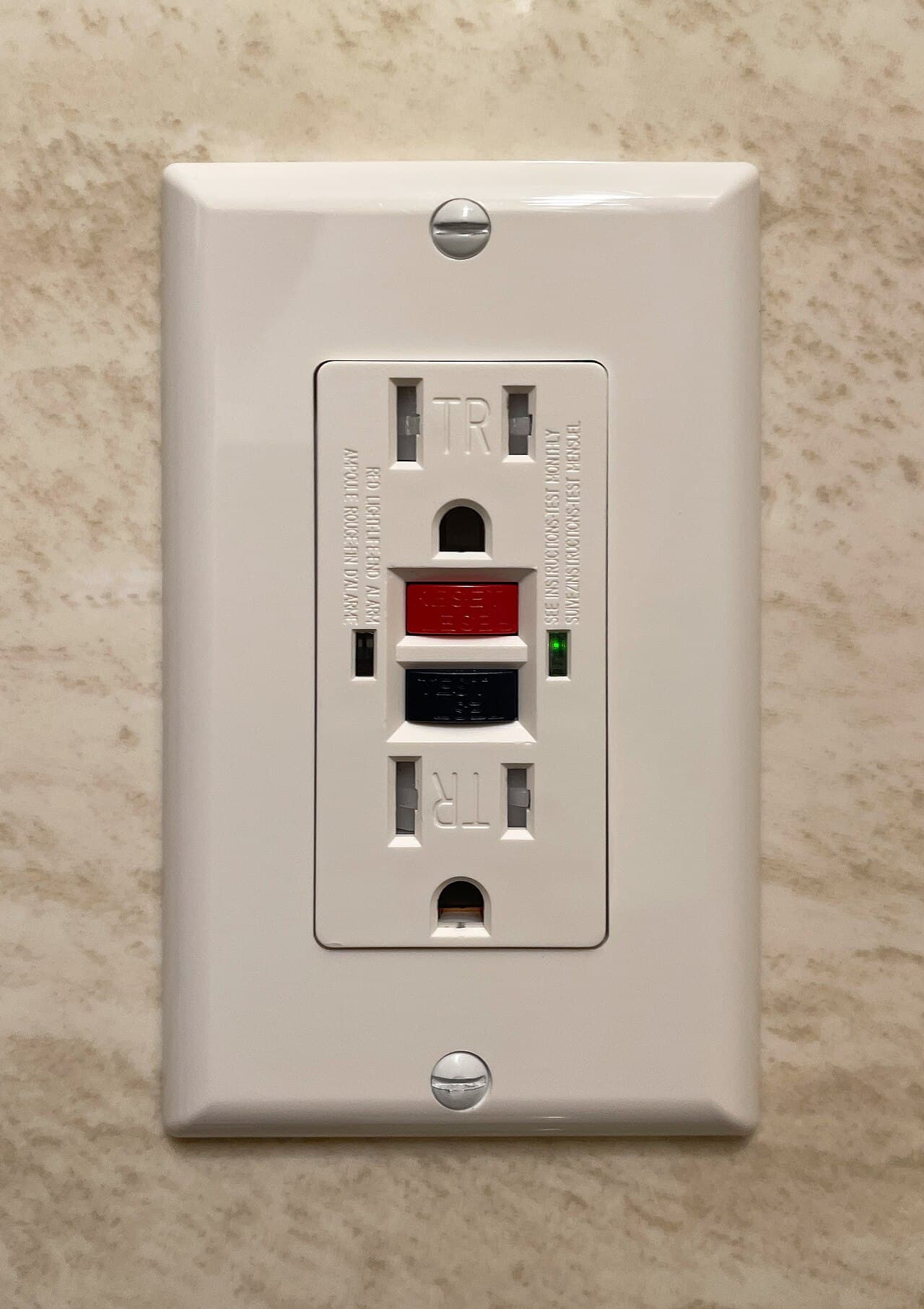
What the breaker is reacting to
Most tubs are protected by a GFCI, which trips for two different reasons. A GFCI detects any loss, or leakage, of current in its circuit that might be flowing through a person, and turns the electricity off.[4] A GFCI circuit breaker protects a whole branch circuit against excessive leakage current and against overcurrent,[4] meaning too much current for the wire. Leakage usually points to moisture or a failing part; overcurrent points to too much load on the circuit.
The common causes
The circuit is shared. Cal Spas says spas should always have their own dedicated electrical service and should never share a circuit with other devices.[1] It adds that 220V spas are hard-wired to an electrical service with its own GFCI breaker.[1] A 120-volt spa plugged into an outlet that also feeds a patio heater, lights or a freezer will trip when they run together. If anything else is on the tub's circuit, that is the first thing an electrician will fix.
The breaker is too small for the tub. Cal Spas lists the breaker rating as a cause: the breaker may have too low an amperage rating for the circuit.[1] Tubs are sized by their equipment; the same manufacturer specifies a 40-amp GFCI for a single-pump system, 50-amp for two pumps and 60-amp for three or more.[2] A tub that replaced a smaller one on the old circuit is a common way to end up here.
It trips the moment it is reset. Cal Spas is direct about this one: "If the breaker trips immediately after resetting it, you probably have a direct short and need to call for service."[1] And: "Don't try to reset the breaker again."[1]
It trips after the tub has been used. Cal Spas notes that a small amount of water in the equipment area can trip the breaker.[1] Splash, a leaking fitting or a cover that lets rain into the cabinet can all do it. A spa technician can find where the water is getting in and dry the equipment safely.
A part is failing. "If the breaker continues to shut off repeatedly, it may indicate a piece of equipment is defective, such as the heater or a pump."[1] The Consumer Product Safety Commission makes the same point for any appliance: an appliance that repeatedly trips a circuit breaker indicates a defect that could cause a fire or shock hazard.[4] Note whether trips happen when the heater comes on, when the jets start, or at random; that narrows it down.
It only trips in storms. Cal Spas says a breaker that shuts off only during thunderstorms may be reacting to static electricity.[1] Cal Spas suggests a whole-house surge suppressor on the incoming lines in storm-prone areas,[1] which an electrician installs at the service.
The GFCI breaker itself has failed. GFCIs can fail without showing any sign of failure,[5] and the Consumer Product Safety Commission says a defective GFCI circuit breaker should be replaced by a qualified electrician.[5]
What not to do
Never fit a bigger breaker to stop the trips. The breaker is sized to protect the wire behind it, and the Consumer Product Safety Commission's advice for a breaker that keeps tripping is plain: "Do not put in a higher ampere fuse or circuit breaker".[4] Do not run the tub on an extension cord to a different outlet, and do not keep resetting a breaker that trips straight away.
Cal Spas says that if the GFCI trips while the spa is in use and will not reset, unplug the spa, call the dealer for service and do not use it.[3] Its troubleshooting page also warns owners: "Do not open the control box."[1] It says anything beyond basic guidance should be done by a qualified spa technician or an electrician.[1]
What helps the technician
Before anyone arrives, write down when the trips happen (heater on, jets on, after use, during rain or storms, at random), whether it is the GFCI breaker near the tub or a breaker in the house panel that trips, whether anything else shares the circuit, and how old the tub and the wiring are. That record often saves an hour of diagnosis.
When to call a licensed pro
Call a spa technician when the trips follow the tub's own parts. Call a licensed electrician when the breaker trips with the tub's equipment idle, when the circuit is shared or undersized, when the GFCI breaker looks faulty, or when you smell burning, see scorch marks or feel a tingle near the tub. Virginia law treats electrical work done for the public for pay as a licensed trade,[6] and no individual may do that work, or offer to, without a tradesman licence.[7] Check the electrician's licence before you hire.
For hot tub repairs, see hot tub repair on Loclis. For the wiring side, read what wiring a hot tub involves and how often to test the GFCI, find electricians in Blacksburg, or read more electrical answers.
Describe your tripping breaker and licensed local electricians quote it.
Common questions
- Can I just put in a bigger breaker?
- No. The breaker protects the wire, and the U.S. Consumer Product Safety Commission says not to put in a higher ampere fuse or circuit breaker when one keeps tripping. If the breaker really is undersized for the tub, an electrician has to check the wire and the whole circuit before anything changes.
- It only trips in thunderstorms. Is that a fault?
- Not necessarily. Cal Spas says a breaker that shuts off only during thunderstorms may be reacting to static electricity, and suggests a whole-house surge suppressor in storm-prone areas, which is an electrician's job.
- It trips right after I reset it. What now?
- Leave it off. Cal Spas says that pattern probably means a direct short and that you should not try to reset the breaker again. Call a spa technician or electrician.
- Who do I call, a spa technician or an electrician?
- If the trips follow a part of the tub, such as the heater or a pump, a spa technician usually finds it. If the breaker trips with the tub disconnected, the circuit is shared, or the breaker itself seems faulty, call a licensed electrician. Many problems need both.
- Is it safe to use the tub while this is going on?
- No. Cal Spas says that if the GFCI trips while the spa is in use and will not reset, you should not use the spa until it has been serviced. A ground-fault trip can mean current is leaking where it should not.
Sources
- [1] Troubleshooting: Breaker, Cal Spas. Checked October 27, 2026.
- [2] Portable Spa Pre-Delivery Guide (LTR50001024, Rev. E), Cal Spas. Checked October 27, 2026.
- [3] Patio and Patio Plus Owner's Manual 2025, Cal Spas. Checked October 27, 2026.
- [4] CPSC Guide to Home Wiring Hazards (Publication 518), U.S. Consumer Product Safety Commission. Checked October 27, 2026.
- [5] Home Electrical Safety Checklist (Publication 513), U.S. Consumer Product Safety Commission. Checked October 27, 2026.
- [6] Code of Virginia § 54.1-1128, Definitions (tradesmen), Code of Virginia, Legislative Information System. Checked October 27, 2026.
- [7] Code of Virginia § 54.1-1129, Necessity for licensure, Code of Virginia, Legislative Information System. Checked October 27, 2026.
Want a pro to handle it?
Describe the job once. Licensed local businesses send quotes, and you pay only when you book one.
Get a quote for Electrical Repair