How often should I test my hot tub's GFCI?
Once a month, and before the first soak after the tub is installed, refilled or has sat unused. The U.S. Consumer Product Safety Commission says to test GFCIs monthly because they can fail without any sign. Pressing TEST should cut the tub's power; if it does not, or the GFCI will not reset, keep everyone out of the water and call a licensed electrician.
Free to ask. Local shops send quotes, and you pay only when you book one.
By Kasra Taheri, Founder, LoclisPublished
Researched and drafted with AI, then checked claim by claim against the sources listed below before it was published. Prices and rules change; the dates beside each source say when it was last checked.
This is a job for a licensed pro in Virginia
This page explains what the work involves, the permits, what a licensed pro does and what drives the cost. It does not give step-by-step instructions, because this work needs a licence, a permit or both, and doing it wrong can injure someone. Before you hire, check the licence on Virginia's DPOR record.
Test your hot tub's GFCI once a month. For GFCI circuit breakers, the U.S. Consumer Product Safety Commission says to test GFCI breakers monthly, and explains why: "They can fail without showing any sign of failure, so regular testing may save your life."[1] Its wiring hazards guide gives the same interval: "Test the GFCI once a month".[2] Spa makers agree; Cal Spas tells owners to test the GFCI before first use and periodically while the spa is powered.[3]
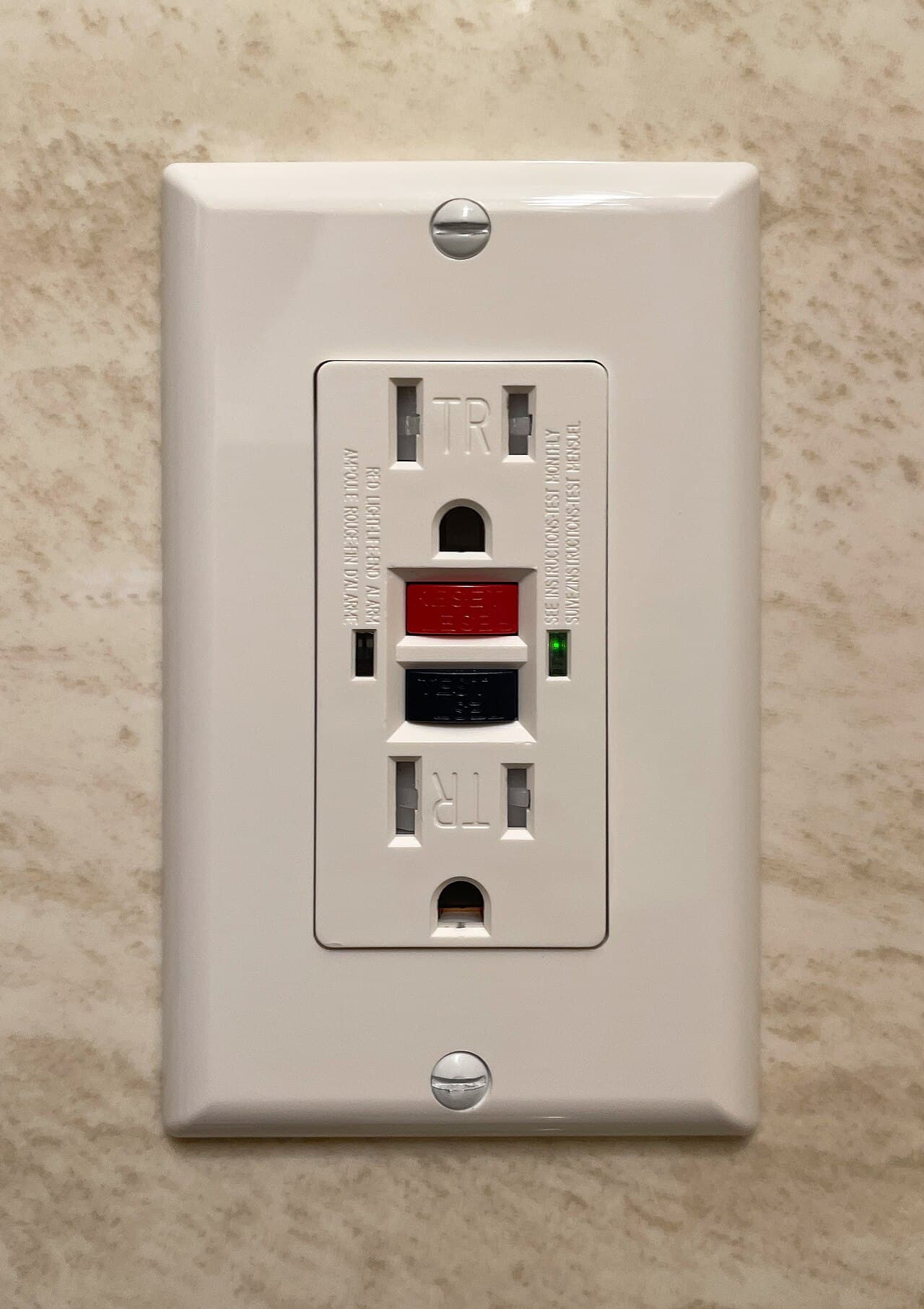
A good routine is the first soak of each month, plus any time the tub has been drained and refilled, has sat unused, or has come back on after a storm or power cut.
Why the GFCI matters so much on a hot tub
A GFCI watches for current leaking out of the circuit, possibly through a person, and shuts the power off.[2] It is fast, but not instant; the CPSC notes you may still feel a painful shock in the moment before it cuts the power.[2] Water is what makes this matter. The CPSC warns that electrical products, even ones in plastic or double-insulated cases, can leak current if they get wet, and are then a serious shock or electrocution hazard.[1] A hot tub puts people in water next to pumps, a heater and a control box, so the GFCI is the device most likely to stand between a fault and a bather.
Finding the right button
Cal Spas notes that 220V spas are hard-wired to an electrical service with its own GFCI breaker.[5] On many hard-wired tubs that breaker sits in a small box near the tub, separate from the house panel, and has its own TEST button. Cal Spas says every 120-volt spa must have a GFCI, either a GFCI receptacle or a GFCI cord-and-plug kit,[3] so on a plug-in spa look at the plug and at the outlet, which may look like the one pictured. If you cannot find yours, ask the electrician who wired the tub, or check the tub's manual.
What a monthly test looks like
Testing is a check you make with the buttons on the device, not electrical work, and it takes under a minute. With the tub running and nobody in the water:
- GFCI breaker. The CPSC explains that pressing the TEST button should send the breaker handle to the middle or off position, and that resetting it means moving the handle to off and then back to on.[1] Cal Spas describes the same thing for its tubs: pressing TEST should trip the GFCI and shut the spa off, and switching the breaker fully off, waiting a moment and switching it back on should bring the power back.[3]
- GFCI plug or receptacle. On a Cal Spas cord-and-plug GFCI, pressing TEST should turn the indicator off and stop the spa, and pressing RESET should turn the indicator and the spa back on.[3]
Follow your own tub's manual if it differs. Either way, the result you want is simple: the tub goes off when you press TEST and comes back when you reset.
If the test fails
There are two ways a test can fail, and both mean the tub stays off.
The tub keeps running when you press TEST. The GFCI is not protecting anyone. Keep everyone out of the water. A defective GFCI circuit breaker should be replaced by a qualified electrician,[1] and that is a job inside a live electrical box.
It trips but will not reset, or trips again straight away. Cal Spas says that if the GFCI trips while the spa is in use and will not reset, unplug the spa, call for service and do not use it.[3] A GFCI that refuses to reset is often reacting to a real fault; see why a hot tub keeps tripping its breaker.
Other checks worth adding to the routine
While you are at the tub each month, look rather than touch. On a plug-in spa, check the cord: "If your power cord becomes damaged, replace it before continuing usage of the spa".[4] Cal Spas also says to never bury a power cord,[3] and to keep outside electrical appliances such as lights, radios and televisions at least 5 feet from the spa.[3] Make sure the cabinet door is closed and the area around the equipment stays dry, and note any trips you have seen since last month.
Our answer on yearly electrical safety checks at home covers the rest of the house.
When to call a licensed pro
Call a licensed electrician when a GFCI fails its test, will not reset, trips on its own repeatedly, looks scorched or cracked, or when the tub has no GFCI you can find. Call one too if the tub runs on an extension cord or shares a circuit with anything else. Virginia law treats electrical work done for the public for pay as a licensed trade,[6] and no individual may do that work, or offer to, without a tradesman licence.[7] Check the electrician's licence before you hire.
See GFCI repair on Loclis, read what wiring a hot tub involves, find electricians in Blacksburg, or browse more electrical answers.
Describe your GFCI problem and licensed local electricians quote it.
Common questions
- Where is my hot tub's GFCI?
- On a hard-wired 240-volt tub it is usually a GFCI breaker with a TEST button, often in its own box near the tub rather than in the house panel. On a 120-volt plug-in spa it is in the plug or cord, or it is the receptacle the spa plugs into.
- Does testing the GFCI hurt the hot tub?
- It switches the tub off for a moment, as a power cut would. Cal Spas tells owners to test before first use and periodically while the spa is powered. If the tub shows a message after the reset, its manual explains it.
- The TEST button did nothing. Can I still use the tub?
- No. A GFCI that does not trip when tested is not protecting anyone. Keep everyone out of the water and call a licensed electrician; the CPSC says a defective GFCI breaker should be replaced by a qualified electrician.
- My GFCI trips on its own. Is that the same problem?
- No, the opposite: it is reacting to something, such as moisture, a failing part or a shared circuit. Our answer on why a hot tub keeps tripping its breaker goes through the causes.
- Is a monthly test enough?
- It is what the CPSC recommends for GFCIs. Test again before the first soak after the tub has been drained and refilled, after a storm or a power cut, and after any electrical work on the tub or the circuit.
Sources
- [1] Home Electrical Safety Checklist (Publication 513), U.S. Consumer Product Safety Commission. Checked October 27, 2026.
- [2] CPSC Guide to Home Wiring Hazards (Publication 518), U.S. Consumer Product Safety Commission. Checked October 27, 2026.
- [3] Patio and Patio Plus Owner's Manual 2025, Cal Spas. Checked October 27, 2026.
- [4] Portable Spa Pre-Delivery Guide (LTR50001024, Rev. E), Cal Spas. Checked October 27, 2026.
- [5] Troubleshooting: Breaker, Cal Spas. Checked October 27, 2026.
- [6] Code of Virginia § 54.1-1128, Definitions (tradesmen), Code of Virginia, Legislative Information System. Checked October 27, 2026.
- [7] Code of Virginia § 54.1-1129, Necessity for licensure, Code of Virginia, Legislative Information System. Checked October 27, 2026.
Want a pro to handle it?
Describe the job once. Licensed local businesses send quotes, and you pay only when you book one.
Get a quote for Electrical Repair