Why is my pool chlorinator not dispensing?
Most often the flow control valve is shut or set too low, the pump is not moving water through the feeder, or the tablets are gone or crusted over. Check the valve setting and the pump, then look for a blocked return line. If it is still dry after a cleaning, a pool technician should test the plumbing.
Free to ask. Local shops send quotes, and you pay only when you book one.
By Kasra Taheri, Founder, LoclisPublished
Researched and drafted with AI, then checked claim by claim against the sources listed below before it was published. Prices and rules change; the dates beside each source say when it was last checked.
Step by step
Read when to stop and call a pro, further down this page, before you start.
Step 1: Test the water first
Test the free chlorine in the pool so you know whether the feeder is really failing. Hayward says the pool should have a chlorine residual of approximately 1.0 to 1.5 ppm.[1]
Step 2: Check the flow control valve
Look at the dial on the feeder. A valve left on OFF after vacuuming or refilling releases nothing, and Hayward says to adjust the dial valve for more or less chlorine.[1]
Step 3: Confirm the pump is running
Make sure the pump is running and the timer is on, since a tablet feeder doses only while the pump moves water through it. Check the filter pressure gauge for a sign of restricted flow.
Step 4: Check that the valves are open
Make sure any valves around the feeder or heater are open so water flows from the pump to the pool. Hayward's refill steps also open the isolation valves of a flooded-system installation to assure flow from pump to pool.[1]
Step 5: Shut it down before opening
Shut off all pumps and pump timers, turn the flow control valve to OFF, and wait one minute to relieve system pressure before attempting to remove the cover.[1]
Step 6: Look at the tablets
Open the cover, away from your face. If the chamber is empty, refill with slow-dissolving trichlor tablets only.[1] If tablets are present but stuck together or coated in crust, take them out.
Step 7: Clean the chamber and fittings
Rinse the chlorinator thoroughly with water.[1] Clear scale from the inlet and outlet fittings with a plastic brush, never wire.
Step 8: Check the return line
Verify that the feeder's return line to the pool is unrestricted.[1]
Step 9: Close it up and restart
Secure the cover, turn the flow control valve to the setting you want and restart the pump.[1] Check the lid for drips, then test the water again after a day.
A tablet chlorinator that is not dispensing is usually not broken. The cause is most often a closed or low dial, a pump that is not moving water through it, or a chamber that is empty or caked with scale. This guide covers an off-line tablet feeder like the common Hayward CL series. Your model may differ, so use its manual for the parts layout. For a clog that you can see, see how to clean a clogged pool chlorinator.
Confirm there is a problem
Start with a test kit, not the feeder. Hayward says the pool should have a chlorine residual of approximately 1.0 to 1.5 ppm.[1] Its manual also says: Check chlorine residual daily and adjust the dial valve for more or less chlorine.[1] A new setup takes some experiment, since demand changes with bathers, temperature and sun.
Sunlight and heat can degrade chlorine quickly.[2] If the tablets are going down but the test reads low, the answer may be a higher dial setting, not a repair.
The usual causes, in order
The dial is closed or too low. When vacuuming, close the flow control valve to prevent bypass of sediment and possible clogging of the control valve.[1] If nobody reopened it, nothing is released. This is the most common reason a feeder suddenly goes quiet.
Water is not flowing through it. Chemical feeders are installed on the discharge side of the pump and introduce chemicals automatically into the water.[2] No pump flow, no dosing. Check that the pump runs, the timer is on during the hours you expect, and the filter pressure is normal. A stuck or half-closed valve in the return plumbing does the same thing: before starting the system pump, all system valves must be set in a position to allow system water to return back to the pool.[1]
The return line is restricted. Verify that the feeder's return line to the pool is unrestricted.[1] A kinked hose, a partly closed valve or a plugged fitting makes a clean feeder act clogged.
The chamber is empty or crusted. Tablets are used up faster than people expect in summer. Tablets that have fused into a mass, or scale on the grate and fittings, block water from contacting them. That needs the chamber emptied and rinsed.
The feeder is in the wrong place. Hayward's instruction is: Always install the chlorine feeder after the heater. If there is no heater, install after the filter.[1] That matters mainly if you have just had equipment moved or replaced. A feeder plumbed across the wrong points may see little differential flow.
Open it safely
Shut off all pumps and pump timers, turn the flow control valve to OFF, and wait one minute to relieve system pressure before attempting to remove the cover.[1] Open it with your face back and eye protection on. Set dosage indicator to zero before stopping flow through the Chlorinator.[1] If you will be shutting the system down for a while, do not allow bathers into pool or spa area until full flow of system has been reestablished.[1]
Take out any fused tablets and set them in a dry, closed container. Rinse the chamber, brush scale off with plastic, check the cover O-ring and refill. Refill with slow-dissolving trichlor tablets only.[1] Never use granular chlorine in an erosion feeder, because it will explode.[2]
Stop and call a pro if
- The feeder cracks, leaks at the body or will not hold its cover. Do not patch a pressurized vessel.
- The dial still releases nothing with clean fittings and free flow. The valve itself, a check valve or the plumbing around the feeder may be the fault.
- You have a salt chlorine generator or a controller with wiring. That is electrical work. Virginia requires a contractor licence for work valued at $1,000 or more,[3] and an individual doing tradesman work as defined in the Code of Virginia must be licensed as a tradesman unless supervised by a licensed one.[4]
- Tablets have been mixed with another chemical. If anything fumed, heated or smells wrong, leave the area and get medical help for any exposure.
- Chlorine stays low even though the feeder dispenses. That points to the water balance or the pool circulation, not the chlorinator. Ask for the findings in a written quote.
Getting help in Virginia
If the feeder is fine and circulation is the suspect, read why a pool pump hums but will not run and browse more pool equipment answers. Loclis lists DPOR-licensed businesses by town: start at pool equipment repair.
When you want a pro to look at it, describe the chlorinator problem once and local pros reply with quotes.
Common questions
- Why did my chlorinator stop working after I vacuumed the pool?
- Probably the flow control valve is still closed. Hayward says to close it while vacuuming so sediment does not bypass through and clog the valve. Open it again to your usual setting when you finish, and test the water the next day.
- The tablets are still there but the chlorine is low. Is the feeder broken?
- Not necessarily. Sunlight and heat can degrade chlorine quickly, so a feeder that is working can still fall behind on a hot, busy week. Test the water, turn the dial up a little, and retest the next day before assuming a fault.
- Can I put granular chlorine in the feeder to get it going?
- No. Virginia's health department guide says never to use granular chlorine in an erosion feeder, because it will explode. Hayward also says to use only slow-dissolving trichlor tablets and never to mix chemicals. Add other products to the pool water directly, as the label directs.
- Does a tablet feeder work when the pump is off?
- No. It is installed on the discharge side of the pump and works from water flowing through it, so it does nothing while the pump is off or the timer is between cycles. Check the timer if chlorine only drops on certain days.
- Is a salt system the same thing?
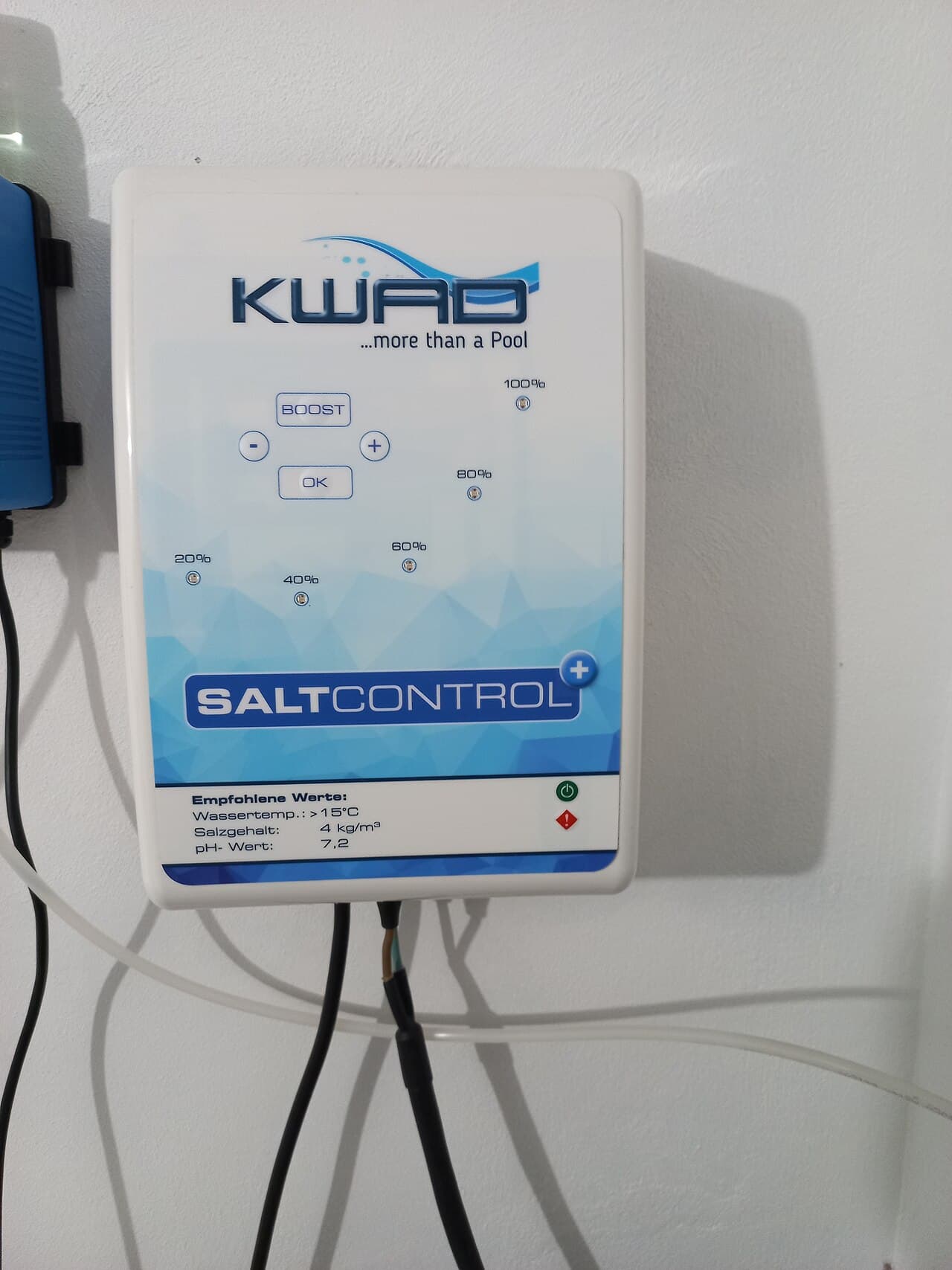
- No. A salt chlorine generator has an electrical cell and control box, not tablets. If that is what you have, the fix is not in this guide, and wiring work goes to a licensed pro.
Sources
- [1] Series CL100/110 and CL200/220 Automatic Chlorine Feeders Owner's Manual, Hayward Industries (manufacturer's manual). Checked October 28, 2026.
- [2] Pool Operation and Maintenance Guide (Portsmouth Health Department, 2018), Virginia Department of Health. Checked October 28, 2026.
- [3] What You Should Know Before You Hire a Contractor, Virginia Board for Contractors, DPOR. Checked October 28, 2026.
- [4] Va. Code § 54.1-1129, Tradesman license required, Code of Virginia, Virginia General Assembly. Checked October 28, 2026.
Want a pro to handle it?
Describe the job once. Licensed local businesses send quotes, and you pay only when you book one.
Get a quote for Pool Equipment