Why is my pool pump humming but not running?
A humming pool pump that will not turn is most often jammed with debris at the impeller, or starved of voltage, or has a worn motor. Switch it off at the breaker rather than letting it hum, because the windings overheat. Hayward's manual says to have a qualified professional open the pump. In Virginia the motor wiring needs a licensed electrician.
Free to ask. Local shops send quotes, and you pay only when you book one.
By Kasra Taheri, Founder, LoclisPublished
Researched and drafted with AI, then checked claim by claim against the sources listed below before it was published. Prices and rules change; the dates beside each source say when it was last checked.
This is a job for a licensed pro in Virginia
This page explains what the work involves, the permits, what a licensed pro does and what drives the cost. It does not give step-by-step instructions, because this work needs a licence, a permit or both, and doing it wrong can injure someone. Before you hire, check the licence on Virginia's DPOR record.
A pool pump that hums and does not turn is most often jammed or starved of power, not dead. The usual suspect is debris wedged against the impeller. Other causes are a worn motor or low voltage at the motor. Switch the pump off at its breaker or switch rather than letting it hum, then have a pool pro open it up.
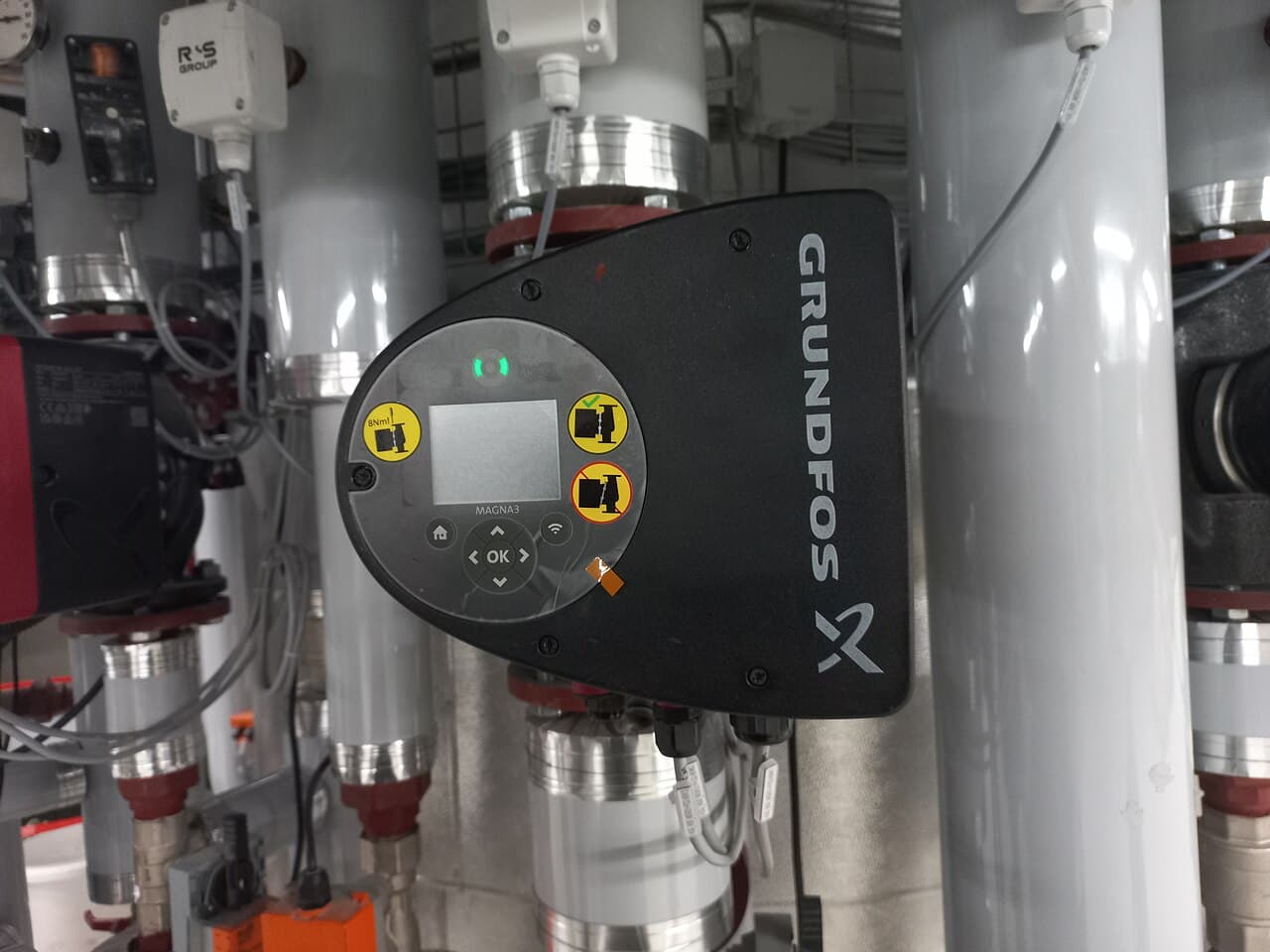
Why a humming pump is worth switching off
The hum is the motor trying to turn a shaft that will not move. Current flows, nothing spins, and the windings heat up. Hayward's Super Pump motor has an automatic thermal overload protector: the motor shuts off if the power supply drops, before heat damage can burn out the windings, and it restarts on its own once it has cooled.[1] The manual adds that it will keep cutting on and off until the problem is corrected, so be sure to correct the cause of the overheating.[1]
That cycle is the sign of a pump you should stop running. Each attempt adds heat to a motor that may be perfectly good.
The likely causes, most common first
A jammed impeller. Hayward's troubleshooting guide lists an impeller jammed with debris as the first thing to check when the motor hums but does not start.[1] Leaves, pool toys, small stones and bits of broken basket can get past the strainer and lock the impeller. The manual's fix is to have a qualified repair professional open the pump and remove the debris.[1]
Low voltage or a weak supply. The same guide traces a motor that shuts off to low voltage at the motor or a power drop, frequently caused by undersized wiring or extension cord use, and says to contact a qualified professional to check that the wiring gauge is heavy enough.[1] Hayward warns the voltage at the motor must not be more than 10% above or below the nameplate rating, or the motor may overheat, causing overload tripping and reduced component life.[1]
An old or worn motor. ENERGY STAR lists a pump that "hums or buzzes but will not start" among the warning signs that it may be time to call a pool services contractor, alongside a pump that is seven to ten years old, does not seem as powerful, makes continuous noise, gets hot and shuts off, or starts slowly.[2] On an older pump, a hum on top of those symptoms points toward the motor, and the repair-or-replace question in is it worth fixing a pool pump motor becomes the real one.
A leaking shaft seal. Hayward warns that running a pump without water may damage seals, causing leakage, flooding and a voided warranty.[1] Its manual also says chlorinated water that gets past a damaged seal can wipe out the grease in the motor bearings and make them whine.[1] A pump that was run dry, or one with a drip at the seal, can end up with a seized or noisy motor.
What not to do
Do not keep switching the pump back on to see if it catches. Do not pry at the pump with the power on, and do not run it from an extension cord. Hayward's manual says hazardous voltage can shock, burn, and cause death or serious property damage, and to turn off the power supply before working on any electrical equipment.[1] It also says its pump should be installed and serviced only by a qualified professional.[1]
A pool pump circuit sits next to water, so the stakes are higher than a typical appliance. Pump work is a plumbing job at the wet end and an electrical job at the motor, and a pro will tell you which half you have.
What to tell the pro
A short description saves a visit. Say when it started (after a storm, after a vacuum clean, after a cold snap, after a power cut), whether the pump hums at once or after a delay, whether the breaker or GFCI has tripped, whether the strainer basket is cracked, and how old the pump is. Say if you have noticed water dripping under the motor. Ask the business to find the cause before quoting a motor, because a jammed impeller is a much smaller job. How much pool pump repair costs in Virginia covers what drives the price, and what replacing a pool pump motor involves covers the bigger job.
When to call a licensed pro
Call as soon as the pump hums without turning, since the cause is inside the pump or the motor wiring. In Virginia no individual may work, or offer to work, as an electrical tradesman without a tradesman licence, unless working under the supervision of a tradesman licensed in that specialty.[3][4] DPOR also says that if the work is valued at $1,000 or more, a valid Virginia contractor's licence is required for the licence category in which the contractor is to work.[5] Look up the business and, for wiring, the electrician in DPOR's licence search; how to check if a contractor is licensed in Virginia shows how.
DPOR advises getting at least three written bids or estimates using identical plans and specifications so you can compare prices and contractors.[5] For a pump, that means the same diagnosis, the same parts and the same warranty terms.
Loclis lists DPOR-licensed businesses with their licence number and class. Browse pool and spa equipment answers or find pool and spa businesses near you.
To have licensed local businesses quote the job, describe the pool pump problem once.
Common questions
- Is it safe to keep trying to start a humming pool pump?
- No. The hum means the motor is drawing current without turning, which heats the windings. Hayward's motor has a thermal overload that cuts out and restarts, and its manual says to correct the cause of the overheating.
- Can I just clear the debris from the impeller myself?
- Hayward's manual says to have a qualified repair professional open the pump and remove the debris. The pump is wired to a circuit beside the pool, so treat it as a pro job.
- Could it be the motor and not the impeller?
- Yes. ENERGY STAR lists a pump that hums or buzzes but will not start as a warning sign, especially on a pump seven to ten years old. A pro can tell the two apart before quoting.
- Can low voltage make a pool pump hum?
- Hayward's manual ties a motor that shuts off to low voltage or a power drop, often from undersized wiring or an extension cord, and says the voltage at the motor must stay within 10% of the nameplate rating.
- Why does the humming pump keep shutting off and restarting?
- That is the thermal overload protector at work. It stops the motor to prevent burnout and restarts it after it cools, repeating until the cause is fixed.
- Who can repair a pool pump motor in Virginia?
- Electrical work needs a licensed tradesman, or someone working under one. Check the business in DPOR's licence search and get at least three written bids.
Sources
- [1] Super Pump Series Owner's Manual (ISSPSERIES, Rev D), Hayward Industries. Checked October 28, 2026.
- [2] Make a Savings Splash with an ENERGY STAR Certified Pool Pump, ENERGY STAR, U.S. Environmental Protection Agency. Checked October 28, 2026.
- [3] Va. Code § 54.1-1128, Definitions (Tradesmen), Code of Virginia, Virginia General Assembly. Checked October 28, 2026.
- [4] Va. Code § 54.1-1129, Tradesman license required, Code of Virginia, Virginia General Assembly. Checked October 28, 2026.
- [5] What You Should Know Before You Hire a Contractor, Virginia Board for Contractors, DPOR. Checked October 28, 2026.
Want a pro to handle it?
Describe the job once. Licensed local businesses send quotes, and you pay only when you book one.
Get a quote for Pool Equipment