Are accessory dwelling units allowed in Virginia?
Today it depends on your locality's zoning. Starting July 1, 2027, a new state law makes an accessory dwelling unit a permitted accessory use in single-family zoning districts, with limited local conditions and a permit fee of no more than $500. A locality that adopted its own ADU ordinance before January 1, 2026 is exempt, so check your local rules first.
Free to ask. Local shops send quotes, and you pay only when you book one.
By Kasra Taheri, Founder, LoclisPublished
Researched and drafted with AI, then checked claim by claim against the sources listed below before it was published. Prices and rules change; the dates beside each source say when it was last checked.
This is a job for a licensed pro in Virginia
This page explains what the work involves, the permits, what a licensed pro does and what drives the cost. It does not give step-by-step instructions, because this work needs a licence, a permit or both, and doing it wrong can injure someone. Before you hire, check the licence on Virginia's DPOR record.
Sometimes today, and in most single-family neighborhoods from July 1, 2027. Whether you can build one now is decided by your county or city zoning ordinance. Virginia's statewide accessory dwelling unit law, § 15.2-2292.4 of the Code of Virginia, takes effect on July 1, 2027.[1] Until then, ask your zoning office.
What counts as an ADU
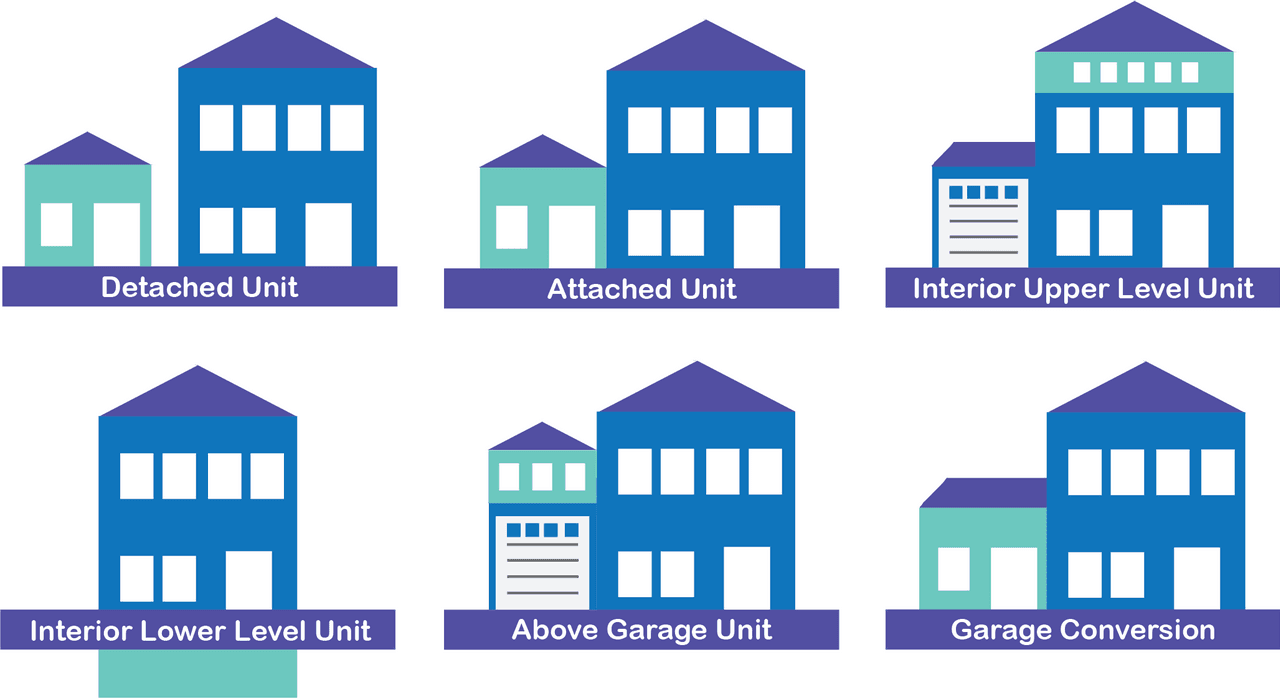
The state law defines an accessory dwelling unit as an attached or detached dwelling unit on a residential dwelling lot that provides complete independent living facilities, is on the same lot as a proposed or existing primary residence, and includes facilities for living, sleeping, eating, cooking and sanitation.[1] That covers a basement apartment, a garage conversion, an addition with its own entrance and a backyard cottage. A bedroom with a bathroom but no kitchen is not an ADU.
What the 2027 state law does
Under the new law, zoning ordinances for single-family residential zoning districts are deemed to include accessory dwelling units as a permitted accessory use.[1] A locality can no longer simply say no in those districts.
Three limits matter. The law does not apply to a locality that adopted an ADU ordinance before January 1, 2026,[1] so places with their own rules keep them. It does not override private agreements, including recorded covenants and the declarations of a property owners' association or common interest community.[1] And it does not erase building and utility rules.
You must obtain an ADU permit before building. A locality may charge a fee of no more than $500 for the ADU permit, in addition to inspection, site or building permit fees.[1]
What your locality may still require
The law lets localities require several things:
- a rental lease term of 30 consecutive days or longer[1]
- replacement of the main house's required parking if the ADU eliminates it, and dedicated parking for the ADU[1]
- owner occupancy of the ADU or the primary dwelling, but not both, only at the time an application is submitted[1]
- limits on floor area, lot coverage and impervious area of no less than 350 square feet on lots under 2,500 square feet and 500 square feet on lots of 2,500 square feet or more[1]
- compliance with the Uniform Statewide Building Code, water, sewer, septic, emergency access, flood zone and stormwater requirements, and historic and architectural district restrictions[1]
- no ADU on a residential lot that has more than one dwelling unit, and no ADU sold separately or subdivided from the primary dwelling[1]
A locality may not require a restrictive covenant for an ADU on a single-family lot, or require the occupants of the ADU and the main house to be related.[1] So a tenant does not have to be family.
A local example: Fairfax County
Fairfax County has its own accessory living unit rules. The county calls these accessory living units and allows one only with a single-family detached house, wholly contained within the house, up to 800 square feet or 40% of the house, whichever is less, with no more than two bedrooms and no more than two occupants.[2] Either the accessory living unit or the main house must be owner-occupied, and the lot needs the parking required for the main house plus one more space.[2] As of October 2026, Fairfax lists the application fee for an accessory living unit at $285.[2]
Other localities differ, which is why a neighbor's experience in another county tells you little.
Questions to ask before you design
Call the zoning office, and ask in writing if you can:
- Is an accessory dwelling or in-law suite permitted on my lot, and in which form: interior, attached or detached?
- What are the size, parking, owner-occupancy and rental rules?
- Is my lot on public sewer and water? On septic or a well, ask the health department about extra bedrooms; Fairfax, for one, requires Health Department approval before it approves an accessory living unit.[2]
- Do my deed, HOA or historic district add limits?
Then ask the building department which building permits you will need; see what building an in-law suite involves and what an ADU costs in Virginia.
When to call a licensed pro
Zoning approval is only the start. Hire a licensed contractor for the build. Virginia's classes turn on contract value: Class C contractors perform or manage work on a single contract over $1,000 but less than $30,000, Class B $30,000 or more but less than $150,000, and Class A $150,000 or more,[3] and an ADU will usually land in the upper two. Check the contractor's licence on the DPOR lookup before signing.
Browse remodeling services or read more remodeling answers. When you know what your zoning allows, describe the job once and licensed local remodelers quote it.
Common questions
- Can I build an ADU in Virginia right now?
- Maybe. Until July 1, 2027 the answer is set by your county or city zoning ordinance. Some localities, Fairfax County among them, already permit accessory units under conditions; others do not. Ask your zoning office before you design anything.
- What is an accessory dwelling unit under Virginia law?
- An attached or detached dwelling unit on the same lot as a primary residence, with complete independent living facilities for living, sleeping, eating, cooking and sanitation.
- How much can a locality charge for the ADU permit?
- Under the 2027 state law, no more than $500, on top of any inspection, site or building permit fees. Fairfax County, which has its own rules, lists its accessory living unit application fee at $285.
- Can my homeowners association stop me?
- Yes. The state law says it does not override recorded declarations, covenants or property owners' association rules, so read yours before you hire anyone.
- Can I rent the unit out?
- Often, but localities may require leases of 30 consecutive days or longer and some, like Fairfax, require owner occupancy of the unit or the house. Short-term rental rules are separate and local.
Sources
- [1] Va. Code § 15.2-2292.4, Development and use of accessory dwelling units, Code of Virginia, Virginia General Assembly. Checked October 27, 2026.
- [2] Accessory Living Unit (Administrative Permit), Fairfax County Department of Planning and Development. Checked October 27, 2026.
- [3] Va. Code § 54.1-1100, Definitions, Code of Virginia, Virginia General Assembly. Checked October 27, 2026.
Want a pro to handle it?
Describe the job once. Licensed local businesses send quotes, and you pay only when you book one.
Get a quote from a local pro