How much does it cost to build an ADU in Virginia?
An ADU is a major construction project, and the cost depends mostly on whether the unit is attached or detached, its size and finish, utilities, site work and local requirements. The Virginia Housing Commission says attached units, like a garage conversion, typically cost less than detached ones. Get itemized written quotes for your own lot, and budget separately for permits and fees.
Free to ask. Local shops send quotes, and you pay only when you book one.
By Kasra Taheri, Founder, LoclisPublished
Researched and drafted with AI, then checked claim by claim against the sources listed below before it was published. Prices and rules change; the dates beside each source say when it was last checked.
This is a job for a licensed pro in Virginia
This page explains what the work involves, the permits, what a licensed pro does and what drives the cost. It does not give step-by-step instructions, because this work needs a licence, a permit or both, and doing it wrong can injure someone. Before you hire, check the licence on Virginia's DPOR record.
There is no single Virginia price. The Virginia Housing Commission, in its introductory brief on ADUs, says the cost depends on factors like square footage and whether an ADU is attached or detached.[1] Your real number comes from itemized written quotes after a builder has seen your lot and your house.
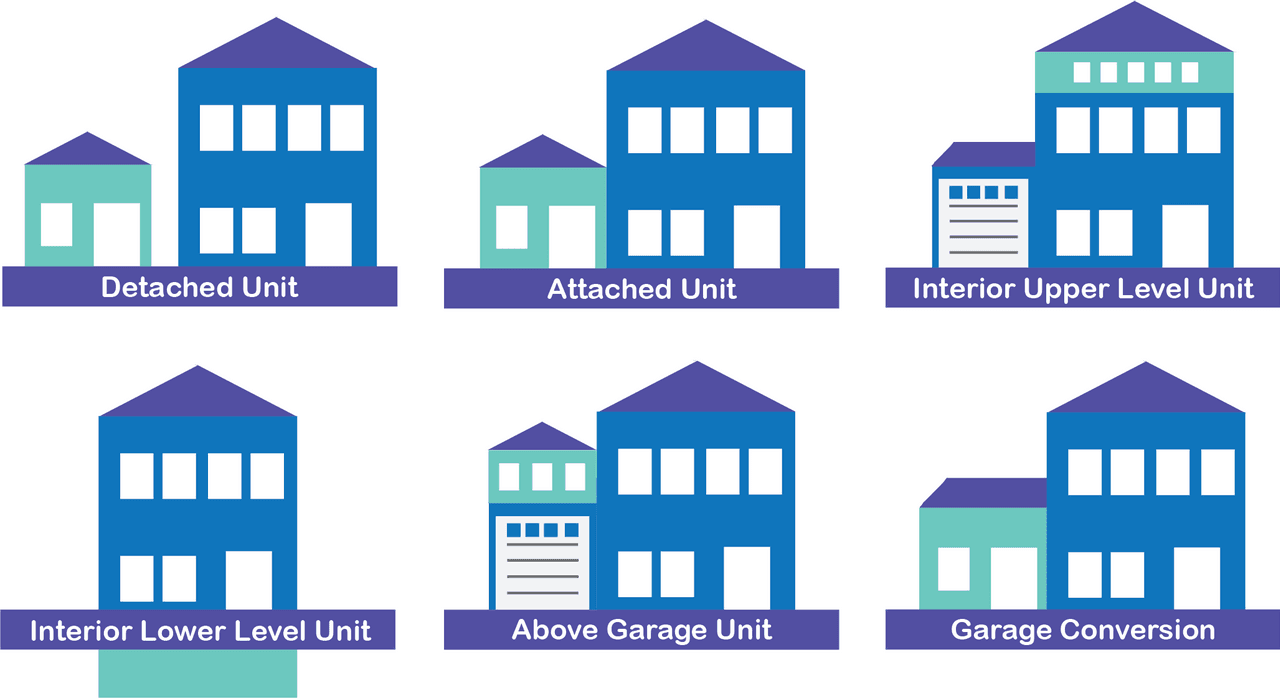
What moves the price
Attached or detached. The brief says constructing an attached ADU, like converting a garage, typically costs less than a detached ADU.[1] A garage or basement already has a floor, walls and a roof. A backyard cottage needs a foundation, a full structure and a roof of its own.
Size and finish. A studio is cheaper than a two-bedroom, and a full kitchen and bath cost far more per square foot than bedrooms do. Quality of finishes moves the total as much as the footprint.
Utilities. A separate unit needs water, drain, electric and heating and cooling. Running lines to a detached building across the yard can mean trenching, a new electrical subpanel and a larger water service. If the house is on a well or septic system, additional documentation may be required by the Health Department to accommodate any additional bedrooms,[3] and a septic upgrade can be a big separate line item.
Site work. Slope, drainage, trees, access for equipment and soil all affect foundation and grading costs. Ask the contractor what is assumed.
Local requirements. Localities may also require replacement of the main house's required parking and dedicated parking for the ADU.[2] They may require compliance with water, sewer, septic, emergency access, flood zone and stormwater requirements.[2] Each can add paving, drainage or engineering to the bill.
Fees to budget separately
Under the state ADU law, effective July 1, 2027, a locality may charge a fee of no more than $500 for the ADU permit, in addition to any inspection, site or building permit fees.[2] Building permit fees are set by each locality, so ask yours for its schedule.
As of October 2026, Fairfax County, which has its own accessory living unit rules, lists its accessory living unit application fee at $285 and a renewal at $75.[3]
Design and engineering drawings, surveys, utility connection charges and the cost of financing are usually outside a contractor's construction price, so ask what is left out.
Costs after it is built
Insurance deserves a call before you commit. The commission's brief says those renting out a detached unit to a non-family member may be required to purchase landlord insurance, which can add to the budget.[1] Property taxes, utilities and the zoning rules on renting also affect what the unit really costs you; see whether ADUs are allowed in Virginia.
Getting quotes you can compare
Ask each builder to price the same scope in writing, showing:
- design and drawings, and who handles permits
- foundation, framing, roof, windows and exterior finish
- plumbing, electrical and heating and cooling, with separate lines for any new service or subpanel
- kitchen and bath allowances, with the brand and grade assumed
- site work, utility trenching, septic or sewer work and landscaping repair
- the payment schedule, schedule and warranty
Compare the scope, not just the total. The cheapest quote is often the one that leaves out utilities or site work. Read what building an in-law suite involves so you know what a complete quote covers.
When to call a licensed pro
For the whole job. Virginia's contractor licence classes turn on contract value: Class C for a single contract over $1,000 but less than $30,000, Class B for $30,000 or more but less than $150,000, and Class A for $150,000 or more.[4] A whole ADU will usually land in Class B or Class A. Check the licence on DPOR's lookup before you pay a deposit.
Browse remodeling services or read more remodeling answers. To get prices for your own lot, describe the job once and licensed local remodelers quote it.
Common questions
- Why can't I get one average price for an ADU?
- The Virginia Housing Commission's brief says the cost depends on factors like square footage and whether the unit is attached or detached. Utilities, site work and local requirements add more. Itemized quotes for your own lot are the only reliable number.
- Is a garage conversion cheaper than a backyard unit?
- Usually. The commission's brief says an attached ADU, like converting a garage, typically costs less than a detached one. A detached unit needs its own foundation, roof and utility connections.
- What does the ADU permit cost?
- Under the state law effective July 1, 2027, a locality may charge no more than $500 for the ADU permit, on top of building permit and inspection fees. As of October 2026, Fairfax County, with its own rules, lists $285 for an accessory living unit application.
- Will an ADU raise my insurance?
- It can. The commission's brief says renting a detached unit to a non-family member may require landlord insurance. Ask your insurer before you build.
Sources
- [1] Accessory Dwelling Units: Introductory Brief, Virginia Housing Commission. Checked October 27, 2026.
- [2] Va. Code § 15.2-2292.4, Development and use of accessory dwelling units, Code of Virginia, Virginia General Assembly. Checked October 27, 2026.
- [3] Accessory Living Unit (Administrative Permit), Fairfax County Department of Planning and Development. Checked October 27, 2026.
- [4] Va. Code § 54.1-1100, Definitions, Code of Virginia, Virginia General Assembly. Checked October 27, 2026.
Want a pro to handle it?
Describe the job once. Licensed local businesses send quotes, and you pay only when you book one.
Get a quote from a local pro