Are mosquito spraying services safe for kids and pets?
They can be, when a licensed applicator uses the product exactly as its label directs. EPA does not expect risks of concern from the common mosquito insecticides used that way, but no pesticide is risk free. Ask for the product name, keep children and pets off treated areas until the spray is completely dry, and protect fish ponds, bees and cats.
Free to ask. Local shops send quotes, and you pay only when you book one.
By Kasra Taheri, Founder, LoclisPublished
Researched and drafted with AI, then checked claim by claim against the sources listed below before it was published. Prices and rules change; the dates beside each source say when it was last checked.
Step by step
Read when to stop and call a pro, further down this page, before you start.
Step 1: Hire a licensed company
Hire a business with a Virginia pesticide business license and a certified commercial applicator on staff.[10]
Step 3: Ask about lower-toxicity options
Ask whether the company will discuss low-toxicity options and how it will avoid unnecessary exposure.[9]
Step 5: Cover what stays out
Cover play structures, outdoor furniture, pet sleeping areas, vegetable gardens and herbs.[6]
Step 6: Close up the house
If the spraying is near the house, close doors and windows and turn off the air conditioner.[6]
Step 7: Protect water
Cover or move small pools, fish ponds and bird baths.[7]
Step 8: Keep everyone inside
Keep children and pets indoors during the application and off the area until it is completely dry.[6]
Step 9: Reschedule on windy days
Ask the company to reschedule if it is windy, since the spray can drift away from where it was aimed.[6]
Mosquito spraying can be done safely around children and pets, but "safe" depends on what is sprayed, how much, where, and what your family touches afterward. EPA does not expect risks of concern to people when the pesticides most commonly used in outdoor residential misting systems are used according to their labels, but excessive use or accidents may pose risks, and no pesticide should be regarded as 100 percent risk free.[1] Your job as the customer is to hire a licensed company, know the product, and keep kids and pets away until it is dry.
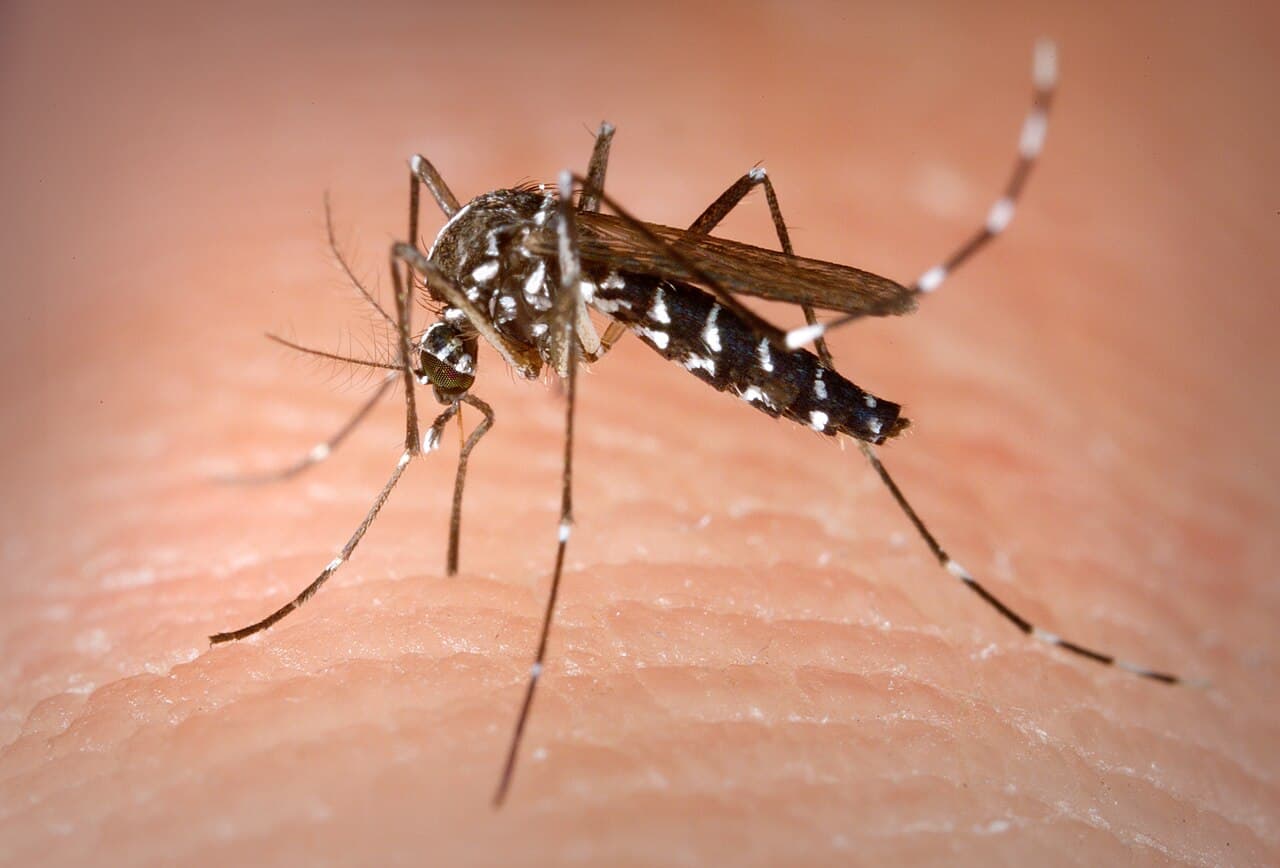
What gets sprayed on a yard
Most residential mosquito services use pyrethroids or pyrethrins. The insecticides most often used in residential misting systems contain pyrethrins and permethrin, sometimes with piperonyl butoxide added.[1] Bifenthrin is a pyrethroid insecticide, a human-made version of the pyrethrins that come from chrysanthemum flowers, and more than 600 products in the United States contain it.[3]
Truck and aircraft spraying by a city or county is different. Those programs use ultra-low volume sprays that typically use less than 3 ounces of active ingredient per acre,[2] and EPA says its review of mosquito control products includes making sure label use does not pose risks to vulnerable groups, including children and pregnant women.[2]
How children and pets get exposed
People and pets can be exposed through direct contact with the spray, by touching plants or other objects in the treated area, or by breathing small amounts left in the air.[1] Children crawl, touch everything and put their hands in their mouths, and pets roll in the grass and lick their paws, so the hours after a treatment are when contact is most likely.
While children may be especially sensitive to pesticides compared with adults, there are currently no data showing that children are more sensitive specifically to bifenthrin or to permethrin.[3][4] The practical answer is the same either way: keep them off treated surfaces until they are dry.
Pets need extra care
Cats are more sensitive to permethrin than dogs or people because it takes their bodies a long time to break it down.[4] Pets exposed to bifenthrin may vomit or have diarrhea once, be less active, twitch their ears, flick their paws and drool more.[3]
Keep pets away from treated areas until the pesticide is completely dry and the area has been well ventilated.[5] Granular lawn products may require keeping pets off the treated area for 24 hours or longer while the granules dissolve and the area dries.[5] The National Pesticide Information Center's advice for hiring is direct: "If you hire a pest control company or lawn service, talk to them about the products they are using and the potential risk to your pets."[5]
Fish, bees and the neighbors
The bigger environmental risk is to animals in water and to pollinators. Permethrin is highly toxic to fish and to bees, and bifenthrin is highly toxic to fish and small aquatic organisms and very highly toxic to bees.[4][3] Ask the technician to stay well back from ponds, creeks and pools, to skip plants in bloom, and to keep spray on your side of the property line.
Read the product before the visit
Every pesticide label carries a signal word. CAUTION means the product is slightly toxic if breathed in, swallowed or gotten on the skin, WARNING means moderately toxic, and DANGER means highly toxic or poisonous.[7] Ask for the label or a link to it, and ask how long the label says to stay off treated areas. Stay away from the treated area for the time the label specifies, or until it is completely dry; shaded areas may take longer to dry.[6]
If you are thinking about a misting system
Automatic misters spray on a schedule whether or not anyone is in the yard, so they need more care than a technician's visit. EPA's guidance includes these points:
- Make sure the reservoir and the system are securely locked and out of children's reach at all times.[1]
- Point nozzles away from eating and cooking areas and from any water, including swimming pools and fish ponds, and keep them less than 10 feet off the ground to reduce drift.[1]
- Do not run the system when people, pets or food are present, and set timers for times when people and pets are unlikely to be sprayed.[1]
- If the equipment leaks or malfunctions, turn the system off immediately and contact the installer.[1]
How to hire safely in Virginia
In Virginia, no one may apply or recommend a pesticide commercially without a pesticide business license and a certified commercial applicator on staff.[10] To get that license, a business must show insurance of at least $100,000 for property damage, $100,000 for injury to or death of one person, and $300,000 per occurrence.[11] This answer explains how to check a pest control licence.
When you interview companies, ask about the products, where they will be applied and how often. One of the questions on the National Pesticide Information Center's checklist is the one that matters most here: "Are they willing to discuss low-toxicity options and reducing environmental risks?"[9] A good company will answer plainly and give you the product names in writing; see what mosquito and tick spraying costs for what else belongs in the quote.
Spraying is not the only tool. Remove standing water where mosquitoes may breed.[8] Use repellent on children as the label directs, with one firm limit from the Virginia Department of Health: "Do not use insect repellent on babies under 2 months of age."[12] For ticks, yard changes do much of the work; see how to get rid of ticks in your yard.
Stop and call a pro if
- A child or pet seems unwell after a treatment. Keep the product name and EPA registration number handy, along with the National Poison Control hotline at 800-222-1222 and the National Pesticide Information Center at 800-858-7378,[1] and call your veterinarian for a pet.
- A misting system leaks, sprays at the wrong time or points toward a pool, patio or neighbor's yard.
- The company will not tell you what it is spraying or cannot show a Virginia pesticide business license.
- Spray drifts onto your property from a neighbor's treatment and you have concerns; contact the company that applied it.
Getting help on Loclis
Ticks are active in Virginia for much of the year, not just summer; see when tick season starts and ends. Browse mosquito and tick services, find pest control around Blacksburg, or read more pest control answers. When you are ready, describe the job on Loclis and ask each licensed business that quotes which products it plans to use.
Common questions
- How long should kids and pets stay off the grass after mosquito spraying?
- Until the spray is completely dry, or longer if the product label says so. Shaded areas take longer to dry. Granular lawn products can require keeping pets off for 24 hours or more while the granules dissolve. Ask the technician what the label says for the product they used.
- Are cats more at risk than dogs?
- With permethrin, yes. Cats break permethrin down slowly and are more sensitive to it than dogs or people. Cats accidentally exposed to products with high levels of permethrin can have tremors and seizures, so keep cats indoors during and after a treatment.
- Is mosquito spray harmful to bees and fish?
- The pyrethroids used for mosquitoes, such as permethrin and bifenthrin, are highly toxic to fish and to bees. Ask the company to keep spray away from ponds, creeks and pools and away from plants in bloom.
- Are natural or organic mosquito sprays safer?
- Not automatically. Some minimum risk products used in misting systems have not been evaluated by EPA for risk or effectiveness in that use. Whatever the product, ask for its label, read the precautions and follow the same steps to keep children and pets away while it dries.
- What if my child or pet seems sick after a yard treatment?
- Call Poison Control at 800-222-1222 for a person, or your veterinarian for a pet, and have the product name and EPA registration number ready. The National Pesticide Information Center, 800-858-7378, can answer questions about a specific product.
- Do I need to spray at all?
- Often not. Removing standing water every week, keeping screens in good repair and using repellent when outdoors handle many backyard mosquito problems. Spraying makes most sense when those steps are not enough.
Sources
- [1] Mosquito Misting Systems, U.S. Environmental Protection Agency. Checked October 27, 2026.
- [2] Pesticides Used To Control Adult Mosquitoes, U.S. Environmental Protection Agency. Checked October 27, 2026.
- [3] Bifenthrin General Fact Sheet, National Pesticide Information Center, Oregon State University and U.S. EPA. Checked October 27, 2026.
- [4] Permethrin General Fact Sheet, National Pesticide Information Center, Oregon State University and U.S. EPA. Checked October 27, 2026.
- [5] Pesticide Use Around Pets, National Pesticide Information Center, Oregon State University and U.S. EPA. Checked October 27, 2026.
- [6] Do I need to spray for mosquitoes at home?, National Pesticide Information Center, Oregon State University and U.S. EPA. Checked October 27, 2026.
- [7] What should I do during mosquito spraying?, National Pesticide Information Center, Oregon State University and U.S. EPA. Checked October 27, 2026.
- [8] Mosquitoes, National Pesticide Information Center, Oregon State University and U.S. EPA. Checked October 27, 2026.
- [9] Selecting a Pest Control Company, National Pesticide Information Center, Oregon State University and U.S. EPA. Checked October 27, 2026.
- [10] Code of Virginia § 3.2-3924. Annual business license required, Virginia General Assembly, Legislative Information System. Checked October 27, 2026.
- [11] Pesticide Business License, Virginia Department of Agriculture and Consumer Services. Checked October 27, 2026.
- [12] Mosquito Prevention, Virginia Department of Health. Checked October 27, 2026.
Want a pro to handle it?
Describe the job once. Licensed local businesses send quotes, and you pay only when you book one.
Get a quote from a local pro