Do pest control companies need a license in Virginia?
Yes. Any business that applies or recommends pesticides for pay in Virginia needs a pesticide business license from the Virginia Department of Agriculture and Consumer Services (VDACS) for each location, and must employ a certified commercial applicator. The people who treat homes are certified commercial applicators or registered technicians. VDACS publishes lists of licensed businesses and certified applicators you can check before you hire.
Free to ask. Local shops send quotes, and you pay only when you book one.
By Kasra Taheri, Founder, LoclisPublished
Researched and drafted with AI, then checked claim by claim against the sources listed below before it was published. Prices and rules change; the dates beside each source say when it was last checked.
Step by step
Read when to stop and call a pro, further down this page, before you start.
Step 1: Ask for the business license
Ask the company for its Virginia pesticide business license for the location that will serve your home.[8]
Step 2: Check the VDACS business list
Look the company up on the list of licensed pesticide businesses that VDACS publishes on its pesticides page.[10]
Step 3: Ask who will treat your home
Get the name and certification number of the applicator or technician who will do the work, and check it on the VDACS applicator list.[10]
Step 4: Match the category to the job
For household pests, ask whether the supervising applicator is certified in general pest control; termites fall under wood-destroying pest control.[7]
Step 5: Ask for proof of insurance
Ask to see the certificate of insurance the company filed for its license, on paper.[8]
Step 7: Get the plan in writing
Get the pests, products, number of visits and price in a written plan before any work starts.[11]
Step 8: Keep your service records
Ask for the product names and EPA registration numbers used at each visit and keep the invoices.[6]
Yes. In Virginia, a company that treats homes for insects, spiders or other pests for pay needs a pesticide business license, and someone certified has to be responsible for what it applies. The Code of Virginia says: "No person may apply or recommend for use any pesticide commercially without a pesticide business license and the employment of a certified commercial applicator" responsible for applying pesticides safely and for the recommendations the company makes.[1] Checking both takes a few minutes and is worth doing before anyone sprays your house.
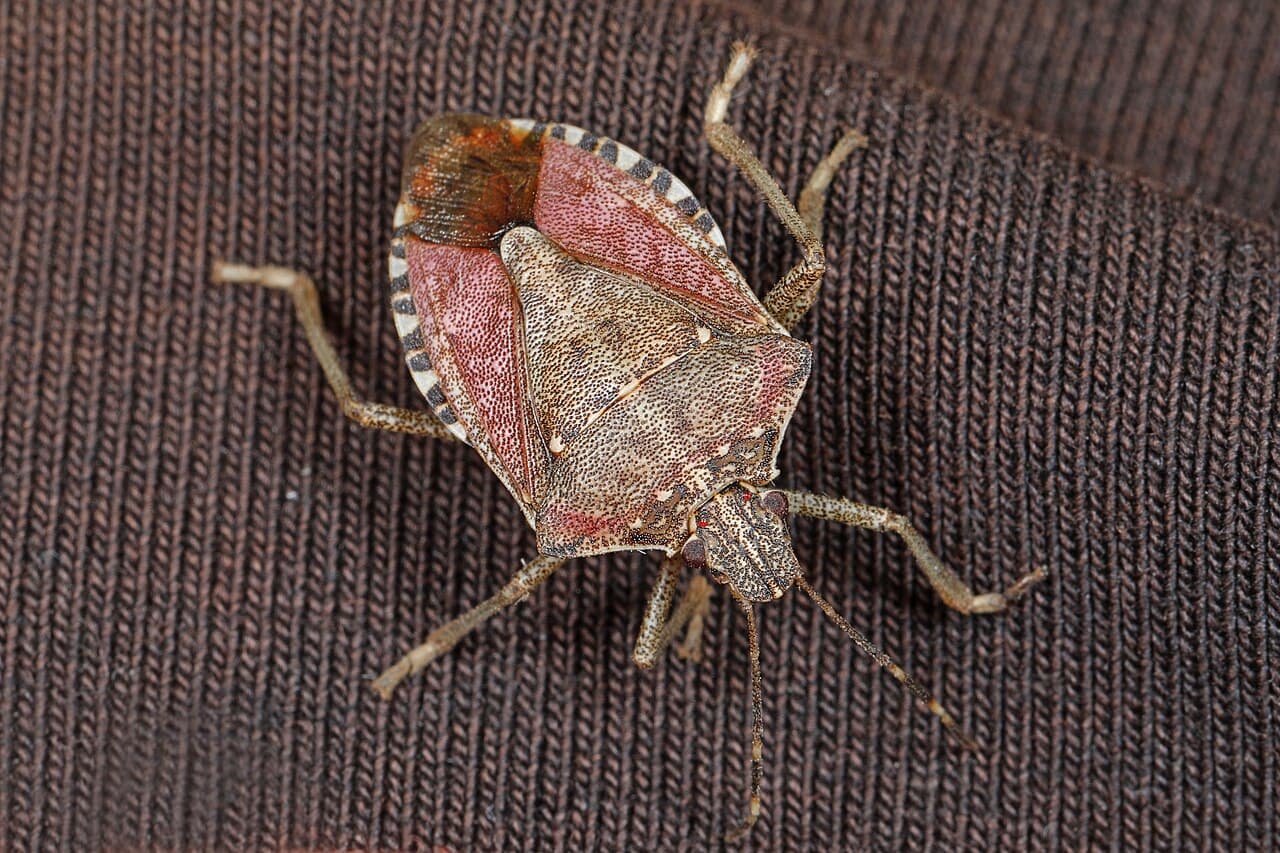
The two credentials to look for
The business license. An annual business license is required for each location or outlet that sells, distributes, stores, applies, or recommends for use any pesticide.[1] The license is issued by the Office of Pesticide Services at VDACS, which certifies pesticide applicators, registers pesticide products and licenses pesticide businesses.[10] This license is separate from and in addition to any other commercial business license,[8] so a city or county business license on its own does not cover pesticide work.
To get the license, a business must furnish a certificate of insurance showing at least $100,000 for property damage, $100,000 for personal injury to or death of one person, and $300,000 per occurrence.[8] The applicant, or an employee it designates, must pass a written examination on pesticide laws and regulations, pesticide hazards to people and the environment, and safe use and disposal, unless that person is already a certified commercial applicator.[4] Once licensed, the business must employ a certified applicator who is responsible for the safe application of pesticides.[8] All pesticide business licenses expire on March 31 of each year and must be renewed,[8] so make sure the one you are shown is current.
The applicator's certification. Any person mixing or applying any pesticide commercially in Virginia must either hold a valid pesticide business license or be employed by a currently licensed pesticide business.[5] VDACS describes two credentials for the people doing that work:
- Commercial applicators for hire use pesticides on others' property in exchange for compensation and must work for a company with a pesticide business license.[9]
- Registered technicians have not completed the requirements for commercial certification; they can apply general use pesticides without supervision, and apply restricted use pesticides only under the supervision of a commercial applicator.[9][3]
Commercial applicators are certified in categories. General pest control covers household pests, pests that inhabit or infest structures, stored products and residential food preparation areas.[7] Wood-destroying pest control is a separate subcategory for organisms that destroy structures made of wood,[7] which is the one that matters for termites. Ask which categories the company's supervising applicator holds. Certificates do not last forever either: commercial applicators and registered technicians hold certificates that expire on June 30 and are renewed by taking recertification courses.[10]
Who does not need the license
A few businesses are exempt from the pesticide business license, including providers of janitorial, cleaning or sanitizing services that use no pesticides other than sanitizers, disinfectants and germicides,[4][8] and certified applicators not for hire, who use pesticides only on property owned or leased by themselves or their employer.[4] A homeowner using a household product on their own house is not selling or applying pesticides for compensation, and the label still applies. Restricted use pesticides are different: no one may use them unless they have met the Board's certification requirements or are training for certification under the direct supervision of a certified applicator on site.[2]
Some pest work is governed by other rules altogether. Termite treatment is licensed pesticide work in its own category. Animals such as bats, raccoons and squirrels are a different kind of job; see whether it is legal to trap and relocate wildlife in Virginia before hiring for animals.
How to check a company before you hire
VDACS publishes downloadable lists of Virginia licensed pesticide businesses and of certified commercial applicators and registered technicians.[10] Search them for the company's name and for the certification number of whoever will treat your home. If the company cannot give you a license and a certification number, keep looking.
Licensing is the floor, not the whole check. The EPA suggests you ask neighbors and friends about their experience with the company, and to call your state pesticide regulatory agency to find out whether it has received complaints.[11] A careful company will inspect your home and outline a recommended control program[11] in writing before it quotes a price. For what drives that price, see how much pest control costs in Virginia.
Keep your paperwork after the job too. Licensed businesses must record, for each application, the name and certification number of the person who made the application, the date, the site and pests treated, the product name and EPA registration number, and the amount used,[6] so asking for the same details on your invoice is reasonable.
If something goes wrong
If you think a product was misapplied, made someone sick or was used without a license, contact the VDACS Office of Pesticide Services at ops.enf@vdacs.virginia.gov or 804-371-6560.[10] If someone develops symptoms after an application, seek medical help right away, or call your local poison center at 1-800-222-1222.[11]
Stop and call a pro if
- You see signs of termites, such as winged insects swarming indoors or piles of shed wings. That is licensed wood-destroying pest work.
- The pest is a bat, bird or other animal living in the house.
- A treatment would need restricted use or professional-use products.
- An infestation keeps coming back after you have sealed gaps, fixed leaks and removed food sources.
Getting help on Loclis
Read how to get rid of spiders in the house, browse general pest control services, find pest control businesses around Blacksburg or see more pest control answers. When you are ready, describe the job on Loclis so licensed pest control businesses can quote it in writing.
Common questions
- Who licenses pest control companies in Virginia?
- The Office of Pesticide Services at the Virginia Department of Agriculture and Consumer Services (VDACS). It licenses pesticide businesses, certifies the applicators who use pesticides, registers products and investigates complaints of pesticide misuse.
- Does every technician who sprays my house need to be certified?
- The company needs a pesticide business license and a certified commercial applicator responsible for its applications. VDACS certifies the people who apply pesticides for hire as commercial applicators or as registered technicians, so ask for the name and certification number of whoever treats your home and check it on the VDACS list.
- Does a company need a license if it only seals gaps or sets traps?
- The VDACS business license covers selling, storing, applying or recommending pesticides for pay. Work that uses no pesticide at all is generally outside that license. Ask any company exactly what it will apply, and whether it holds the license anyway.
- How do I check a Virginia pest control license?
- VDACS publishes downloadable lists of licensed pesticide businesses and of certified commercial applicators and registered technicians on its pesticides page. Search them for the company name and the applicator's certification number.
- Where do I complain about a pest control company in Virginia?
- Pesticide-related complaints go to the VDACS Office of Pesticide Services, which investigates allegations of pesticide misuse. Its listed complaint contacts are ops.enf@vdacs.virginia.gov and 804-371-6560.
- Do I need a license to spray my own house?
- Not for ordinary household products used on your own home. The business license is for people who apply or recommend pesticides for pay. Restricted use pesticides are the exception: using them requires certification or a certified applicator supervising on site. You still have to follow the product label.
Sources
- [1] Code of Virginia § 3.2-3924. Annual business license required, Virginia General Assembly, Legislative Information System. Checked October 26, 2026.
- [2] Code of Virginia § 3.2-3929. Restricted use pesticides prohibited; exceptions; training required, Virginia General Assembly, Legislative Information System. Checked October 26, 2026.
- [3] Code of Virginia § 3.2-3900. Definitions (Pesticide Control), Virginia General Assembly, Legislative Information System. Checked October 26, 2026.
- [4] 2VAC5-680-20. General requirements for all pesticide businesses; exemptions, Virginia General Assembly, Legislative Information System. Checked October 26, 2026.
- [5] 2VAC5-680-30. Business licensing requirements for commercial applicators, Virginia General Assembly, Legislative Information System. Checked October 26, 2026.
- [6] 2VAC5-680-65. Recordkeeping of pesticide applications by licensed pesticide businesses, Virginia General Assembly, Legislative Information System. Checked October 26, 2026.
- [7] 2VAC5-685-70. Categories for commercial applicator certification, Virginia General Assembly, Legislative Information System. Checked October 26, 2026.
- [8] Pesticide Business License, Virginia Department of Agriculture and Consumer Services. Checked October 26, 2026.
- [9] Becoming a Certified Pesticide Applicator, Virginia Department of Agriculture and Consumer Services. Checked October 26, 2026.
- [10] Pesticides (Office of Pesticide Services), Virginia Department of Agriculture and Consumer Services. Checked October 26, 2026.
- [11] Citizen's Guide to Pest Control and Pesticide Safety, U.S. Environmental Protection Agency. Checked October 26, 2026.
Want a pro to handle it?
Describe the job once. Licensed local businesses send quotes, and you pay only when you book one.
Get a quote from a local pro