How do I get rid of ticks in my yard?
You usually cannot remove every tick, but you can make the parts of the yard your family uses far less welcoming to them. Mow, rake out leaf litter, clear brush at the lawn's edge, lay a wood chip or gravel strip between lawn and woods, move play sets away from the trees, and discourage deer and mice. For a spray, hire a licensed applicator.
Free to ask. Local shops send quotes, and you pay only when you book one.
By Kasra Taheri, Founder, LoclisPublished
Researched and drafted with AI, then checked claim by claim against the sources listed below before it was published. Prices and rules change; the dates beside each source say when it was last checked.
Step by step
Read when to stop and call a pro, further down this page, before you start.
Step 1: Find the tick zone
Walk the yard and note the woods edge, leaf litter, groundcover, stone walls and tall grass, where most ticks live.[2]
Step 2: Mow and clear brush
Keep the lawn mowed and clear tall grass and brush around the house and at the edges of the lawn.[1]
Step 3: Rake out leaf litter
Rake or blow leaves out from under shrubs, then bag or compost them instead of piling them elsewhere in the yard.[2]
Step 4: Let in the sun
Trim tree branches and shrubs around the lawn edge so more sunlight and air reach the ground.[2]
Step 5: Lay a dry border
Put down a strip of wood chips, mulch or gravel at least 3 feet wide where the lawn meets woods or a stone wall.[2]
Step 6: Move play areas
Move swing sets and sandboxes away from the woodland edge and set them on wood chips or mulch.[2]
Step 7: Move feeders and woodpiles
Move bird feeders and firewood piles away from the house and clean up spilled bird seed.[2]
Step 8: Discourage deer
Remove plants that attract deer, choose deer-resistant ones, and consider a fence to keep deer out of the yard.[1]
Step 9: Protect your pets
Keep dogs on a tick preventive your veterinarian recommends and check them for ticks after time outdoors.[3]
Step 10: Check people after yard work
Check yourself and your children for ticks after yard work, and tumble dry work clothes on high heat for 10 minutes.[3]
Step 11: Hire out any spraying
If you want the yard sprayed, hire a licensed pest control business and time it for when young blacklegged ticks are at their local peak.[1]
You can't make a Virginia yard tick-free, especially one that borders woods, but you can make the parts your family uses a poor place for ticks. Ticks need shade, moisture and animals to feed on. Take those away near the house and you will find far fewer of them on your lawn, your kids and your dog.
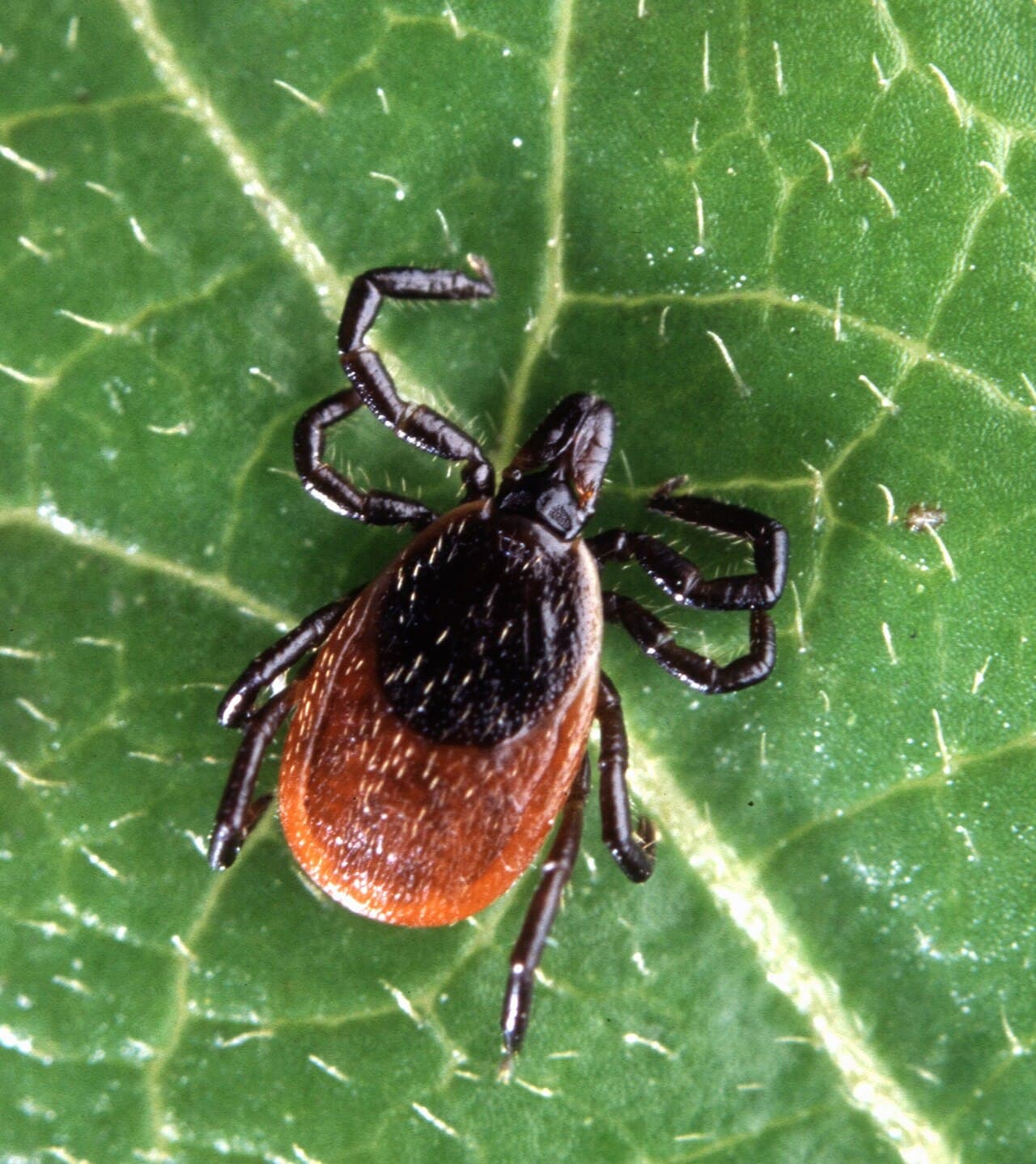
Where ticks live in a yard
Blacklegged ticks and lone star ticks, the two most important disease-carrying ticks for people in Virginia, live mainly in forest leaf litter or in shaded, grassy areas.[3] Ticks do not fly or climb high on vegetation; they wait low down and climb onto shoes and socks.[3] American dog ticks prefer sunnier, open spots such as trail edges, fields of medium-height grass and shrubby, overgrown areas.[4]
Where you find them matters more than how many you have. The Connecticut Agricultural Experiment Station's handbook reports that most blacklegged ticks sampled were found in dense woods (67 percent) and in the unmaintained edge between woods and open ground (22 percent), with 9 percent in ornamental plantings and 2 percent in the lawn.[2] Of the ticks in lawns, 82 percent were within 3 yards of the lawn's edge, especially along woods, stone walls and ornamental plantings.[2] So the work is at the edges, not across the middle of the lawn.
Make the edges dry and sunny
The ticks that spread Lyme disease need the higher humidity of woodland and die quickly in drier conditions.[1] The Fairfax County Health Department advises that removing leaf litter, mowing the lawn and clearing tall grass and brush around the house and at the edges of the lawn reduces the number of ticks that transmit Lyme disease.[1]
Mow and clear. Keep the grass cut on a regular schedule and cut back tall grass, weeds and brush where the lawn meets the trees.
Rake out leaf litter. Rake or blow leaves out from under shrubs and along the woods edge in fall and again in early spring. Bag or compost the leaves; do not simply move them to another part of the property.[2]
Let in light. Trim low branches and overgrown shrubs around the edge of the lawn so sun and air reach the ground.
Lay a dry border. Wood chips or gravel laid where the lawn meets the woods create a drying barrier that can reduce ticks on the grass.[1] The Connecticut handbook suggests a border of wood chips, mulch or gravel 3 feet wide or wider between lawn and woods or stone walls.[2]
Rethink groundcover. Restrict groundcovers such as pachysandra to parts of the yard the family and pets rarely use, since ticks shelter in them.[2]
Move people away from tick habitat
Focus your effort on the places people actually go: walkways, places used for play, eating or entertaining, the mailbox, storage areas and gardens.[2] You do not need to clear the whole property. Move swing sets and sandboxes away from the woodland edge and set them on a base of wood chips or mulch.[2] Keep patio furniture, the grill and the kids' play space in the sunny, open part of the yard, and widen any path that runs into the woods so nobody brushes against vegetation.
Discourage deer and mice
Ticks ride in on animals. There is a link between the number of deer and the number of blacklegged ticks in a community, and tick numbers do not drop much unless deer are removed or greatly reduced.[1] You can still keep deer away from the house. Fencing, removing food such as spilled bird seed, and removing plants that attract deer all help discourage them.[1] Garden centers, nurseries and local extension agents keep lists of deer-resistant plants.[1]
Small animals matter just as much, because young ticks feed on them. Move firewood piles and bird feeders away from the house, and clear brush and leaves around stone walls and woodpiles, to discourage the mice and chipmunks that feed young ticks.[2]
Should you spray?
Yard work lowers tick numbers but rarely gets rid of them. Research summarized in the Connecticut handbook found that pesticides are the most effective way to reduce ticks, particularly when combined with landscaping changes that cut tick habitat in the parts of the yard used most.[2]
Timing and targeting matter. Fairfax County says a residential tick treatment should be supervised by a licensed pest control professional and timed for when young blacklegged ticks are at their local peak.[1] For Fairfax County, the Health Department says the best time to apply permethrin to a yard for ticks is between late March and early May.[1] A good applicator treats the woods edge, stone walls and shady planting beds rather than blanketing open lawn.
Ask what product will be used and keep it away from ponds and flowering plants. Permethrin is highly toxic to fish and to bees, and cats are more sensitive to it than dogs or people.[6] In Virginia, no one may apply or recommend a pesticide commercially without a pesticide business license and a certified commercial applicator on staff.[7] See whether mosquito and tick spraying is safe for kids and pets and what it costs in Virginia before you book.
Keep protecting people and pets
Even a well-kept yard has some ticks. Landscape management alone may not reduce disease, because a single unnoticed bite from an infected tick is enough to transmit Lyme disease.[2]
After yard work or play near the woods, change clothes. Tumble dry clothes on high heat for 10 minutes to kill any ticks left on them.[3] When you check yourself and your children, check armpits, the groin, in and around the ears and hairline, the belly button, the backs of the knees and between the legs.[3] On long days outdoors, Virginia Cooperative Extension passes on this Virginia Department of Health advice: "Conduct tick checks on children and pets every four hours when staying outside."[5] For dogs, the Virginia Department of Health's advice is plain: "Use a tick prevention product for your dog as recommended by a veterinarian."[3]
Ticks are not only a summer problem in Virginia; see when tick season starts and ends for a year-round routine.
Stop and call a pro if
- Your yard backs onto woods and you still find ticks on people or pets after the yard work is done. A targeted treatment of the woods edge is a job for a licensed pest control business.
- You want a pesticide applied for you. Ask to see the company's Virginia pesticide business license; this answer explains what licences pest control companies need.
- Deer fencing, stone wall repair or large brush clearing is more than you can do safely yourself.
- Someone feels unwell after a bite. If you think you may be sick from a tick bite, contact your healthcare provider as soon as possible and tell them about any recent tick bites or time outdoors.[8]
Getting help on Loclis
Fleas often share the same shady spots, so see how to keep fleas out of your yard. Browse mosquito and tick services, find pest control around Blacksburg, or read more pest control answers. When you are ready, describe the job on Loclis so licensed pest control businesses can quote it.
Common questions
- Can I get rid of all the ticks in my yard?
- Usually not, especially if the yard borders woods. The goal is fewer ticks in the parts of the yard people and pets use: a mowed lawn, a dry wood chip or gravel border at the woods edge, play areas moved away from the trees, and regular tick checks.
- Where do ticks hide in a yard?
- Mostly in leaf litter, the shady woods edge, groundcover, tall grass and brush, and around stone walls and woodpiles. Open, sunny, mowed lawn holds few ticks, and most of the ones found in lawns are within a few yards of the edge.
- Does a wood chip border really help with ticks?
- It helps. A strip of wood chips, mulch or gravel 3 feet wide or wider between lawn and woods creates a dry barrier that ticks cross less readily, which can reduce the number of ticks on the grass. It works best alongside mowing and leaf removal.
- Should I spray my yard for ticks?
- A targeted treatment of the woods edge and other tick habitat is the most effective way to cut tick numbers, especially combined with yard changes. In Virginia a business that applies pesticides needs a pesticide business license and a certified applicator, and Fairfax County advises having a professional apply it between late March and early May.
- Do deer bring ticks into my yard?
- Yes. Adult blacklegged ticks feed on deer, and the number of deer in a community is tied to the number of those ticks. Fencing, removing spilled bird seed and plants deer like, and choosing deer-resistant plants all help.
Sources
- [1] Tick-Free Yard, Fairfax County Health Department. Checked October 27, 2026.
- [2] Tick Management Handbook (Bulletin No. 1010), The Connecticut Agricultural Experiment Station. Checked October 27, 2026.
- [3] Tick Prevention, Virginia Department of Health. Checked October 27, 2026.
- [4] Tick Identification, Virginia Department of Health. Checked October 27, 2026.
- [5] Common Ticks of Virginia, Virginia Cooperative Extension, Virginia Tech. Checked October 27, 2026.
- [6] Permethrin General Fact Sheet, National Pesticide Information Center, Oregon State University and U.S. EPA. Checked October 27, 2026.
- [7] Code of Virginia § 3.2-3924. Annual business license required, Virginia General Assembly, Legislative Information System. Checked October 27, 2026.
- [8] Ticks, Virginia Department of Health. Checked October 27, 2026.
Want a pro to handle it?
Describe the job once. Licensed local businesses send quotes, and you pay only when you book one.
Get a quote from a local pro