When does tick season start and end in Virginia?
Virginia has no true tick-free season. Ticks are busiest from spring through midsummer, and Fairfax County advises extra care from March through October, but the Virginia Department of Health says ticks can be active on warm days at any time of year. Adult blacklegged ticks bite in fall, winter and early spring, so keep up tick checks year round.
Free to ask. Local shops send quotes, and you pay only when you book one.
By Kasra Taheri, Founder, LoclisPublished
Researched and drafted with AI, then checked claim by claim against the sources listed below before it was published. Prices and rules change; the dates beside each source say when it was last checked.
Step by step
Read when to stop and call a pro, further down this page, before you start.
Step 1: Late winter: clear leaf litter
On a dry late-winter day, rake leaf litter out from under shrubs and along the woods edge, and bag or compost it.[10]
Step 2: Early spring: book any yard treatment
If you want a professional tick treatment, book it for spring; Fairfax County names late March to early May as the window there.[8]
Step 3: Spring: treat outdoor clothes
Treat work and hiking clothes, socks and shoes with 0.5% permethrin a few days before wearing them, never on skin.[4]
Step 4: Spring and summer: keep it mowed
Keep grass and underbrush mowed and thinned around the house and play areas through the growing season.[9]
Step 5: Every outing: check for ticks
After time outdoors, check bodies, clothes, gear and pets for ticks, and tumble dry clothes on high heat for 10 minutes.[3]
Step 6: Fall: rake again
Rake fallen leaves away from the lawn edge and play areas, because adult blacklegged ticks are active in fall.[2]
Step 7: Winter: keep checking on warm days
On winter days above about 40 degrees, keep doing tick checks after walks and yard work.[7]
Step 8: All year: keep pets protected
Keep dogs on the tick preventive your veterinarian recommends and check them after outdoor activity.[3]
Step 9: Save a tick that bites
Save a tick that has bitten you in a bag or container with rubbing alcohol in case illness develops.[5]
Virginia does not have a clean start and end to tick season. Ticks are busiest from spring into midsummer, but the state health department is clear that they can bite in any month. Ticks have become common in Virginia and can be active on warm days at all times of the year, which the Virginia Department of Health links to suburban growth, the abundance of deer in suburban forests and a changing climate.[1] The practical answer is to treat March through October as high season and the rest of the year as low season, not no season.
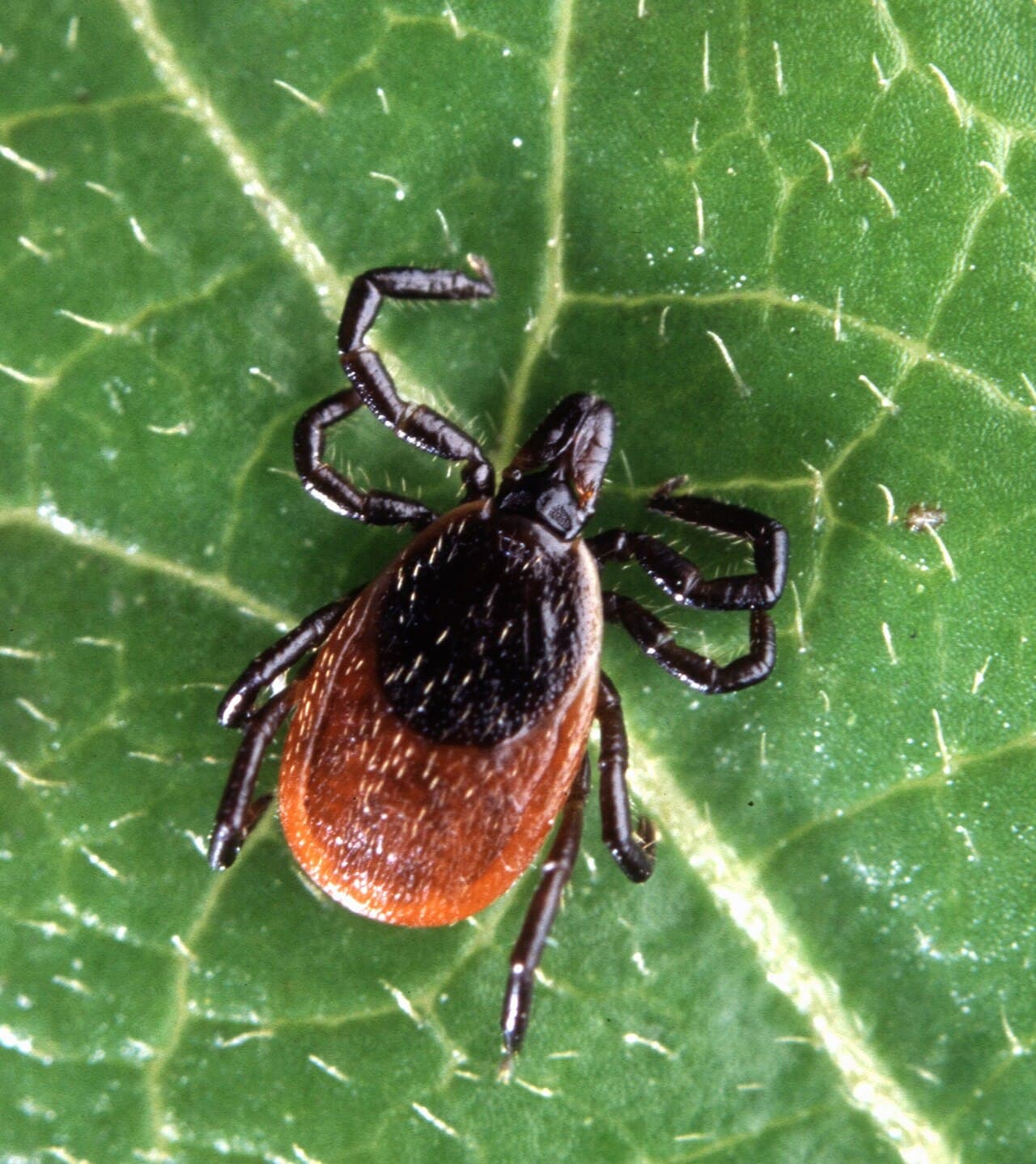
High season and low season
The Fairfax County Health Department tells residents to be extra vigilant from March through October, when ticks are most active and people spend more time outdoors.[7] Blacklegged ticks, which can transmit Lyme disease, are also active on warm winter days when the temperature is above 40 °F.[7] A sunny January afternoon is enough to bring them out of the leaf litter.
When each tick is active
Among the 16 tick species in Virginia, only a few species commonly bite people.[2] Each of the common ones keeps its own calendar.
Blacklegged (deer) tick. Nymphs, less than 1/16 inch long, are the stage that most commonly spreads disease to people and are most active in late spring and early summer. Adults bite people less often but still pose a risk in fall, on warmer winter days and in early spring.[2] This is the tick that keeps tick season going through the cold months.
Lone star tick. Nymphs are active from late spring through mid-summer; adults are most active from late winter to early summer.[2] Lone star ticks are aggressive biters that can transmit ehrlichiosis and can cause alpha-gal syndrome.[2]
American dog tick. Adults are most active from early spring to mid-summer, and the adult female is the stage that most often spreads disease to people.[2]
Put together, the peak for most Virginians is late spring and early summer, when blacklegged and lone star nymphs are out at the same time. Nymphs are tiny and easy to miss, so that is when careful tick checks matter most.
Where you live changes the picture
Lone star ticks are common in Virginia's coastal and Piedmont regions up to about 1,600 feet of elevation.[2] Blacklegged ticks are most common in suburban forests where deer are common, particularly at higher elevations in the mountains, and they do not tolerate the hot summers of Virginia's lowland areas.[2] The American dog tick is found throughout Virginia,[2] most commonly in the western regions and west of the Blue Ridge.[9] The Asian longhorned tick was found in Virginia in 2018 and is largely found in the western half of the state, along the Blue Ridge and in the north.[9]
So in the higher, wooded parts of western Virginia, such as the New River Valley, blacklegged ticks are a bigger part of the picture, while lone star ticks are the familiar summer biter in Hampton Roads and the Piedmont.
Tick season is longer than mosquito season
In Virginia, mosquito season runs from early May to early November.[6] Ticks start earlier and finish later. If you stop doing tick checks when the mosquitoes disappear, you miss the fall and winter adult blacklegged ticks.
A year-round routine
Late winter. On a dry day, rake leaf litter out from under shrubs, along the woods edge and around play areas. Removing leaf litter has been shown to reduce the number of blacklegged tick nymphs on some properties.[10]
Early spring. If you plan to have the yard treated, book it now. In Fairfax County, the Health Department says the best time to apply permethrin to a yard for ticks is between late March and early May.[8] Treat clothing and gear with 0.5% permethrin and do not apply permethrin to skin.[4] The Virginia Department of Health adds that you should apply it a few days before you wear the clothes so it can dry.[3]
Late spring and summer. This is nymph season. Virginia Cooperative Extension's advice is short: "Keep grass and underbrush mowed and thinned."[9] Change out of yard clothes when you come in. Tumble dry clothes on high heat for 10 minutes to kill any ticks left on them.[3]
Fall. Adult blacklegged ticks are back. Rake leaves away from the lawn edge and paths, and keep checking after hikes, hunting and yard work.
Winter. On mild days, keep the routine going after walks in the woods.
All year. "Use a tick prevention product for your dog as recommended by a veterinarian."[3] Dogs bring ticks into the house in every season.
For the yard work itself, see how to get rid of ticks in your yard.
If a tick bites
Remove it promptly; the Virginia Department of Health says there is no safe attachment time for a tick to prevent any pathogen transfer.[5] Its instructions are to grasp it with tweezers as close to the skin as possible and pull upward with steady, even pressure, then clean the bite with soap and warm water.[5] Save the tick in a bag or container with rubbing alcohol in case an illness develops, and never crush a tick with your fingers.[5] Knowing the species can help a doctor. The Fairfax County Health Department identifies ticks for free, though it does not test them for disease.[7]
Stop and call a pro if
- Someone feels unwell after a bite. If you think you may be sick from a tick bite, contact your healthcare provider as soon as possible and tell them about any recent tick bites or time outdoors.[1]
- You keep finding ticks on people or pets even after mowing and clearing leaf litter, and the yard borders woods. A spring treatment of the woods edge by a licensed pest control business may help; read whether it is safe for kids and pets and what it costs.
- Ticks turn up inside the house, in a doghouse or kennel. Talk to your veterinarian and a licensed pest control business.
Getting help on Loclis
Fleas and ticks often show up together; see how to keep fleas out of your yard. Browse mosquito and tick services, find pest control around Blacksburg, or read more pest control answers. When you are ready, describe the job on Loclis so licensed pest control businesses can quote a spring treatment.
Common questions
- Are ticks active in winter in Virginia?
- Yes, on warm days. The Virginia Department of Health says ticks can be active on warm days at all times of the year, and Fairfax County notes that blacklegged ticks are active on winter days above 40 °F. Adult blacklegged ticks are the main winter risk.
- What is the worst month for ticks in Virginia?
- Late spring and early summer is when blacklegged and lone star nymphs are both active. Nymphs are tiny, less than 1/16 inch, and easy to miss, and they are the blacklegged tick stage that most often spreads disease to people.
- Can I get a tick identified in Virginia?
- Yes. The Virginia Department of Health accepts ticks for identification through its Virginia Tick Survey, and the Fairfax County Health Department identifies ticks for free, though it does not test them for disease. Knowing the species can help your doctor if you get sick after a bite.
- When should I treat my yard for ticks?
- In spring, before young ticks peak. Fairfax County says the best time to apply permethrin to a yard for ticks there is between late March and early May, and that the treatment should be supervised by a licensed pest control professional.
- Is tick season the same across Virginia?
- Not quite. Lone star ticks are common in the coastal and Piedmont regions up to about 1,600 feet, while blacklegged ticks are most common in suburban forests with many deer, particularly at higher elevations, and do not tolerate hot lowland summers.
- How is tick season different from mosquito season?
- Mosquito season in Virginia runs from early May to early November, and mosquitoes disappear in cold weather. Ticks start earlier, keep going later, and can bite on warm winter days, so tick checks should not stop when the mosquitoes do.
Sources
- [1] Ticks, Virginia Department of Health. Checked October 27, 2026.
- [2] Tick Identification, Virginia Department of Health. Checked October 27, 2026.
- [3] Tick Prevention, Virginia Department of Health. Checked October 27, 2026.
- [4] Preventing Tick Bites and How to Remove a Tick (card), Virginia Department of Health. Checked October 27, 2026.
- [5] Tick Removal, Virginia Department of Health. Checked October 27, 2026.
- [6] Mosquitoes, Virginia Department of Health. Checked October 27, 2026.
- [7] Ticks, Fairfax County Health Department. Checked October 27, 2026.
- [8] Tick-Free Yard, Fairfax County Health Department. Checked October 27, 2026.
- [9] Common Ticks of Virginia, Virginia Cooperative Extension, Virginia Tech. Checked October 27, 2026.
- [10] Tick Management Handbook (Bulletin No. 1010), The Connecticut Agricultural Experiment Station. Checked October 27, 2026.
Want a pro to handle it?
Describe the job once. Licensed local businesses send quotes, and you pay only when you book one.
Get a quote from a local pro