Can any roofer repair a standing seam metal roof?
Legally, any contractor whose Virginia licence covers roofing may take the job, but not every roofer has the experience or tools for it. Standing seam panels hide their fasteners under interlocking seams, some systems need a mechanical seamer, and some designs require neighbouring panels to come off to replace one. Hire a licensed roofer who works on your type of system regularly and respects its warranty terms.
Free to ask. Local shops send quotes, and you pay only when you book one.
By Kasra Taheri, Founder, LoclisPublished
Researched and drafted with AI, then checked claim by claim against the sources listed below before it was published. Prices and rules change; the dates beside each source say when it was last checked.
This is a job for a licensed pro in Virginia
This page explains what the work involves, the permits, what a licensed pro does and what drives the cost. It does not give step-by-step instructions, because this work needs a licence, a permit or both, and doing it wrong can injure someone. Before you hire, check the licence on Virginia's DPOR record.
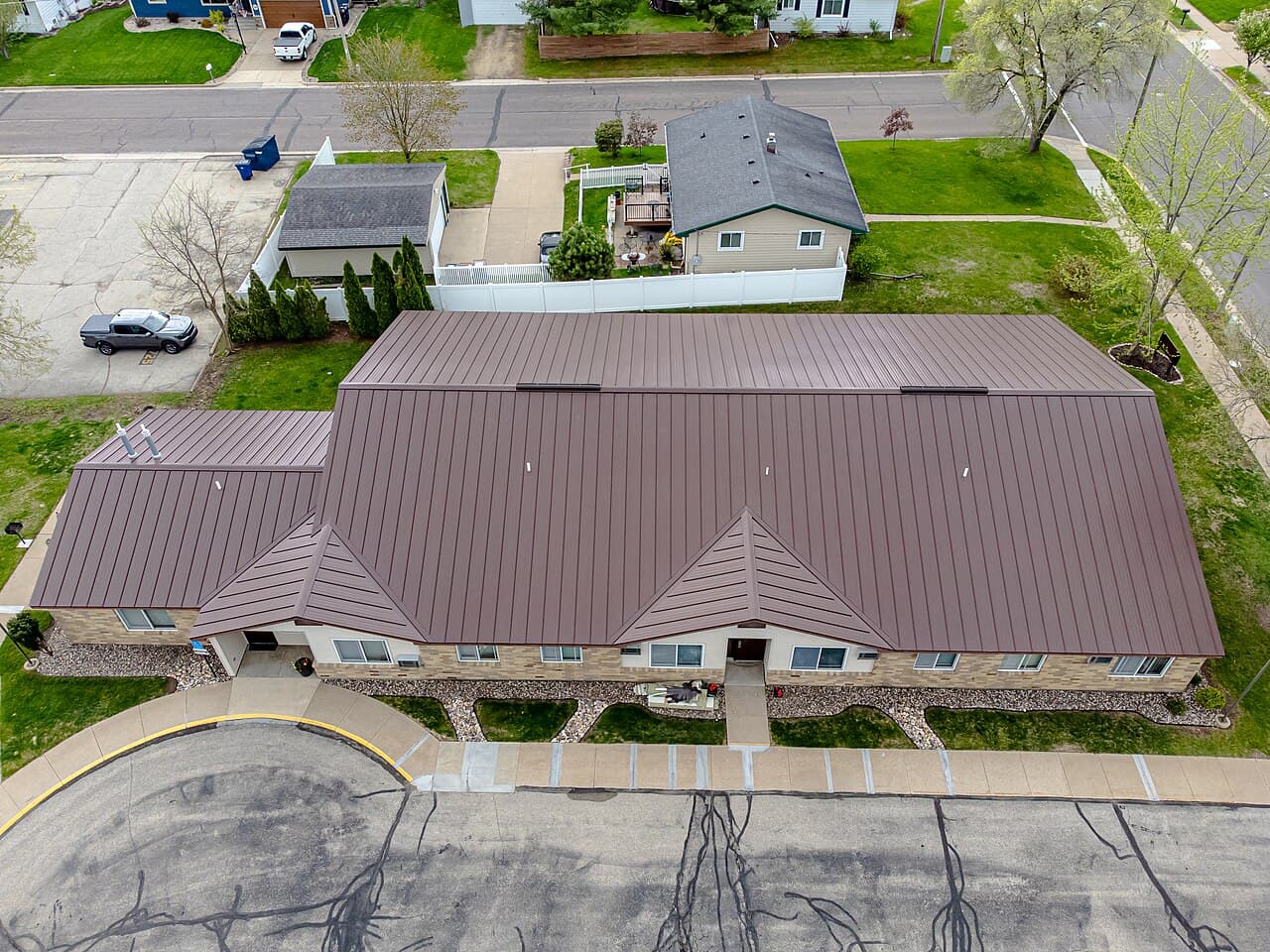
Legally, yes: any contractor whose Virginia licence covers roofing may repair a standing seam metal roof. In practice, not every roofer should. Standing seam systems are built differently from shingle and screw-down metal roofs, some need special seaming tools, and a careless repair can dent panels, open seams or put a panel warranty at risk. The right hire is a licensed roofer who works on your kind of system regularly.
What Virginia law requires
The Code of Virginia is direct: "No person shall engage in, or offer to engage in, contracting work in the Commonwealth unless he has been licensed under the provisions of this chapter."[1] DPOR's consumer guide puts it in plain terms: if the work is valued at $1,000 or more, a valid Virginia contractor's licence is required for the category the contractor will work in.[2]
The licence is for roofing work, not for a particular roofing material. Under the Board for Contractors' regulations, roofing contracting (ROC) is the specialty for installing, repairing, removing or improving the materials that form a watertight, weather-resistant roof surface.[3] The CBC and RBC building classes and the HIC and CIC specialties also cover that work.[3] A general building contractor may contract for specialty work but must hold that specialty licence or have a specialty contractor do the work,[2] and DPOR notes that if you want only roofing work, you may want a contractor licensed in that specialty.[2]
The licence class sets the size of job. A Class C contractor can take a single job over $1,000 but less than $30,000, and a Class B contractor one of $30,000 or more but less than $150,000.[4]
So the legal answer is about the licence, not the material. The licence does not prove skill with metal.
Why standing seam is its own skill
The fasteners are hidden. McElroy Metal explains that standing seam panels interlock at raised vertical seams and attach with concealed clips or fastening flanges.[5] There are no exposed screws to reseat, so leaks are found and fixed at seams, flashings, trim and penetrations instead.
Seams come in different types. Snap-together systems are commonly used on steeper residential roofs, while mechanically seamed panels can be specified for lower slopes, longer panel runs, or demanding wind and weather conditions.[5] Mechanically seamed panels are closed with a tool. Metal Sales says of one of its systems: "The Magna-Loc panel system requires the use of a mechanical seamer for proper installation."[6] A roofer without the right seamer for your profile cannot close a replacement panel properly.
Replacing one panel is not always simple. Symmetrical T-seam designs can also allow an individual panel to be removed from the middle of a roof, while many asymmetrical designs require adjacent panels to be removed first.[5] That affects the time, the cost and the risk of damaging good panels.
The panels are designed to move. In Metal Sales' system, floating clips let the panels move independently of the structure below for thermal expansion and contraction.[6] A repair that pins a panel with screws through its face, or seals a joint that is meant to slide, can cause new problems later.
Manufacturers write for trained installers. Metal Sales describes its instructions as a guide to show a knowledgeable, trained erector the correct parts placement,[6] and it warns: "Do not use the roof panel as a walking platform."[6]
Mind the panel warranty
If your panels are still under warranty, the repair method matters. Englert's sample roof warranty, for example, excludes damage caused by walking on the roof and panel damage from overdriven fasteners,[7] and it also excludes failures from unapproved fixtures or attachments on or through the panels, including snow guards, lightning protection, solar panels and communications devices.[7] Find your warranty, check its exclusions, and share it with the roofer before work starts.
Questions to ask a roofer
McElroy Metal, a panel maker, makes the key point plainly: "Experience installing asphalt shingles doesn't automatically translate into experience installing standing seam or exposed fastener metal roofing systems."[8] Useful questions:
- How often do you work on standing seam roofs, and on which systems?
- Is my seam snap-together or mechanically seamed, and do you have the tools for it?
- Can my panel be replaced on its own, or will neighbouring panels have to come off?
- Where can you get panels and trim that match my profile and color?
- How will your crew move on the roof without denting panels?
- Will this repair keep my panel warranty intact?
When to call a licensed pro
Any work on a standing seam roof is a job for a licensed roofer, not a homeowner. Before you hire, check the licence yourself: DPOR warns, "A license number in an advertisement or on a business card does not necessarily mean the contractor’s license is valid."[2] If you hire someone who is not licensed, the Board for Contractors may not be able to help you resolve a complaint.[2] Look the contractor up using DPOR's License Lookup or by calling (804) 367-8511,[10] or read how to check a contractor's licence.
Get the job in a written contract. For residential work, Virginia's regulations require it to include, among other things, a list of the specified materials and work and the contractor's name, address, license number, class of license and specialty.[9] For pricing, see what fixing a leaking metal roof costs in Virginia. Browse all roofing answers or metal roofing businesses.
Describe the repair and add photos, and licensed local roofers send quotes you can compare side by side.
Common questions
- Does a roofer need a special licence for metal roofs in Virginia?
- No separate metal roofing licence exists. The roofing contracting specialty covers roof surfaces of any common material, and the building contractor classes and the home improvement specialty cover it too. What varies is experience with metal systems, which a licence does not prove.
- Should I call the company that installed my standing seam roof?
- If it is still in business and the roof is under a workmanship warranty, yes, call them first. They know the panel system and the details they used. Ask the panel maker for other installers if they are not available.
- Can a shingle roofer fix a leak at my standing seam chimney flashing?
- Possibly, if they have done metal flashing work before. Ask how often they work on standing seam, whether they can match the trim profile and color, and how they will avoid walking damage to the panels.
- Will a repair by another roofer void my panel warranty?
- Not automatically, but panel warranties commonly exclude damage from foot traffic, overdriven fasteners and unapproved attachments. Read your warranty, and ask the roofer how their repair keeps within it.
- How do I find out what standing seam system I have?
- Check your closing papers or the original contract for the manufacturer and panel name, or ask the installer. A roofer can often identify the seam type on site. Knowing the system helps you find someone who has worked on it.
Sources
- [1] § 54.1-1103. Necessity for license, Code of Virginia. Checked October 27, 2026.
- [2] What You Should Know Before You Hire a Contractor, Virginia Board for Contractors, DPOR. Checked October 27, 2026.
- [3] 18VAC50-22-30, Definitions of specialty services, Virginia Board for Contractors (Virginia Administrative Code). Checked October 27, 2026.
- [4] § 54.1-1100. Definitions (contractor classes), Code of Virginia. Checked October 27, 2026.
- [5] Standing Seam Metal Roofing Materials: A Homeowner's Guide, McElroy Metal. Checked October 27, 2026.
- [6] Magna-Loc 90 Installation Guide (10/26), Metal Sales Manufacturing Corporation. Checked October 27, 2026.
- [7] Englert U.S. Roof Warranty (sample, rev. 7), Englert, Inc.. Checked October 27, 2026.
- [8] Finding the Right Metal Roofing Contractor: Beyond the Google Search, McElroy Metal. Checked October 27, 2026.
- [9] 18VAC50-22-260, Filing of charges; prohibited acts, Virginia Board for Contractors (Virginia Administrative Code). Checked October 27, 2026.
- [10] Disaster Recovery: Avoiding Fraud, Virginia Department of Professional and Occupational Regulation. Checked October 27, 2026.
Want a pro to handle it?
Describe the job once. Licensed local businesses send quotes, and you pay only when you book one.
Get a quote for Roofing