Do I need an electrician to install a ceiling fan in Virginia?
If you are paying someone, yes. Virginia requires anyone doing electrical work for pay to hold a tradesman licence or work under a licensed tradesman in that specialty, and that includes a handyman hanging a fan. An owner working on their own primary residence is exempt from the licensing law but must still meet the building code, and new wiring needs a permit.
Free to ask. Local shops send quotes, and you pay only when you book one.
By Kasra Taheri, Founder, LoclisPublished
Researched and drafted with AI, then checked claim by claim against the sources listed below before it was published. Prices and rules change; the dates beside each source say when it was last checked.
This is a job for a licensed pro in Virginia
This page explains what the work involves, the permits, what a licensed pro does and what drives the cost. It does not give step-by-step instructions, because this work needs a licence, a permit or both, and doing it wrong can injure someone. Before you hire, check the licence on Virginia's DPOR record.
If someone is doing it for pay, yes. In Virginia, the person who wires and hangs a ceiling fan for you has to be a licensed electrical tradesman or work under the supervision of one, and that is true whether they call themselves an electrician or a handyman. Owners working on their own primary residence are outside the licensing law but not outside the building code.
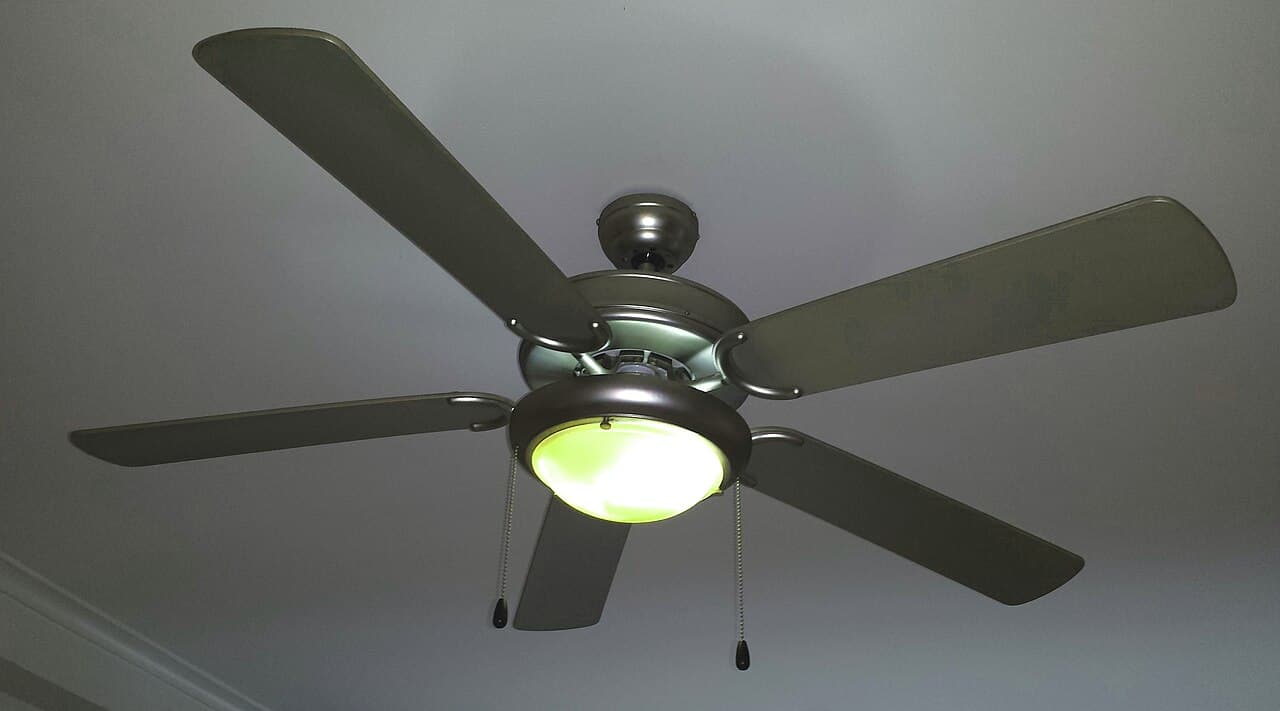
What Virginia's licensing law says
Virginia's Code defines who counts: a tradesman is any individual who engages in, or offers to engage in, electrical, plumbing or HVAC work for the general public for compensation.[1] Then it sets the rule: no individual may engage in, or offer to engage in, work as a tradesman unless licensed.[2] There is one carve-out that matters on a job site: someone working under the supervision of a tradesman who is licensed in the specialty being performed does not need their own licence.[2]
A ceiling fan is electrical work. Taking down a light, connecting the fan to the house wiring and mounting it to the box are all part of the electrical trade, so a handyman who does it for pay needs an electrical licence or a licensed electrician supervising.
The business has its own licence too. Virginia licenses contractors in classes by job size. The Class C licence covers a single contract or project with a total value over $1,000 but less than $30,000,[3] and the Board requires a master tradesman licence as a condition of licensing an electrical contractor.[3] A single fan swap is often below that line, which is why the individual's tradesman licence is the one to check.
If it is your own house
The licensing chapter does not apply to a person who performs or supervises the construction, removal, repair, or improvement of no more than one primary residence owned by him and for his own use during any 24-month period.[4] Two other owner exemptions sit alongside it: a person who performs or supervises the repair or improvement of residential dwelling units owned by him that are subject to the Virginia Residential Landlord and Tenant Act,[4] and a house built on his own land as a bona fide gift to a member of his immediate family who lives in it.[4] None of them covers doing the work for pay in someone else's home. And an owner who uses one of these exemptions must still comply with the Uniform Statewide Building Code.[4]
Being allowed to do it is not the same as it being a small job. "If you are unfamiliar with wiring, use a qualified electrician," Hunter's Ristrello manual advises.[7] The harder parts are often not the wires themselves but the box and its support. "If you are replacing a ceiling fixture, most likely you will need to replace the electrical box," according to ENERGY STAR.[8] Our answer on putting a fan where there is only a light fixture explains what that involves.
Permits
Virginia's building code says a permit is required before work starts on installations or alterations involving electric wiring.[5] It also lists ordinary repairs that need no permit application: replacement of luminaires (lighting fixtures) and ceiling (paddle) fans needs no permit application in Groups R-3, R-4 and R-5, and in Group R-2 where serving a single dwelling unit.[5]
So a replacement, such as an old fan for a new one on the same box and wiring, may need no permit, while a fan in a new spot with new wiring does. Note that exemption does not excuse the work from the code's other requirements,[5] and if an owner asks for a permit for exempt work, one is issued and the inspections follow.[5] Where a particular job falls is for your local building official to decide.
When a permit is needed and you are hiring, it belongs to the contractor. The Board for Contractors advises: "The contractor should apply for and obtain any necessary building permits."[6] Be wary of anyone who asks you to pull the permit in your name for their work.
Hiring the right person
Check the licence before anything else. The Board for Contractors warns that "A license number in an advertisement or on a business card does not necessarily mean the contractor's license is valid."[6] Look the person and the business up on DPOR's record; our guide to checking a contractor's licence in Virginia shows how.
Then the paperwork. The Board for Contractors also advises you to "Limit your deposit to 10% down or $1,000, whichever is less."[6] It adds that "Virginia law requires all licensed contractors to provide a written contract for residential work."[6] For a fan job, the contract should say whether the box is being replaced and braced, whether any new wiring or controls are included, and whether a permit is part of the price. Our answer on what a ceiling fan installation costs in Virginia lists what a full quote should cover.
When to call a licensed pro
Hire a licensed electrician whenever you are paying someone to do the work. Call one regardless of who is doing the installation when:
- The fan is going where there is no fixture, switch or wiring today.
- The existing box is not marked as rated for a fan, or you cannot tell.
- You want separate wall controls for the fan and the light.
- The ceiling is high or sloped, or the box sits under finished space with no attic access.
- The existing light flickers, the box is loose, or there is a burning smell, discoloured wiring or scorch marks at the fixture.
Find an electrician
Browse ceiling fan installers on Loclis, look up electricians in Blacksburg, or read more electrical answers.
Describe your ceiling fan job and licensed local electricians quote it.
Common questions
- Can a handyman install a ceiling fan in Virginia?
- Only if the person doing the electrical work holds an electrical tradesman licence, or works under the supervision of a licensed electrical tradesman. Virginia's licensing law covers anyone doing electrical work for the general public for compensation, and a ceiling fan is electrical work.
- Can I install a ceiling fan in my own house?
- Virginia's contractor and tradesman licensing law does not apply to an owner working on their own primary residence, within the limit of one such residence every 24 months, but that owner must still comply with the Uniform Statewide Building Code. Hunter's fan manual advises using a qualified electrician if you are unfamiliar with wiring.
- Does a ceiling fan need a permit in Virginia?
- Replacing an existing light fixture or ceiling fan in the residential groups the building code lists needs no permit application. New wiring, such as a new circuit or a new switch run, does. Your local building official decides where a particular job falls.
- How do I check that an electrician is licensed?
- Look the person or business up on DPOR's license lookup, or call the Board for Contractors at (804) 367-8511. A licence number printed on a business card or an ad is not proof by itself that the licence is current.
- Does the business need a contractor licence too?
- For jobs over $1,000, yes: that is where Virginia's Class C contractor licence begins (it runs to less than $30,000 for a single project), and an electrical contractor licence requires a master tradesman. Below that, the individual doing the electrical work still needs a tradesman licence.
Sources
- [1] Code of Virginia § 54.1-1128, Definitions, Code of Virginia, Legislative Information System. Checked October 26, 2026.
- [2] Code of Virginia § 54.1-1129, Necessity for licensure, Code of Virginia, Legislative Information System. Checked October 26, 2026.
- [3] Code of Virginia § 54.1-1100, Definitions, Code of Virginia, Legislative Information System. Checked October 26, 2026.
- [4] Code of Virginia § 54.1-1101, Exemptions; failure to obtain certificate of occupancy; penalties, Code of Virginia, Legislative Information System. Checked October 26, 2026.
- [5] 13VAC5-63-80, Virginia Uniform Statewide Building Code, Section 108 Application for permit, Virginia Administrative Code, Legislative Information System. Checked October 26, 2026.
- [6] What You Should Know Before You Hire a Contractor, Virginia Board for Contractors, DPOR. Checked October 26, 2026.
- [7] Ristrello Ceiling Fan Installation Manual (PG3865, 2021), Hunter Fan Company. Checked October 26, 2026.
- [8] Ceiling Fan Installation and Usage Tips, ENERGY STAR, U.S. Environmental Protection Agency. Checked October 26, 2026.
Want a pro to handle it?
Describe the job once. Licensed local businesses send quotes, and you pay only when you book one.
Get a quote for Electrical Repair