Do I need an electrician to replace a light switch in Virginia?
If you are paying someone, yes. Anyone doing electrical work for pay in Virginia must be a licensed electrical tradesman or work under one, and a switch is wired into the house. Swapping a switch needs no permit application in a house, but an owner doing their own home's work must still meet the building code, and new wiring needs a permit.
Free to ask. Local shops send quotes, and you pay only when you book one.
By Kasra Taheri, Founder, LoclisPublished
Researched and drafted with AI, then checked claim by claim against the sources listed below before it was published. Prices and rules change; the dates beside each source say when it was last checked.
This is a job for a licensed pro in Virginia
This page explains what the work involves, the permits, what a licensed pro does and what drives the cost. It does not give step-by-step instructions, because this work needs a licence, a permit or both, and doing it wrong can injure someone. Before you hire, check the licence on Virginia's DPOR record.
If someone is doing it for pay, yes. In Virginia, the person who replaces a wall switch for you has to be a licensed electrical tradesman or work under the supervision of one, whether they call themselves an electrician, a handyman or a maintenance tech. Owners working on their own primary residence are outside the licensing law, but not outside the building code.
What Virginia's licensing law says
The Code of Virginia defines who counts: a tradesman is any individual who does, or offers to do, electrical, plumbing or HVAC work for the general public for compensation.[1] The rule follows: no individual may engage in, or offer to engage in, work as a tradesman unless licensed.[2] The carve-out that matters on a job site is that someone working under the supervision of a tradesman who is licensed in the specialty being performed does not need their own licence.[2]
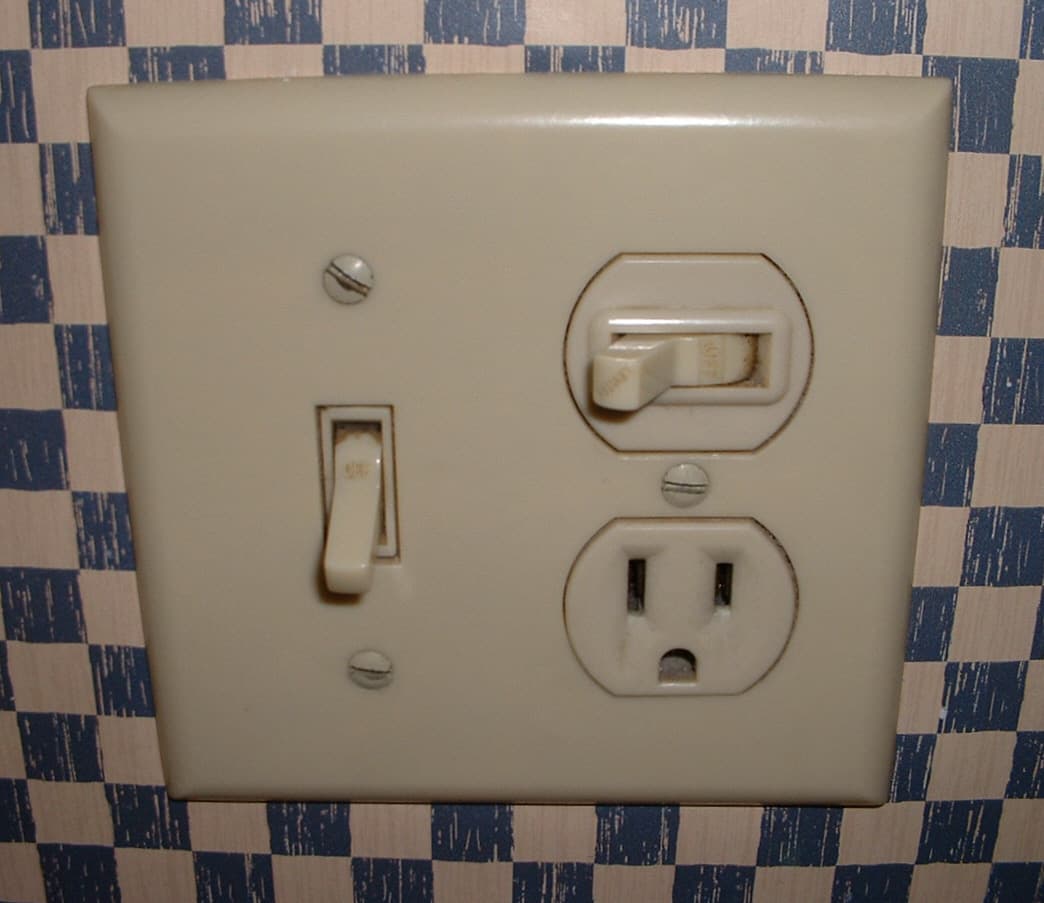
A wall switch is part of the house wiring. Taking the old one out, connecting the new one and its ground, and fitting it back in the box is electrical work, even when it takes ten minutes. There is no small-job exception in the tradesman law.
The business has its own licence too. The Class C licence covers jobs whose total value is over $1,000 but less than $30,000,[4] and the Board requires a master tradesman licence as a condition of licensing an electrical contractor.[4] A single switch is usually well under $1,000, which is why the individual's tradesman licence is the one to check.
If it is your own house
The licensing chapter does not apply to a person who performs or supervises the construction, removal, repair, or improvement of no more than one primary residence owned by him and for his own use during any 24-month period.[3] There is a similar exemption for an owner working on residential units they own that are subject to the Virginia Residential Landlord and Tenant Act.[3] Neither covers a friend's house, and neither covers someone the owner pays.
The exemptions come with a condition: an owner using either exemption must still comply with the Uniform Statewide Building Code,[3] and breaking that rule is a Class 1 misdemeanor.[3] Our answer on whether a homeowner can do their own electrical work covers the limits in more detail.
Permits
A plain switch swap usually needs no permit. Virginia's building code lists ordinary repairs that need none: replacement of general use snap switches, dimmer and control switches needs no permit application in Groups R-3, R-4 and R-5, and in Group R-2 where serving a single dwelling unit.[5] Note that exemption does not excuse the work from the code's other requirements,[5] and if an owner asks for a permit for exempt work, one is issued and the inspections follow.[5]
New wiring is different. A permit is required before work starts on installations or alterations involving electric wiring,[5] so adding a switch where there was none, moving one, or turning a single switch into a pair of three-way switches with a new cable is permit work. Roanoke County, for example, lists the addition or modification of electric circuits, including new or replacement wiring, among the jobs that need a trade permit.[6] The county encourages homeowners to have a licensed contractor apply for the permit, although a homeowner may do so,[6] and it asks for an owner affidavit when the homeowner is doing the work on their own primary residence.[6] Other localities run similar processes; ask your building office.
When you hire and a permit is needed, it belongs to the contractor: "The contractor should apply for and obtain any necessary building permits."[7]
A permit exemption is not a licensing exemption. A switch swap that needs no permit still needs a licensed person when someone is paid to do it.
Dimmers and smart switches
Dimmers and smart switches are where a simple swap often stops being simple. Leviton notes that every dimmer has a wattage rating, and it needs to handle the total wattage of the connected lights to prevent overheating.[11] Some smart switches need a neutral wire at the switch box, and some older houses do not have one there; Leviton, for one, sells no-neutral dimmers and switches for older homes without a neutral wire in the wallbox.[10] Three-way and four-way circuits, where two or more switches control one light, also take more care to identify.
An electrician can tell you quickly which devices suit the box you have. If your LED lights flicker after a dimmer goes in, see why LED bulbs flicker on a dimmer switch.
When to call a licensed pro
Hire a licensed electrician whenever someone other than you, the owner of the home you live in, will do the work. Call one regardless of who would do it when:
- The switch or its cover plate is warm. Some dimmer switches may warm during normal use,[8] but an ordinary toggle switch should not. See why an outlet or switch gets warm.
- The switch crackles, buzzes, or sparks. The CPSC says a switch that causes visible arcing or sparking when it is operated should be checked by a qualified electrician.[9]
- Lights flicker or go off when the switch is touched. A loose screw holding a wire or a worn out switch can lead to electrical arcing, overheating, or a fire.[8]
- You find aluminum, cloth-covered or brittle wiring, or no ground in the box.
- You want a switch where there is none, or a smart switch the box may not support.
Hiring the right person
Check the licence first. The Board for Contractors warns that "A license number in an advertisement or on a business card does not necessarily mean the contractor's license is valid."[7] Look the person and the business up on DPOR's record; our guide to checking a contractor's licence in Virginia shows how.
For anything beyond a single switch, get the paperwork right: "Virginia law requires all licensed contractors to provide a written contract for residential work."[7] And "Limit your deposit to 10% down or $1,000, whichever is less."[7] If you have several switches, outlets or fixtures to change, ask for them to be quoted as one visit. Our answer on what an electrician costs per hour in Virginia explains how shops price small jobs.
Find an electrician
Browse outlet and switch electricians on Loclis, look up electricians in Blacksburg, or read more electrical answers.
Describe your switch job and licensed local electricians quote it.
Common questions
- Can a handyman replace a light switch in Virginia?
- Only if the person doing it holds an electrical tradesman licence or works under the supervision of a licensed electrical tradesman. Virginia's licensing law covers anyone doing electrical work for the general public for pay, and replacing a wall switch is electrical work, however small the job.
- Can I replace a light switch in my own house?
- Virginia's contractor and tradesman licensing law does not apply to an owner working on their own primary residence, within the limit of one such residence every 24 months, but that owner must still comply with the Uniform Statewide Building Code. The exemption does not cover a friend's or relative's house.
- Do I need a permit to replace a light switch?
- Replacing a switch, dimmer or control switch in a house, or in an apartment serving a single dwelling unit, needs no permit application under Virginia's building code. Adding a switch where there was none, or running new wiring for it, does. Your local building official decides where a particular job falls.
- Does a smart switch need an electrician?
- It is the same wiring job as any wall switch, so the licensing rules are the same when someone is paid to do it. Some smart switches also have wiring needs an old box may not meet, such as a neutral wire, which is a good reason to have an electrician check the box first.
- What if my landlord replaces the switch?
- Virginia's licensing law has an exemption for an owner working on residential units they own that are subject to the Virginia Residential Landlord and Tenant Act. The owner must still meet the building code. A maintenance worker or handyman the landlord pays is a different matter and needs the electrical licence or a licensed electrician supervising.
Sources
- [1] Code of Virginia § 54.1-1128, Definitions, Code of Virginia, Legislative Information System. Checked October 27, 2026.
- [2] Code of Virginia § 54.1-1129, Necessity for licensure, Code of Virginia, Legislative Information System. Checked October 27, 2026.
- [3] Code of Virginia § 54.1-1101, Exemptions; failure to obtain certificate of occupancy; penalties, Code of Virginia, Legislative Information System. Checked October 27, 2026.
- [4] Code of Virginia § 54.1-1100, Definitions, Code of Virginia, Legislative Information System. Checked October 27, 2026.
- [5] 13VAC5-63-80, Virginia Uniform Statewide Building Code, Section 108 Application for permit, Virginia Administrative Code, Legislative Information System. Checked October 27, 2026.
- [6] Residential: Electric, Plumbing and Mechanical, Roanoke County, Virginia. Checked October 27, 2026.
- [7] What You Should Know Before You Hire a Contractor, Virginia Board for Contractors, DPOR. Checked October 27, 2026.
- [8] Home Electrical Safety Checklist (Publication 513), U.S. Consumer Product Safety Commission. Checked October 27, 2026.
- [9] CPSC Guide to Home Wiring Hazards (Publication 518), U.S. Consumer Product Safety Commission. Checked October 27, 2026.
- [10] Smart Home Lighting Controls, Leviton Manufacturing Co.. Checked October 27, 2026.
- [11] The 5 Things to Look for When Buying a Dimmer, Leviton Manufacturing Co.. Checked October 27, 2026.
Want a pro to handle it?
Describe the job once. Licensed local businesses send quotes, and you pay only when you book one.
Get a quote for Electrical Repair