Do I need a home inspection on a new-build house in Virginia?
You should get one. HUD says a home inspection only happens if you arrange it, and the building official's final inspection checks code compliance, not your house's condition. Virginia's implied new-home warranty lasts one year, five for the foundation, and can be waived. Hire an inspector with the NRS specialty.
Free to ask. Local shops send quotes, and you pay only when you book one.
By Kasra Taheri, Founder, LoclisPublished
Researched and drafted with AI, then checked claim by claim against the sources listed below before it was published. Prices and rules change; the dates beside each source say when it was last checked.
Step by step
Read when to stop and call a pro, further down this page, before you start.
Step 1: Look at your contract
Check what it says about inspections, access to the site and warranty waivers.[6]
Step 2: Decide when to inspect
At minimum near completion; ideally at stages while work is still visible.
Step 3: Hire an NRS-specialty inspector
Confirm the licence on DPOR's lookup.[8]
Step 4: Attend the inspection if you can
Read the whole report, not only the summary.
Step 5: Send the findings to your builder in writing
Keep proof that the builder received them.[6]
Step 6: Get the fixes confirmed before you close
Keep the report in your warranty file.
Yes, get one. A new house is not a checked house. The building department's inspections and your builder's own walk-through each cover something different from a home inspection, and the legal warranty on a new home runs for a limited time, so problems you find before closing are far easier to fix than the ones you find later.
What the other inspections do not do
HUD is blunt that a home inspection will only occur if you arrange for one.[7] HUD adds that FHA does not perform home inspections.[7] HUD also says an appraisal, which estimates the home's value for your lender, does not replace a home inspection.[7]
The building official's inspections are real and worthwhile, but they answer a different question. At the final inspection, the official confirms that any defective work has been corrected and that all work complies with the building code, and a certificate of occupancy must be issued before the house is occupied.[1] That is a code check for the locality. A private inspector works for you and writes up the condition of the house as you are about to take it.
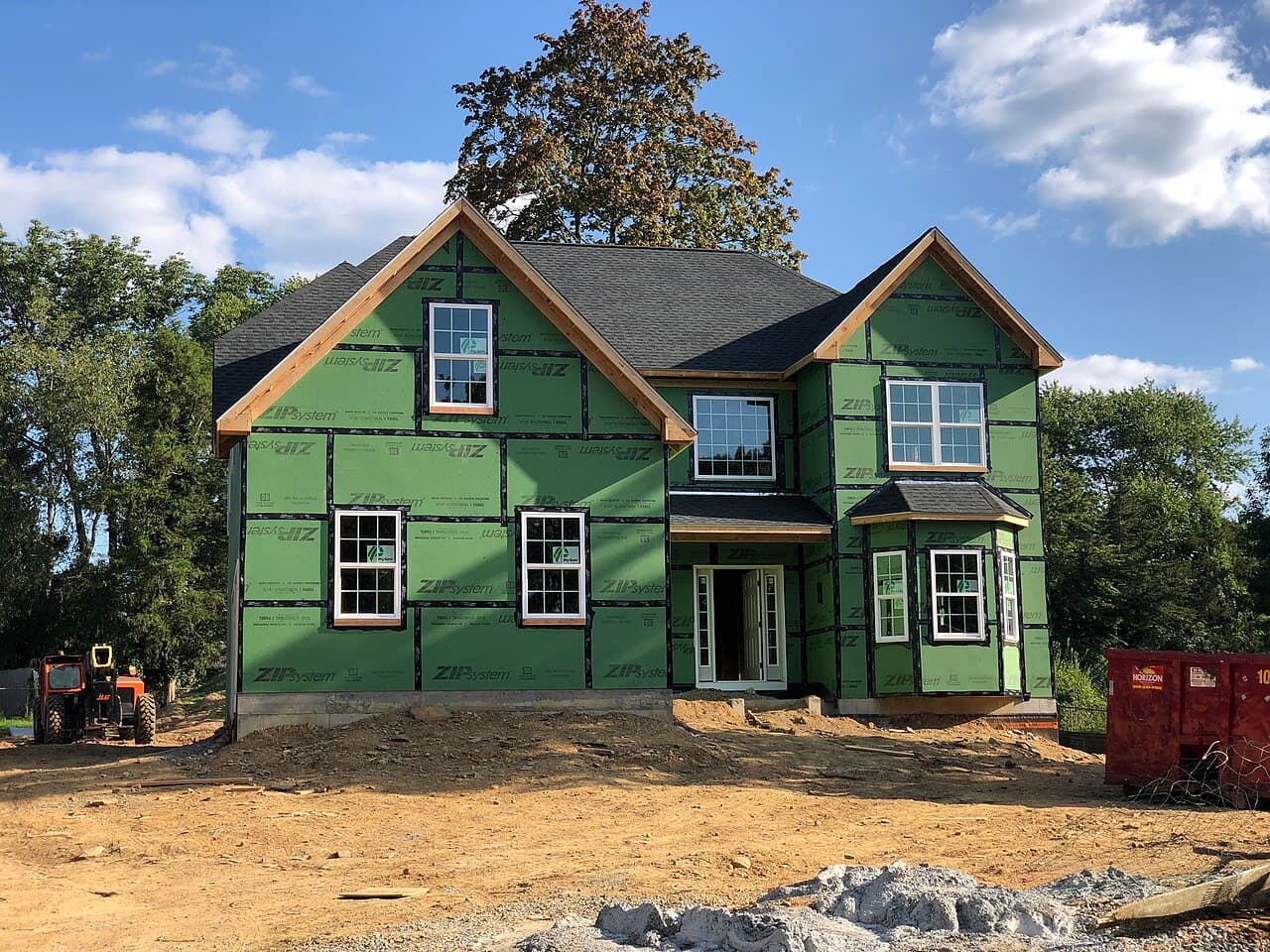
Why it matters on a new build
Virginia gives buyers of new homes an implied warranty, but it has limits. The seller warrants that, to the best of the seller's actual knowledge, the home is free from structural defects and built in a workmanlike manner, so as to pass without objection in the trade. A seller in the business of building or selling homes also warrants that it is fit for habitation.[6] The warranty lasts one year from the transfer of title or the date you take possession, whichever is first, except that the structural-defect warranty for the foundation lasts five years.[6]
Three details are worth knowing:
- It can be waived. A contract can sell a new home "as is" only if the waiver is conspicuous, in capital letters at least two points larger than the other type, and states specifically which warranties are given up.[6] Read the contract before signing.
- There is a process. For a breach, you first have to give the vendor written notice of the claim, and the vendor then has a reasonable time, not more than six months, to cure the defect.[6]
- There is a deadline. Any action for breach has to be brought within two years after the breach.[6]
An inspection before closing gives you a dated, written list to hand the builder while fixing is still simple. For questions about your own contract or a warranty claim, ask a Virginia real estate attorney.
When to inspect
HUD notes that if you request an inspection early in the process, you may be able to make your purchase contract contingent on its results.[7] On a house under construction, that can mean visits at several stages, which Virginia calls course of construction inspections;[2] see what phase inspections are. The least you should do is an inspection near completion, before the final walk-through and closing.
Hiring the right inspector
A home inspection on a new residential structure can only be done by a licensed home inspector with the NRS specialty.[3] DPOR's licence lookup shows whether a licence is current.[8]
Be cautious with an inspector the builder recommends. If an inspector recommends someone for repairs, the contract has to disclose any financial interest in that person,[4] and Virginia prohibits an inspection under an agreement where pay or future referrals depend on the findings or on the sale.[5] Costs vary, so read how much a new construction inspection costs in Virginia.
What to do
- Look at your contract. Check what it says about inspections, access to the site and warranty waivers.
- Decide when to inspect. At minimum, near completion; ideally at stages while work is still visible.
- Hire an NRS-specialty inspector. Confirm the licence on DPOR's lookup.[8]
- Attend the inspection if you can and read the whole report.
- Send the findings to your builder in writing, and keep proof that they were received.
- Get the fixes confirmed before you close, and keep the report for your warranty file.
Stop and call a pro if
- The report shows a structural problem, such as a cracked footing, sagging framing or a wet crawl space. Ask the builder in writing for a licensed contractor's or engineer's remedy; do not patch it yourself.
- You smell gas or see exposed live wiring. Leave the house and tell the builder and the building department.
- The builder refuses access or says the warranty is waived. Have a Virginia real estate attorney read the contract before you close.
Getting help in Virginia
Browse inspection services and all inspection answers, or read whether a home inspector needs a licence in Virginia.
When you are ready, describe what you want inspected once and licensed local inspectors quote it.
Common questions
- Does Virginia require a home inspection on a new house?
- It is your decision as the buyer, and HUD says a home inspection will only occur if you arrange for one. The building official's inspections check code compliance, not the condition of the house for you as a buyer.
- Does the county's final inspection replace a home inspection?
- No. The final inspection confirms that the permitted work complies with the building code and that defective work has been corrected. A home inspection is your own written look at the house, and by rule it does not include a code-compliance review.
- How long is the warranty on a new home in Virginia?
- The implied warranty runs one year from the transfer of title or when you take possession, whichever is first, and five years for the foundation's structural-defect warranty. A contract can waive it only with conspicuous, specific wording.
- Who can inspect a new-build house?
- A licensed home inspector with the NRS specialty. Virginia requires it for any home inspection on a new residential structure, including inspections during construction.
- Should I use the inspector my builder recommends?
- Ask about the relationship first. An inspector must disclose in the contract any financial interest in someone they recommend for repairs, and cannot be paid based on the findings or the sale.
- When is the best time to inspect a new build?
- Early and more than once if you can: stages such as framing before drywall are called course of construction inspections. At minimum, inspect near completion and before closing.
Sources
- [1] 13VAC5-63-130, Section 113 Inspections (Virginia Uniform Statewide Building Code), Virginia Administrative Code, Department of Housing and Community Development. Checked October 27, 2026.
- [2] 18VAC15-40-10, Definitions (Home Inspector Licensing Regulations), Virginia Administrative Code, Board for Asbestos, Lead, and Home Inspectors. Checked October 27, 2026.
- [3] 18VAC15-40-20, Necessity for licensure, Virginia Administrative Code, Board for Asbestos, Lead, and Home Inspectors. Checked October 27, 2026.
- [4] 18VAC15-40-120, Home inspection contract, Virginia Administrative Code, Board for Asbestos, Lead, and Home Inspectors. Checked October 27, 2026.
- [5] 18VAC15-40-140, Conflict of interest, Virginia Administrative Code, Board for Asbestos, Lead, and Home Inspectors. Checked October 27, 2026.
- [6] Va. Code § 55.1-357, Implied warranties on new homes, Code of Virginia, Virginia General Assembly. Checked October 27, 2026.
- [7] For Your Protection: Get a Home Inspection (HUD-92564-CN), U.S. Department of Housing and Urban Development, Federal Housing Administration. Checked October 27, 2026.
- [8] License Lookup, Virginia Department of Professional and Occupational Regulation. Checked October 27, 2026.
Want a pro to handle it?
Describe the job once. Licensed local businesses send quotes, and you pay only when you book one.
Get a quote from a local pro