What do inspectors find most often in new homes?
Problems in new houses cluster in a few places: soil sloping toward the foundation or downspouts ending at the wall, leaky or disconnected ducts, GFCI outlets and smoke alarms that do not work, and cracked or loose drywall. Check each, and report what you find to the builder in writing.
Free to ask. Local shops send quotes, and you pay only when you book one.
By Kasra Taheri, Founder, LoclisPublished
Researched and drafted with AI, then checked claim by claim against the sources listed below before it was published. Prices and rules change; the dates beside each source say when it was last checked.
Step by step
Read when to stop and call a pro, further down this page, before you start.
Step 1: Walk the outside after rain
Look for water pooling along the foundation, downspouts that end at the wall, and gutters that are loose or not connected.
Step 2: Check the slope
Look at the soil beside the foundation; it should slope away from the house, ideally 5% for ten feet.[2]
Step 3: Look at flashing and caulk
Scan around windows, doors and wall penetrations for gaps or missing caulk, and note them.
Step 4: Test the GFCI outlets
Press the test and reset buttons on each GFCI outlet in the kitchen, bathrooms, garage and outdoors; the outlet should cut power when tested.[5]
Step 5: Test the smoke alarms
Press the test button on every alarm and note any that stay silent.[6]
Step 6: Look at the vents
Check that bathroom fans and the dryer vent end outdoors, and that visible ducts are connected.
Step 7: Scan the drywall
Walk each room with a flashlight held low along the walls and note cracks, nail pops and rough joints.
Step 8: Write a dated list
Photograph each item, list where it is, and send the list to your builder in writing.
The short answer
New does not mean finished. The building official inspects a new house at set stages, but a home inspector reports on its condition, and the findings tend to cluster in the same few places: water management outside, ducts and mechanical systems, electrical safety devices, and the drywall and finish work. Virginia's home inspection standard covers the readily accessible components of a house, including heating, cooling, plumbing and electrical systems, structural components, the foundation, the roof, and exterior and interior components,[1] so those are the headings these findings appear under.
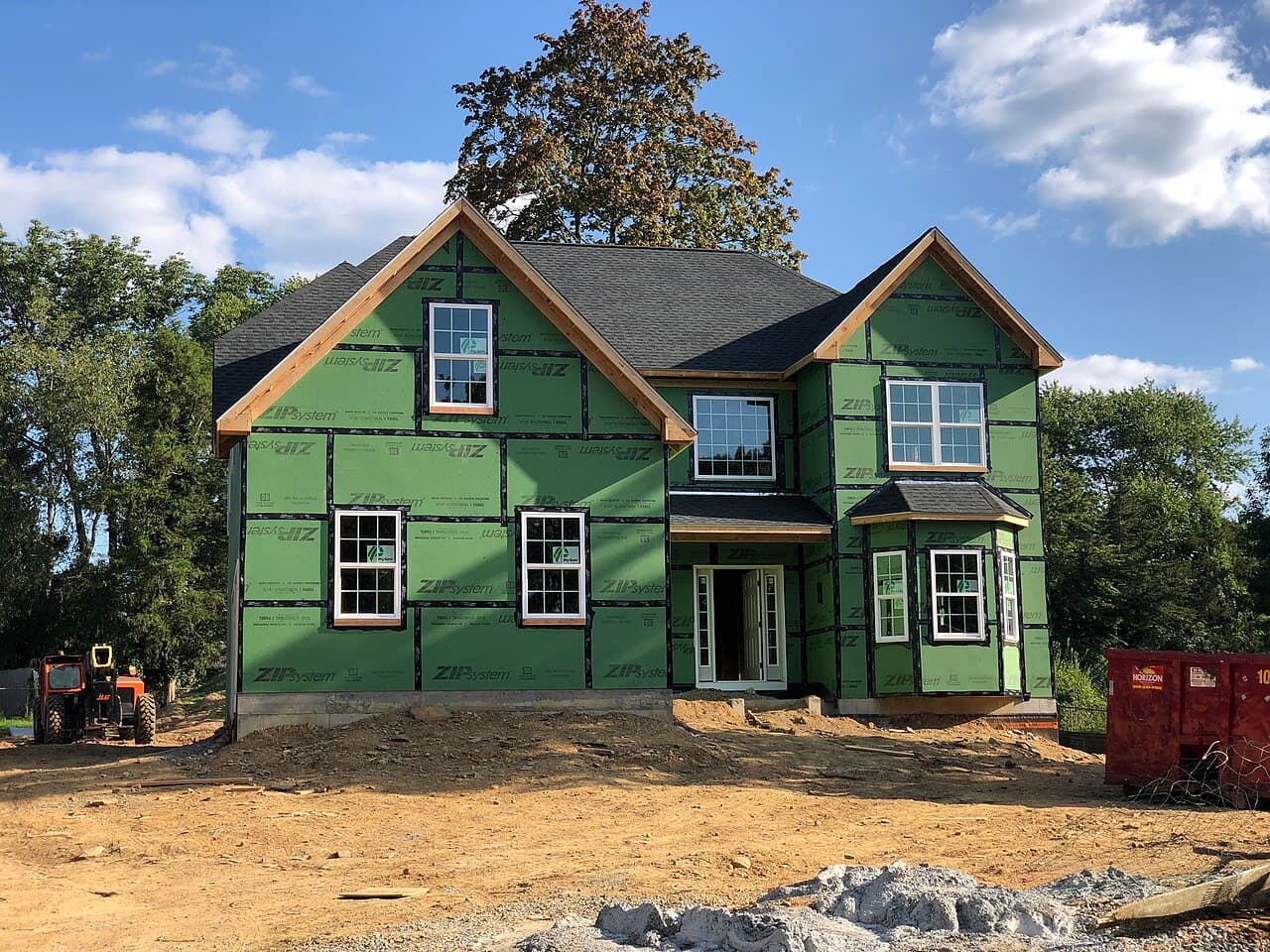
Water with nowhere to go
A new lot is often freshly graded and not yet landscaped, and fill soil settles. Inspectors look for ground that slopes toward the house, low spots where soil has sunk beside the foundation, downspouts that end at the wall, and gutters that are loose or not yet connected.
The Northern Virginia Soil and Water Conservation District puts the target plainly: "Land around your house should slope away from foundation walls. Ideally, a 5% grade should be maintained for a distance of ten feet around your home."[2] For a downspout, it advises "a concrete or plastic splash block at the end of the pipe to direct flow away from the foundation wall".[2]
Water is the finding that matters most. Virginia Cooperative Extension explains that "bulk moisture leaks represent pathways for liquid water to immediately move into building cavities".[3] Missing flashing, unsealed windows and gaps around pipes and vents are the new-house versions of the same problem.
Ducts, vents and mechanical systems
Heating and cooling equipment is new, but its installation is where problems turn up: loose duct connections, ducts crushed or disconnected in the attic or crawl space, a condensate line that ends in the wrong place, and a bathroom fan that vents into the attic. Duct leakage is common enough that ENERGY STAR reports that in a typical house about 20 to 30 percent of the air that moves through the duct system is lost due to leaks, holes, and poorly connected ducts.[4]
None of this is visible from the living room, which is the reason to hire an inspector who goes into the attic and crawl space. For what gets checked while the walls are still open, see what phase inspections on a new house are.
Electrical safety devices
Virginia's inspection standard puts ground fault circuit interrupters and the presence or absence of smoke alarms or carbon monoxide detectors in the electrical review.[1] The Consumer Product Safety Commission explains why: GFCIs can prevent electrocutions.[5] In a new house the usual findings are a GFCI outlet that does not trip when tested, a missing cover plate, a loose receptacle, or a smoke alarm with no battery.
Under the same rule, for any smoke alarms that are readily accessible, the home inspection report must include a determination of whether the smoke alarms are in good working order.[1] Once you move in, the U.S. Fire Administration's routine is simple: "Test the alarm monthly."[6]
Drywall, paint and finish items
Cracks at corners and over doors, nail pops, uneven joints, paint touch-ups, doors that rub and caulk gaps are typical punch-list items. Drywall manufacturer USG says that "All gypsum panels should be tight and secure against the framing members or underlying substrate."[7] It also names uncontrolled environmental conditions as a primary cause of joint cracks and joint ridges.[7] A new house going through its first heating season can see that kind of change, which may be why some cracks appear months after closing.
What to do with the list
Sort the report by importance: water and safety first, finish last. Send the builder the items in writing and keep a copy. In Virginia, a contract for a new home carries an implied warranty that the dwelling is "constructed in a workmanlike manner, so as to pass without objection in the trade",[8] and the deadlines are covered in what to check before the one-year warranty ends.
If you are still deciding whether to hire an inspector at all, read whether you need a home inspection on a new build in Virginia and what a new construction inspection costs.
Stop and call a pro if
- You smell gas, or a fuel-burning appliance has no vent or a disconnected one. Leave the house and call a licensed gas fitter or HVAC contractor from outside.
- A GFCI will not reset, an outlet or switch plate is warm, or lights flicker. Call a licensed electrician; do not open the panel or devices yourself.
- Water is coming in, a ceiling is stained, or soil is sinking along the foundation.
- A crack is wide, runs diagonally from a window or door corner, or comes with sticking doors. Ask the builder and a qualified inspector to look at it.
Getting help in Virginia
Loclis lists DPOR-licensed businesses with their licence details. Browse inspection, read more inspection answers, and when you are ready, describe what you need and licensed local pros respond.
Common questions
- Is a new house really likely to have problems?
- Often a handful, and most are small. A home inspection report describes the condition of the whole house, which is a different thing from the building official's inspections at set stages of construction.
- Which findings are the serious ones?
- Water getting in or collecting at the foundation, anything involving gas appliances or venting, electrical devices that do not work as they should, and cracks that are wide or diagonal. Cosmetic items such as paint and caulk matter less but still go on the list.
- Will the builder fix what the inspector finds?
- That depends on the builder, and a written list gives you a record. Virginia also implies a warranty on new homes that gives you a legal route if the builder does not.
- Should I test GFCI outlets and smoke alarms myself?
- Yes. Pressing the built-in test button on each GFCI outlet and smoke alarm is safe and takes minutes. Do not remove cover plates or open panels.
- Do cracks in new drywall mean a structural problem?
- Not necessarily. Small cracks at corners and joints are a common finish item. Wide cracks, diagonal cracks from window corners, or cracks with sticking doors are worth showing to the builder and an inspector.
Sources
- [1] 18VAC15-40-130. Home inspection report, Virginia Administrative Code, Legislative Information System. Checked October 27, 2026.
- [2] Gutters and Downspouts: Wetness or Erosion Problems, Northern Virginia Soil and Water Conservation District, Fairfax County. Checked October 27, 2026.
- [3] ENERGY SERIES: What about Moisture? (2908-9020), Virginia Cooperative Extension, Virginia Tech. Checked October 27, 2026.
- [4] Duct Sealing, ENERGY STAR, U.S. Environmental Protection Agency. Checked October 27, 2026.
- [5] Home Electrical Safety Checklist (Publication 513), U.S. Consumer Product Safety Commission. Checked October 27, 2026.
- [6] Smoke alarms, U.S. Fire Administration, FEMA. Checked October 27, 2026.
- [7] Wallboard Finished Appearance: Managing Expectations and Best Practices (white paper), USG. Checked October 27, 2026.
- [8] § 55.1-357. Implied warranties on new homes, Code of Virginia, Legislative Information System. Checked October 27, 2026.
Want a pro to handle it?
Describe the job once. Licensed local businesses send quotes, and you pay only when you book one.
Get a quote from a local pro