Do I need a permit for an outdoor kitchen in Virginia?
Usually yes, for the utilities. Virginia's building code requires a permit for new gas piping, electrical wiring and plumbing, which most outdoor kitchens include. A masonry island under six feet tall on an existing patio, with a grill on a portable propane cylinder, may need no building permit, but zoning, HOA and site rules can still apply. Confirm with your locality.
Free to ask. Local shops send quotes, and you pay only when you book one.
By Kasra Taheri, Founder, LoclisPublished
Researched and drafted with AI, then checked claim by claim against the sources listed below before it was published. Prices and rules change; the dates beside each source say when it was last checked.
This is a job for a licensed pro in Virginia
This page explains what the work involves, the permits, what a licensed pro does and what drives the cost. It does not give step-by-step instructions, because this work needs a licence, a permit or both, and doing it wrong can injure someone. Before you hire, check the licence on Virginia's DPOR record.
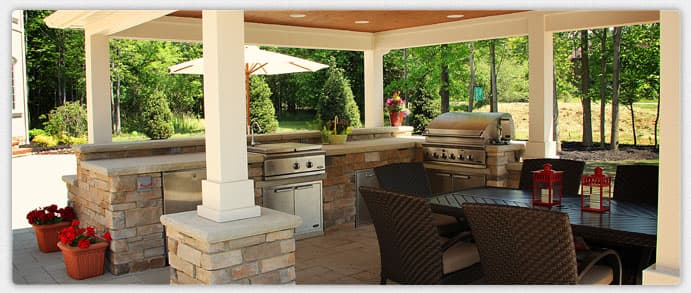
Most outdoor kitchens need at least one permit in Virginia, and the reason is the utilities rather than the stone. A gas line, a new outdoor circuit, a sink or an ice-maker drain each brings a trade permit and an inspection. A plain masonry island with no gas line, wiring or plumbing may need no building permit at all, though zoning and HOA rules can still apply.
What the state code says
Your local building office enforces the Uniform Statewide Building Code. Under its Section 108, a permit must be obtained before work begins on electric wiring, fuel supply systems, mechanical systems, the water supply and distribution system, or the sanitary drainage system.[1] That covers the gas piping to a grill, the circuit for a refrigerator or lights, and the supply and drain for a sink.
The same section lists work that needs no permit, and some of it fits outdoor kitchens:
- The island itself, when it is built of concrete or masonry walls that do not exceed six feet in height above the finished grade.[1]
- Small storage buildings: one-story detached sheds and similar structures up to 256 square feet.[1] A roofed pavilion for cooking is a different question, so ask your building office.
- A propane tank swap: LP-gas is propane, and the exemption is the replacement of aboveground existing LP-gas containers of the same capacity in the same location and associated regulators when installed by the serving gas supplier.[1] A new tank or new piping is not covered.
An exemption covers the permit, not the rules: exempt work still has to meet the code.[1] The code also says that if the owner asks for a permit for exempt work, one is issued and inspections follow,[1] and a building official may require a permit for exempt items in a special flood hazard area.[1]
How localities apply it
Your county or city building office decides how the code applies to your project, and their published lists are a good guide.
Fairfax County, for example, requires a permit for new, repaired or relocated electrical fixtures, including outlets,[2] and includes propane tanks among the mechanical or gas fixtures that need one.[2] It lists sinks, hose bibs and wet-bars among the plumbing or gas fixtures that need a permit,[2] and says detached structures such as gazebos and pool houses need a permit.[2] On the other side, on-grade paver and concrete patios and concrete or masonry walls up to 6 feet need no permit,[2] though setbacks and other zoning requirements may still apply.[2]
Prince William County always requires a permit for installing a new electrical circuit, fixture, or receptacle,[3] and for "New appliances in a new location".[3] Its list also includes a "Secondary food preparation area - wet bar and/or food warming kitchen",[3] so ask how the county treats an outdoor kitchen with a sink. It exempts concrete patio slabs on grade that are not designed to support a future building addition,[3] with the note "Zoning and/or Watershed approval will be required".[3] It also tells owners to check with your homeowners' association[3] before exterior work.
Smaller counties often publish less, so call the building office with a sketch and an appliance list.
Digging, zoning and the HOA
Gas and electrical lines to an island are usually buried, and Virginia 811 must be contacted at least 3 working days before digging.[4] Your contractor is responsible for contacting Virginia 811[4] when it does the digging, but confirm it has. Separately, check setbacks from property lines, any easements, and your HOA's approval process before you finalize the location.
When to call a licensed pro
The permit work is also licensed work. DPOR's Tradesmen Program covers electrical, plumbing, HVAC and gas fitting, and the board notes that state certification of these trades is mandatory, not optional.[6] The Code of Virginia describes a liquefied petroleum gas fitter's work as the installation, repair, improvement, alterations or removal of piping, liquefied petroleum gas tanks and appliances.[7] Grill makers say the same thing in their own terms: Lynx, for example, says installation must conform with local codes or, in the absence of local codes, with the National Fuel Gas Code.[8]
Let the contractor handle the paperwork. DPOR's consumer guide says: "The contractor should apply for and obtain any necessary building permits".[5] It also warns that "The permit holder becomes the general contractor and assumes responsibility for the overall job".[5] Put who pulls which permit in the contract, and do not let work start until you have copies.
Before you sign, ask each bidder:
- Which permits the job needs in your locality: building, gas, electrical, plumbing, zoning.
- Who pulls each one, and whose licence is on it.
- How many inspections there are and when the trench is inspected before it is backfilled.
- Who calls 811, and who restores the lawn after trenching.
What building an outdoor kitchen involves explains each part of the job, and who can install a gas line in Virginia covers the gas licences. Browse outdoor kitchen businesses, concrete and hardscaping businesses in Blacksburg, or more concrete and hardscaping answers.
Describe your outdoor kitchen once and licensed local businesses send quotes you can compare.
Common questions
- Do I need a permit for a grill island with no gas line or power?
- Often not a building permit. Virginia's building code exempts concrete or masonry walls up to six feet above finished grade, so a block or stone island on an existing patio with a grill on a portable propane cylinder may need none. Zoning setbacks, HOA rules and site approvals can still apply, so check with your locality first.
- Does running a gas line to my grill need a permit?
- Yes. Virginia's building code requires a permit for work on fuel supply systems, and the work is done by a certified gas fitter or a licensed plumbing or HVAC tradesman. Your contractor should pull the permit in its own name and schedule the inspections.
- Does a pergola or pavilion over the outdoor kitchen need a permit?
- Often. Fairfax County, for example, lists detached structures such as gazebos and pool houses among work that needs a permit. Size, attachment to the house and your locality's rules decide it, so ask before you design.
- Can I pull the permit myself?
- An owner can apply in Virginia, but DPOR warns that the permit holder becomes the general contractor and takes on responsibility for the job. If you are hiring the work out, have the licensed contractor and its tradespeople pull the permits in their own names.
- What happens if I build an outdoor kitchen without a permit?
- You may be asked to permit, open up for inspection and correct the work after the fact. Prince William County, for example, has a process for correcting and resolving unpermitted work. Permitting it first is simpler.
Sources
- [1] 13VAC5-63-80, Section 108 Application for permit (Virginia Uniform Statewide Building Code), Virginia Administrative Code, Legislative Information System. Checked October 27, 2026.
- [2] Does My Project Require a Permit?, Fairfax County Land Development Services. Checked October 27, 2026.
- [3] Do I Need a Permit?, Prince William County Building Development Division. Checked October 27, 2026.
- [4] Homeowners FAQ, Virginia 811. Checked October 27, 2026.
- [5] What You Should Know Before You Hire a Contractor, Virginia Board for Contractors (DPOR). Checked October 27, 2026.
- [6] Tradesmen Program, Virginia Department of Professional and Occupational Regulation. Checked October 27, 2026.
- [7] § 54.1-1128. Definitions (tradesmen and gas fitters), Code of Virginia. Checked October 27, 2026.
- [8] Lynx Professional Grills (Pro Models) Care & Use / Installation Manual, Lynx Grills. Checked October 27, 2026.
Want a pro to handle it?
Describe the job once. Licensed local businesses send quotes, and you pay only when you book one.
Get a quote from a local pro