How do I know if a cleaning service is really eco-friendly?
Ask for specifics, not slogans. A genuinely green cleaning service can name every product it will use in your home, and you can look each one up on EPA's Safer Choice list or check that its disinfectant carries an EPA registration number and the Design for the Environment logo. Be wary of a bare "eco-friendly" claim: the FTC says marketers should not make unqualified environmental claims.
Free to ask. Local shops send quotes, and you pay only when you book one.
By Kasra Taheri, Founder, LoclisPublished
Researched and drafted with AI, then checked claim by claim against the sources listed below before it was published. Prices and rules change; the dates beside each source say when it was last checked.
Step by step
Read when to stop and call a pro, further down this page, before you start.
Step 1: Decide what green means to you
Write down what matters in your home, such as fragrance-free products, no bleach, a HEPA vacuum, less packaging or reusable cloths.
Step 2: Ask for the product list
Ask the business to name every product it will use in your home, by brand and product name, for each room.
Step 3: Look each product up
Search the names in EPA's Safer Choice product list, which you can filter for home use and fragrance-free products.[2]
Step 5: Ask what any seal covers
If the business shows a certification, ask who awarded it, for what, and whether it covers homes as well as commercial work.
Step 6: Ask about equipment and methods
Ask whether it brings a HEPA vacuum, uses washable microfiber cloths, and dilutes concentrates with measured doses.
Step 7: Put it in the quote
Have the product list, any fragrance-free request and the equipment written into the quote you accept.
Step 8: Watch the first visit
Check that the products and methods you agreed on are the ones the crew actually brings into your home.
You know a cleaning service is really eco-friendly when it can tell you exactly what it does differently and you can check it. That means the products it uses in your home, named by brand, that you can look up on EPA's Safer Choice list; a registered disinfectant, ideally one with EPA's Design for the Environment logo; and equipment and methods it can describe plainly. A green leaf on the website and the word "natural" are not evidence.
Start with the products, by name
Ask for a list of every product the crew will use in your home, room by room. A business that cleans green on purpose has that list ready. A business that answers "all our products are natural" without naming them has not given you anything to check.
Then look the names up. Before a product can carry the Safer Choice label, EPA reviews all of its chemical ingredients, regardless of their percentage in the product.[1] The program also looks at performance, pH, packaging and VOC content, and once a product meets the standard, EPA conducts annual audits.[1] Participation is voluntary,[1] so a missing label is not proof a product is harmful, but a label is something you can verify.
EPA keeps a searchable list. You can search by product or company name, filter for home use and for fragrance-free products,[2] and a ‡ beside a listing means the company is overdue for its yearly partnership review.[2]
Disinfectants are a separate check
Cleaning products and disinfectants are regulated differently. EPA reviews and registers antimicrobial pesticides, which include surface disinfectant products,[5] and the label tells you whether a product is registered: Find the EPA registration number on the product.[4]
If you want a gentler disinfectant, ask for one with the DfE logo. EPA's DfE logo marks antimicrobial products that meet the health and safety standards of the federal pesticide registration process as well as other EPA criteria.[3] For those products, EPA reviews every chemical ingredient, even impurities and ingredients present in low amounts,[3] and a DfE-certified sanitizer or disinfectant can claim to kill germs that cause illness only after its lab testing data is submitted to and approved by EPA.[3]
Be careful with a service that says it disinfects with vinegar. EPA does not review the effectiveness of common household ingredients like vinegar,[5] so that claim cannot be checked. Vinegar is a fine cleaner; it is not a registered disinfectant.
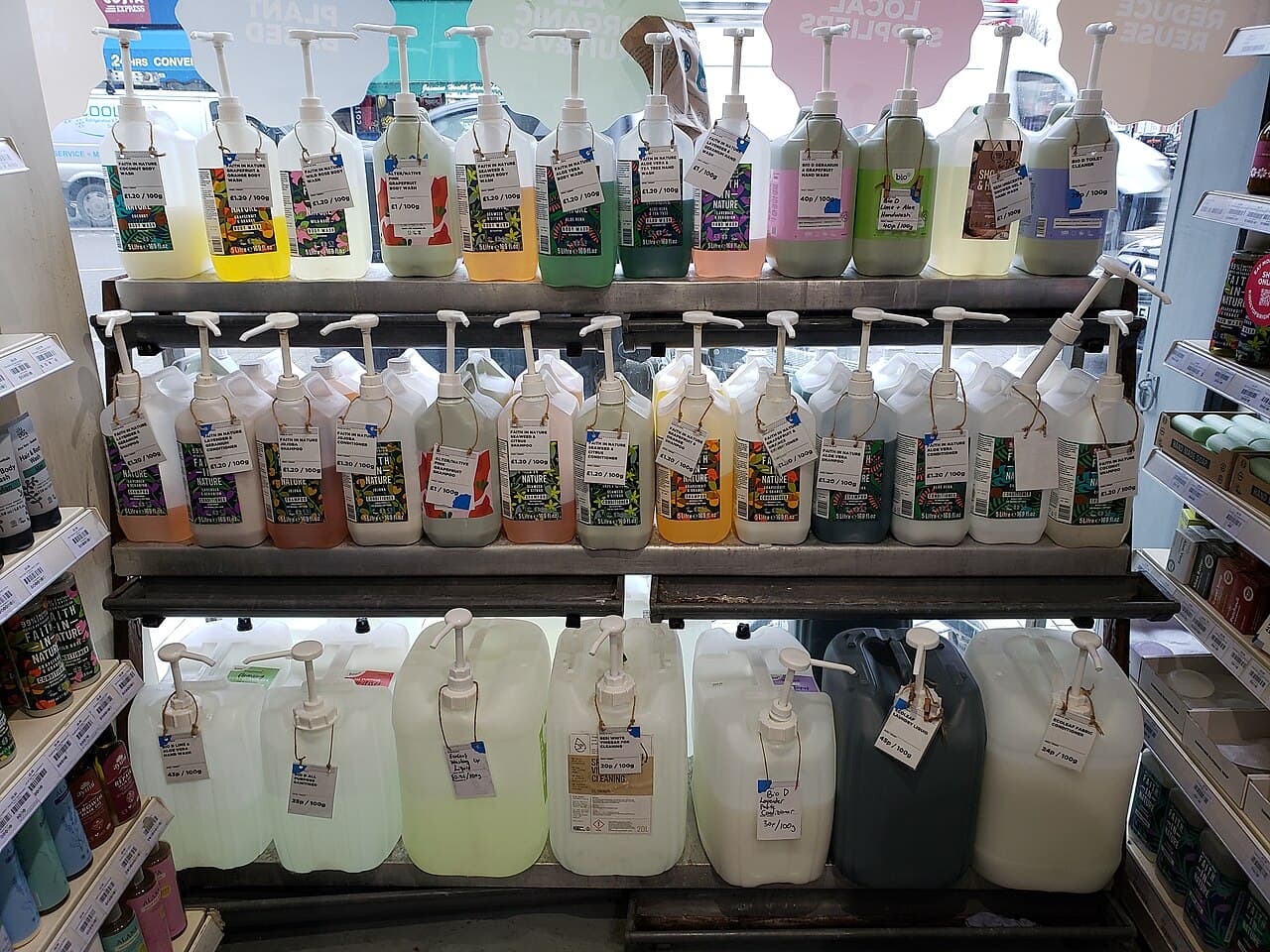
Read the marketing the way the FTC does
The FTC's Green Guides apply to environmental claims about services as well as products, in any medium, whether made in words, symbols, logos or brand names.[6] A few rules from them make a good filter for a cleaning company's website:
- Vague claims. The guides say unqualified general environmental benefit claims are difficult to interpret, and marketers should not make them.[6] In the FTC's own example, the brand name "Eco-friendly" likely conveys far-reaching environmental benefits and may convey no negative environmental impact at all, which a marketer is highly unlikely to be able to back up.[6] A specific claim, such as "we use only Safer Choice products," is one you can test.
- Seals and certifications. It is deceptive to misrepresent that a product or service has been endorsed or certified by an independent third party,[6] and marketers should not use environmental certifications or seals that do not convey the basis for the certification.[6] Ask who awarded a badge and for what.
- "Non-toxic." Under the guides, a non-toxic claim likely conveys that a product is non-toxic both for humans and for the environment generally.[6] That is a big promise; ask which products it refers to.
- "Free of." A truthful "free of" claim can still be deceptive if the product contains substances that pose the same or similar environmental risks as the one left out.[6] "Bleach-free" means little if the replacement is just as harsh.
Certifications for cleaning services
Green Seal's GS-42 standard is for commercial and institutional cleaning services, and it does not cover residential buildings.[7] So no house cleaner is GS-42 certified for your home. A company that holds it for office work has still shown it can run a disciplined program. The standard calls for a written cleaning plan for each building,[7] environmentally preferable products for general-purpose, floor, bathroom, glass and carpet cleaners,[7] reusable cleaning cloths or microfiber instead of paper products whenever appropriate,[7] disinfection only with EPA-registered disinfectants, prepared by the label's directions,[7] and at least 12 hours of training for new cleaning staff.[7]
Those make good questions for any house cleaner, certified or not.
Questions to ask before you book
- Which products will you use in my home, by name, and are they on EPA's Safer Choice list?
- Which disinfectant do you use, where, and does it have the DfE logo?
- Can you use fragrance-free products, or products I supply?
- Do you bring a HEPA vacuum? Do you wash your cloths between homes?
- How do you dilute concentrates, and how are your crews trained?
- What does any certification you advertise actually cover?
For the general questions, such as insurance and who the cleaner works for, see what to ask before hiring a house cleaner.
Watch how they actually work
The first visit tells you more than the website. Check that the products match the list. Watch for habits that matter whatever the label says: EPA's rule is to Never mix household care products unless the label tells you to,[8] and if a label says to use a product in a well-ventilated area, open windows to provide the maximum amount of outdoor air possible.[8]
If a green claim turns out to be false
Raise it with the business first, in writing. If that goes nowhere, Virginia law speaks to this. Under the Virginia Consumer Protection Act, a supplier in a consumer transaction may not misrepresent that goods or services have certain characteristics, ingredients, uses or benefits,[9] or misrepresent their source, sponsorship, approval or certification.[9] The Office of the Attorney General's Consumer Protection Section takes complaints against businesses operating in Virginia, and its online form is the quickest way to file.[10] For advice on your own case, talk to a lawyer.
Stop and call a pro if
- Cleaning turns up mold that covers a large area or keeps coming back, or water damage. A cleaning service, green or not, cannot fix the moisture behind it.
- Products used in your home cause breathing trouble, rashes or headaches. Stop using them, air out the house, and ask a doctor what to avoid.
- The job is sewage, a hoarding cleanout or biohazard cleanup, which need specialists.
Finding a green cleaner on Loclis
Read whether green cleaning costs more and how to clean a house without harsh chemicals, browse green cleaning businesses or cleaning services around Blacksburg, and see more cleaning answers. Then describe the job on Loclis, list the products or labels you want, and compare the quotes that come back.
Common questions
- Is there an official green certification for house cleaners?
- Not for homes in the way product labels work. Green Seal's GS-42 service standard covers commercial and institutional buildings, not residential ones. The checks that work for a house cleaner are practical: ask for the products by name, look them up on EPA's Safer Choice list, check that any disinfectant has an EPA registration number, and get the details written into your quote.
- What is the Safer Choice label?
- It is EPA's label for cleaning and other products. EPA reviews every chemical ingredient against human health and environmental criteria before a product can carry it, checks performance, pH, packaging and VOC content, and audits labeled products every year. EPA's online search shows which products currently qualify.
- Can a cleaning service disinfect with vinegar?
- It can wipe with vinegar, but that is not disinfecting you can rely on. EPA does not review how well household ingredients like vinegar kill germs. A service that disinfects should use an EPA-registered product and follow the label, including the contact time. EPA's DfE logo marks registered disinfectants that also meet extra health and environmental criteria.
- Does a Green Seal certificate mean the company cleans homes green?
- Not by itself. Green Seal's GS-42 standard covers commercial and institutional cleaning services and does not cover residential buildings. A company that holds it for office work has shown it can run a green program; ask whether it uses the same products and methods in homes.
- What does "non-toxic" mean on a cleaner's website?
- Under the FTC's Green Guides, a non-toxic claim likely tells customers the product is non-toxic for people and for the environment, so a marketer making it should have scientific evidence for both or qualify the claim. Ask which products the claim refers to and look them up.
- What can I do if a service lied about being green?
- Start by raising it with the business in writing. Virginia's Consumer Protection Act bars suppliers from misrepresenting the characteristics, ingredients or certification of goods and services, and the Attorney General's Consumer Protection Section accepts complaints online. For advice on your own situation, talk to a lawyer.
Sources
- [1] Learn About the Safer Choice Label, U.S. Environmental Protection Agency. Checked October 27, 2026.
- [2] Search Products that Meet the Safer Choice Standard, U.S. Environmental Protection Agency. Checked October 27, 2026.
- [3] Learn About Design for the Environment (DfE) Certification, U.S. Environmental Protection Agency. Checked October 27, 2026.
- [4] 6 Steps for Safe and Effective Disinfectant Use, U.S. Environmental Protection Agency. Checked October 27, 2026.
- [5] Can I use common household substances to kill the novel coronavirus?, U.S. Environmental Protection Agency. Checked October 27, 2026.
- [6] Guides for the Use of Environmental Marketing Claims (16 CFR Part 260), Federal Trade Commission, via the Electronic Code of Federal Regulations. Checked October 27, 2026.
- [7] GS-42 Commercial and Institutional Cleaning Services, Green Seal. Checked October 27, 2026.
- [8] Volatile Organic Compounds' Impact on Indoor Air Quality, U.S. Environmental Protection Agency. Checked October 27, 2026.
- [9] Code of Virginia § 59.1-200. Prohibited practices, Virginia General Assembly, Legislative Information System. Checked October 27, 2026.
- [10] File a Complaint, Office of the Attorney General of Virginia, Consumer Protection Section. Checked October 27, 2026.
Want a pro to handle it?
Describe the job once. Licensed local businesses send quotes, and you pay only when you book one.
Get a quote from a local pro