Does a painter need to be lead-safe certified to work on an older house?
Yes, if the house was built before 1978 and the painter is paid to disturb paint. Scraping and sanding count. Under the EPA's Renovation, Repair and Painting Rule, which EPA runs directly in Virginia, the firm must be lead-safe certified and a certified renovator must direct the work, unless the paint is documented lead-free or the job disturbs 20 square feet or less outside.
Free to ask. Local shops send quotes, and you pay only when you book one.
By Kasra Taheri, Founder, LoclisPublished
Researched and drafted with AI, then checked claim by claim against the sources listed below before it was published. Prices and rules change; the dates beside each source say when it was last checked.
Step by step
Read when to stop and call a pro, further down this page, before you start.
Step 1: Confirm the year built
Check your deed, tax record or closing papers; a house built before 1978 is covered by the lead-safe rule when someone is paid to disturb its paint.[2]
Step 2: Ask for both certificates
Ask each painter for the firm's EPA lead-safe certification and the name of the certified renovator who will run your job.[8]
Step 3: Look the firm up
Search for the firm in EPA's online locator of lead-safe certified contractors before you sign anything.[3]
Step 4: Check the Virginia licence
For a job over $1,000, also confirm the contractor holds a Virginia contractor licence of the right class.[11]
Step 6: Put lead-safe work in the contract
Have the written contract list the containment, removal methods, cleanup and disposal the crew will use.
Step 7: Watch the setup
On the first day, look for warning signs, plastic on the ground and closed windows near the work before any scraping starts.[7]
Step 8: Walk the site at the end
Before final payment, check the ground, plants and windowsills below the work for paint chips and dust.[7]
Yes, in most cases. If your house was built before 1978 and a painter is paid to scrape, sand or otherwise disturb its paint, federal law requires the painting firm to be lead-safe certified by the EPA and a certified renovator to direct the work. Most exterior repaints involve at least some scraping and sanding, so most of them disturb paint.
Who the rule covers
The rule is EPA's Renovation, Repair and Painting Rule. In the agency's words, anyone who is paid to perform work that disturbs paint in housing and child-occupied facilities built before 1978 must be certified. This includes all firms, even sole proprietorships.[2] EPA names special trade contractors, including painters[2] among those covered, and the regulation's definition of renovation includes surface preparation activity (such as sanding, scraping, or other such activities that may generate paint dust).[4]
Virginia does not run its own version. EPA administers the program except in the states it has authorized, and that list is Alabama, Delaware, Georgia, Iowa, Kansas, Massachusetts, Mississippi, North Carolina, Oklahoma, Oregon, Rhode Island, Utah, Vermont, Wisconsin[1] and one tribe. So in Virginia, the certification to ask for is EPA's.
When certification is not required
The rule does not cover:
- Housing built in 1978 or later.[2]
- Housing or components declared lead-free by a certified inspector or risk assessor.[2] In addition, a certified renovator may declare specific components lead-free using an EPA recognized test kit or paint chip samples sent to an EPA recognized laboratory.[2]
- Minor repair and maintenance that disturbs 20 square feet or less on the exterior of a home.[2] Window replacement and demolition of painted surfaces are always covered regardless of square footage.[2]
Testing is optional, but the default runs one way: unless you have documentation that the paint is not lead-based, then the requirements of the RRP Rule apply.[2]
It also matters who is doing the work. Generally, the RRP Rule does not apply to homeowners doing RRP projects in their own pre-1978 homes.[1] It does apply if you rent all or part of your home, operate a childcare center in your home or if you buy, renovate and sell homes for profit.[1] If you plan to do the prep yourself, see how to prep a house for exterior painting for lead-safe methods.
What a certified painter has to do
Certification comes with specific duties you can watch for.
Before the job. No more than 60 days before beginning renovation work, the firm must give the owner EPA's Renovate Right pamphlet and get a written acknowledgment that the owner received it, or a certificate of mailing at least 7 days before the work.[4][5]
A certified renovator in charge. The renovator must be physically present at the work site when the warning signs are posted, while the containment is being set up, and while the work area is cleaned,[8] and must be available, either on-site or by telephone, at all times that renovations are being conducted.[8] Renovators must have copies of their initial and most recent refresher course certificates with them at the work site,[8] and when you ask, must use an acceptable test kit to determine whether components to be affected by the renovation contain lead-based paint.[8]
Containment outside. The crew must close all doors and windows within 20 feet of the renovation[7] and cover the ground with plastic sheeting or other disposable impermeable material extending 10 feet beyond the perimeter of surfaces undergoing renovation.[7]
Banned methods. "Open-flame burning or torching of painted surfaces is prohibited."[7] Machines that remove paint at high speed, such as sanding, grinding, power planing, needle gun, abrasive blasting, or sandblasting,[7] are allowed only with a shroud and a HEPA vacuum attachment. Heat guns may be used only below 1,100 degrees Fahrenheit.[7]
Cleanup. At the end, a certified renovator must visually inspect surfaces in and below the work area, including windowsills and the ground, and have any remaining dust, debris or residue cleaned up.[7]
Lead-safe painting is not lead abatement
EPA describes renovation work and abatement as two separate programs that require different certifications.[9] A lead-safe painter controls dust while repainting; the paint stays. The EPA adds that "Just painting over the paint hazards with regular paint will not permanently address lead-based paint hazards."[9]
Virginia defines lead abatement as any measure or set of measures designed to permanently eliminate lead-based paint hazards.[10] Lead contractors, abatement workers, inspectors and risk assessors are licensed by the Virginia Board for Asbestos, Lead, and Home Inspectors,[10] a DPOR board that licenses individuals engaged in lead-based paint remediation.[6] The EPA notes that abatement is sometimes ordered by a state or local government and can involve specialized techniques not typically performed by most residential contractors.[9]
The Virginia contractor licence still applies
EPA certification is on top of, not instead of, a Virginia contractor licence. Under the Code of Virginia, a single contract over $1,000 falls under at least a Class C licence.[11] See how to check a contractor's licence.
Stop and call a pro if
- A crew on your pre-1978 house is dry sanding, power sanding without a vacuum shroud, burning paint, or working with no plastic on the ground. Stop the work and call the firm's certified renovator. You can also call the National Lead Information Center at 1-800-424-5323 or report a violation to EPA online.[1]
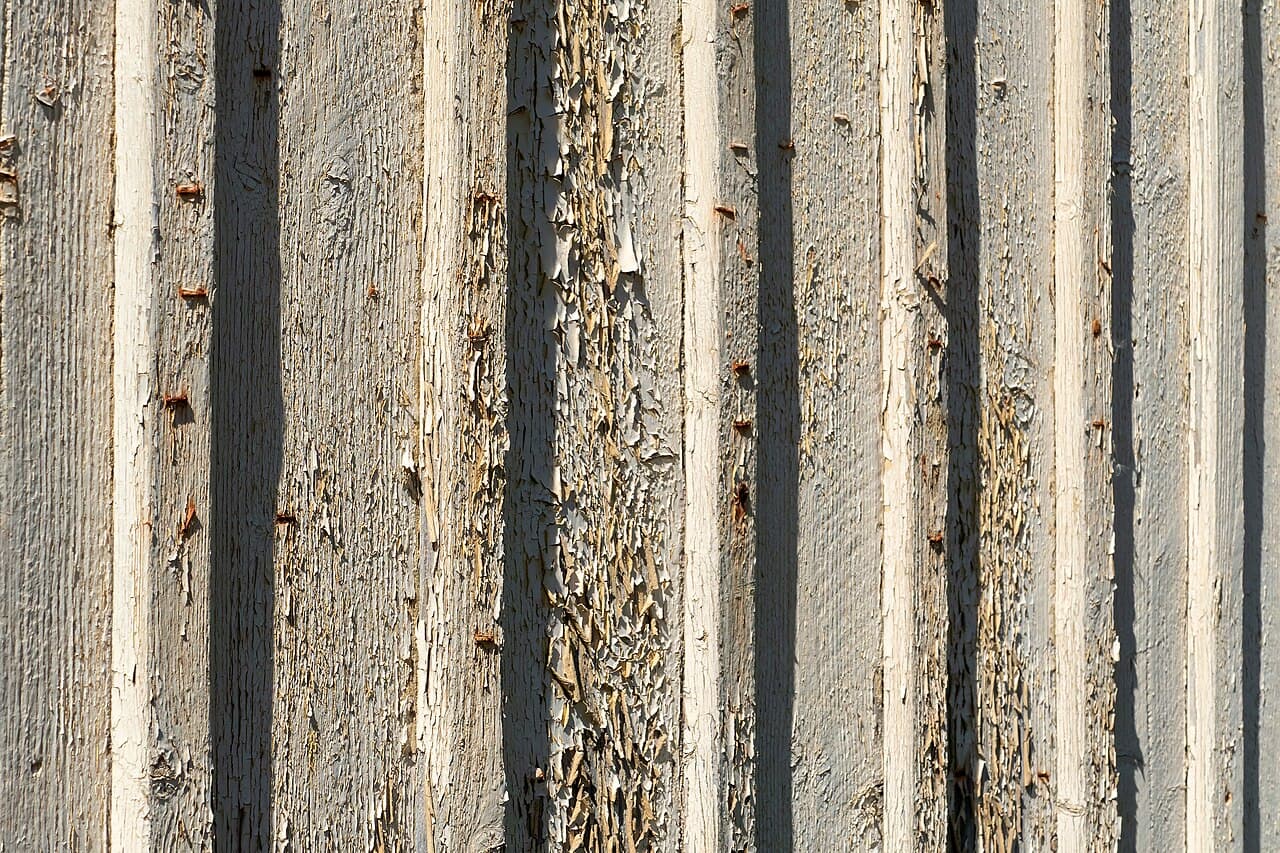
- Peeling paint on an older house shows cracked, scaly surfaces that look like alligator skin[12] and young children live there. The Virginia Department of Health's advice: "Ask your doctor to find out if your child should be tested for lead."[12] A certified lead risk assessor can tell you where the hazards are.
- The job is abatement rather than painting. Hire a Virginia-licensed lead abatement contractor.
For what the extra work does to price, see what exterior painting costs in Virginia, and for diagnosis, why exterior paint peels. Browse exterior painters, look up painting businesses around Blacksburg, or read more exterior answers. When you are ready, describe your exterior painting job, mention the year the house was built, and licensed local businesses can quote it.
Common questions
- Does the lead-safe rule apply if my house was built in 1978 or later?
- No. EPA's Renovation, Repair and Painting Rule covers housing built before 1978. A house built in 1978 or later is outside the rule, though the painter still needs a Virginia contractor licence for a job over $1,000.
- Can I paint my own pre-1978 house without being certified?
- Yes. The rule generally does not apply to homeowners working on their own home. It does apply if you rent out all or part of it, run a child care business there, or buy, renovate and sell houses for profit. Working on your own house, use lead-safe methods: keep surfaces wet, never dry sand or torch paint, and contain the chips on plastic.
- Does the painter have to test my paint for lead?
- No. Testing is not required, but without documentation that the paint is lead-free, the painter must follow the lead-safe rules. You can ask the certified renovator to use an EPA-recognized test kit on the surfaces being worked on, or hire a certified inspector or risk assessor to test the whole house.
- Is a lead-safe certified painter the same as a lead abatement contractor?
- No. A lead-safe certified painter is trained to disturb paint during renovation, repair and painting without spreading lead dust. Lead abatement is work meant to permanently remove lead-based paint hazards, and in Virginia it is done by contractors and workers licensed by the Board for Asbestos, Lead, and Home Inspectors.
- What if a painter offers to skip the lead-safe steps to save money?
- Do not accept it. For a paid job on a pre-1978 house, the containment, work-practice and cleanup steps are federal requirements, and the dust they prevent is most dangerous to young children. Choose a certified firm and report violations to the EPA or the National Lead Information Center.
Sources
- [1] Lead Renovation, Repair and Painting Program, U.S. Environmental Protection Agency. Checked October 27, 2026.
- [2] Lead Renovation, Repair and Painting Program: Contractors, U.S. Environmental Protection Agency. Checked October 27, 2026.
- [3] Lead-Safe Renovations for DIYers, U.S. Environmental Protection Agency. Checked October 27, 2026.
- [4] 40 CFR 745.84, Information distribution requirements, with the end of 745.83, Definitions (Lead Renovation, Repair and Painting Rule), U.S. Government Publishing Office (Code of Federal Regulations). Checked October 27, 2026.
- [5] 40 CFR 745.83, Definitions (Lead Renovation, Repair and Painting Rule), U.S. Government Publishing Office (Code of Federal Regulations). Checked October 27, 2026.
- [6] Board for Asbestos, Lead, and Home Inspectors, Virginia Department of Professional and Occupational Regulation. Checked October 27, 2026.
- [7] 40 CFR 745.85, Work practice standards (Lead Renovation, Repair and Painting Rule), U.S. Government Publishing Office (Code of Federal Regulations). Checked October 27, 2026.
- [8] 40 CFR 745.90, Renovator certification and dust sampling technician certification, U.S. Government Publishing Office (Code of Federal Regulations). Checked October 27, 2026.
- [9] Lead Abatement, Inspection, and Risk Assessment, U.S. Environmental Protection Agency. Checked October 27, 2026.
- [10] Code of Virginia § 54.1-500. Definitions (Asbestos, Lead, and Home Inspection Contractors and Workers), Virginia General Assembly. Checked October 27, 2026.
- [11] Code of Virginia § 54.1-1100. Definitions (Contractors), Virginia General Assembly. Checked October 27, 2026.
- [12] Lead-Safe Virginia, Virginia Department of Health. Checked October 27, 2026.
Want a pro to handle it?
Describe the job once. Licensed local businesses send quotes, and you pay only when you book one.
Get a quote for Roofing