How much does it cost to paint the exterior of a house in Virginia?
There is no reliable statewide price, because an exterior repaint is mostly labour and the labour depends on the house. The biggest drivers are how much scraping and repair the paint needs, the size and height of the walls, how many coats go on, trim detail, and lead-safe work on a pre-1978 house. Compare two or three itemised written quotes.
Free to ask. Local shops send quotes, and you pay only when you book one.
By Kasra Taheri, Founder, LoclisPublished
Researched and drafted with AI, then checked claim by claim against the sources listed below before it was published. Prices and rules change; the dates beside each source say when it was last checked.
Step by step
Read when to stop and call a pro, further down this page, before you start.
Step 1: Look at the paint first
Walk around the house and note which walls are only dirty or chalky and which are cracking or peeling to bare wood, since that sets how much prep you are paying for.
Step 2: Check for rot
Probe sills, trim ends and the lowest siding boards with a screwdriver so wood repairs are priced in the quote rather than found halfway through the job.
Step 3: Note the year built
Tell every painter if the house was built before 1978, because lead-safe rules then apply to a paid crew that disturbs paint.[3]
Step 4: Decide the scope
Ask whether every side needs painting now, or only the sunny, weathered walls, since paint on the shaded side often lasts much longer.[1]
Step 5: Get two or three quotes
Ask licensed painting contractors to walk the house and quote the same scope, surfaces, products and number of coats.
Step 6: Check the licence
For a job over $1,000, confirm the contractor holds a Virginia contractor licence with the painting specialty or a classification that covers it.[6]
Step 7: Compare line by line
Line up prep, repairs, primer, topcoats, trim, lead-safe work and cleanup across quotes instead of comparing only the totals.
Step 8: Sign a written contract
Before work starts or money changes hands, get a contract signed by both sides that states the total price, payment schedule and down payment.[8]
There is no honest single price for painting a house in Virginia, because two houses of the same size can need very different amounts of work. An exterior repaint is mostly labour, and the labour depends on how much the existing paint needs before new paint can go on, how big and tall the walls are, how many coats are applied, and whether lead-safe rules apply. Below is what moves the number and how to get quotes you can actually compare.
Prep is the biggest variable
The condition of the old paint matters more than the square footage. The USDA Forest Products Laboratory's Wood Handbook notes: "Surface preparation for film-forming finishes, however, can be extensive and labor intensive."[1]
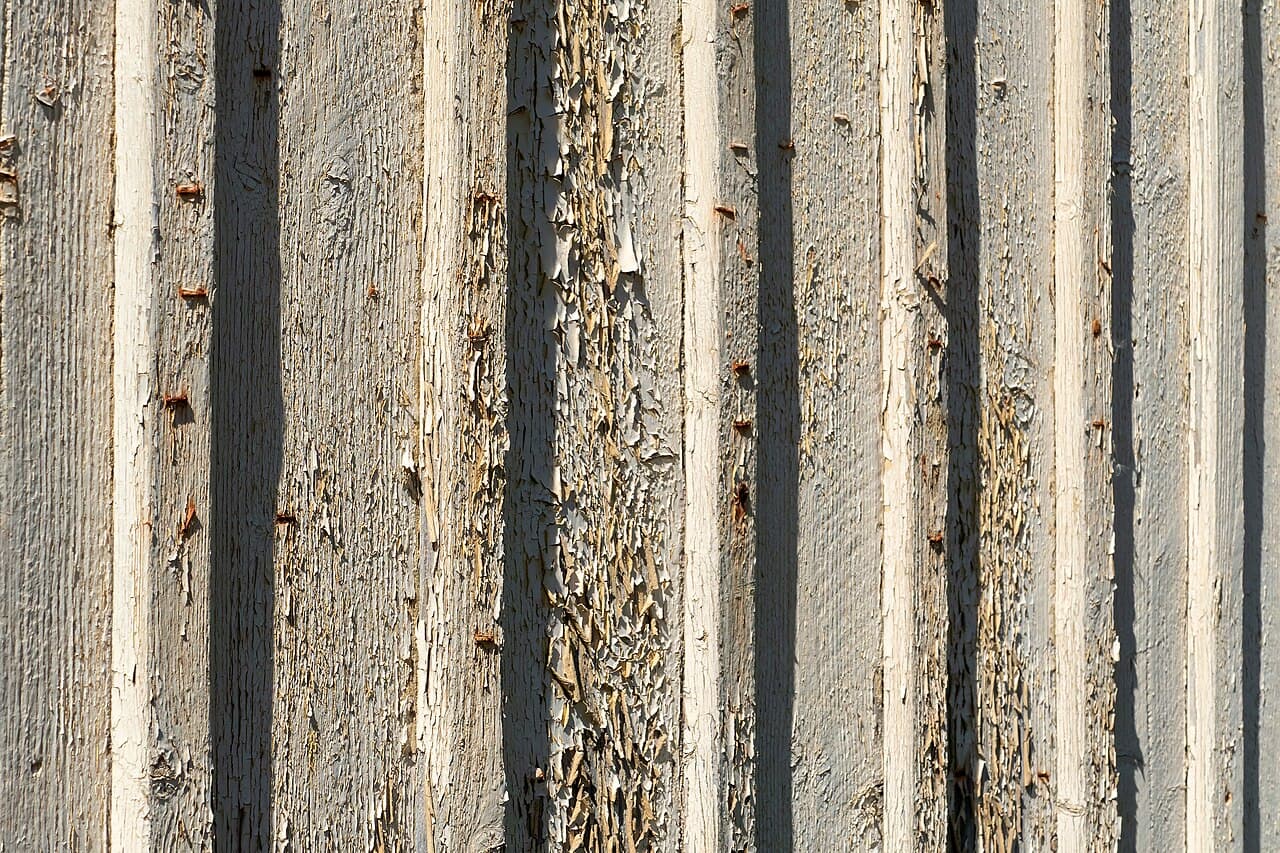
At the easy end, paint that has simply worn thin needs little work: surface preparation merely involves washing the surface to remove mildew, dirt, and chalk[1] before new topcoats go on. At the hard end, where paint has peeled away from the wood, the crew has to scrape off all loose paint, sand exposed wood, wash the rest, prime the bare areas and then topcoat.[1] That is several times the labour on the same wall.
Waiting raises the bill. The National Park Service warns that postponing scraping, sanding and repainting of failing siding leads to further paint failure, greater preparatory costs, and could even mean replacing some siding.[2] Rotted sills, trim and siding boards have to be repaired before painting, and that carpentry is often priced separately.
How many coats, and on which walls
Coats are labour and material. When old paint is sound, the handbook advises you to reapply one or two new topcoats. One coat may be adequate if the old paint surface is in good condition.[1] On bare or primed wood, a primer and two topcoats last longest, but where that is not practical the handbook suggests two topcoats on the fully exposed south and west sides and a single topcoat elsewhere.[1]
You may not need the whole house done at once. Paint on the shaded side often lasts twice as long as that on a fully exposed, sunny side.[1] For porch ceilings, soffits and walls under deep overhangs, Repainting protected areas every other time the structure is painted usually gives adequate performance.[1] Asking for the weathered walls to be priced separately is a fair way to control cost.
Paint quality is a small share of a labour-heavy job, so do not economise there. The Park Service's advice is simple: "Use top quality coating materials."[2] Colour matters too: Many dark-colored finishes may fade to give unacceptable performance long before the finish fails.[1]
Older houses and lead-safe work
If the house was built before 1978, federal rules add work that a quote should reflect. The EPA says anyone who is paid to perform work that disturbs paint in housing and child-occupied facilities built before 1978 must be certified.[3] On an exterior job, the crew must close all doors and windows within 20 feet of the work, cover the ground with plastic extending 10 feet beyond the surfaces being worked on, and leave no dust, debris or residue on surfaces in and below the work area, including windowsills and the ground.[4] Open-flame burning and power sanding without a shroud and HEPA vacuum are not allowed,[4] so scraping takes longer.
The rule exempts minor jobs that disturb 20 square feet or less of paint on the exterior,[3] but a full repaint with real prep is well past that. A painter who quotes a pre-1978 house without mentioning lead-safe work is either pricing a different job or skipping a legal requirement. See whether a painter needs to be lead-safe certified for what that involves.
Height, access and permits
Two-storey walls, steep lots, porch roofs and dormers take more ladder and staging time than a one-storey ranch. Overhead power lines can slow a job too: Virginia law bars painters and other trades from placing a person or a ladder within 10 feet of an overhead high-voltage line.[9]
One cost you should not see is a building permit for the painting itself. Virginia's Uniform Statewide Building Code lists "Application of paint or wallpaper" among the jobs exempt from a permit.[5]
Licence and contract
Virginia licenses contractors by the size of the job. Under the Code of Virginia, a single contract over $1,000 but less than $30,000 falls under a Class C licence,[6] with larger jobs needing Class B or A. The Board for Contractors' painting and wallcovering specialty explicitly covers surface preparation, caulking, sanding, and cleaning preparatory to painting.[7] Check a licence before you sign; how to check a contractor's licence walks through it.
A residential contract must be in writing, and the regulations list what it has to contain, including when work is to begin and the estimated completion date,[8] the total cost, the amounts and schedule for progress payments, including a specific statement on the amount of the down payment,[8] a listing of specified materials and work to be performed,[8] and the contractor's name, address, license number, class of license, and classifications or specialty services.[8] It must also say that any change to the cost, materials, work or completion date must be in writing and signed by all parties.[8]
What to ask for in a written quote
- Which surfaces are included: siding, trim, soffits, fascia, doors, shutters, porch floors and ceilings.
- The prep: washing method, how much scraping and sanding, and how bare wood will be primed.
- Repairs, priced as separate line items or as a unit price per board or per foot.
- The primer and paint by brand and product line, the sheen, and the number of coats on each surface.
- Lead-safe work practices and the firm's EPA certification if the house was built before 1978.
- Cleanup and disposal of paint chips and debris.
- Start date, expected finish, payment schedule and deposit.
Stop and call a pro if
- The paint is peeling to bare wood over large areas of a house built before 1978. Pricing that job needs a lead-safe certified firm, not a guess.
- You find soft or rotted wood in sills, fascia, corner boards or framing. Get the carpentry priced and done before painting.
- The work involves second-storey walls, roof edges or overhead lines near the house.
If you plan to do some of the work yourself, see how to prep a house for exterior painting and how often a house needs painting. Browse exterior painters, look up painting businesses around Blacksburg, or read more exterior answers. To compare prices on your own house, describe your exterior painting job once and licensed local businesses can quote it.
Common questions
- Why are exterior painting quotes so far apart?
- Usually because the painters are pricing different jobs. One may plan to wash and apply a single coat; another may scrape, sand, prime bare wood, replace rotted trim and apply two coats. Ask each one to list the prep, repairs, primer, products and number of coats so you can compare the same scope.
- Do I need a permit to paint the outside of my house in Virginia?
- Generally no. The Virginia Uniform Statewide Building Code lists the application of paint among the jobs that need no building permit. Repairs that come up during the job, such as replacing siding in a historic district or structural rot, can have their own rules, so ask your local building department if the scope grows.
- Does an older house cost more to paint?
- Often. A house built before 1978 may have lead paint, and a paid crew that disturbs that paint must be EPA lead-safe certified and use plastic containment, restricted removal methods and careful cleanup. Older houses also tend to have more paint layers, more failing paint and more trim detail to prepare.
- Can I save money by painting only part of the house?
- Yes, when the paint allows it. Paint wears at different rates, and the shaded side often lasts about twice as long as the sunny side. Protected areas such as porch ceilings and soffits often need repainting only every other cycle. Ask a painter to price the weathered walls separately from the whole house.
- Should I pay a large deposit up front?
- Virginia's contractor regulations require a written residential contract that states the down payment and the schedule of progress payments. Agree on an amount that matches the materials and work at each stage, and do not pay before the contract is signed by both of you.
Sources
- [1] Chapter 16: Finishing Wood, Wood Handbook (FPL-GTR-282), USDA Forest Service, Forest Products Laboratory. Checked October 27, 2026.
- [2] Preservation Brief 47: Maintaining the Exteriors of Small and Medium Size Historic Buildings, National Park Service. Checked October 27, 2026.
- [3] Lead Renovation, Repair and Painting Program: Contractors, U.S. Environmental Protection Agency. Checked October 27, 2026.
- [4] 40 CFR 745.85, Work practice standards (Lead Renovation, Repair and Painting Rule), U.S. Government Publishing Office (Code of Federal Regulations). Checked October 27, 2026.
- [5] 13VAC5-63-80. Section 108 Application for permit (Virginia Uniform Statewide Building Code), Virginia Administrative Code (Virginia General Assembly). Checked October 27, 2026.
- [6] Code of Virginia § 54.1-1100. Definitions (Contractors), Virginia General Assembly. Checked October 27, 2026.
- [7] 18VAC50-22-30. Definitions of specialty services (Board for Contractors Regulations), Virginia Administrative Code (Virginia General Assembly). Checked October 27, 2026.
- [8] 18VAC50-22-260. Filing of charges; prohibited acts (Board for Contractors Regulations), Virginia Administrative Code (Virginia General Assembly). Checked October 27, 2026.
- [9] Code of Virginia § 59.1-408. Prohibited activities (Overhead High Voltage Line Safety Act), Virginia General Assembly. Checked October 27, 2026.
Want a pro to handle it?
Describe the job once. Licensed local businesses send quotes, and you pay only when you book one.
Get a quote for Roofing