How often should a house exterior be painted?
Repaint when the paint stops protecting the wood, not on a fixed calendar. A good primer and two topcoats on sound wood can last 10 to 20 years, solid-color stain 6 to 15, and sunny walls wear out well before shaded ones. Check the house every spring, wash off dirt and mildew, and touch up cracks and peeling before they spread.
Free to ask. Local shops send quotes, and you pay only when you book one.
By Kasra Taheri, Founder, LoclisPublished
Researched and drafted with AI, then checked claim by claim against the sources listed below before it was published. Prices and rules change; the dates beside each source say when it was last checked.
Step by step
Read when to stop and call a pro, further down this page, before you start.
Step 1: Inspect every spring
Walk around the house each spring, before the summer painting season, and look closely at walls, trim, windows and porches.[3]
Step 2: Start with the sunny sides
Look hardest at the south and west walls and at window sills, where paint wears fastest.[1]
Step 3: Rub the paint
Wipe a dark hand or cloth across the paint; a heavy powder of chalk means the paint is wearing thin and needs cleaning before any repaint.
Step 4: Look for primer showing
Where the topcoat has worn through to primer, plan one or two new topcoats on that area.[1]
Step 5: Test dark spots for mildew
Put a drop of household bleach on dark spots; if they whiten in seconds, it is mildew, which needs washing rather than paint.[1]
Step 6: Wash what is dirty
Scrub dirt and mildew off with detergent and a soft brush and rinse with a garden hose pointed down, rather than repainting sound paint.[1]
Step 7: Keep water off the walls
Clean gutters, renew failed caulk at trim joints, and trim back shrubs and branches that hold moisture against the siding.[2]
Step 8: Touch up early
Scrape, prime and touch up small cracked or peeling spots the same season, using lead-safe methods on a house built before 1978.[3]
Step 9: Keep a record
Write down when each side was painted, with what product and colour, so you can see which walls wear fastest.
There is no set number of years. Repaint when the paint has worn thin or started to fail, and touch up small problems as soon as you see them. On sound wood with good preparation, a primer and two quality topcoats commonly last 10 to 20 years on a wall, but the sunny sides, sills and dark colours wear out sooner, and the shaded sides later. A yearly look tells you more than a calendar.
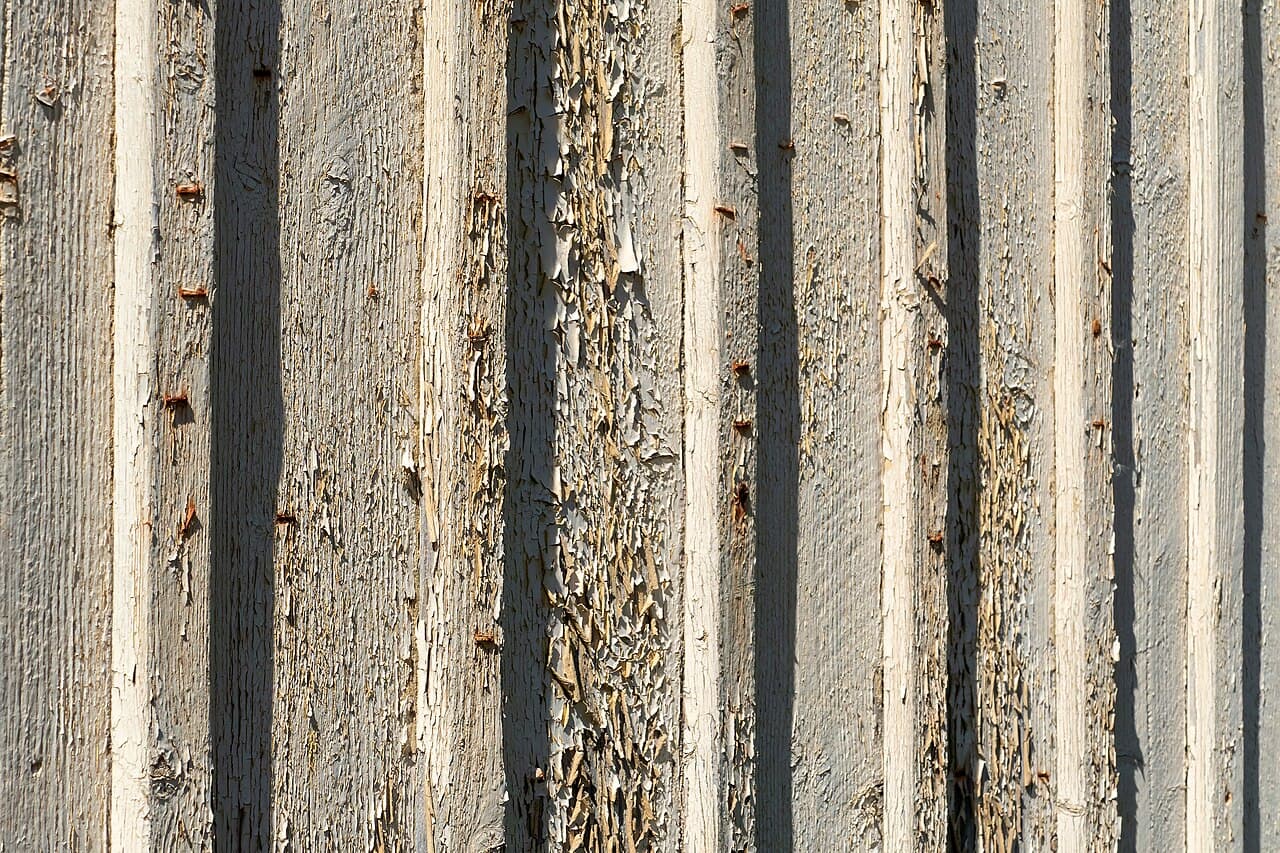
How long paint lasts
The USDA Forest Products Laboratory's Wood Handbook gives typical service lives on vertical wood surfaces of 10–20 years for paint and 6–15 years for solid-color stain,[1] and 4–8 years for semitransparent stain on saw-textured or weathered wood.[1] It stresses that service life depends on surface preparation, climate and exposure, amount and quality of finish, and the wood species and its surface texture.[1]
With everything done right, the numbers get long. A three-coat finish system (0.10 to 0.13 mm thick) should last 20 years.[1] Many three-coat paint systems in tests at FPL have lasted 30 years.[1]
Older guidance is shorter. The National Park Service's brief on historic woodwork, written when oil paints were standard, describes exterior paint as requiring re-application every 5-8 years.[2]
Repaint by condition, not by date
The handbook's rule: Refinish exterior wood when the old finish has worn thin and no longer protects the wood.[1] In practice, When the topcoats begin to wear thin, exposing the primer, reapply one or two new topcoats.[1] If paint is cracking, blistering or peeling, it needs attention sooner, and the cause should be found first; see why exterior paint peels.
Some chalk is normal. The Park Service calls it healthy aging: In moderation, chalking is the ideal way for a paint to "age," because rain carries dirt away with the chalk.[2] Heavy chalk that rubs off thickly on your hand means the paint is wearing out.
Colour alone is not a reason. In the Park Service's words, nor is color fading, of itself, sufficient justification to repaint,[2] though Many dark-colored finishes may fade to give unacceptable performance long before the finish fails.[1] If you want paint that looks good longest, the handbook's advice is short: "White is always a safe choice."[1]
Different walls, different schedules
You rarely need to repaint the whole house at once. Paint erodes at different rates, so different sides of a structure do not need to be painted on the same schedule.[1] Paint on the shaded side often lasts twice as long as that on a fully exposed, sunny side.[1] For porch ceilings, soffits and walls under deep eaves, Repainting protected areas every other time the structure is painted usually gives adequate performance.[1]
Within a wall, the flat parts take the most weather. The Park Service notes that horizontal surfaces such as window sills wear faster and need repainting more often than less exposed surfaces.[2] Sills, railings and the tops of trim often need a touch-up between full repaints; see how to keep exterior trim from rotting.
Painting too often causes problems too
More coats do not mean more protection once the paint is sound. The handbook is direct: "Do not paint too often. If paint is sound, but discolored with mildew, wash it. It does not need repainting."[1] Too many coats of latex paint can eventually lead to adhesion failure of the primer.[1] The Park Service adds that When paint builds up to about 1/16 inch, roughly 16 to 30 layers, one or more extra coats may be enough to trigger cracking and peeling.[2]
A yearly routine that stretches the cycle
The Park Service recommends that owners inspect exterior walls, porches and windows once a year, in spring, before the summer and fall painting season.[3] Cleaning is part of the maintenance: To help extend a repainting cycle, dirt and spider webs should be removed before permanent staining occurs.[3] Wash with a mild detergent and a soft brush rather than high pressure; how often to pressure wash a house covers when washing helps and when it harms.
Do not let small failures sit. About a south-facing wall with failing paint, the Park Service warns: "Postponing such work will lead to further paint failure, require greater preparatory costs, and could even result in the need to replace some siding."[3]
On a house built before 1978, the yearly check doubles as a lead check. The EPA says lead-based paint in good condition is not a hazard,[4] but Owners and occupants should regularly monitor and check for deteriorating paint (paint that is peeling, chipping, chalking or cracking).[4] Use lead-safe methods for touch-ups.
Stop and call a pro if
- Paint is peeling to bare wood over large areas, or on a house built before 1978 where children live.
- You find soft wood in sills, trim, fascia or siding during the spring check.
- The worn areas are on second-storey walls, gables or anywhere you would need a tall ladder or roof access to reach.
- Peeling keeps coming back in the same spot within a year or two of painting, which points to a moisture problem behind the wall.
When it is time, how to prep a house for exterior painting and what exterior painting costs in Virginia will help you plan. Browse exterior painters, look up painting businesses around Blacksburg, or read more exterior answers. To get it done, describe your exterior painting job once and licensed local businesses can quote it.
Common questions
- Is it bad to wait too long to repaint?
- Yes. Once paint cracks and peels, water reaches the wood, the failure spreads, and the next paint job needs far more scraping, priming and sometimes new siding or trim. Touching up small failures each year is much cheaper than a full strip-and-repaint later.
- Can I repaint just one side of the house?
- Yes. Paint wears at different rates on different walls, and the shaded side often lasts about twice as long as a fully exposed sunny side. Repainting the worn sides when they need it, and protected areas such as porch ceilings every other cycle, is a sound way to spread the cost.
- How long does exterior paint last on a house in Virginia?
- It depends more on prep, product, colour and exposure than on the state. On sound wood, a primer and two good topcoats can last 10 to 20 years on a vertical wall, while sills, south and west walls and dark colours wear faster. Older oil paint systems on historic houses were expected to need repainting every 5 to 8 years.
- Does a fresh coat every few years protect the house better?
- Not if the old paint is sound. Extra coats add thickness that eventually makes paint crack and peel, and too many coats of latex can cause the primer to lose adhesion. Wash dirty or mildewed paint instead, and repaint only when the topcoat has worn thin or started to fail.
- What about vinyl siding or brick?
- This answer is about painted wood siding and trim, which is what the service lives above describe. For vinyl siding and brick, see the Loclis answers on washing vinyl siding and on sealing exterior brick, and follow the siding maker's instructions before painting either one.
Sources
- [1] Chapter 16: Finishing Wood, Wood Handbook (FPL-GTR-282), USDA Forest Service, Forest Products Laboratory. Checked October 27, 2026.
- [2] Preservation Brief 10: Exterior Paint Problems on Historic Woodwork, National Park Service. Checked October 27, 2026.
- [3] Preservation Brief 47: Maintaining the Exteriors of Small and Medium Size Historic Buildings, National Park Service. Checked October 27, 2026.
- [4] Lead Abatement, Inspection, and Risk Assessment, U.S. Environmental Protection Agency. Checked October 27, 2026.
Want a pro to handle it?
Describe the job once. Licensed local businesses send quotes, and you pay only when you book one.
Get a quote for Roofing