How are snapped garage door cables replaced?
A trained door technician replaces them. The job means releasing the door's tension safely, fitting a new cable at the bottom bracket and the spring drum, and resetting spring balance. Clopay's manual says springs, cables and bottom fixtures are under strong spring tension and warns of severe injury, so book a pro and keep clear of the door.
Free to ask. Local shops send quotes, and you pay only when you book one.
By Kasra Taheri, Founder, LoclisPublished
Researched and drafted with AI, then checked claim by claim against the sources listed below before it was published. Prices and rules change; the dates beside each source say when it was last checked.
This is a job for a licensed pro in Virginia
This page explains what the work involves, the permits, what a licensed pro does and what drives the cost. It does not give step-by-step instructions, because this work needs a licence, a permit or both, and doing it wrong can injure someone. Before you hire, check the licence on Virginia's DPOR record.
A snapped garage door cable is replaced by a trained door technician, not by the homeowner. The job means taking the tension off the spring system, fitting a new cable at the bottom bracket and the drum, and setting the spring tension again so the door balances. Manufacturers say the parts involved are under strong tension, so this is a job to book, not to try.
Why this repair belongs to a pro
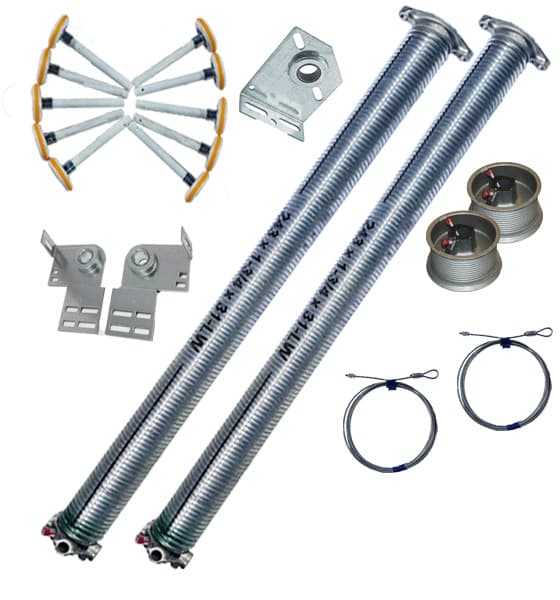
A lift cable runs from a bracket at each bottom corner of the door up to the spring system overhead. Clopay's installation manual warns: "Springs, cables, and bottom fixtures are under strong spring tension. Do not attempt to loosen any fasteners on these components. You could suddenly release spring forces and risk severe injury."[1] It adds: "The brackets at the bottom corners of your garage door are under great tension."[1]
On a door with torsion springs, the cable winds onto a drum on the spring shaft, so changing a cable means working next to a wound spring. Clopay says: "Attempting to remove a torsion spring assembly without proper training and tools may result in an uncontrolled release of spring forces which can cause serious or fatal injury."[1] That is why the manual tells owners to have a qualified door repair service handle that part.
What a technician does
You do not need the full procedure, but knowing the outline helps you judge a quote and a finished job.
Make the door safe. The technician first deals with the door's weight and the stored spring energy, using purpose-made tools. Clopay's manual warns: "The use of screwdrivers or any substitutes for winding bars will risk severe injury."[1] That is one more reason this is not a home job.
Fit the new cable correctly. A new cable is not just threaded into place. It has to be secured at the bottom bracket, seated properly on the drum and left with even tension on both sides. A cable that is bunched, crossed or off its groove wears out fast or slips.
Restore balance. Once both sides are fitted, spring tension is set so the door holds in place when stopped partway. The U.S. Consumer Product Safety Commission describes a properly operating door as "balanced," and says: "If doors are not "balanced," or if they bind or stick, they should be serviced by a professional."[2]
Look for the cause. A cable breaks for a reason: rust, fraying, a bent bracket, a worn drum or a door that jumped its track. Clopay warns: "If the garage door and/or any of the supporting track are damaged, operating the door could be hazardous."[1] Ask the technician to check both cables, both bottom brackets and the drums, and to tell you what they found. Many pros replace cables as a pair, so ask about it when you get the quote.
What to do until the pro arrives
Do not run the opener, and do not force the door up by hand. A door with one cable gone can tilt, jam or drop. Keep people and cars clear of the door and do not touch the cables, the bottom brackets or the springs. If the door is stuck open or closed, leave it that way and call.
When to call a licensed pro
Call as soon as you see a snapped, frayed or slack cable, a door hanging crooked, or a cable on the floor. On licensing, DPOR's hiring guide says: "If the work you are considering is valued at $1,000 or more, a valid Virginia Contractor’s License is required" for the category in which the contractor works.[3] Under Va. Code § 54.1-1100, Class C contractors work on single contracts over $1,000 but less than $30,000.[4] Many cable repairs come in below that, so ask any company for its licence number anyway and check the licence before you agree to the work.
DPOR advises getting at least three written bids or estimates using identical plans and specifications.[3] For a cable job that means asking each company to price the same things: both cables, the brackets, any drum or spring work, a balance check, and the parts warranty, in writing.
For prices, read how much it costs to replace a snapped garage door cable in Virginia. To understand the spring side of the system, see the difference between torsion and extension garage door springs. More background is in the garage door repair answers, and you can browse garage door repair businesses on Loclis.
When you are ready, describe the job once and licensed local pros will quote it.
Common questions
- Can I replace a garage door cable myself?
- This is a job for a trained technician. Clopay's manual says springs, cables and bottom fixtures are under strong spring tension, that you should not loosen fasteners on them, and that you could suddenly release spring forces and risk severe injury.
- Is it safe to open the door with one cable broken?
- Avoid it. A door held by one cable can tilt, bind or drop. Leave it where it is, keep people and cars clear and call a door technician.
- Are both cables replaced at the same time?
- Often, yes. Many companies replace both sides together, and a good technician checks both cables and both bottom brackets either way. Ask for this in the written quote.
- What else should the technician check?
- The U.S. Consumer Product Safety Commission says a door that binds, sticks or is not balanced should be serviced by a professional. Ask for a balance check, plus a look at the drums, brackets and track.
Sources
- [1] Clopay Aluminum Full Vision Residential Garage Door Installation and Maintenance Instructions, Clopay Building Products. Checked October 27, 2026.
- [2] Non-Reversing Automatic Garage Door Openers Are a Hazard (Publication 523), U.S. Consumer Product Safety Commission. Checked October 27, 2026.
- [3] What You Should Know Before You Hire a Contractor, Virginia Board for Contractors, DPOR. Checked October 27, 2026.
- [4] Va. Code § 54.1-1100, Definitions, Code of Virginia, Virginia General Assembly. Checked October 27, 2026.
Want a pro to handle it?
Describe the job once. Licensed local businesses send quotes, and you pay only when you book one.
Get a quote for Garage Doors