How do I keep garage door hinges from cracking?
Oil the hinges once a year, tighten any loose screws, wash the door a couple of times a year, and test its balance by hand every month so a weak spring does not overload the hinges. Replace a bent hinge early, one at a time. Leave springs, cables and bottom brackets to a door technician.
Free to ask. Local shops send quotes, and you pay only when you book one.
By Kasra Taheri, Founder, LoclisPublished
Researched and drafted with AI, then checked claim by claim against the sources listed below before it was published. Prices and rules change; the dates beside each source say when it was last checked.
Step by step
Read when to stop and call a pro, further down this page, before you start.
Step 1: Test the door every month
Close the door, detach the opener with the quick-release, and move the door up and down by its handle. If it is unbalanced or binds, call a door technician.[3]
Step 2: Look at the hinges
Check for loose or bent hinges on the face of the door, keeping hands clear of the section joints.[1]
Step 3: Tighten loose screws
Tighten screws on loose hinges, snug but not forced.[1]
Step 4: Oil the hinges each year
Put a drop of light household oil on each hinge pivot, and on the rollers and bearings.[1] Wipe off the excess.
Step 5: Leave the tracks dry
Do not grease the door tracks.[3]
Step 6: Wash the door
Wipe it down with a mild household detergent and rinse with clean water, more often if road salt builds up in winter.[1]
Step 7: Replace bent hinges early
A bent hinge is easier to replace than a cracked one. Replace one at a time with the door locked down.[1]
The short version
Four habits keep hinges from cracking: oil them once a year, tighten loose screws, test the door's balance by hand every month, and fix a bent hinge before it fails. None of it takes more than a few minutes. What it does not include is any work on springs, cables or the bottom corner brackets, which are a door technician's job.
Test the door every month
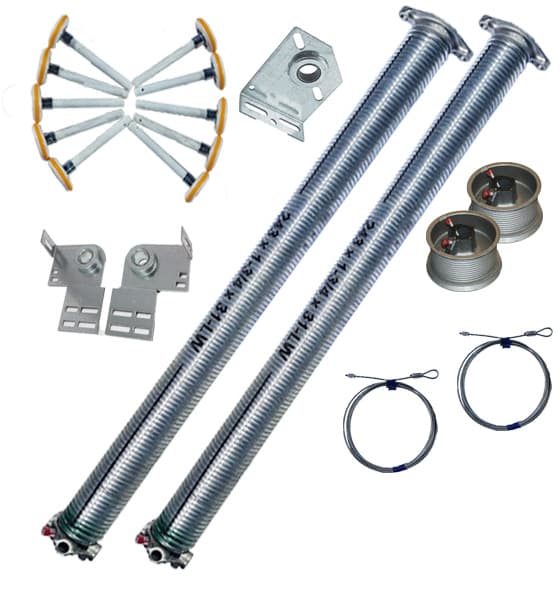
Hinges crack when the door asks too much of them, and the earliest sign is how the door moves. The CPSC says to inspect the garage door and the garage door opener every 30 days to make sure they are working properly.[2] LiftMaster's monthly check is simple: Manually operate door. If it is unbalanced or bind ing, call a trained door systems technician.[3]
A door that is out of balance or binds loads its hinges harder on every cycle. The CPSC adds: If doors are not "balanced," or if they bind or stick, they should be serviced by a professional.[2] Do not wait until a hinge shows a crack.
Look and tighten
Once a year, run through the hinges. Check for loose or bent hinges.[1] The remedy for a loose one is Tighten screws on loose hinges.[1] Go snug, not forced. Clopay also lists a wider check: Check the door and track supports for loose or missing bolts, screws, etc. Be careful not to over tighten.[1]
While you look, keep hands and fingers clear of section joints, track, and other door parts,[1] since the hinges are at those joints. A bent hinge is the one to act on early: Straighten or replace bent hinges.[1] See how to replace a broken garage door hinge for the method.
Oil them once a year
LiftMaster's yearly checklist reads: Oil door rollers, bearings and hinges.[3] Clopay's annual maintenance says to Lubricate all moving parts of the door with light household oil.[1]
A drop on each hinge pivot is enough. Wipe off the excess so it does not drip or collect dust. Skip the tracks: LiftMaster adds a warning, Do not grease the doors tracks.[3] The same visit is a good time to listen for squeaks, and how to make a garage door quieter covers the rest.
Wash the door
Dirt and road salt sit on the hardware as well as the panels. Clopay's manual says the door should be cleaned at least twice a year (normal environments) or 4 times a year (coastal environments).[1] The door may need to be cleaned more frequently if road salt accumulates in a winter climate.[1] The door should be wiped down with a mild household detergent and rinsed with clean water.[1]
Replace, never rush
When a hinge does need replacing, go slowly. Door must be locked and in the down position.[1] No more than one hinge is to be removed from the door at any given time.[1] The details are in the sibling answer above.
Stop and call a pro if
- The door is heavy, lurches or will not stay part-way open. That is a spring problem. Springs, cables, and bottom fixtures are under strong spring tension.[1] Do not attempt to loosen any fasteners on these components.[1]
- A hinge at a bottom corner is cracked or loose. The brackets at the bottom corners of your garage door are under great tension.[1]
- The door binds or sticks. The CPSC says it should be serviced by a professional.[2]
- Several hinges are cracking. Read why garage door hinges crack and ask a technician for a written quote.
Getting help in Virginia
For a door that is out of true, see how to keep garage door tracks aligned. Browse more garage door repair answers, or find pros under garage door repair on Loclis.
When you want a technician to do the check and the springs, describe what the door is doing and local garage door pros will quote it. Ask for the price in writing.
Common questions
- How often should I oil garage door hinges?
- Once a year is the manufacturers' schedule. LiftMaster's yearly list includes oiling the rollers, bearings and hinges, and Clopay's annual maintenance calls for light household oil on all moving parts. Wipe off any excess.
- Can I use grease or WD-40 on the hinges?
- The manufacturer sources here specify oil, and light household oil in Clopay's case. Keep lubricant off the tracks: LiftMaster says not to grease the door tracks. Whatever you use, wipe off the excess so it does not collect dirt.
- What else shortens the life of a hinge?
- A door that binds or is out of balance, and screws that have worked loose. All three put extra load on the hinges, which is why the monthly hand test and the yearly tighten-and-oil check are the routine.
- Does washing the door matter for the hinges?
- A little. Clopay says to clean the door at least twice a year, and more often where road salt builds up in winter. Dirt and salt stay on the hardware as well as the panels, so wipe the hinges when you wipe the door.
- Who should adjust the springs if the door feels heavy?
- A door technician. The brackets at the bottom corners and the springs and cables are under great tension. A heavy or unbalanced door is a reason to book a visit, not to loosen anything yourself.
Sources
- [1] Avante Garage Door Installation Instructions, Clopay Building Products. Checked October 28, 2026.
- [2] Non-Reversing Automatic Garage Door Openers Are a Hazard (CPSC publication 523), U.S. Consumer Product Safety Commission. Checked October 28, 2026.
- [3] LiftMaster Residential Maintenance, LiftMaster. Checked October 28, 2026.
Want a pro to handle it?
Describe the job once. Licensed local businesses send quotes, and you pay only when you book one.
Get a quote for Garage Doors