How do wildlife removal companies get animals out of an attic?
A good company inspects first to find the animal and every way in, then gets it out so it cannot return: usually a one-way exit, sometimes live traps, always checking for young. Virginia limits what comes next: a captured animal is released on your property, taken to a rehabilitator if injured, sick or orphaned, or humanely killed, with narrow exceptions for squirrels and snakes. Then the holes get sealed.
Free to ask. Local shops send quotes, and you pay only when you book one.
By Kasra Taheri, Founder, LoclisPublished
Researched and drafted with AI, then checked claim by claim against the sources listed below before it was published. Prices and rules change; the dates beside each source say when it was last checked.
This is a job for a licensed pro in Virginia
This page explains what the work involves, the permits, what a licensed pro does and what drives the cost. It does not give step-by-step instructions, because this work needs a licence, a permit or both, and doing it wrong can injure someone. Before you hire, check the licence on Virginia's DPOR record.
A wildlife removal company gets animals out of an attic in a set order. First it identifies the animal and finds every way in. Then it gets the animal out in a way that keeps it out, usually with a one-way exit, sometimes with live traps, and always with a check for young left behind. Virginia law limits what can happen to a captured animal afterwards, and the job is not finished until the holes are sealed and the mess is cleaned up.
Who does this work in Virginia
Two kinds of people trap wildlife for hire. Licensed trappers are authorized to capture certain game and furbearer species during open seasons, but they cannot transport live animals from your property.[1] Commercial Nuisance Animal Permit (CNAP) holders are authorized to trap most wildlife species at any time of the year and transport them offsite for humane dispatch at another location.[1] For an attic job, you almost always want a CNAP holder.
Do not count on a public agency to do it. In Virginia, local animal control agencies may handle nuisance wildlife calls at the discretion of local government, and most only have the staff for dogs and cats.[3] Paying for removal falls to the homeowner.
The inspection comes first
A good company spends the first visit working out what the animal is and how it gets in, because removing an animal without fixing the opening rarely lasts. Virginia Cooperative Extension's guiding principle is to find and fix the true underlying cause, because if nothing changes, another animal will respond to the same opportunity and soon replace the one removed.[5]
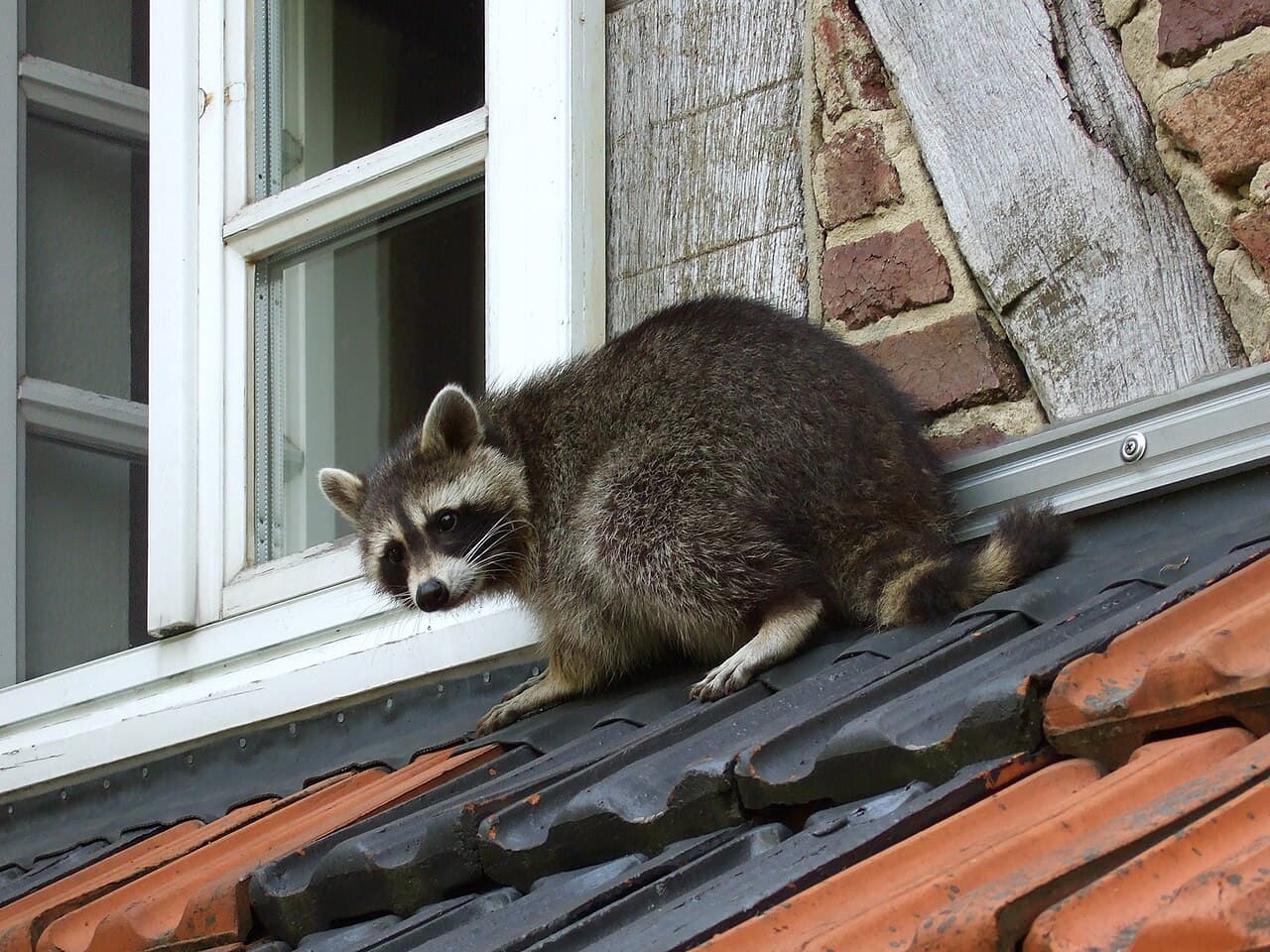
Expect questions about when you hear the noise. Flying squirrels are the most common squirrel in attics and are nocturnal.[4] Raccoons are nocturnal and weigh 10 to 30 pounds.[7] Bats leave at dusk, so a crew may watch the house at sunset to see where they come out. Outside, the inspector usually looks at soffits, gable vents, roof edges, chimneys and the spots where wires and pipes enter, and inside at droppings, nesting and torn insulation. If you are not sure what you have, start with what animal is living in my attic.
Getting the animal out
Most companies prefer exclusion: every opening but the main one is closed, and a one-way door or tube goes over that one, so animals can leave to feed and cannot get back in. For bats, the Virginia Department of Health describes exclusion tubes that let bats leave but make it unlikely they can re-enter, left in place until all bats are gone, typically 5 to 7 nights in warmer weather and longer in cold or bad weather.[6] The same idea is used for squirrels with metal one-way funnels.
Live traps are the other main tool, often used together with exclusion for raccoons and squirrels. Virginia sets the basic rules. Traps must be visited once each day and every animal caught removed, and a trap set on someone else's land must carry the trapper's name and address or a Department identification number.[10] Under the permit, a live animal may be held no more than 48 hours after it comes out of the trap, transport included.[2] Daily trap checks are one reason a trapping job takes several visits.
Young animals change the plan
Spring and summer jobs often involve babies. In Fairfax County, raccoons establish dens and give birth in April and May, and the young often den with their mother through the first winter.[7] Sealing a mother out with her young inside leaves orphans in the attic and an adult trying to tear back in. The Department of Wildlife Resources warns to make sure no young have been left inside before the hole is plugged.[4] A careful crew searches the attic for a nest, and where young are present it may remove them by hand or time the exclusion for when they are old enough to leave with the mother.
Bats have firm dates. DWR's permit conditions define the bat maternity season as May 1 to August 15 and bar excluding or removing bats during it except when no young bats are present or there is a threat to human health or safety.[2] The Virginia Department of Health advises doing bat exclusion before April and after August, and avoiding hibernation periods.[6] A company that offers to seal up a bat colony in July, without first confirming there are no young, is a red flag.
What happens to a captured animal
This is the question most homeowners do not think to ask. A permit holder has a short list of options: release on the curtilage of the building, delivery of an injured, sick or orphaned animal to a permitted wildlife rehabilitator, or humane dispatch on site or at another location.[2] Live translocation and release off site are prohibited, with two exceptions: in areas where firearms cannot be lawfully discharged, nuisance squirrels may be released on other property with that landowner's permission, and snakes may be translocated and released under certain conditions.[2] The legal side is covered in is it legal to trap and relocate wildlife in Virginia.
Rabies adds rules. An animal involved in a possible human or pet rabies exposure, or one that appears ill with signs that could be rabies, may not be released, and every incident of possible human or pet exposure must be reported to the local health department or animal control immediately.[2]
Sealing and cleanup
Once the animals are out, every gap gets closed with something they cannot chew through, and openings that must stay open, like chimneys and vents, get caps or screens. After the bats are gone, the health department's guidance is to seal exits larger than a quarter-inch by half-inch, and to add chimney caps, window screens and draft guards under attic doors.[6]
Cleanup matters as much as the repair. The Virginia Department of Health says an area with bird or bat droppings should be cleaned by a company that specializes in removal of hazardous waste, because the fungus that causes histoplasmosis grows in soil containing those droppings and its spores get into the air when disturbed.[9] Raccoon latrines and urine-soaked insulation are also usually removed rather than left. Repellents and deodorizers come with their own limit: the wildlife permit does not authorize the use of pesticides or chemical repellents; that takes certification as a commercial pesticide applicator or registered technician.[2]
When to call a licensed pro
Attic wildlife is a job for a permitted professional, not a weekend project. Call one when you hear animals overhead, find droppings or torn vents, or see an animal going in and out at the roofline. If bats are involved, call your local health department for advice if you wake up to find a bat in your room or see a bat in the room of an unattended child, and do not destroy or discard the bat.[8]
Before you hire, ask:
- for the company's Commercial Nuisance Animal Permit and the species it handles;
- whether it has the bat training DWR now requires, if bats are involved: since January 1, 2025, a permit holder who does bat work must also pass a bat-specific training course, except for exclusions done outside the maternity season with no bats in the building;[2]
- what it will do with each animal it catches, and how it checks for young;
- who does the repairs and cleanup, and whether that work is licensed.
That last point matters. Virginia's definition of a contractor covers repair or improvement of a building, including cleanup of contaminants, and a Class C licence covers single jobs over $1,000 but less than $30,000.[11] Residential contracting needs a legible written contract, signed by both sides before work starts or payment is taken.[12] Read how to check if a contractor is licensed in Virginia, see what wildlife removal costs in Virginia, browse wildlife removal businesses, find pest control businesses in Blacksburg, or read more pest control answers.
Describe what you are hearing in the attic and local wildlife control businesses can quote the removal and the repairs.
Common questions
- Do wildlife removal companies kill the animals?
- Sometimes. Under a Virginia Commercial Nuisance Animal Permit, an animal taken from a building can be released on that property, taken to a permitted rehabilitator if it is injured, sick or orphaned, or humanely killed. Apart from limited exceptions for squirrels and snakes, moving it to a park or the woods is not allowed. Ask each company what it plans for your animal before you hire.
- How long does it take to get animals out of an attic?
- It depends on the animal and the season. A one-way exit for bats usually stays up 5 to 7 nights in warm weather and longer in cold weather, according to the Virginia Department of Health. Traps are checked every day. Spring jobs can take longer when there are young in the attic.
- Will animal control remove a raccoon or squirrel from my attic?
- Usually not. In Virginia, local animal control may take wildlife calls at the local government's discretion, but most only have the staff for dogs and cats, and most help from the state wildlife agency is given by phone or email. Paying for removal is up to the homeowner.
- Can a company remove bats from my attic in summer?
- Generally no. DWR's permit conditions bar excluding or removing bats from May 1 to August 15 unless no young bats are present or there is a threat to health or safety, and the Virginia Department of Health advises excluding bats before April and after August.
- What happens after the animal is out?
- The entry points get sealed with sturdy material, chimneys and vents get caps or screens, and droppings and soiled insulation are cleaned up. Heavy bat or bird droppings should be handled by a company that specializes in hazardous waste removal, the Virginia Department of Health says.
Sources
- [1] Find a Licensed Trapper or Wildlife Control Specialist, Virginia Department of Wildlife Resources. Checked October 26, 2026.
- [2] Commercial Nuisance Animal Permit Information Materials and Conditions, Virginia Department of Wildlife Resources. Checked October 26, 2026.
- [3] Wildlife Among Us: Dealing With Neighborhood Wildlife Furbearers, Virginia Department of Wildlife Resources. Checked October 26, 2026.
- [4] Problems with Squirrels, Virginia Department of Wildlife Resources. Checked October 26, 2026.
- [5] Other Animals: Conflicts with Vertebrates (2026 Pest Management Guide, ENTO-634-H), Virginia Cooperative Extension, Virginia Tech. Checked October 26, 2026.
- [6] Methods for Bat Exclusion and Capture (Virginia Guidelines for Rabies Prevention and Control), Virginia Department of Health. Checked October 26, 2026.
- [7] Raccoon, Fairfax County, Virginia. Checked October 26, 2026.
- [8] Rabies fact sheet, Virginia Department of Health. Checked October 26, 2026.
- [9] Histoplasmosis fact sheet, Virginia Department of Health. Checked October 26, 2026.
- [10] Va. Code § 29.1-521, Unlawful to hunt, trap, possess, sell, or transport wild birds and wild animals except as permitted, Code of Virginia, Virginia General Assembly. Checked October 26, 2026.
- [11] Va. Code § 54.1-1100, Definitions, Code of Virginia, Virginia General Assembly. Checked October 26, 2026.
- [12] 18VAC50-22-260, Filing of charges; prohibited acts, Virginia Administrative Code, Board for Contractors. Checked October 26, 2026.
Want a pro to handle it?
Describe the job once. Licensed local businesses send quotes, and you pay only when you book one.
Get a quote from a local pro