What animal is living in my attic?
Start with when you hear it. Light scurrying at night usually means flying squirrels, though rats and mice sound similar; heavier thumps at night suggest a raccoon; noise at dawn and late afternoon fits gray squirrels; and small animals leaving the roofline at dusk are likely bats. The size of the entry hole and the droppings narrow it down, and a licensed wildlife pro can confirm.
Free to ask. Local shops send quotes, and you pay only when you book one.
By Kasra Taheri, Founder, LoclisUpdated
Researched and drafted with AI, then checked claim by claim against the sources listed below before it was published. Prices and rules change; the dates beside each source say when it was last checked.
This is a job for a licensed pro in Virginia
This page explains what the work involves, the permits, what a licensed pro does and what drives the cost. It does not give step-by-step instructions, because this work needs a licence, a permit or both, and doing it wrong can injure someone. Before you hire, check the licence on Virginia's DPOR record.
The quickest clue is when you hear it. Light scurrying at night usually means flying squirrels, rats or mice. Heavy thumps at night suggest a raccoon. Noise at dawn and late afternoon fits gray squirrels. Small animals leaving the roofline at dusk are most likely bats. The size of the way in, the droppings and the damage narrow it down from there, and a licensed wildlife pro can confirm before anything is sealed.
Start with when you hear it
Write down the times for a few days. It is the most useful thing you can tell a wildlife company.
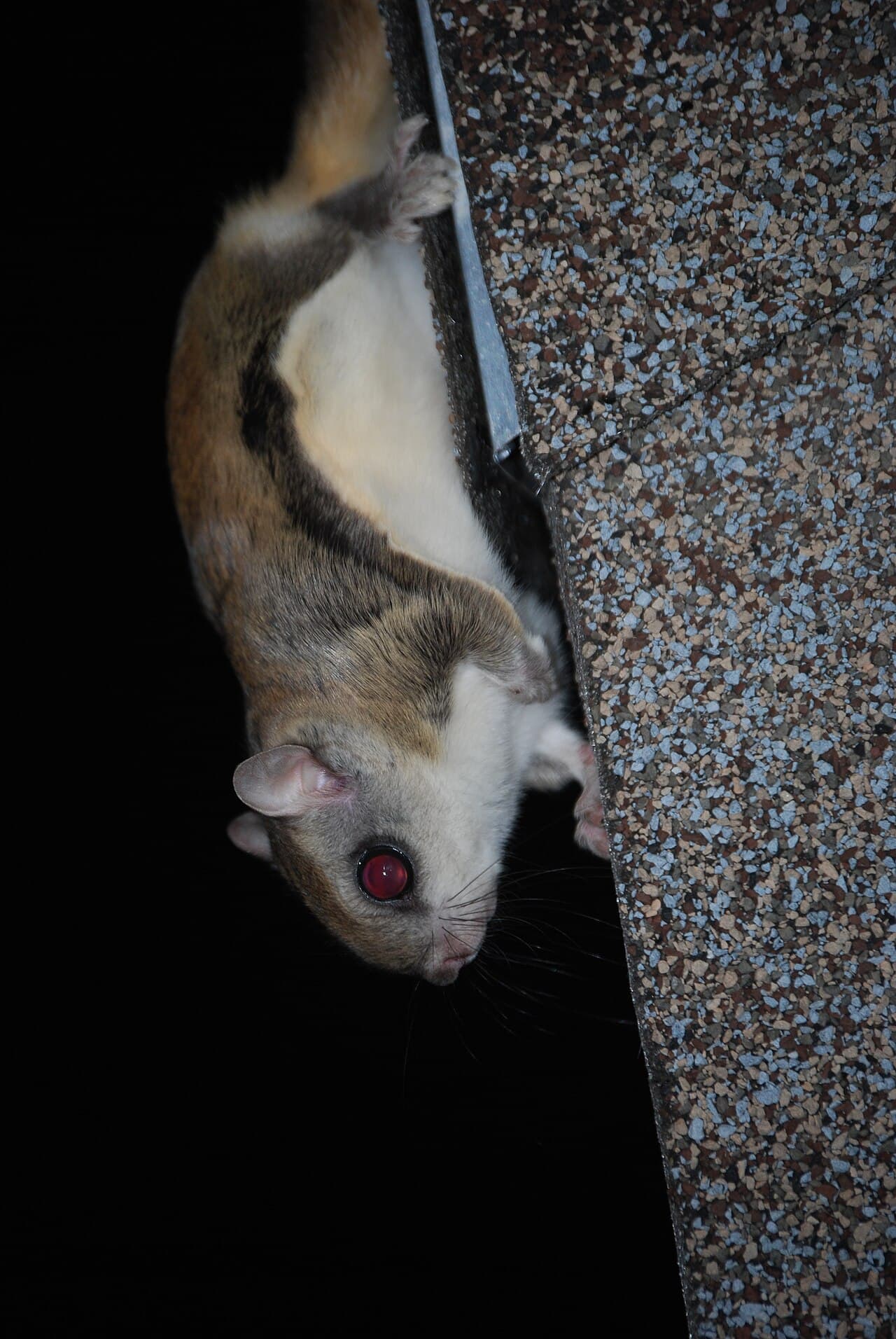
At night. The Virginia Department of Wildlife Resources names flying squirrels as the most common culprits in attics, and they are nocturnal.[1] Rats and mice can sound much the same, so the droppings and damage below help tell them apart. Raccoons are nocturnal and primarily active at night.[3]
Early morning and late afternoon. Fairfax County says squirrels are diurnal, with peak activity at dawn and late afternoon.[2] A noise that starts around sunrise, goes quiet midday and picks up again before dark is a classic gray squirrel pattern.
At dusk, outside. Bats are quiet in the attic but easy to see leaving. DWR's advice for finding them is watching the outside of the house from dusk until about a half-hour after sunset to see where bats leave as they go out to feed.[5]
How heavy it sounds
Size changes the sound. A raccoon is 2.5 to 4 feet long, nose to tail, and weighs 10 to 30 pounds, while a gray squirrel weighs 1 to 1.5 pounds.[3][2] Heavy walking, thumping and dragging overhead usually means a raccoon. Quick, light scratching and rolling sounds, like a nut across the floor, usually mean squirrels or rodents. Chirping or squeaking from one spot in spring can mean a nest of young; squirrels have 1 to 2 litters a year with 2 to 4 young per litter.[2]
Raccoons do not need an attic, and raccoons are usually drawn by food or an easy place to den, such as under porches and decks, in crawl spaces or in outbuildings.[4] When one is in the attic, there is often visible damage at the roofline where it got in.
The size of the way in
From the ground, look at soffits, gable vents, roof edges, the chimney and any place where a pipe or wire enters the house. Binoculars help. Do not climb onto the roof to look.
Small openings point to small animals. Holes chewed through walls and floors are one of the signs the Environmental Protection Agency lists for rats and mice.[6] The Norway rat, the roof rat and the house mouse, all non-native, are among the rodents that become pests when they infest houses.[7]
A round hole with chewed edges, often at a corner of the roofline or beside a vent, usually means squirrels. Torn vent covers, lifted shingles or a pulled-back soffit panel usually point to a raccoon. Narrow gaps along the roofline with dark staining around them often point to bats.
What they leave behind
Bats have particular habits worth knowing. The big brown bat, evening bat, little brown bat and Brazilian free-tailed bat are the four Virginia species most likely to take up residence in a building.[5] From May through August, bats may have young still present in the space they use.[5] A pile of small dark droppings building up under one spot is a common sign of a roost.
Rodents leave a trail. EPA lists the signs to look for: droppings, nesting material such as shredded paper, fabric or dried plant matter, signs of chewing, and stale smells coming from hidden areas.[6] Rodent-borne diseases can reach people through bites and through food, water or dust contaminated by rodent droppings and other waste.[7]
Look from the attic hatch rather than crawling through. Bat droppings can harbor the spores of the fungus that causes histoplasmosis, and DWR says a large buildup should be cleaned up by a professional.[5] The Virginia Department of Health says the fungus grows best in soil that contains bird or bat droppings, and its spores get into the air if contaminated soil is disturbed and are then breathed in.[9]
Signs to act on now
Some findings should not wait:
- Chewed wiring. Have an electrician look at any wiring an animal has chewed before anyone works around it.
- A bat in the living space. The Virginia Department of Health says if you wake up to find a bat in your room, or see one in the room of an unattended child, do not destroy or discard the bat, and call your local health department for advice.[8]
- An animal that looks sick. Seeing a raccoon during the day is not by itself a sign of rabies, but the Department of Wildlife Resources says to contact your local health department if one shows signs such as stumbling, foaming at the mouth or aggression.[4]
- Water stains or daylight at the roof deck where an animal got in, which can mean a roof leak as well.
Do not seal the hole yet. If an animal or a litter is still inside, sealing traps it or sends the mother tearing back in somewhere else.
When to call a licensed pro
Call a permitted wildlife control operator once you have a likely suspect, or sooner if you see any of the signs above. DWR's Trapper Finder Tool lists licensed trappers and Commercial Nuisance Animal Permit holders near you and the species each is willing to trap.[10] Tell the company what you heard and when, and where you saw the entry. For what happens next, read how wildlife removal companies get animals out of an attic and what wildlife removal costs in Virginia.
The repairs afterwards are building work. Virginia's definition of a contractor covers repair or improvement of a building, including cleanup of contaminants, and a Class C licence covers single jobs over $1,000 but less than $30,000.[11] Check any licence with how to check if a contractor is licensed in Virginia. Browse wildlife removal businesses, find pest control businesses in Blacksburg, or read more pest control answers.
Tell us what you are hearing and when and local wildlife control businesses can quote an inspection.
Common questions
- What animal makes noise in the attic at night?
- Most often flying squirrels, which the Virginia Department of Wildlife Resources names as the most common attic squirrel and which are nocturnal. Raccoons are also active at night, and rats and mice can make similar scurrying sounds. Light, quick scurrying points to the small animals; heavy thumps and dragging sounds point to a raccoon, which can weigh 10 to 30 pounds.
- What animal is in my attic during the day?
- Usually gray squirrels. Fairfax County notes that gray and fox squirrels are active by day, with peak activity at dawn and late afternoon. Noise that starts around sunrise and again before dark, with quiet nights, fits a squirrel better than a raccoon or rodent.
- How can I tell if I have bats in the attic?
- Watch the outside of the house at dusk until about half an hour after sunset. Bats leaving from a gap at the roofline or eaves to feed is the clearest sign. Small dark droppings piling up below one spot in the attic is another. Do not disturb large piles of droppings; they can carry histoplasmosis spores.
- Is it dangerous to have an animal in the attic?
- It can be. EPA says rodent-borne diseases can reach people through bites and through food, water or dust contaminated by droppings. Bat droppings can carry histoplasmosis spores. Raccoons and bats can carry rabies, so do not handle them, and call your local health department if you wake up to find a bat in your room or see one in the room of an unattended child. Have an electrician check any chewed wiring.
- Should I seal the hole as soon as I find it?
- Not until you know nothing is inside. Sealing an animal in, or sealing out a mother with young inside, makes the problem worse. Squirrels have 1 to 2 litters a year, raccoons give birth in spring, and bats may have young from May through August, so let a wildlife pro confirm the attic is empty first.
Sources
- [1] Problems with Squirrels, Virginia Department of Wildlife Resources. Checked October 26, 2026.
- [2] Squirrel, Fairfax County, Virginia. Checked October 26, 2026.
- [3] Raccoon, Fairfax County, Virginia. Checked October 26, 2026.
- [4] Problems with Raccoons, Virginia Department of Wildlife Resources. Checked October 26, 2026.
- [5] Problems with Bats, Virginia Department of Wildlife Resources. Checked October 26, 2026.
- [6] Identify and Prevent Rodent Infestations, U.S. Environmental Protection Agency. Checked October 27, 2026.
- [7] About Rats and Mice, U.S. Environmental Protection Agency. Checked October 27, 2026.
- [8] Rabies fact sheet, Virginia Department of Health. Checked October 26, 2026.
- [9] Histoplasmosis fact sheet, Virginia Department of Health. Checked October 26, 2026.
- [10] Find a Licensed Trapper or Wildlife Control Specialist, Virginia Department of Wildlife Resources. Checked October 26, 2026.
- [11] Va. Code § 54.1-1100, Definitions, Code of Virginia, Virginia General Assembly. Checked October 26, 2026.
Want a pro to handle it?
Describe the job once. Licensed local businesses send quotes, and you pay only when you book one.
Get a quote from a local pro