How does virtual interior design work?
You send a designer photos, measurements and your goals online, usually through a questionnaire and a video call. They return a plan: a layout, a colour palette and a shopping list you buy and place yourself. It suits furniture, colour and decor. Anything that moves walls, plumbing or wiring still needs a licensed contractor.
Free to ask. Local shops send quotes, and you pay only when you book one.
By Kasra Taheri, Founder, LoclisPublished
Researched and drafted with AI, then checked claim by claim against the sources listed below before it was published. Prices and rules change; the dates beside each source say when it was last checked.
Step by step
Read when to stop and call a pro, further down this page, before you start.
Step 1: Decide what the room is for
Write down who uses the room, what it must do, your budget and what you already own and want to keep.
Step 2: Measure the room
Measure wall lengths, ceiling height, windows, doors and the swing of each door, and sketch the room with the measurements on it.
Step 3: Photograph every wall
Take photos from each corner in daylight and again with the lights on, so the designer can judge light and colour.
Step 4: Choose a designer and a package
Compare portfolios and ask exactly what the fee includes, how many revisions you get and whether shopping lists are included.
Step 5: Check any title or licence they claim
If a designer calls themselves a certified interior designer, ask for their certification details and verify them with the state Board.[1]
Step 6: Review the plan against your measurements
Check each piece in the plan against your sketch, including doorways and stairs the furniture must pass through.
Step 7: Test colours with real samples
Look at paint samples on the wall in your own light before buying paint.[4]
Step 8: Buy and place in stages
Order the largest pieces first, check their return policies, and set them out before you buy the smaller items.
Step 9: Hire a licensed contractor for any building work
If the plan involves building work valued at $1,000 or more, DPOR says a valid Virginia contractor's license is required, so ask for the licence number and check it with DPOR.[3]
The short version
Virtual interior design swaps the home visit for photos, measurements and a video call. You describe the room and your goals, the designer works from what you send, and you get back a plan: a layout, colours, furniture and lighting suggestions, often with a shopping list. You buy and set everything up yourself, or with local help.
It works best for decisions that live on the surface of a room: furniture, paint, rugs, curtains, lighting and styling. It does not replace anyone who has to stand in your house and cut, wire or plumb.
The usual process
Most virtual designers follow the same arc, whatever they call the packages.
1. Intake. You fill in a questionnaire about how you use the room, your budget, your style and what you already own. Some designers add a short call.
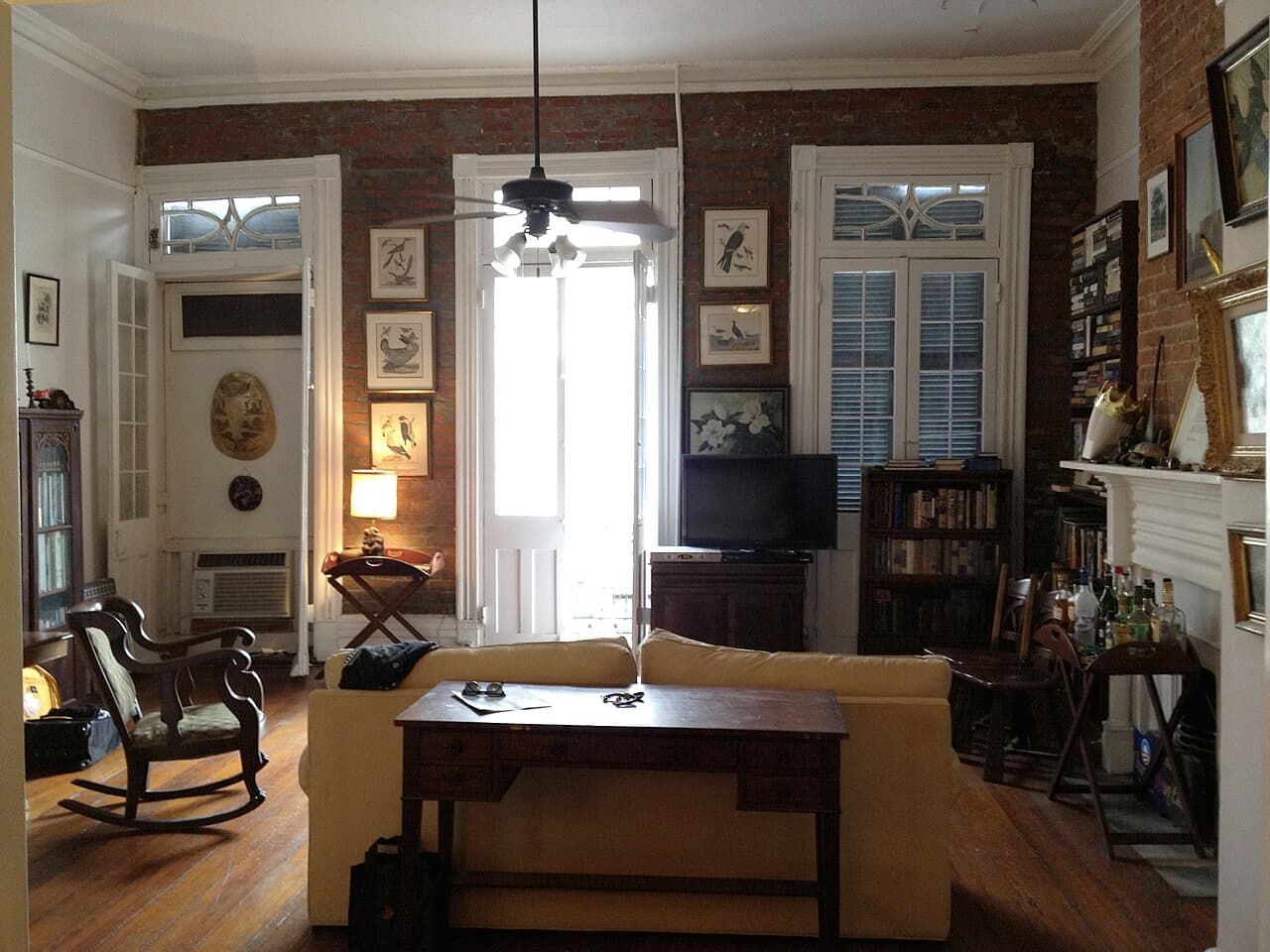
2. Your homework. You send the room's measurements, a rough sketch, and photos of every wall in different light. Include the windows, the floor, the ceiling and any awkward corner. This is the part that decides how good the plan is. A designer cannot tell that a doorway is 28 inches wide unless you tell them.
3. The concept. You receive a mood board or a concept: palette, materials, style direction. This is the moment to say what you hate.
4. The plan. A scaled layout shows where furniture goes, with product choices, sizes and links. Lighting, rugs, window treatments and wall colour are usually included.
5. Revisions. Packages differ in how many rounds of changes they allow, so ask before you buy.
6. Carrying it out. You order, assemble and arrange. Some designers answer questions during this stage, others stop when the plan is delivered.
Paint companies run a small version of the same thing. Sherwin-Williams offers a free 30-minute virtual color consultation that you book online, with a slot by text, email, phone or video chat.[4] In the company's description, you send photos of your space, meet the consultant one-on-one online, and get a custom color palette and tips by email.[4] That is a useful model for what to expect from any remote service: your photos in, a written plan out.
What it does well, and where it falls short
Virtual design is good when you want a professional eye without paying for visits, and when you are comfortable ordering and arranging pieces yourself. It is a clean fit for a living room, a bedroom or a home office.
It is weaker where the room itself has to change. A designer on a screen cannot check whether a wall is load-bearing, whether a floor is level, or what is behind the drywall. And colour on a screen is never exact. Always look at real samples on your own wall in your own light before you commit to paint or fabric.
What Virginia does and does not regulate
Virginia does not require a licence to give design advice. The Code of Virginia says its interior design chapter does not restrict an uncertified interior designer, architect, engineer or any other person from rendering the services that make up the practice of interior design.[1] So a virtual designer does not need state approval to sell a layout and a shopping list.
One thing is protected: the title. No person may hold himself out as, or use the title of, "certified interior designer" unless he has been so certified.[1] If a designer uses it, ask for their certification details and check with the state Board. If they do not use it, that tells you nothing about their skill. Look at their portfolio instead, and ask to speak with a past client.
When the plan includes building work
Design plans often lead to construction: a new vanity, moved outlets, a removed wall. The designer's plan is not the job. The work needs a contractor with the right licence. No person shall engage in, or offer to engage in, contracting work in the Commonwealth unless he has been licensed.[2]
DPOR's guide says if the work is valued at $1,000 or more, a valid Virginia Contractor's License is required for the license category in which the contractor is to work.[3] DPOR's guide says unlicensed contracting is against the law and that, if you contract with someone who does not hold a license, the Board for Contractors may not be able to help you resolve a complaint.[3] A license number in an advertisement or on a business card does not necessarily mean the contractor's license is valid.[3] Look the number up yourself on DPOR's site.
For the contractor side, DPOR advises getting at least three written bids or estimates using identical plans and specifications.[3] Hand each contractor the same plan from your designer, so the bids can be compared. DPOR's rule of thumb for a down payment on a home improvement job is no more than 10% of the total price or $1,000, whichever is less.[3]
Stop and call a pro if
- The plan moves or removes a wall. Structure is for a licensed professional, and your local building office will tell you what a permit needs.
- The plan relocates plumbing, outlets, switches or light fixtures. DPOR's guide says contractors hold general or specialty licenses, with plumbing as one example.[3]
- A designer offers to run the construction but gives no contractor licence number. Do not pay until you have checked the number with DPOR.
- The designer asks for the full fee or a large deposit for building work before anything starts. Compare that with the deposit guidance above.
- You find water damage, mould or old wiring while preparing the room. Fix the problem before you decorate over it.
Getting help in Virginia
If you are weighing the cost and the credentials, read how much an interior designer costs in Virginia and whether interior designers need a licence in Virginia. For a quick win before any plan arrives, see how to make a small room look bigger. Browse interior design on Loclis, or more interiors answers.
When you are ready, describe your project and licensed local pros can quote it.
Common questions
- What do I get from a virtual interior designer?
- Usually a plan you carry out yourself: a furniture layout, a colour palette, lighting and decor ideas, and a shopping list with links. The exact deliverables differ by designer, so ask what is in the package and how many revisions you get before you pay.
- What does the designer need from me?
- Photos of every wall, a sketch with measurements, the size and position of windows and doors, your budget, and a few images of rooms you like. The more accurate the measurements, the fewer returns you make.
- Does a virtual designer need a licence in Virginia?
- No licence is needed to offer interior design services. The Code of Virginia says its interior design chapter does not restrict an uncertified interior designer, architect, engineer or any other person from rendering those services. Only the title "certified interior designer" is protected.
- Can a virtual designer manage construction for me?
- Only if they hold a Virginia contractor licence. No person shall engage in, or offer to engage in, contracting work in the Commonwealth unless he has been licensed. Ask for the licence number and check it with DPOR.
- How much should I pay up front?
- For a design fee, agree the scope and payment schedule in writing. For building work, DPOR's rule of thumb is a deposit of no more than 10% of the total price or $1,000, whichever is less.
Sources
- [1] Va. Code § 54.1-412. Applicability (interior designers), Code of Virginia, Virginia General Assembly. Checked October 27, 2026.
- [2] Va. Code § 54.1-1103. Necessity for license, Code of Virginia, Virginia General Assembly. Checked October 27, 2026.
- [3] What You Should Know Before You Hire a Contractor, Virginia Board for Contractors, DPOR. Checked October 27, 2026.
- [4] Free Virtual Color Consultation, Sherwin-Williams. Checked October 27, 2026.
Want a pro to handle it?
Describe the job once. Licensed local businesses send quotes, and you pay only when you book one.
Get a quote from a local pro