How do I make a small room look bigger?
Clear the floor and the window first, then work on light. Keep curtains off the glass, pick a pale, low-contrast wall colour, add layered lamps in one warm colour of white, and use a mirror to bounce light. Favour a few slim pieces on legs over many bulky ones. None of this needs a permit or an electrician.
Free to ask. Local shops send quotes, and you pay only when you book one.
By Kasra Taheri, Founder, LoclisPublished
Researched and drafted with AI, then checked claim by claim against the sources listed below before it was published. Prices and rules change; the dates beside each source say when it was last checked.
Step by step
Read when to stop and call a pro, further down this page, before you start.
Step 1: Clear the floor
Take out everything that is not used weekly, and keep the walkway from the door to the window open.
Step 2: Free the window
Hang curtains on a rod that sits wide of the frame so the glass stays uncovered, and move tall furniture away from the window.
Step 3: Pick one pale colour family
Paint or style walls, trim and curtains in close shades so the eye does not stop at edges.
Step 4: Layer the lighting
Add a table or floor lamp in each dark corner, all in the same colour of white light.[1]
Step 5: Hang a mirror
Place one large mirror on the wall facing or beside a window, and anchor it to the wall with hardware rated for its weight.
Step 6: Choose slim furniture
Swap bulky pieces for ones with visible legs, thin arms and a lower back, so you can see floor beneath and behind them.
Step 7: Keep one focal point
Leave one wall for a single piece of art or a bookcase and keep the others plain.
Start with the floor and the window
A small room looks smaller mainly because of clutter and shadow, so the fastest gains come from clearing space and letting in light. Take out everything that is not used weekly. Keep an open path from the door to the window, because a clear line of sight across the room does more than any paint colour.
Then free the window. Hang curtains on a rod set wide of the frame so they sit beside the glass, not over it, and move tall furniture away from the window. Daylight is the cheapest way to make a room feel larger.
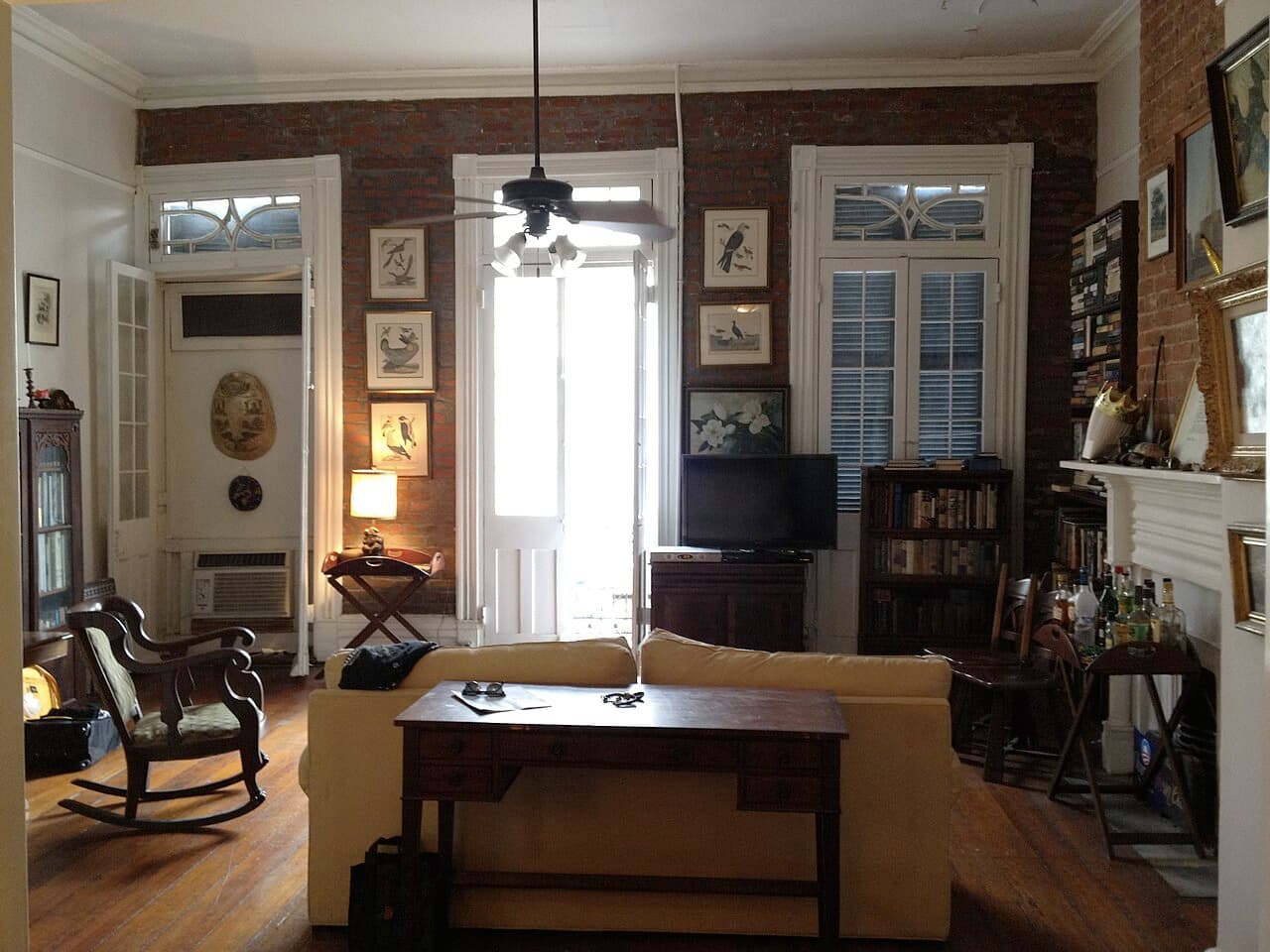
Keep the colours close
Paint walls, trim and curtains in close shades of one pale family. The eye then reads fewer edges and the room feels like one volume. If you want contrast, add it in small things such as a cushion, a book spine or a picture, not in big blocks.
If you paint and your home was built before 1978, read the warning below first. EPA says a renovation, repair or painting project in a pre-1978 home that has lead-based paint can easily create dangerous lead dust, and that a home built before 1978 may have lead-based paint.[3]
Layer the light
One ceiling fixture lights a small room flatly and leaves the corners dark, which makes the walls feel closer. Add a table or floor lamp to each dark corner and aim some light up at a wall or the ceiling. All the plug-in lamps you need are available without touching the wiring.
Choose one colour of white for the whole room. ENERGY STAR says lower Kelvin numbers make light look more yellow, or warmer, and higher Kelvin numbers make it look whiter or bluer.[1] ENERGY STAR says some downlights match the yellowish light of incandescent bulbs at 2200-3000K, with 3500-4100K for a whiter light and 5000-6500K for bluer white light.[1] The number is printed on the bulb or the box. Mixing colours in one room looks patchy, so buy the same number for every lamp.
Use a mirror on purpose
A mirror doubles whatever it faces. Put one large mirror on the wall facing or beside a window, so it bounces daylight deeper into the room. Avoid hanging it where it only reflects a dark corner or a pile of storage. Large mirrors are heavy, so use hanging hardware rated for the weight and anchor it into the wall properly.
Pick slim furniture and fewer pieces
Furniture with visible legs, thin arms and a low back lets you see the floor and wall behind it, which makes the room read as larger. A sofa that sits on legs looks lighter than a skirted one the same size. A few well-sized pieces nearly always look better than many small ones, so measure the room and each piece before you buy, and leave a clear path through the middle.
Use the vertical space. A tall, narrow bookcase or shelves above a door take storage off the floor. Keep one wall for a single focal point, such as one large piece of art, and leave the others plain.
Stop and call a pro if
- The idea involves a wall. Taking out or opening a wall is construction. Virginia's building code requires a permit before work that removes or adds any wall, partition or portion of one, alters any structural component, or involves electric wiring.[4] Hire a licensed contractor and ask the building office before anyone cuts anything.
- You want ceiling lights where there are none. ENERGY STAR says that if you do not have existing overhead lighting, you will likely need to add wiring to connect a new fixture to the electrical panel, and that is generally a job for an electrician.[2]
- The house was built before 1978 and the walls need sanding or scraping. Dust from disturbed old paint can contain lead. EPA recommends hiring a lead-safe certified contractor for projects that disturb paint in these homes.[3]
- You find a stain, soft drywall or a musty smell while moving furniture. That is a moisture problem, and it needs fixing before any decorating.
Getting help in Virginia
If you would like a second pair of eyes, read how much an interior designer costs in Virginia and whether interior designers need a licence in Virginia. You can also browse interior design pros on Loclis and more interiors answers.
When you are ready, describe the room and designers can quote it.
Common questions
- Do light colours really make a room look bigger?
- Usually, yes. Pale walls reflect more of the light a small room has, and walls, trim and curtains in close shades give the eye fewer edges to stop at. A dark colour can still work in a room that is used mostly at night, but it will not make the room feel larger.
- Where should I hang a mirror in a small room?
- On the wall facing a window or beside it, so it bounces daylight into the room rather than reflecting a dark corner. Use hanging hardware rated for the mirror's weight and anchor it properly, because a large mirror is heavy.
- Should I use warm or cool light bulbs in a small room?
- Pick one colour of white and use it everywhere in the room. ENERGY STAR lists 2200-3000K as matching the yellowish light of incandescent bulbs and 3500-4100K as whiter light. Mixing the two makes a room look patchy and smaller.
- Is it worth taking out a wall to make a room bigger?
- That is a construction project, not a decorating one. Virginia's building code requires a permit before work that removes or adds any wall, partition or portion of one, and a wall may carry load. Start with the cheap changes in this guide, and ask a licensed contractor about the wall only if the room still does not work.
- What furniture works best in a small room?
- Pieces with visible legs, slim arms and low backs, because you can see floor and wall behind and beneath them. A few well-sized pieces nearly always look bigger than many small ones. Measure the room and the furniture before you buy, and leave a clear path through the middle.
Sources
- [1] Light Fixtures (Downlights), ENERGY STAR, U.S. Environmental Protection Agency. Checked October 27, 2026.
- [2] How to Choose and Install Recessed Lighting, ENERGY STAR, U.S. Environmental Protection Agency. Checked October 27, 2026.
- [3] Renovation, Repair and Painting Program: Do-It-Yourselfers, U.S. Environmental Protection Agency. Checked October 27, 2026.
- [4] 13VAC5-63-80. Section 108 Application for permit (Virginia Uniform Statewide Building Code), Virginia Administrative Code, Virginia General Assembly. Checked October 27, 2026.
Want a pro to handle it?
Describe the job once. Licensed local businesses send quotes, and you pay only when you book one.
Get a quote from a local pro