How does whole-home audio work?
Whole-home audio sends music to several rooms at once. Wireless speakers join your Wi-Fi and take orders from a phone app, while a wired system uses a central amplifier and speaker wire to in-wall or in-ceiling speakers. Plug-in wireless is a safe DIY job; cable inside walls is not.
Free to ask. Local shops send quotes, and you pay only when you book one.
By Kasra Taheri, Founder, LoclisPublished
Researched and drafted with AI, then checked claim by claim against the sources listed below before it was published. Prices and rules change; the dates beside each source say when it was last checked.
Step by step
Read when to stop and call a pro, further down this page, before you start.
Step 1: Choose your design
Decide between plug-in wireless speakers and a wired system with a central amplifier; wireless needs no wall work.
Step 2: List the rooms
Write down every room you want music in and whether you want the same song everywhere or different songs.
Step 3: Check your Wi-Fi
Walk the house with a phone and note rooms where the signal is weak, since wireless speakers rely on the network.
Step 4: Place the speakers
Put each speaker near an outlet, off the floor if you can, and away from corners that make bass boom.
Step 5: Join them to your network
Plug each speaker in and add it to your Wi-Fi in the maker's app.
Step 6: Group the rooms
Use the app to group rooms for one song or ungroup them for different songs.
Whole-home audio puts one music source in several rooms at once, or a different song in each. It works in one of two ways: wireless speakers that join your Wi-Fi network and are controlled from a phone app, or a wired system with a central amplifier and speaker wire running to in-wall or in-ceiling speakers. Most people can set up the wireless kind themselves.
The two designs
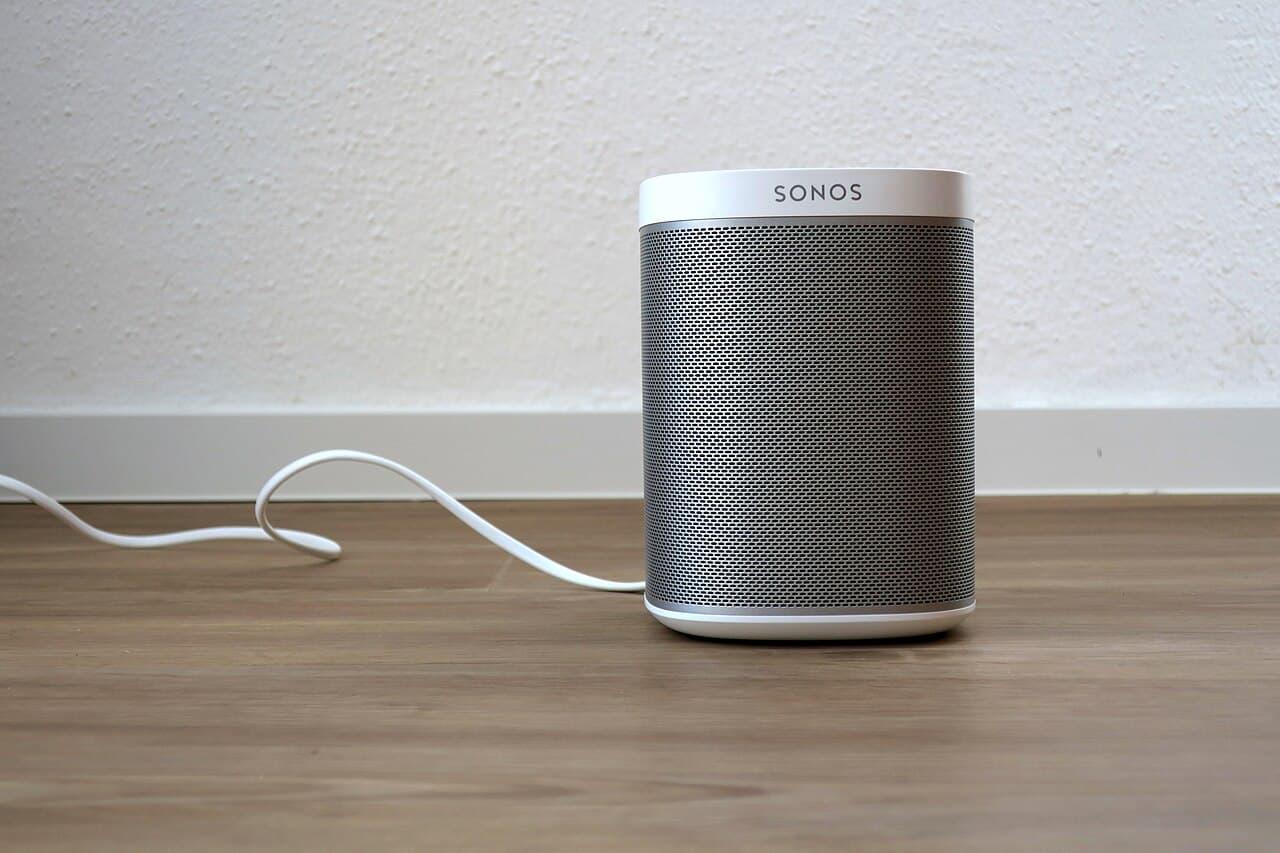
Wireless (networked) speakers. Each speaker has its own amplifier and plugs into a wall outlet. It connects to your home network, and an app on your phone tells each speaker what to play. Because they sit on the network, you can group rooms to play the same song or split them to play different ones. Adding a room means buying one more speaker and plugging it in.
Wired (central amplifier) systems. A multi-zone amplifier or receiver sits in a closet, rack or media cabinet. Speaker wire runs from it to a pair of speakers in each room, usually in the ceiling or wall, and often to a keypad or app for each zone. The sources, such as a streaming player or a TV, plug into the amplifier. A wired system looks tidy, but the cable has to be routed through the house, which is the expensive part.
Many homes mix the two: a wired system in the main living areas and a plug-in speaker in a bedroom or garage.
What every system needs
- Sources. A phone, streaming service, TV or turntable feeding the system.
- Amplification. Inside each wireless speaker, or in one central box for a wired system.
- Speakers. Free-standing, or built into walls and ceilings.
- Control. An app, remote or wall keypad for choosing the source, the rooms and the volume.
- A solid home network. Wireless speakers depend on it. If rooms drop out, the fix is often better Wi-Fi coverage; how to get good Wi-Fi in every room of the house covers it.
What the wiring involves in Virginia
Speaker wire is low-voltage wiring. Virginia's building code lists among the work that needs no permit the installation of wiring and equipment that (i) operates at less than 50 volts,[1] but not when it is "located in a plenum, penetrate fire rated or smoke protected construction."[1] That exception matters for in-wall runs, so ask your locality if the cable will pass through fire-rated construction or a plenum space.
Running cable inside walls is a different job from placing speakers. It means drilling through framing, fishing wire past insulation and house wiring, and patching drywall. How to run Ethernet cable through walls describes the same challenge for network cable.
On licences, DPOR's consumer guide says that if the work is valued at $1,000 or more, a valid Virginia contractor's license is required for the license category.[2] Virginia's specialty definition covers the installation, repair, improvement, or removal of electronic or communications systems annexed to real property including telephone wiring, computer cabling, sound systems.[3] That includes a contractor who installs a wired audio system.
Stop and call a pro if
- The plan means cutting into walls or ceilings to run cable or mount speakers.
- Any cable would pass through fire-rated construction or a plenum. The permit exemption does not cover it.
- You need a new outlet or circuit for an amplifier or rack. That is electrical work.
- The job is valued at $1,000 or more. Virginia then requires a licensed contractor.
- Rooms keep dropping out and better Wi-Fi does not fix it.
Getting help in Virginia
For prices, read how much whole-home audio costs in Virginia, and for deciding who does what, should I hire an audio installer for in-ceiling speakers. Browse security and smart home answers or Security & Smart Home pros.
When you want a wired system, describe your whole-home audio job once and licensed local pros quote it.
Common questions
- Do I need to wire my house for whole-home audio?
- No. Wireless speakers need only an outlet and a Wi-Fi network. Wiring is for people who want hidden speakers or a central amplifier.
- Can I play different music in different rooms?
- Yes, on most systems. Wireless speakers can be grouped for one song or split, and a wired multi-zone amplifier sends a source to each zone separately.
- Does speaker wire need a permit in Virginia?
- Virginia's building code lists wiring and equipment that operates at less than 50 volts among the work that does not need a permit, but not when it runs through a plenum or penetrates fire-rated construction. Ask your locality.
- Do I need a licensed contractor to install whole-home audio?
- If the work is valued at $1,000 or more, Virginia requires a valid contractor's license for the license category. Sound-system installation falls within the electronic and communications specialty.
- Why do my wireless speakers drop out?
- Weak Wi-Fi coverage is a common cause. Improve coverage in the affected rooms before replacing speakers.
Sources
- [1] 13VAC5-63-80, Section 108 Application for permit (Virginia Uniform Statewide Building Code), Virginia Administrative Code, Virginia General Assembly. Checked October 27, 2026.
- [2] What You Should Know Before You Hire a Contractor, Virginia Board for Contractors, Department of Professional and Occupational Regulation. Checked October 27, 2026.
- [3] 18VAC50-22-30, Definitions of specialty services (Board for Contractors Regulations), Virginia Administrative Code, Board for Contractors. Checked October 27, 2026.
Want a pro to handle it?
Describe the job once. Licensed local businesses send quotes, and you pay only when you book one.
Get a quote from a local pro