How long does roof flashing last?
There is no single figure: flashing life depends on the metal, the sealant, the roof it sits on and the installation. Metal flashing can outlast the shingles, while rubber vent collars and sealant joints wear out sooner. Have flashing checked twice a year, and ask a licensed roofer which pieces to renew when the roof is replaced.
Free to ask. Local shops send quotes, and you pay only when you book one.
By Kasra Taheri, Founder, LoclisPublished
Researched and drafted with AI, then checked claim by claim against the sources listed below before it was published. Prices and rules change; the dates beside each source say when it was last checked.
This is a job for a licensed pro in Virginia
This page explains what the work involves, the permits, what a licensed pro does and what drives the cost. It does not give step-by-step instructions, because this work needs a licence, a permit or both, and doing it wrong can injure someone. Before you hire, check the licence on Virginia's DPOR record.
No source we checked gives one lifespan for roof flashing, because it depends on the metal, the sealant, the roof it sits on and how it is installed. Metal flashing can outlast the shingles around it. Rubber pipe collars and sealant joints tend to wear out sooner. The practical rule is to inspect flashing twice a year and plan to renew it whenever the roof covering is replaced.
What decides how long flashing lasts
- The material. Flashing is thin metal or roll roofing. Metals differ in how they resist corrosion, and the right choice depends on the roof covering. Ask a roofer to name the metal and gauge in a written quote rather than saying "flashing".
- Sealant versus lapped metal. Flashing that depends on caulk or roofing cement is only as good as that bead. VELUX describes its skylight flashing as designed to shed water without relying on sealants that can break down over time.[2] A joint held together with surface sealant needs rechecking far more often than a well-lapped metal joint.
- Rubber parts. Plumbing vent boots have rubber collars that sit in the sun. They often crack before the metal does. See why a plumbing vent boot leaks.
- Installation. Flashing that is tucked in correctly with the shingles above and below it keeps shedding water. A poorly lapped piece can leak within a season.
- Exposure. Coastal salt air, heavy shade that stays damp, steep wind-driven rain and clogged gutters all shorten the life of the metal. For galvanized steel roofing, the USDA Forest Service says to expect fewer years in coastal climates.[1]
- Movement. Chimneys, walls and dormers settle and flex slightly. Cracked mortar or lifted counterflashing is usually where a joint opens first.
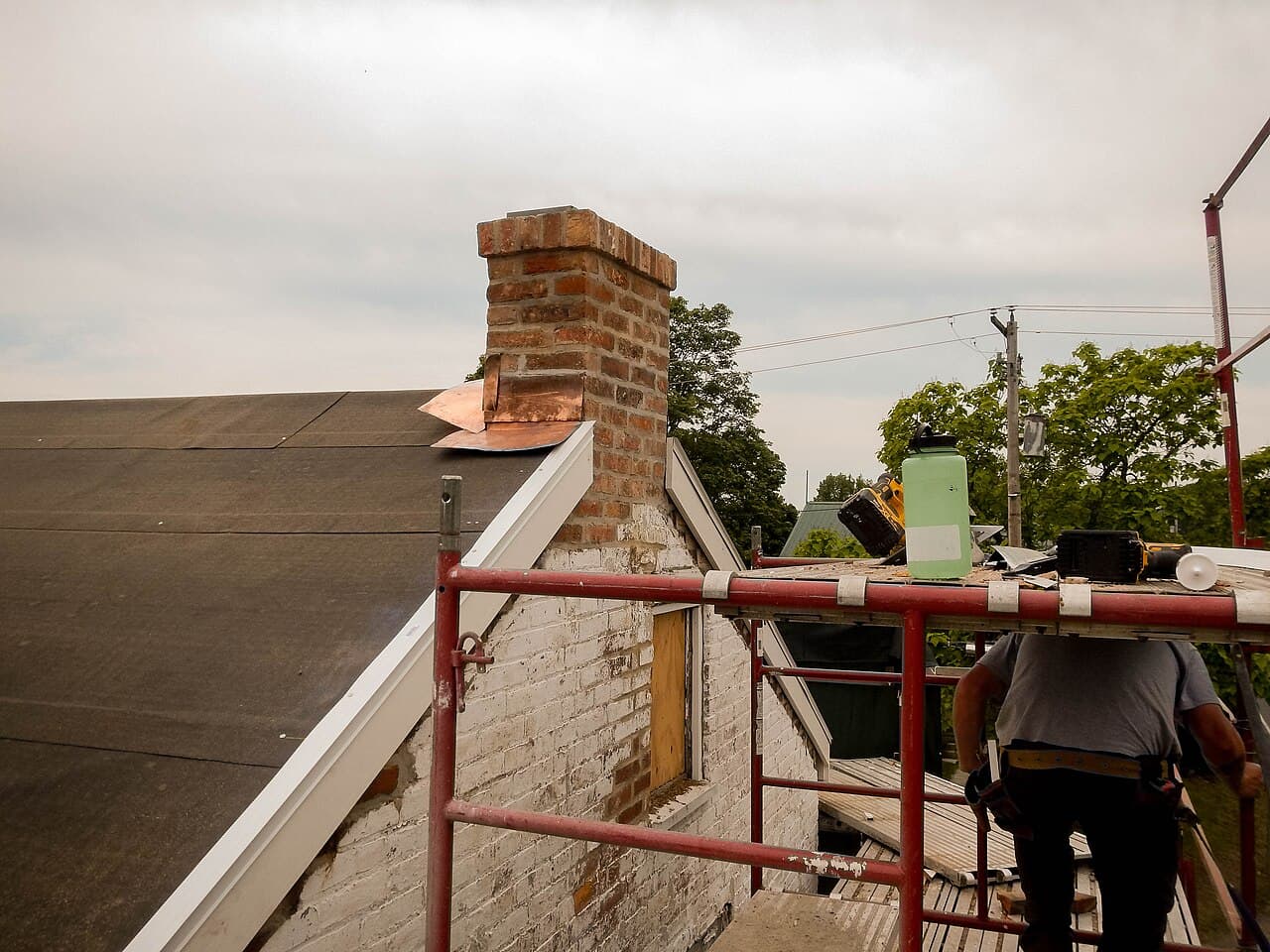
Flashing and the age of the roof
The surrounding roof is a useful guide. The USDA Forest Service lists a heavy, laminated architectural asphalt shingle at a 20- to 30-year lifespan.[1] If your roof is that old, the flashing was probably installed with it, and some may have been reused when the roof was last replaced. Reusing old flashing under new shingles saves money only if the metal is sound and the details can be redone properly.
Shingle warranties do not usually help here. One Owens Corning lifetime warranty states that it does not cover non-Owens Corning® roofing components, such as flashing, fasteners, pipe boots, and wood decking.[3] Do not assume a long shingle warranty means long flashing life.
How often to check
The USDA Forest Service says flashings should be checked twice a year when the roof is inspected and the gutters are cleaned.[1] It also says many apparent roof leaks are really flashing leaks.[1]
You can do part of that check from the ground or an upstairs window. Binoculars show rust streaks, lifted edges, gaps where metal meets a chimney or wall, and old sealant that has split. Inside, look for new stains on ceilings and walls near chimneys, dormers and vents, and for damp insulation in the attic. Stay off the roof. OSHA's roofing guide says falls are the leading cause of death in the construction industry.[5]
When to replace instead of repair
Signs that a section has reached the end of its life: rust that has eaten through the metal, repeated leaks at the same spot, caulk layered over earlier caulk, or flashing that has shifted away from the chimney or wall. In those cases a roofer may recommend renewing that flashing instead of patching it. When a roof is replaced, ask the quote to say which flashings are new and which are reused. Pricing is covered in how much flashing repair costs in Virginia.
When to call a licensed pro
Inspecting, resealing, repairing and replacing flashing is roofwork. In Virginia the Board for Contractors defines roofing as the installation, repair, removal, or improvement of materials common to the industry that form a watertight, weather resistant surface for roofs and decks.[6] DPOR's hiring guide says that when the work is valued at $1,000 or more, a valid Virginia Contractor’s License is required for the license category in which the contractor is to work.[7] Look up the roofer on DPOR's licence lookup before you pay a deposit.
A building permit may be required for a roof replacement, so ask your local building department.[4]
To learn what flashing is and where it goes, read what roof flashing is. To find the right trade, see who repairs chimney and roof flashing. Browse all roofing answers or roofing businesses near you.
Describe the roof and add photos, and licensed local roofers send quotes you can compare side by side.
Common questions
- Does flashing last as long as shingles?
- Not necessarily. Good metal flashing can outlast shingles, but rubber collars and sealant joints often wear out sooner, and old flashing is sometimes reused under a new roof. Ask the roofer to say in writing which flashing is new.
- Should flashing be replaced when the roof is replaced?
- Often it is worth it, because the flashing has to be redone with the new covering anyway. A roofer can tell you whether the existing metal is sound enough to reuse. Ask the quote to list each flashing.
- How often should flashing be inspected?
- The USDA Forest Service says flashings should be checked twice a year when the roof is inspected and the gutters are cleaned.
- Does a shingle warranty cover flashing?
- Often not. One Owens Corning lifetime warranty says it does not cover non-Owens Corning roofing components, such as flashing, fasteners, pipe boots, and wood decking. Read the warranty on your own roof.
- Is caulking flashing a long-term fix?
- Usually not. Sealant is a short-term patch that can crack and hide the real problem. Have a roofer decide whether the flashing needs resealing, repair or replacement.
Sources
- [1] Overview of Roofing Materials for Forest Service Facilities, USDA Forest Service, Missoula Technology and Development Center. Checked October 28, 2026.
- [2] Installation Type & Flashing Systems, VELUX America LLC. Checked October 28, 2026.
- [3] System Protection Limited Lifetime Warranty, Owens Corning Roofing and Asphalt, LLC. Checked October 28, 2026.
- [4] Asphalt Shingle Roofs, Building America Solution Center, Pacific Northwest National Laboratory for the U.S. Department of Energy. Checked October 28, 2026.
- [5] Protecting Roofing Workers (OSHA 3755), U.S. Occupational Safety and Health Administration. Checked October 28, 2026.
- [6] 18VAC50-22-30. Definitions of specialty services (Board for Contractors Regulations), Virginia Administrative Code (Virginia General Assembly). Checked October 28, 2026.
- [7] What You Should Know Before You Hire a Contractor, Virginia Department of Professional and Occupational Regulation, Board for Contractors. Checked October 28, 2026.
Want a pro to handle it?
Describe the job once. Licensed local businesses send quotes, and you pay only when you book one.
Get a quote for Roofing