Why is my plumbing vent boot leaking?
A plumbing vent boot usually leaks because its rubber collar has cracked, shrunk or pulled away from the pipe, or the metal base has rusted, lifted or lost its seal. Sealant on top only slows the drip. A licensed roofer can find the cause, replace or retrofit the boot, and check for wet decking. Stay off the roof.
Free to ask. Local shops send quotes, and you pay only when you book one.
By Kasra Taheri, Founder, LoclisPublished
Researched and drafted with AI, then checked claim by claim against the sources listed below before it was published. Prices and rules change; the dates beside each source say when it was last checked.
This is a job for a licensed pro in Virginia
This page explains what the work involves, the permits, what a licensed pro does and what drives the cost. It does not give step-by-step instructions, because this work needs a licence, a permit or both, and doing it wrong can injure someone. Before you hire, check the licence on Virginia's DPOR record.
A leaking plumbing vent boot is usually a worn-out seal, not a mystery. The boot is the small flashing, typically a metal base with a rubber collar, that fits around the vent pipe where it comes through the roof. When the collar splits, shrinks or lifts away from the pipe, rain runs down the outside of the pipe and into the attic. A roofer can usually replace a boot quickly, and it is worth doing before the water stains the ceiling.
Why a vent boot leaks
Most boots fail for a handful of reasons:
- A cracked or shrunken collar. The rubber ring around the pipe sits in sun and weather every day. With age it often hardens, splits or pulls away from the pipe, leaving a gap.
- A rusted or bent base. The metal flange under the shingles can corrode, get dented by a fallen branch or be lifted by wind.
- Exposed or popped nails. Fasteners through the flange that were not covered can back out and let water follow the shank.
- A dried-out sealant bead. Caulk or roofing cement at the edge cracks over time. Skylight maker VELUX describes its own flashing as designed to shed water without relying on sealants that can break down over time.[2]
- A boot that was set wrong. If the upper edge of the flange sits on top of the shingles instead of under them, water can run in beneath it from the first rain.
- Damage from work on the roof. Other trades walking the roof, a re-roof that reused the old boot, or a new vent added nearby can all disturb it.
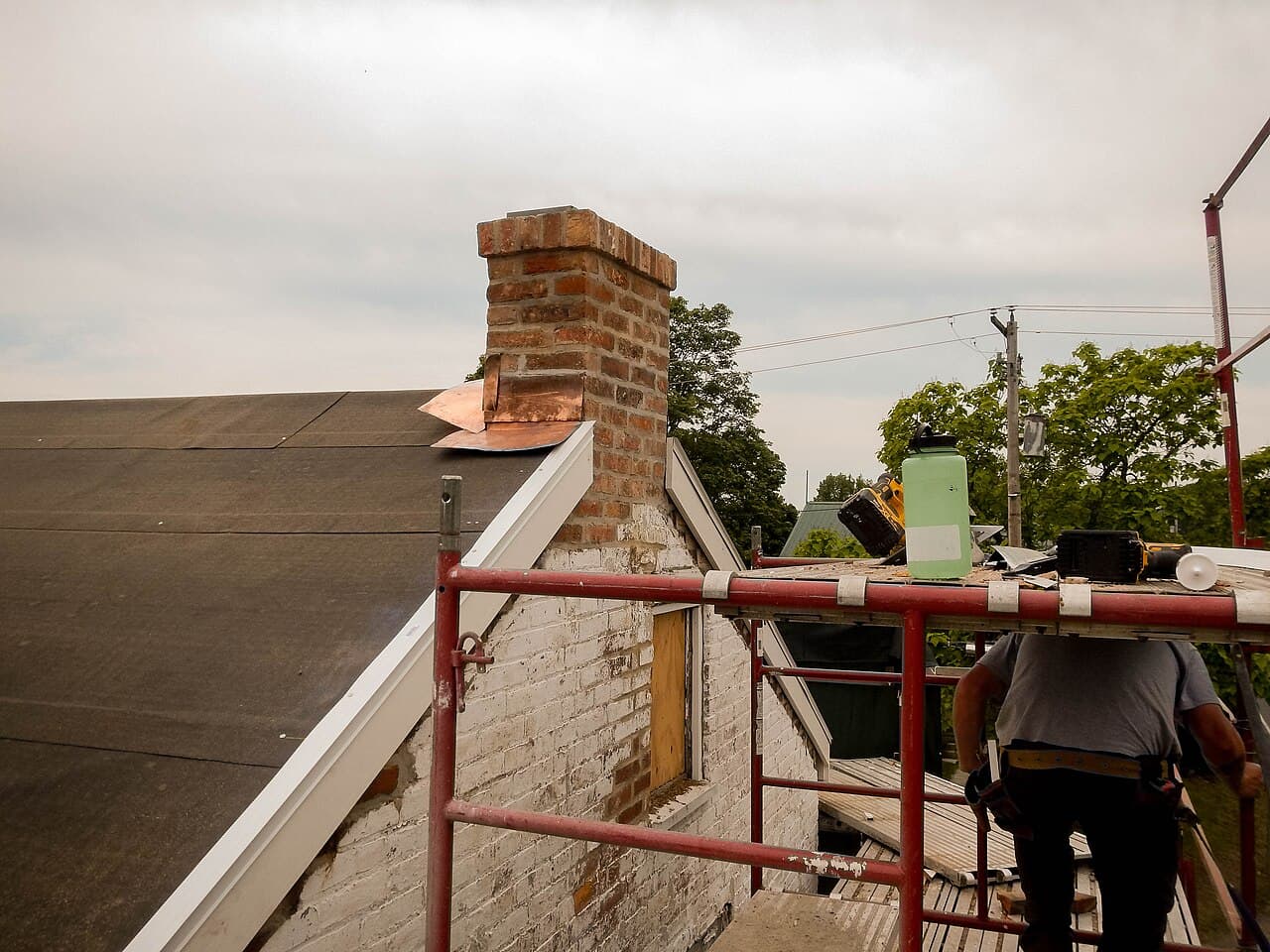
The USDA Forest Service says many apparent roof leaks are really flashing leaks.[1] It also warns that without good tight flashings around chimneys, vents, skylights, and wall/roof junctions, water can leak into buildings and damage walls, ceilings, insulation, and even the electrical system.[1]
Signs it is the boot
Signs from inside: a brown ring or drip on the ceiling near a bathroom or kitchen wall, damp insulation around the pipe in the attic, a musty smell, or water that appears only in heavy or wind-driven rain. A leak in the attic at the pipe can also be mistaken for condensation, so a roofer will look at the pipe, the underlayment and the decking, not just the stain.
From the ground, binoculars can show a split collar or a bead of old sealant. That is as close as you should get. OSHA's roofing guide says falls are the leading cause of death in the construction industry.[5]
Why sealant on top is not a repair
A tube of caulk or a smear of roofing cement over a cracked collar can slow a drip for a while. It does not fix the reason the boot failed, it hides the damage, and it often makes the next repair harder because the roofer has to clean off the old material first. Treat it as a stopgap until the roof can be seen by a pro.
What a proper repair involves
A licensed roofer will first find out whether the problem is only the collar or the whole boot, and whether water has reached the decking. Depending on what they find, the fix is usually one of three things: a replacement boot integrated with the surrounding shingles, a retrofit collar where the base is still sound, or a larger repair if the decking or underlayment is wet or rotted. The principle on the roof is the one the Building America Solution Center states: properly flash all roof penetrations and at roof-wall intersections.[4]
Who pays? Check what you already have. Shingle makers' warranties often exclude this part: one Owens Corning lifetime warranty says it does not cover non-Owens Corning® roofing components, such as flashing, fasteners, pipe boots, and wood decking.[3] If a roofer installed the boot recently, ask about the roofer's own workmanship warranty first.
Prices depend on the roof pitch, access, how many pipes there are and whether damage lies underneath. See how much flashing repair costs in Virginia and get the scope in a written quote.
When to call a licensed pro
Call a roofer as soon as you see a stain or hear dripping; it is a roof job, not a ladder job. The Building America Solution Center says roofing should be inspected and installed by a professional roofing contractor, licensed and insured.[4]
In Virginia the Board for Contractors defines roofing as the installation, repair, removal, or improvement of materials common to the industry that form a watertight, weather resistant surface for roofs and decks.[6] DPOR's hiring guide says: DPOR's hiring guide says that when the work is valued at $1,000 or more, a valid Virginia Contractor’s License is required for the license category in which the contractor is to work.[7] Even for a smaller boot repair, look up the roofer's licence and insurance first. A good rule of thumb is an initial deposit of no more than 10% of the total price or $1,000, whichever is less, according to the same guide.[7]
Once the boot is fixed, have the roofer check the other flashings. The USDA Forest Service says flashings should be checked twice a year when the roof is inspected and the gutters are cleaned.[1] For the basics, read what roof flashing is, and for who to call, who repairs chimney and roof flashing. Browse all roofing answers or roofing businesses near you.
Describe the leak and add photos, and licensed local roofers send quotes you can compare side by side.
Common questions
- How long does a plumbing vent boot last?
- It depends on the boot material, sun and weather exposure and how well it was installed, and the sources we checked give no single figure. Many rubber collars wear out before the shingles do. Have the boots looked at whenever the roof is inspected.
- Can I fix a leaking vent boot with caulk?
- Caulk or roofing cement can slow a drip for a short time, but it is a stopgap that does not address why the boot failed. It can also hide ongoing damage. Have a roofer replace or retrofit the boot.
- Is a vent boot leak an emergency?
- Not usually, but water in the attic can wet insulation and decking and cause stains and mould, so do not wait long. Put a bucket under the drip, move belongings, take photos and call a licensed roofer.
- Does homeowners insurance or a shingle warranty cover a leaking boot?
- Often not. One Owens Corning shingle warranty, for example, says it does not cover non-Owens Corning roofing components, such as flashing, fasteners, pipe boots, and wood decking. Read your own warranty and policy, and ask the roofer who installed the roof.
- Do I need a licensed roofer to replace a vent boot in Virginia?
- DPOR's hiring guide says that when the work is valued at $1,000 or more, a valid Virginia Contractor’s License is required for the license category in which the contractor is to work. Check the licence on DPOR's lookup before you pay a deposit.
Sources
- [1] Overview of Roofing Materials for Forest Service Facilities, USDA Forest Service, Missoula Technology and Development Center. Checked October 28, 2026.
- [2] Installation Type & Flashing Systems, VELUX America LLC. Checked October 28, 2026.
- [3] System Protection Limited Lifetime Warranty, Owens Corning Roofing and Asphalt, LLC. Checked October 28, 2026.
- [4] Asphalt Shingle Roofs, Building America Solution Center, Pacific Northwest National Laboratory for the U.S. Department of Energy. Checked October 28, 2026.
- [5] Protecting Roofing Workers (OSHA 3755), U.S. Occupational Safety and Health Administration. Checked October 28, 2026.
- [6] 18VAC50-22-30. Definitions of specialty services (Board for Contractors Regulations), Virginia Administrative Code (Virginia General Assembly). Checked October 28, 2026.
- [7] What You Should Know Before You Hire a Contractor, Virginia Department of Professional and Occupational Regulation, Board for Contractors. Checked October 28, 2026.
Want a pro to handle it?
Describe the job once. Licensed local businesses send quotes, and you pay only when you book one.
Get a quote for Roofing